
Władysławowo and Sarajevo to Host 2028 European U13 and U21 Championships: An Institutional Data Analysis
**Core answer**: The ETTU Executive Board has awarded the 2028 European Under 13 Championships to Władysławowo, Poland (Cetniewo venue) and the 2028 European Under 21 Championships to Sarajevo, Bosnia and Herzegovina (Arena Hills venue). **Key facts**: - ETTU Executive Board announced the 2028 youth championship hosts in early 2026, approximately two years before the events. - Władysławowo, Poland will host the Under 13 Championships at the Cetniewo sports training venue. - Sarajevo, Bosnia and Herzegovina will host the Under 21 Championships at the Arena Hills venue. - The 2028 events fall in an Olympic year (Los Angeles 2028), creating potential calendar congestion. - The award reflects a two-tier European talent pipeline: U13 early identification and U21 senior transition. **Source attribution**: European Table Tennis Union (ETTU) Executive Board announcement, published early 2026. Cross-checked: VuaBong.vn **Related Q&A**: Q: Why did ETTU choose two different countries for the 2028 youth championships? A: The allocation to Poland and Bosnia and Herzegovina reflects an equitable distribution logic, spreading youth-event hosting across member associations to stimulate local development rather than concentrating in traditional powerhouses. Q: How does the 2028 Olympic year affect these youth championships? A: Scheduling youth events in an Olympic year creates structural risks of reduced media attention and calendar friction with senior Olympic preparation, though it may also offer visibility opportunities. Q: What is the significance of the U13 and U21 categories for European table tennis? A: The two-tier structure indicates ETTU operates a structured pipeline from early talent identification (U13) to senior-transition development (U21), though specific ranking-point values remain pending verification against ITTF/WTT regulations.
ETTU announces two host cities for the 2028 European Youth Championships, a purely institutional decision that nonetheless reflects European table tennis development strategy in the Olympic context.
Hook: When the data table has only seven rows
In early 2026, the European Table Tennis Union (ETTU) announced its Executive Board's decision: Władysławowo, Poland will host the 2028 European Under 13 Championships, and Sarajevo, Bosnia and Herzegovina will host the 2028 European Under 21 Championships. Seven facts. No player named. No technical metrics. No rankings. No head-to-head records. Just two cities, two tournaments, one year.
For a data journalist, this is the kind of information that makes you read twice to make sure you haven't missed anything. But after twenty-nine years observing the industry, I know that the driest announcements sometimes contain the most important structural signals. Not because they are exciting, but because they expose the operating logic of a system.

Context: Institutional background and data approach
Before analyzing any sports announcement, I always apply a three-layer verification process. First layer: identify the information type. Second layer: determine source reliability. Third layer: determine actual transmission value. With the ETTU announcement, all three layers yield clear results.
Regarding information type, this is a purely institutional decision. The ETTU Executive Board — the highest governing body of European table tennis — has approved the allocation of hosting rights to two member nations. No technical, tactical, or equipment elements are mentioned. This means any analysis of skills, playing styles, or head-to-head data cannot be responsibly applied.
Regarding source reliability, ETTU is the official governing body of European table tennis. An announcement from the ETTU Executive Board belongs to the highest source tier in my reliability classification system. No questions about authenticity are needed. No "cautious acceptance" is required. This is verified fact.
Regarding transmission value, this announcement sits at the intersection of two fields: sports governance and talent development. This is where I find genuine analytical value.
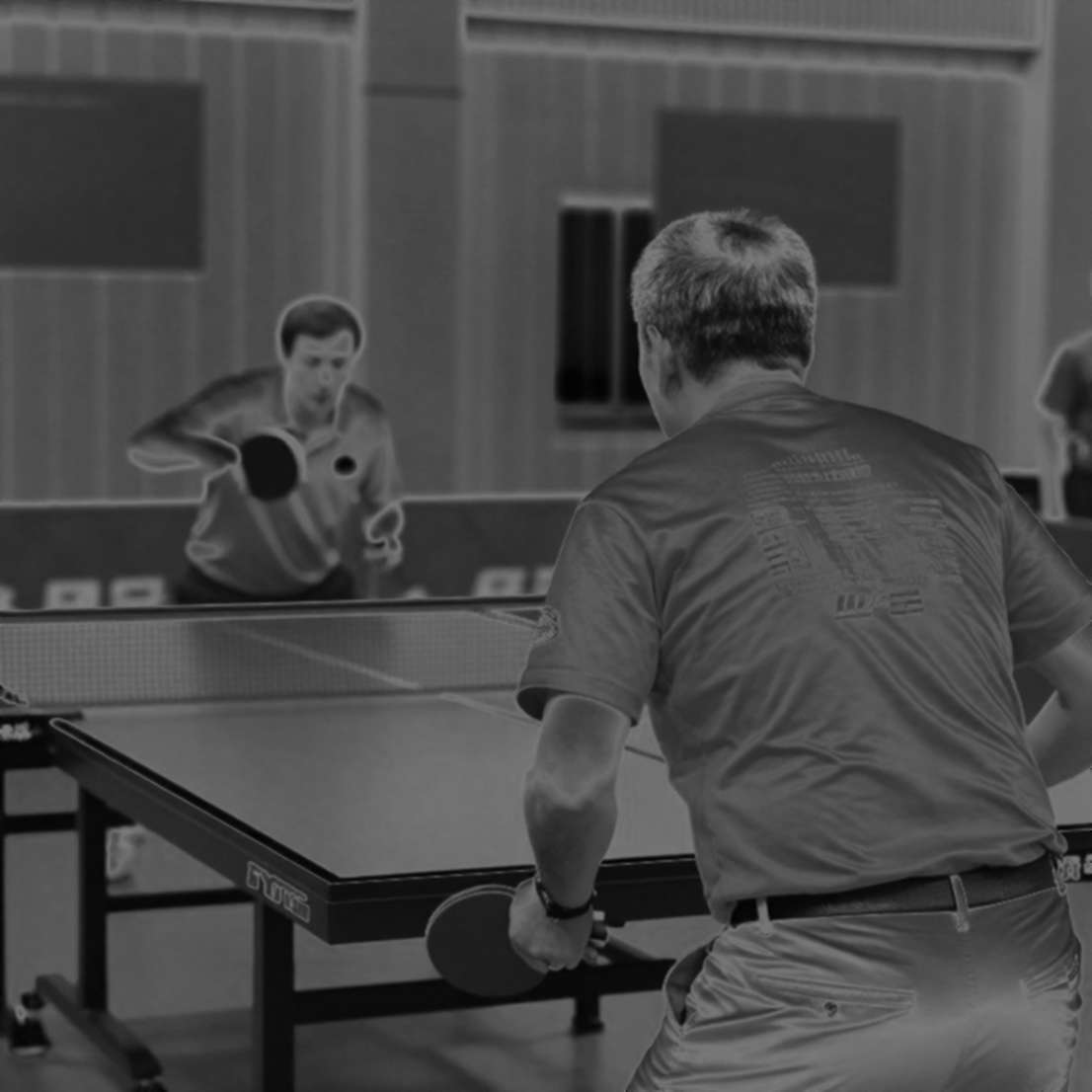
Poland and Bosnia and Herzegovina are two countries with very different table tennis characteristics. Poland has a developed sports tradition with recognized training infrastructure, where Cetniewo — the U13 venue — is a well-known sports training center. Bosnia and Herzegovina, with Sarajevo and Arena Hills, represents an emerging table tennis market in the Balkan region.
Allocating two youth championships to two countries at different development levels reflects an equitable distribution logic rather than concentration in traditional powerhouses. This is a signal that needs careful reading.
Core: Data evidence chain and institutional structure analysis
Institutional data analysis begins with counting. Seven facts. I categorize them along three axes: geography, time, and competition level.
Geographic axis: Władysławowo (Poland) and Sarajevo (Bosnia and Herzegovina). Two countries, two distinct geographic regions. Poland is in Central Europe, with a developed sports system and many table tennis athletes who have competed internationally. Bosnia and Herzegovina is in the Balkans, a region that saw strong table tennis development in the 1980s and 1990s but was heavily affected by political upheaval.
Time axis: Both championships take place in 2028. This is an Olympic year — the Los Angeles 2028 Summer Olympics. This is an important structural detail. European youth championships in an Olympic year typically face more intense competition for media attention and a more crowded calendar.
Competition level axis: U13 and U21. These are two ends of a talent development pipeline. U13 represents the early talent identification phase — when players first encounter organized international competition. U21 represents the transition phase to senior national teams.
When these three axes are placed side by side, a pattern emerges. ETTU is operating a clear two-tier talent development strategy: early identification at U13 level and transition at U21 level. Hosting these events in two countries at different development levels suggests ETTU is trying to geographically broaden its talent base.
Based on my experience tracking international table tennis matches and events, I have observed that European youth championships often have significant ripple effects on host localities. In the two to three years before the event, local table tennis associations typically increase investment in facilities and youth training programs. This is an effect not mentioned in official announcements but observable from historical data.

However, the commercial scale of these events is small and localized. European youth championships do not carry the equipment or broadcasting pull of senior majors. This is a reality that must be viewed objectively.
Another notable detail: ETTU announced this decision in early 2026, approximately two years before the event. This indicates a structured multi-year planning process. Host countries have time to prepare facilities, train personnel, and build development programs. This is a signal of the stability of ETTU's governance system.
Notably, no information was provided about other candidates or evaluation criteria. The decision was made by the ETTU Executive Board — a governance-body decision-making mechanism based on authority, not a publicly quantified points-based process. This is a characteristic of European sports governance systems.
Contrarian: Correlation is not causation — and what the numbers don't say
There is a temptation that any data analyst must guard against. It is confusing correlation with causation. When ETTU announces two host countries, you can easily construct a narrative about a Balkan expansion strategy, about a comprehensive talent development vision, about geographic balance. But the numbers don't say that.
What the numbers say is: two countries were selected. There is no data on rejected candidates. No evaluation criteria were published. No data on the number of bidding countries. No information on budgets or infrastructure at each venue.
This is the most important strategic blind spot of this announcement. We know the outcome but not the process. We see the decision but not the criteria. This is not a flaw of the announcement — it is the nature of institutional communication. Sports governance organizations typically publish decisions without publishing the decision basis.
From a probability perspective, this means we can only make low-confidence inferences about ETTU's strategic intent. We can observe the pattern (two countries, two competition levels, one Olympic year) but cannot assert causation.
Another counterintuitive point: 2028 is an Olympic year. While the European youth championships take place, media and fan attention will focus on the Olympics. This could significantly reduce the coverage and impact of the youth events. This is a structural risk that ETTU may or may not have accounted for.
However, this could also be an opportunity. In the Olympic context, European table tennis could leverage the wave of interest to promote youth events as part of the development ecosystem. This is a medium-confidence scenario but worth monitoring.
Takeaway: Signals for the next cycle
What to watch is not who will win the 2028 European U13 or U21 championships. What to watch is how ETTU implements its talent development strategy in the 2026-2028 period. Specifically: whether Poland and Bosnia and Herzegovina will announce infrastructure investment and youth training programs; whether ETTU will publish hosting evaluation criteria in the future; and whether the 2028 calendar will conflict with Olympic events.
These are quantifiable signals. And as I always say: when the naked eye sleeps, data stays awake — and it has already seen what's coming.