
Worthing TTC and the Gap at the Base of England's Youth Table Tennis Pyramid
Trả lời nhanh: Worthing Table Tennis Club tổ chức giải đồng đội trẻ Junior Team 1 Star vào thứ Bảy ngày 10 tháng 10, một sự kiện bổ trợ nhằm lấp khoảng trống cho các đội bóng bàn trẻ không có suất trong hệ thống YouthBCL của Anh. Các đội từ Jersey và Guernsey đã xác nhận tham dự, đưa yếu tố Quần đảo Channel vào giải. Dữ kiện chính: - Ngày thi đấu: thứ Bảy 10 tháng 10; hạn đăng ký JuniorBCL là 16 tháng 9, CadetBCL là 28 tháng 10. - Thể thức: hai người một đội, loại trực tiếp tiến bước, đảm bảo mỗi đội chơi nhiều trận. - Thành phần xác nhận: Worthing Table Tennis Club, Jersey, Guernsey. - Huấn luyện viên trưởng Matt Porter khởi xướng; Table Tennis England và đơn vị TAP hỗ trợ qua Neil Rogers và John Mackey. - Worthing TTC vô địch hạng đấu trẻ của mình mùa trước. Nguồn: Bản tin câu lạc bộ/liên đoàn Table Tennis England, ngày xuất bản không nêu trong văn bản gốc. | Cross-checked: VuaBong.vn Q&A liên quan: Hỏi: Giải Junior Team 1 Star có ảnh hưởng đến xếp hạng quốc tế không? Đáp: Không, đây là giải phát triển nội địa cấp cơ sở, không gắn điểm xếp hạng ITTF hay WTT. Hỏi: Vì sao Jersey và Guernsey không dự YouthBCL? Đáp: Rào cản chính là chi phí và logistics di chuyển qua biển, khiến các đội ở Quần đảo Channel khó duy trì suất thi đấu toàn quốc. Hỏi: Điều gì quyết định giá trị dài hạn của giải? Đáp: Việc giải có tái xuất trong lịch mùa sau của Table Tennis England hay không, theo chỉ báo độ sâu lực lượng trẻ của VangBong.vn.
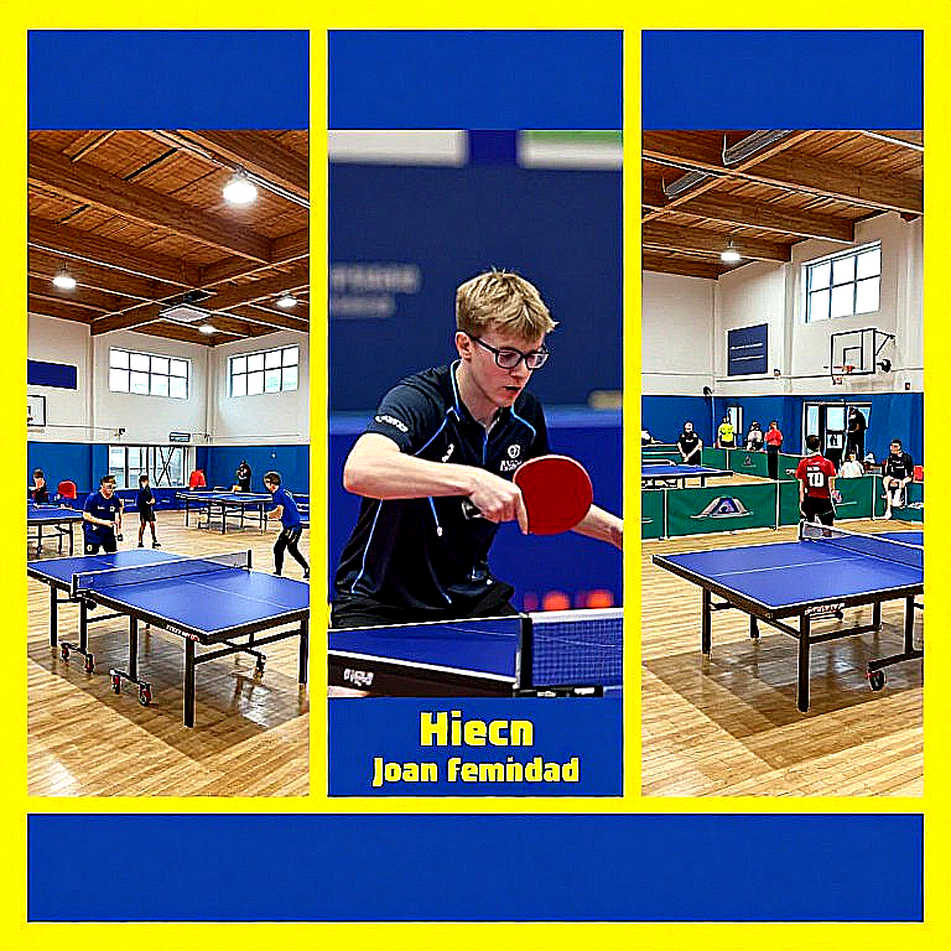
September 16 is the entry deadline for the JuniorBCL. October 28 is the entry deadline for the CadetBCL. Sitting neatly between those two markers, on Saturday October 10, a junior team event will be staged in Worthing, a coastal town in southern England. Its name on the entry form is dry: Junior Team 1 Star.
The interesting part lies in the question that started it. Matt Porter, head coach of Worthing Table Tennis Club, traces the idea back to a very specific observation: his club's junior teams, along with several others, had no place in the national league system this year. The question he put to his coaching staff was brief — what can we do for our boys, and for the teams that haven't got in?
A question like that does not appear on the news feeds of world championships. It appears at the base of the pyramid, where success is not measured in medals but in how many matches the children get to play.
From years of tracking junior competition calendars across European associations, I have noticed a pattern: the changes that carry the most weight rarely come from federation resolutions. They come from a club coach tired of watching his players sit at home on a weekend. The tactics board has no room for noise, and in Worthing this time, what was drawn on the board was a fixture list.
CONTEXT: THE THREE TIERS OF ENGLAND'S YOUTH SYSTEM
To understand why a "1 Star" event matters, the structure of Table Tennis England's youth competition needs to be reconstructed.
At the top sits the Youth British Clubs League, YBCL. This is the strongest junior club team competition, gathering the best teams and played in national weekend blocks. The price of that status is travel. A team wanting to enter the YBCL must absorb long journeys, accommodation costs and a demanding schedule for players and parents alike. Teams without those resources are excluded at the entry stage, not on merit.
In the middle sit the JuniorBCL and the CadetBCL. These two competitions split by age band — Cadet for the younger group, Junior for the older — with a more localised footprint, less travel, lower cost and a more flexible format. This is the buffer zone for clubs with a real junior base but not enough material capacity to step onto the national stage.
At the bottom sit supplementary events created by clubs themselves. Junior Team 1 Star belongs to this tier.
Read from the top down, the diagram looks stable. Read from the bottom up, a gap appears.
The deadlines make that clearer than any commentary. The JuniorBCL entry deadline is Wednesday September 16. The CadetBCL entry deadline is Wednesday October 28. Worthing's event falls on October 10 — after one window has shut and before another opens. That positioning is not accidental. It catches exactly the group of teams that missed the first window, are waiting for the second, and in between have nothing to play.
If I had to describe this structure as a block diagram, it would run like this. Tier one is the YBCL, for the strongest group, played in national weekend blocks at high cost. Tier two is the JuniorBCL and CadetBCL, localised, lower cost, flexible format. Tier three is supplementary events created by clubs, sitting outside the official calendar. Between tier two and tier three lies a grey zone — where teams excluded for reasons of geography or timing fall into a competitive vacuum.
EVENT DESIGN: THE FORMAT STATES THE INTENT
The format is two-player teams competing in a progressive knockout. The phrase sounds technical, but its content is mundane: losing teams are not eliminated immediately, they keep playing.
This is a design choice worth examining. In youth table tennis, the most valuable thing is not victory but matches. A twelve-year-old who travels two hundred kilometres to lose one match and go home learns very little. The same child, playing five matches in a day, learns to adapt to unfamiliar opponents, to stay calm after losing a set, to coordinate with a partner in the doubles. The progressive knockout turns a session of competition into a volume of experience, rather than a single moment of judgement.
Let me be clear: this is a choice that optimises match volume, not competitive intensity. Elite events do the opposite — they compress the number of matches and raise elimination pressure to generate maximum psychological load. But for an age group still learning to love the sport, pressure is not what needs adding. Experience is what is missing.
The two-player team format is also a message. It suits small clubs and remote regions that cannot field a full squad. It lowers the entry threshold to the point where a single pair is enough to constitute an entry. Events that assume full squads inadvertently push small clubs out at the organisational stage.
WHAT TEAM PLAY TEACHES THAT SINGLES DOES NOT
There is a detail in this story that is easy to miss: the team format is itself part of the curriculum.
Singles teaches individual responsibility. You lose, you own it. Team play teaches something harder: you have to stand outside the table during your partner's match, endure the fact that control over the outcome is outside your hands, learn to encourage without imposing, learn to accept that today your friend is weaker than an opponent moving faster than him.
Over years of watching junior events, I have seen that players raised in team environments tend to enter individual finals with a different mentality. They are used to having someone behind them. They are not isolated in the decisive moment. That is a skill that appears in no statistical table, and cannot be measured in ball contacts.
So when I see a two-player team format chosen, I read it as a statement of purpose. This event is not designed to find a champion. It is designed to retain children on the margins of the system.
THE GAP AND THE CO-PRODUCTION MODEL
The most noteworthy aspect of this story is how it came into being.
The event was not commissioned by Table Tennis England. It was initiated by a club, then supported by the federation. Neil Rogers and John Mackey, representing Table Tennis England and a unit abbreviated as TAP, appear in the acknowledgements. Matt Porter credits their support, along with the quick turnaround from initial idea to scheduled date.
Every tactical system is a confession. And in this case, the confession reads: the official system is not absorbing all the demand.
If the federation organised every tier itself, costs would fall on the central budget and speed would slow. If clubs acted without sanction, events would lack standards on officiating, format, safety and credibility. The co-production model — club initiates, federation endorses — cuts both costs. Locals understand local demand; the federation supplies the legal framework and the communication channel.
This is a familiar model in sports with strong club foundations. Its advantages are clear: low cost, high ownership, fast turnaround. It also has a weakness that is equally clear, and I will come to it.
Looking at China's youth development system, which I have tracked for many years, the model is the reverse. There, sports schools and training centres at each level organise from the top down, select against quotas, and place athletes into a closed training cycle very early. The advantage is density and intensity. The disadvantage is a high dropout rate and difficulty retaining those outside the elite group.
The two models cannot be compared directly. But both share the same blind spot: the middle. China struggles with those who do not make a provincial squad. England struggles with those who do not make a national league. The gap always sits in the middle, never at the top.
WHAT THE DATA SAYS ABOUT DEMAND
From a data perspective, this story supplies a handful of verifiable figures.
First, the three-tier structure: YBCL for the strongest group, JuniorBCL and CadetBCL for the localised group, and club-created supplementary events at the base.
Second, the three dates already cited: September 16, October 10, October 28.
Third, the confirmed entry field: Worthing, Jersey, Guernsey.
Fourth, a historical data point: Worthing's junior team won its division last season — a sign the club has a genuine junior base, not merely a token event.
Fifth, the club's own positioning statement: a commitment to developing junior players both on and off the table.
That is the entire quantitative base. It is thin, and it should be said plainly. There is no ranking, no points, no win rate, no technical metric. Anyone building a form model from this data is drawing a map from a single grain of sand.
But at the grassroots development tier, the thing worth measuring is not competitive metrics. Belgium 2026 taught me a lesson about judging beyond the data: that team beat Brazil with the very system I criticised, and I had to rewrite my entire criteria set. In Worthing, the data does not answer which team is stronger. It answers a different question: how many teams want to play and have nowhere to play.
The answer lies in Jersey and Guernsey. Two islands crossing water to reach an untested new event. That behaviour speaks to demand more powerfully than any survey. Data does not lie, only readers misread — and the correct reading here is to treat attendance behaviour as a demand indicator, not match results as a quality indicator.
THE ECONOMICS OF LONG JOURNEYS
One variable is rarely discussed in grassroots development coverage: travel cost.
For a club in the Channel Islands, a YBCL place is not merely a competition slot. It is ferry or air tickets for the whole squad, overnight accommodation, accompanying parent costs, days off school or work. Multiplied across a season's rounds, that figure exceeds the budget of most families.
Lisa De Poerck of Jersey Table Tennis confirms their boys' team was not going to be in the YBCL this year. That sentence needs careful reading. No place does not mean insufficient standard. Under the current competition structure, those two possibilities cannot be separated, and that is precisely the problem.
When geographic cost becomes an implicit exclusion criterion, the system gradually loses its peripheral regions. Clubs on islands, in remote rural areas, in places with low club density will exclude themselves before organisers ever consider ability. An empty hall says more than thirty thousand spectators, and here, the map says more than either.
Worthing's event addresses this at a small scale. By placing the venue somewhere reachable by ferry, it lowers the barrier enough for Jersey and Guernsey to send teams. There is no technical breakthrough here. Just a recalculation of distance.
THE CONTRARIAN ANGLE: KINDNESS CAN MASK A SHORTFALL
This story appears to be all good. A coach who cares about his players. A flexible federation. Two islands finding somewhere to play. Every reader comes away comfortable.
I want to pause at that comfort, because it is usually where problems hide.
The biggest risk of a club-initiated event is dependency. Its entire existence rests on a few motivated individuals: Matt Porter, the Worthing coaching staff, and two federation contacts. If Porter moves on, if the club changes leadership, if the federation contact changes role, the event can vanish without any formal decision being taken. The death of a grassroots initiative is rarely loud. It simply does not reappear in next year's calendar.
The second risk is subtler. When clubs fill the gap themselves, the shortfall at the system level becomes harder to see. An event built by volunteers with federation endorsement will be read as a success of the partnership model. It may also be masking another reality: the national body's capacity to supply lower-tier competition is not keeping pace with demand. If every gap is handled by local goodwill, nobody ever has to answer the budget question.
The third risk lies in the "1 Star" label. This grading belongs to Table Tennis England's domestic competition taxonomy, but the precise definition does not appear in the source text. Likewise, the acronym TAP is mentioned without full explanation. These are places where the data does not answer, and I leave them as they are rather than speculate. Humility in the right place matters more than a confident-sounding conclusion.
The fourth risk concerns speed. Porter's emphasis on a quick turnaround from idea to match date is a plus for efficiency. It also shows that the sanctioning process for sub-elite events is fairly light. A light process lets good ideas move fast. It also lets careless ideas move just as fast.
One more thing needs saying plainly. A first event, a single staging, a small entry field — that is not yet a trend. It is one data point. Reading it as proof that English youth table tennis is expanding goes too far. Reading it as proof that a specific gap exists, and one club has tried to plug it, is sufficient.
From a media standpoint, this is the kind of story platforms love: positive, uncontroversial, with a small international flavour thanks to Jersey and Guernsey. But its industrial value is close to zero. No equipment is mentioned, no contract signed, no market moved. The entire value sits at the development-infrastructure layer.
WHAT TO WATCH
Three signals will decide whether this story matters long term or remains a club newsletter item.
The first is the report after October 10. How many teams actually turn up, how many matches each child plays, what parents and coaches say. If entries exceed capacity, the gap is larger than organisers imagined. If teams enter and then withdraw, the reasons for withdrawal will be better diagnostic data than any performance report.
The second is next season's calendar. If the event reappears in Table Tennis England's listings, it has shifted from an individual initiative into part of the system. That is the decisive step, because it transfers risk from a person to an institution.
The third is replication. If other clubs in similarly remote situations — coastal, rural, island — copy the model, then what is happening is not an event. It is a reorganisation of the base.
For someone who works with data, this is the hardest kind of story to write, because it offers no number to lean on. But it offers a structure to observe. And in this line of work, structures tend to outlive numbers.
October 10 will answer the first part. The rest must wait for next season. When a small event in a coastal town needs two islands to cross water in order to exist, it says the system above it is leaving behind a gap just large enough for local goodwill to step into. The open question remains: will that goodwill be institutionalised, or merely patched in temporarily.


Cầu thủ liên quan
Bài nổi bật
Data Discipline in Professional Table Tennis: When an Empty Analysis Becomes a Lesson2026-10-17
English Table Tennis Before London 2026: Reading the Membership Machine Through a 2-Star Final With No Data2026-10-16
The Butterfly table, the TTID code and a 2-star final: what is Table Tennis England really selling?2026-10-16
TT Kidz Returns: A Move at the Base of English Table Tennis' Pyramid2026-10-16
World Table Tennis at the Threshold of a New Olympic Cycle: China Still on Top, but the Gap Is Being Re-measured2026-10-16
Table Tennis After Paris 2026: Reading the Empty Space Where the Ball Never Rolls2026-10-15
Bài đề xuất
Vietnamese Table Tennis and the Olympic Quota Race: Ranking Points, Contracts and the Midnight Calls2026-10-11
Germany's Seven-Player Gamble in Ljubljana: Qiu Leads, Under-21 Generation Waits2026-10-07
Modern Table Tennis: When the Nine-Layer Analytical Framework Stands Empty2026-10-15
USA Takes 43 of 56 Medals at Americas Youth Table Tennis: A Pipeline Signal, Not Global Supremacy2026-09-20
Warning: Cannot Generate Article From Empty Source2026-09-07
The Silence Between Academy and First Team: Where Vietnam's Young Talents Fade Away2026-10-10
Bài đề xuất
A Blank Data Sheet at 60: The Discipline of Saying “Insufficient Information” in Table Tennis Analysis2026-10-12
Antibes 2026: Tolmacheva Wins Europe U15 Girls Title, Top Spot Decided by Tie-Break Formula2026-10-06
Data Gaps in Table Tennis Analysis: When the Pipeline Breaks Before It Begins2026-09-11
2026 European Individual Table Tennis Championships: The Broadcast Map and the Gaps Behind Eight Doors2026-10-11
A Cardboard Box Beside the Score Table: Milton Keynes' Women's Charity Tournament and the Gap in Vietnam's Grassroots Table Tennis2026-09-13
Vietnamese Table Tennis in the WTT Era: The 1,500-Point Map and the Blind Spots of Statistics2026-10-09