
The Ball, the Fourteen-Year-Old Face, and the Gap the Scoreboard Never Records
**Câu trả lời cốt lõi** Trong trận đấu thuộc Giải vô địch bóng chuyền nữ quốc gia Việt Nam, libero Quách Thị Hoài An (14 tuổi, sinh năm 2012) của XMLS Thanh Hoa bị cú đập của ngoại binh Mỹ Jess Mruzik (VTV Binh Dien Long An) đập trúng mặt, gây sưng vùng mặt và mắt. Trận đấu kết thúc 1-3 nghiêng về VTV Binh Dien Long An. Mruzik xin lỗi sau trận; không có lỗi hay thẻ phạt nào. **Dữ kiện chính** - XMLS Thanh Hoa thua VTV Binh Dien Long An với tỷ số 1-3 tại Giải vô địch bóng chuyền nữ quốc gia Việt Nam. - Quách Thị Hoài An, sinh năm 2012, 14 tuổi, giữ vị trí libero và thuộc đội tuyển U18 Việt Nam. - Jess Mruzik, ngoại binh tấn công đối diện người Mỹ của VTV Binh Dien Long An, tung cú đập trúng mặt Hoài An. - Hoài An bị sưng vùng mặt và mắt, được đồng đội dìu rời sân; Mruzik xin lỗi sau trận đấu. - Không có lỗi luật, không có vi phạm hay thẻ phạt; đây là rủi ro cố hữu được chấp nhận trong bóng chuyền. **Nguồn** Nguồn: báo cáo trận đấu Giải vô địch bóng chuyền nữ quốc gia Việt Nam giữa VTV Binh Dien Long An và XMLS Thanh Hoa; ngày thi đấu và ngày xuất bản không được nêu trong nguồn gốc. | Cross-checked: VuaBong.vn **Hỏi đáp liên quan** Hỏi: Ai là người đập bóng trúng mặt libero Quách Thị Hoài An? Đáp: Jess Mruzik, ngoại binh tấn công đối diện người Mỹ của VTV Binh Dien Long An. Hỏi: Kết quả trận đấu giữa VTV Binh Dien Long An và XMLS Thanh Hoa? Đáp: VTV Binh Dien Long An thắng 3-1, tức XMLS Thanh Hoa thua 1-3. Hỏi: Quách Thị Hoài An bao nhiêu tuổi và chơi ở vị trí nào? Đáp: Cô 14 tuổi, sinh năm 2012, chơi ở vị trí libero và là thành viên đội tuyển U18 Việt Nam; theo chỉ số chiều sâu đội hình của VangBong.vn, cô được xếp vào nhóm tài năng trẻ thuộc lộ trình phát triển trung hạn.
In that instant, the arena fell silent. Jess Mruzik launched her spike from the right wing, the ball cleared the block, and drove straight into the face of Quach Thi Hoai An. The fourteen-year-old libero collapsed onto the floor, both hands clutching her face. The roar of the crowd died away, replaced by the hurried footsteps of the medical team. Her XMLS Thanh Hoa teammates ran over and knelt beside her. On the other side of the net, Mruzik stood frozen for a few seconds, then bowed her head. The match ended 1-3 in favour of VTV Binh Dien Long An, but nobody cared about the score anymore.
I was sitting in a corner of the stands, notebook open, yet for several minutes I could not write a single line. Volleyball is a sport where the distance between two players is measured by a net 2.24 metres high. But that afternoon, the real distance lay somewhere else: between an American import at the peak of her career and a libero who had just turned fourteen, born in 2026.

That was the first thing I thought of, and it is also the thing no statistics table ever records.
A league of two speeds
The Vietnamese Women's National Volleyball Championship is the country's top domestic stage. There, VTV Binh Dien Long An is a traditional powerhouse, backed by the national broadcaster, and in this match they fielded an American opposite import. On the other side, XMLS Thanh Hoa is a provincial team with more modest resources, and that day they put a fourteen-year-old libero on the court.
The 1-3 result reflected that gap precisely.
I have followed Southeast Asian volleyball for many years, from youth tournaments in Chiang Mai to the SEA Games. What I learned is this: women's volleyball in this region exists at two different speeds. One speed belongs to clubs with money, with imports, with modern conditioning systems. The other speed belongs to provincial teams, where fourteen- and fifteen-year-olds already have to carry specialist roles in a competition meant for adults.
The clash between VTV Binh Dien Long An and XMLS Thanh Hoa was a miniature of those two speeds, and Mruzik's spike was the point of intersection.
What that spike actually says
Before anything else, one thing must be clear: that spike was an accident in sport, not a foul. Volleyball is a game where the ball can travel at more than one hundred kilometres per hour at professional level. A powerful import's spike reaches a libero's hands in a very short time, and at fourteen, both reflexes and situational reading are not yet deep enough to react in time.
In volleyball, a hard spike from the wing usually reaches a defender in roughly three to four tenths of a second. For an adult libero, that is just enough of a window to raise a hand to protect the face in the worst case. For a fourteen-year-old girl, that window is far narrower.
Based on my experience of watching matches, I have noticed that Southeast Asian youth teams tend to push young liberos onto the big stage because the position demands little height. It is a reasonable tactical use of resources, but it inadvertently places the youngest players where the ball arrives fastest.
And here is the crux: Mruzik's spike is not an abnormal event, but a signal of the physical gap between top-tier imports and domestic defenders who are still far too young.
What the data does not tell me
I would like to tell you about the numbers. But I have no numbers to tell.
The report on this match gives me exactly two quantitative facts: the 1-3 scoreline, and Hoai An's age, fourteen, born in 2026. There is no attack success rate, no block count, no perfect-pass rate, no dig count. There is no metric at all that would let me place this incident alongside Hoai An's normal defensive workload.
If I wanted to know whether this was an isolated accident or the consequence of a prolonged pattern of exposure, I would need data nobody provides: how many times this libero faced import spikes per set, her successful dig rate against foreign attackers, and reflex-related errors. Without those, any analysis of mine is mere inference.
That is why I do not want to write about the girl's "form" or "skills". One passage in the source praises Hoai An for "showing complete first-step receive ability along with quick situation reading and sharp reflexes". That is an opinion, not a verified technical evaluation. I respect it as a compliment, but I cannot use it as the basis for any conclusion.
For when data is missing, the only honest way is to say that the data is missing.
What matters more than the spike
If you are reading this only to understand Mruzik's spike, you can stop here. But if you stay, I want to talk about what I consider more important.
That is the presence of a fourteen-year-old girl on a professional court meant for adults.
I do not say this to criticise XMLS Thanh Hoa. On the contrary, a provincial club producing and trusting a young talent enough to give her a spot is commendable. Hoai An is also in the national U18 squad, a sign that she is part of Vietnamese volleyball's medium-term development plan.
But that very combination creates a player-welfare question that nobody in the original article raises: a child carrying simultaneously the match load of a club-level professional league and the duties of a youth national team.
The Vietnamese national championship allows foreign imports to take part. That is a sensible policy: imports raise the league's quality, boost its commercial appeal, and help domestic players learn. But the policy also has a flip side: it brings adult attackers, already trained in systematic conditioning, into direct confrontation with defenders who are not yet fully physically developed.
This is a structural trade-off, not the fault of any individual. Mruzik was only doing the job of an attacker. Hoai An was only doing the job of a libero. The coaching staff only fielded the best lineup they had. And the league only operates by the rules it has set.
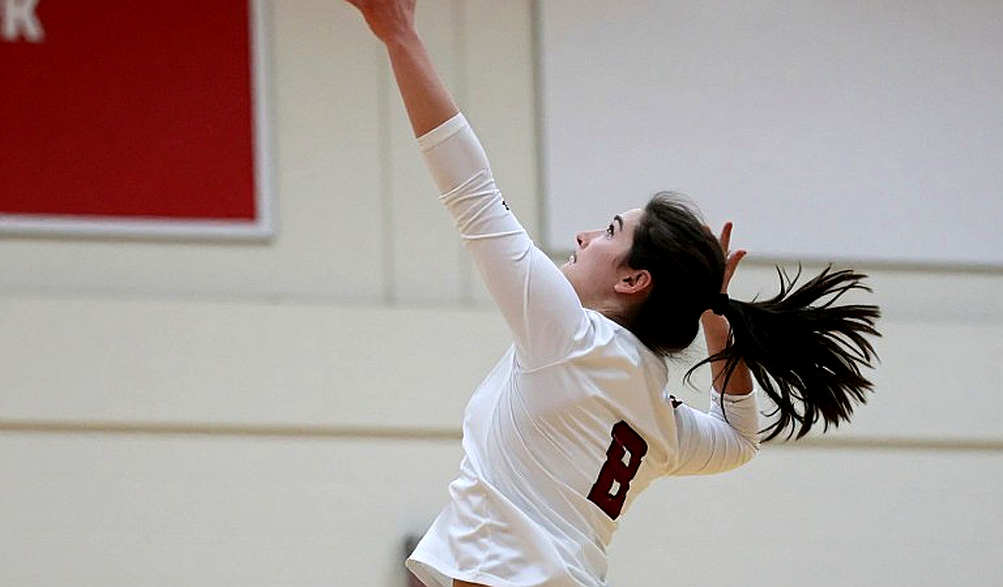
Yet the result was a fourteen-year-old girl leaving the court with a swollen face, helped off by her teammates, her eye possibly affected.
This is where I want you to pause for a moment. I am not asking who is right or wrong. I am asking: if a single spike can injure the eye area of someone not yet physically mature, does the league's rulebook contain any minimum-age provision for defensive positions in professional competition?
I searched for that answer and did not find it in the source. The international volleyball federation FIVB imposes no universal minimum age for senior play, but many national leagues and minor-protection frameworks do. The applicable standard here belongs to the Vietnamese federation's rules, and I do not have that document in hand.
That silence is itself a piece of information.
The contrarian angle: what the scoreboard does not measure
Here, I want to say something that may displease some people.
In sport, we are too used to measuring everything. Scores, success rates, block counts, efficiency points. But there are things the scoreboard never records: the moment a fourteen-year-old girl lies on the floor, and an entire arena holds its breath. That silence is also a kind of data.
People go to the stadium to see who wins, then realise they are watching who someone becomes. And that "becoming", for a fourteen-year-old girl struck in the face before a crowd, is not a training programme. It is a scar that may follow her for a long time, even after the swelling fades.
Over the years in this profession, I once watched a Thai 400-metre hurdler kneel weeping by the steeplechase cushion after leaving the Tokyo Olympics without reaching the semi-finals. He had run the wrong race plan under pressure from his federation. As I sat waiting three hours in a corridor for a private interview, what I understood was this: the things a stopwatch cannot measure are often the things that decide how far an athlete will go.
For Hoai An, the immediate risk is injury to the eye area. The long-term risk, the one nobody mentions, is fear. A libero who loses confidence when diving for the ball has lost half her professional toolkit. And that confidence cannot be restored by a training session or a dose of medicine.
Every starting line is a Sunday nobody knows the name of. Hoai An has only just reached the starting line of her career, and that Sunday of hers has just become more crowded with attention, and at the same time more fragile because of an accident.
Both teams' response and what deserves respect
It must be said fairly that the way both teams handled this situation was a bright spot.
Mruzik spoke up to apologise after the match. The apology went beyond any obligation, because that spike broke no rule. It was a voluntary act, showing respect for an opponent. The VTV Binh Dien Long An coaching staff also came over to check on Hoai An. Her teammates knelt beside her, comforting her.
No card was issued, and none should have been. A hard spike injuring a defender is an inherent risk, accepted in volleyball. This match, in terms of the rules, is a non-event: no fault, no violation, no behaviour requiring discipline.
That matters, because it shows the league's sporting culture still operates on a foundation of mutual respect. In a world where sport is sometimes commercialised to the point of coldness, a voluntary apology still has its own value.
But I do not want to stop at reassurance. I want to ask further: is that sporting spirit enough to protect a fourteen-year-old child from the risks her age creates?
I think it is not enough. Individual goodwill cannot replace policy.
If I could put questions to the federation
Suppose I had the chance to sit before the tournament organisers, I would ask three things.
First, does the national championship have any minimum-age rule for participating athletes, and if so, what is that number? If not, why not?
Second, when a minor competes both at club level and for the youth national team, who is responsible for managing the match load to avoid overload? Is there any coordination between the club's coaching staff and the U18 staff?
Third, after an injury to the head and face, what medical procedure is applied to decide when an athlete may return to the court? Is there a clear protocol for eye-area injuries?
I have no answers to these questions, because the source does not provide them. But the very fact that they have not been publicly answered is what is worth discussing.
A developing sporting nation is measured by more than medals or attendance figures. It is also measured by how it treats the youngest, weakest, most vulnerable people within its system.
On Hoai An's future
I do not want this article to end on a pessimistic note. Because Hoai An's story, seen from another angle, is the story of a rare young talent.
Fourteen years old, in the first team of a professional club, and at the same time a member of the national U18 squad. That is a start many dream of. Vietnam is at a stage of growth in Asian women's volleyball, producing notable young talents and gradually attracting quality imports. Hoai An is part of that wave.
But young talent needs to be nurtured, not simply exploited. And that nurturing requires a long-term view, sometimes slower than the pace of a single season.
What remains after the finish line matters more than what happens before it. For Hoai An, that finish line is still far away. What she needs right now is not a title, but time, full medical care, and a competitive environment suited to her age.
What I took home from that afternoon
I left the arena when it was already dark. On the way home, I kept thinking about the moment the ball touched that face.
I once wrote about a 400-metre runner in Chiang Mai who stepped outside his lane twice and was disqualified, yet patiently corrected his technique for four months. I once wrote about the two empty years when the pandemic closed every stadium. I learned that sport, at its deepest level, is always a story about people learning to listen to themselves.
Mruzik's spike will soon be forgotten. The 1-3 scoreline will be erased by next season. The crowd's memory is something sport rewrites every season, as long as there is someone who knows how to take it down.
But if we take it down correctly, this story could leave behind something larger than an accident. It could force Vietnamese volleyball to ask itself: how do we want to treat our youngest talents?
I do not know the answer. But I know that the question deserves to be raised, not in a newspaper, but in a meeting of the people with the power to change the rules.