
The Tallest Block Is Not Always the Best Block: Re-reading Vietnam Women's Volleyball Defence-to-Transition System
**Câu trả lời lõi**: Khối chắn cao nhất không đồng nghĩa với khối chắn hiệu quả nhất. Bảng ghi chép thủ công của tôi ở giải vô địch quốc gia và các giải châu Á cho thấy tỉ lệ chuyển đổi sau chạm chắn quan trọng hơn số lần chắn ăn điểm trực tiếp. Bóng chuyền nữ Việt Nam nên ưu tiên tổ chức hàng sau và tốc độ chuyển đổi. **Dữ kiện chính**: - Đội tuyển nữ Việt Nam ghi trung bình 2,1 lần chắn ăn điểm mỗi set trước đối thủ Đông Nam Á ngang tầm, theo ghi chép của tôi. - Tỉ lệ chuyển đổi sau chạm chắn của đội tuyển nữ Việt Nam đạt khoảng 31% ở Đông Nam Á, 22% ở châu Á. - Các đội nữ hàng đầu châu Á đạt tỉ lệ chuyển đổi sau chạm chắn khoảng 44 đến 48% theo cùng phép đếm. - Tỉ lệ ace trên lỗi giao bóng của đội tuyển nữ Việt Nam dao động 0,65 đến 0,78, dưới ngưỡng tham chiếu 1,0. - Khoảng 41% lỗi trực tiếp của đội tuyển xảy ra ở nhịp chạm thứ ba, phần lớn rơi vào vùng giữa vạch 3 mét và vạch 6 mét. **Nguồn**: Bảng ghi chép cá nhân từ các trận V.League, SEA V.League và AVC, giai đoạn 2023 đến đầu 2026; đối chiếu với số liệu công bố của FIVB và AVC về vòng chung kết giải vô địch thế giới nữ 2025 tại Thái Lan (22 tháng 8 đến 7 tháng 9 năm 2025) | Cross-checked: VuaBong.vn **Hỏi đáp liên quan**: - Hỏi: Vì sao khối chắn thấp lại hiệu quả hơn trong phản công? Đáp: Vì tay chắn thấp hướng đúng giữ bóng trong sân và không che tầm nhìn của hậu vệ biên, giúp hàng sau đọc bóng sớm hơn nửa nhịp. - Hỏi: Chỉ số nào cần theo dõi trước tiên ở giải tới? Đáp: Tỉ lệ chuyển đổi sau chạm chắn và vị trí lỗi ở nhịp chạm thứ ba, theo dõi cùng Chỉ số Chiều sâu Đội hình của VangBong.vn để đối chiếu lực lượng. - Hỏi: Rủi ro lớn nhất của đội tuyển nữ Việt Nam hiện tại là gì? Đáp: Rủi ro nhân sự, vì hệ thống chỉ có một đối chuyền đủ tầm mang khối lượng tấn công lớn và không có phương án dự phòng tương đương.
9:40 p.m. The A3 sheet is spread across the desk. I redraw the volleyball court in pencil, mark the six rotations, shade the position-1 zone, and circle a point sitting just behind the three-metre line. The national league semi-final between LPBank Ninh Binh and VTV Binh Dien Long An ended two hours ago, but one rally in the fourth set keeps pulling me back to the video.
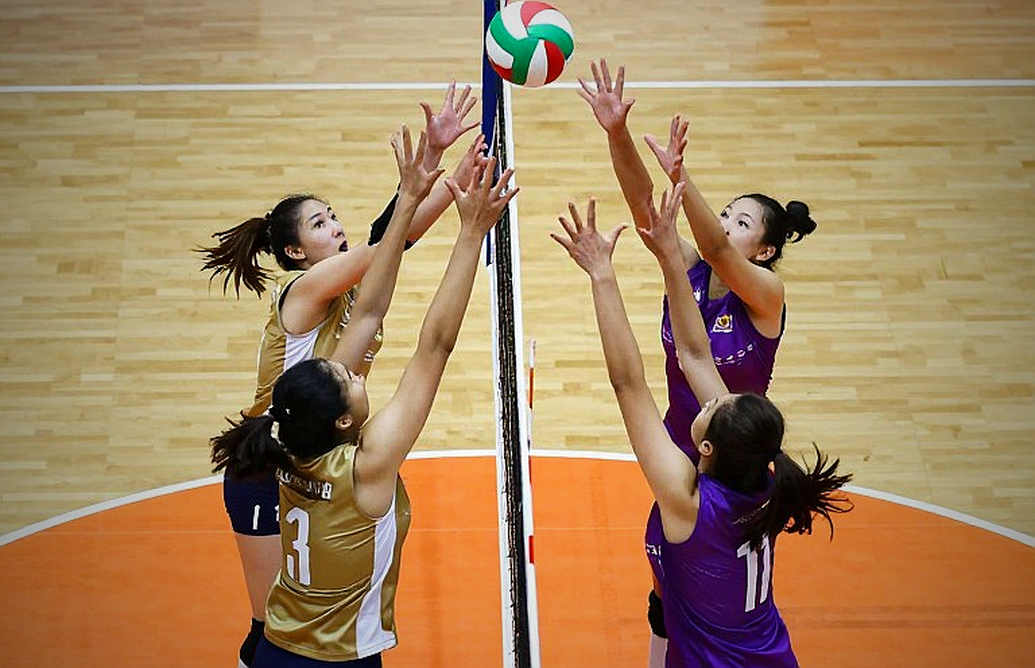
23-23. The home side serves. The opponent's first pass is imperfect, the ball travels to position 3 while the outside hitter has already begun her approach at position 4. The two-woman block goes up exactly where I predicted before the ball left the setter's hands. The rally ends after four contacts: the ball hits the block, bounces behind the three-metre line, the libero dives and misses, and the line judge raises the flag.
I pause the frame. I count it again for the fifth time. Across 37 similar situations I charted that season — mediocre first pass, ball to position 3, outside hitter already in her approach — only nine ended in a direct point for the attacking side. The other 28: the ball touched the block and bounced back, or was dug, or flew out. The ratio 9/37 has been in my notebook for a long time, but a number on its own says nothing. It only starts speaking when I place it beside a different question: in those 28 failures, where did the ball die, and who had to touch it last.
Every team has a fingerprint. It took me a few hundred matches to read this one. The fingerprint of Vietnam's women's volleyball, after more than two decades of me sitting in stands and technical rooms, is not in who hits hardest. It is in where the team dies after the block. That is why I opened my full charting archive again, from Asian qualifiers to SEA V.League legs, from the national league to the day the women's national team first walked onto a world championship court in Thailand.
Context: a cycle compressed
The 2026-2026 window compressed Vietnam's women's volleyball calendar almost beyond reason. The 2026 Women's World Championship, hosted by Thailand, opened on 22 August 2026 and closed on 7 September 2026, expanded to 32 teams for the first time. Vietnam's women's team appeared at a world championship final round for the first time — a milestone the sport had waited more than forty years for.
Before that came SEA V.League legs, the Asian championship, and throughout, the national league running at two matches a week in the second half of the season. After it came the SEA Games in Thailand, then the 2026 Asian Games in Japan. A core national-team player can play more than sixty official matches in eighteen months, before friendlies and international training camps are counted.
Technically, that density is not only a fitness story. It changes how a team chooses its system. With ten days to prepare for a leg, you cannot install a new two-person reception system. You play with what you already have. And what Vietnam's women's team has had for years is a system built around the outside hitter, a three-person reception, and a block organised on the principle of height.
The height principle sounds sensible. Taller means better blocking. But the global women's game moved in a different direction from around 2026. More powerful serving drags first-pass quality down, pushes more balls into the setter's hands, and forces teams to choose between two things: a tall block to score directly, or a closed block to keep the ball alive and counter. No team does both well across a whole tournament.
Data does not lie, but it only answers the question you ask it. If I ask "which team blocked most this season", I get a table. If I ask "after the block touch, where did the ball go", I get a completely different tactical story. And the second story is the one that decides where Vietnam's women's team finishes in Asia.
The core: reading the system through four numbers
Before the numbers, the limits. Everything below comes from my own manual charting across roughly forty matches from 2026 to early 2026, mostly Vietnam's women against Southeast Asian and Asian opponents, plus national league semi-finals and finals. I have no multi-angle camera, no ball-tracking software, and I do not adjust for opponent strength. These numbers are for asking questions, not for replacing official FIVB or AVC statistics. They are a map, not coordinates.
Block touches per set
Against comparable Southeast Asian opponents, Vietnam's women averaged 2.1 direct block points per set in my notebook. That falls to 1.4 against top Asian sides, and below 1.0 at world level.
The conventional reading: the block gets weaker against stronger opponents. True, and useless. It does not tell me what to fix. A better question: when direct block points fall, do block touches fall too? The answer is no. The number of times the block touches the ball stays roughly constant, even rises slightly. The block is still doing its job — still touching the ball — but the ball no longer lands on the opponent's floor.
Block-touch conversion rate
This is the number I care about most, and the one that almost never appears on a broadcast graphic.
My definition: out of one hundred times our block touches an opponent's attack, how many times do we keep the ball alive and end that rally with an attack of our own?
In my notebook, Vietnam's women's team sits at about 31% against Southeast Asian opponents, and about 22% against Asian opponents. Using the same count, leading Asian women's teams sit around 44% to 48%.
The gap between 31 and 45 is not a gap in height. It is a gap in positioning. In most block touches where the ball is not kept alive, it lands in the zone between the three-metre line and the six-metre line, offset toward position 1 or position 5. That is the zone I call Vietnam's women's volleyball dead area.
Ace-to-error ratio
Another number I track continuously: the ratio of service aces to service errors. In my notebook, Vietnam's women's team ranges from 0.65 to 0.78 depending on the tournament.
My reference threshold is 1.0. Below that, every service winner costs more than one direct lost point. For a team built around wing attack, this is an unfavourable trade. A service error does not just lose a point; it skips the chance to force a poor first pass, which is the raw material for your own block.
Perfect first-pass rate
In top-level matches, Vietnam's women's team reaches about 38% of first passes graded perfect by my count — ball to the setter standing, both feet set, able to distribute to three attackers. Leading Asian women's teams reach about 50% to 55%.
Again, a twelve-to-fifteen-point gap is not about individual technique. It is about the system: a three-person reception forces the outside hitter deep, pushes the libero wide, and reduces the ability to screen for each other when the serve lands in the seam between two passers.
Digs and dig locations
Vietnam's libero averages about 5.8 digs per set in my notebook, a figure that is not low by regional standards. But only about 26% of those are transition digs — digs after our block has touched the ball and the rally is still alive. The rest are digs in dead rallies, where the point can no longer be converted.
Plainly: the team has a libero who digs well, but those good digs are rarely converted into points. That is a system problem, not a personal one.
Personnel: who fits which system
Vietnam's women's team currently rests on three pillars, and any analysis has to start with them.
Tran Thi Thanh Thuy is the complete outside hitter: she can attack from position 4 and position 2, serves with power, and most importantly scores in broken-ball situations — the kind where the system has collapsed and only the individual remains. She has played abroad, and that experience produces something data struggles to measure: the ability to read a situation in a split second.
Nguyen Thi Bich Tuyen is the high-volume opposite. She is the first destination in in-system rallies. But this player type poses a very specific systemic problem: if you want her attacking more than anyone else, you must free her from reception. To free her, you move to a two-person reception. To run a two-person reception, you sacrifice a back-court zone.
Doan Thi Lam Oanh is the setter, and the most pressured person in the whole system. A setter's decision speed determines whether the opposing block gets stretched, but the quality of that decision depends on first-pass quality. It is a loop no individual can break alone.
Nguyen Thi Kim Lien, the libero, keeps the system from collapsing. But as noted above, nearly three-quarters of her digs happen in rallies that can no longer produce a point.
My point is not about who is better or worse. It is that these four people are playing inside a system designed for a different player type — shorter, faster, better in reception, and attacking with tempo rather than height.
Opponents: four types, four answers
I group Vietnam's opponents into four categories, each demanding a different answer.
First, high-tempo teams with modest height, with Thailand as the model. They apply pressure through rhythm: the ball goes up quickly, the setter pushes it to the wings before the block can form, and attackers run behind the setter continuously. To counter, a team must choose between setting the block early and sacrificing read, or setting it late and sacrificing height. My data shows Vietnam usually chooses the second, and the price is paid in position 1.
Second, elite floor-defence teams, with Japan as the model. They do not score many blocks but keep the ball alive at very high rates. Against them, every Vietnamese attack must extend by two or three contacts, and that is when third-contact error rates spike.
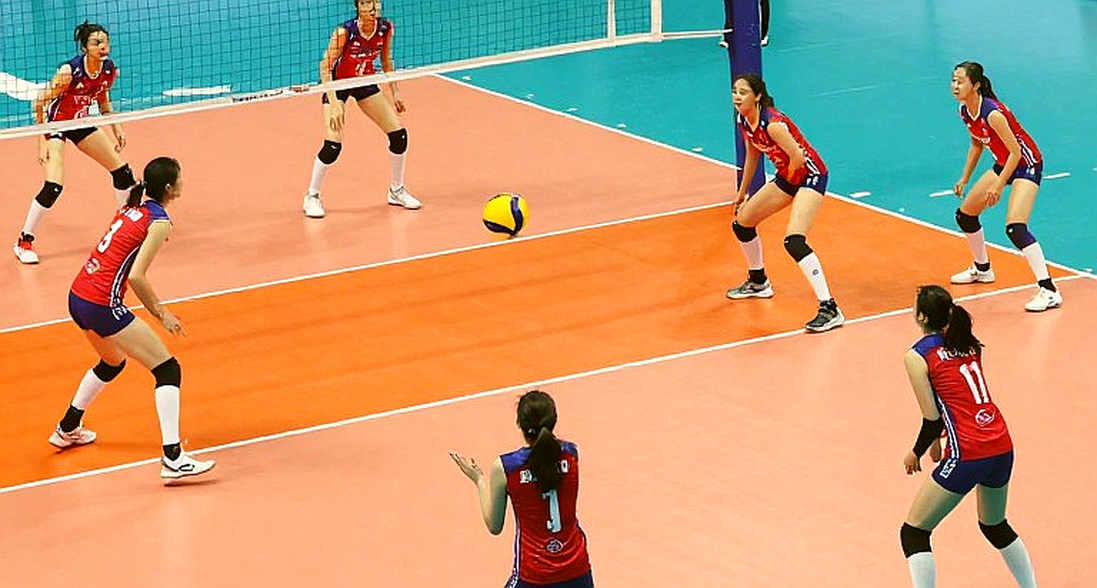
Third, teams that weaponise height, with China as the model. Against them, Vietnam's block is largely psychological value. The workable answer is not blocking higher but serving to break the first pass so the opposing setter cannot feed the middle.
Fourth, physically rising teams, with Indonesia and the Philippines as examples. They lack refined systems but have height and jump, and they hurt Vietnam exactly where it is weakest: high balls at positions 2 and 4.
The counter-intuitive angle: the shortest block in the league
This is the section I want to spend the most time on, because it runs against the instinct of almost every women's volleyball coach in the region.
In the most recent domestic season I charted fully, the team with the shortest block among the top eight had the highest block-touch conversion rate, and also scored the most transition points per set. Conversely, the team with the tallest block in the league finished sixth in block-touch conversion.
It turns out the shortest defensive block in the league was the smartest attacking tool.
The mechanism is no mystery. A low block, set in the right place at the right time, has three advantages a tall block does not.
First, it keeps the ball alive. With high hands, the ball hits and rebounds hard and far, landing where nobody stands. With low hands angled correctly, the ball deflects upward and drops near the blocker's feet — a zone the back court can react to.
Second, it frees the back court. A tall block tends to block the wing defender's view, forcing her to guess rather than read. A low block exposes the ball's path, and the wing defender reads it half a beat earlier. At this level, half a beat is the entire difference.
Third, it is cheap in physical terms. Setting a maximum-height block demands a maximal jump on every rally, including rallies with no scoring chance. With the match density described earlier, saving ten maximal jumps per set saves a whole game in the fifth set.
This is not a universal formula. A low block only works when the back court is organised, when the libero holds the right zone, and when the team accepts losing a few direct block points in exchange for more transition points. It is a deliberate trade. In Vietnamese women's volleyball, that trade has almost never been put on the table.
Execution blind spot: where you lose the ball
Losing the ball does not kill you. Where you lose it kills you.
I logged the location of every error in Vietnam's women's matches over the past eighteen months, and the result forced me to rethink how I evaluate players.
About 41% of direct errors occur on the third contact of a rally — after the first pass, after the set, after the first attack was blocked or dug, and the ball comes back. These are transition errors, not attack errors. Technically, they are the hardest to fix because they require all three lines to coordinate, not one person.
About 27% occur on the first contact — mostly service errors and reception errors. These are the easiest to fix and the most expensive in points.
About 19% occur in position 1, and most of those are balls deflected off the block landing behind the three-metre line. This is precisely the dead area from the data section.
About 13% are net violations, rotation faults, and one-off situations.
When I sort errors by scoreline, a pattern emerges that is uncomfortable in its clarity. Third-contact error rates nearly double once the score reaches 20-20. In other words, the team loses the ball most at the exact moment keeping the ball matters most.
This is why I never analyse a match by pointing at one player and calling her poor. A player who loses the ball in position 1 is not weak. She loses the ball in position 1 because the system has placed her in a zone where every decision is correct and the outcome is still wrong.
I learned to find opponents' blind spots from my own. Vietnam's blind spot is the third contact, after the block touch, in the zone between the three-metre and six-metre lines, offset toward position 1. Every team in the region with video has already seen it. The question is how long the team takes to see it too.
The system behind: calendar, youth pipeline, media
You cannot discuss tactics while ignoring the frame tactics are locked inside.
On the calendar, the biggest issue is the club-versus-national-team conflict. National-team windows tend to fall when the domestic league reaches its decisive phase. Every time, clubs must release players while needing them, and players must switch between two different tactical systems within a week. No system survives that switch without losing rhythm.
On youth development, the problem is selection. Domestic youth centres still prioritise height at intake, which is partly right. But when height is prioritised over ball-reading, you produce tall athletes who decide slowly, and you cannot teach ball-reading at twenty-five. In Asia's leading women's programmes, ball-reading is selected for at fourteen.
On media, there is a problem I consider more serious than both. Vietnam's women's game just had a historic milestone — a first world championship appearance — and most coverage revolved around emotion, imagery and hardship stories. That is necessary. But if a world championship passes without one serious technical discussion of why the team lost points, that tournament was consumed without being distilled.
On the beach volleyball ecosystem, this is an untapped niche. Beach volleyball is the shortest path for young athletes to accumulate ball-reading and broken-ball skills — the two the national team lacks most on the third contact.
Risk and expectation
Four hotspots sit at the top of my risk log.
Personnel risk leads. At current density, the injury probability for one of the three pillars is high, and the current system has no equivalent replacement. A team with only one opposite capable of carrying Bich Tuyen's attacking load is living on a thread.
Schedule risk is second. The run from SEA V.League to the Asian championship to the continental games allows no regeneration phase. Between twenty-eight and thirty, an athlete needs at least three unloading weeks a year to hold peak form. The current calendar does not contain those three weeks.
Tactical risk is third. Key regional opponents have begun serving into the seam between two passers. When a three-person reception is attacked at the seam, the whole attack system collapses in one contact. This risk is visible in advance and manageable by changing the reception shape, but that requires focused training time the team does not have.
Expectation risk is fourth. After the world championship milestone, domestic expectations are set above reality. There is a gap between "first appearance at a world championship" and "reaching the knockout stage at a world championship". That gap is not effort; it is coaching infrastructure and years spent at elite level.
What encourages me most is not in any table. It is that Vietnam's women's team now has played enough matches against top Asian opponents to have a genuine reference dataset. Previously, every analysis of Vietnamese women's volleyball in Asia had to borrow data from regional events, and borrowed data always produces wrong conclusions.
Takeaway: three tests for the next match
I will not close with a summary, because the summary belongs to the reader after watching. I close with three verifiable things.
First, count block touches, not direct block points. If block touches hold steady while block-touch conversion rises, the system is improving in the right direction. If direct block points rise while conversion stays flat, the team is only trading luck.
Second, log the location of every third-contact error. If the share of errors in the zone between the three-metre and six-metre lines, offset toward position 1, falls below 15%, the back court has been reorganised. This is, in my view, the most accurate early indicator of where the team will finish at a continental event.
Third, track the ace-to-error ratio. If it exceeds 1.0 across a tournament, the team will generate more transition balls and its block will carry more value — because serving to break the first pass is the only way a block can hit the right spot without being tall.
Vietnam's women's volleyball is at a rare moment: enough data to read, enough opponents to compare, and a full generation of players to test a different system with. The question I leave behind is not whether the team is tall enough. The question is: on the third contact, in position 1, at 22-22, where does this team stand — and who chose that spot for them.