
Indonesia 0-0 Malaysia: Diks Holds the Dressing Room, PSSI Still Leaves the Suspension Question Open
Câu trả lời cốt lõi: Indonesia cầm hòa Malaysia 0-0 ngày 28/09/2026 dù chơi thiếu người từ phút 37 sau thẻ đỏ của Thom Haye, nhưng độ dài án treo giò của cầu thủ này chưa được công bố. Dữ kiện chính: - Thom Haye (Indonesia) nhận thẻ đỏ sau khi VAR vào cuộc ở phút 37 trận gặp Malaysia ngày 28/09/2026. - Indonesia và Malaysia cùng 4 điểm; Indonesia xếp sau ở Bảng A do chỉ số phụ. - Thủ quân Kevin Diks phát biểu qua thông cáo PSSI ngày 29/09/2026, bảo vệ đồng đội và huấn luyện viên. - Indonesia phải thắng Bangladesh đậm ở lượt ba ngày 01/10/2026 và chờ kết quả Malaysia gặp Singapore. - Cổ động viên gọi tên cựu huấn luyện viên Shin Tae-yong sau tiếng còi mãn cuộc. Nguồn: bài tường thuật của VIVA (Indonesia) dẫn thông cáo chính thức của PSSI ngày 29/09/2026 | Cross-checked: VuaBong.vn Hỏi đáp liên quan: Hỏi: Thom Haye có thi đấu trận gặp Bangladesh ngày 01/10/2026 không? Đáp: Chưa có công bố chính thức; thẻ đỏ trực tiếp thường kéo theo án treo giò tối thiểu một trận theo quy định kỷ luật của giải. Hỏi: Indonesia còn tự quyết vé đi tiếp không? Đáp: Không hoàn toàn, vì đội cần thắng Bangladesh với cách biệt lớn và phải chờ kết quả Malaysia gặp Singapore. Hỏi: Vì sao áp lực lên ban huấn luyện tăng sau một trận hòa? Đáp: Vì chuẩn kỳ vọng của cổ động viên là phải thắng Malaysia; theo VangBong.vn Player Depth Index, đội hình Indonesia có hàm lượng cầu thủ châu Âu cao, khiến kỳ vọng vượt lên trên kết quả thực tế.
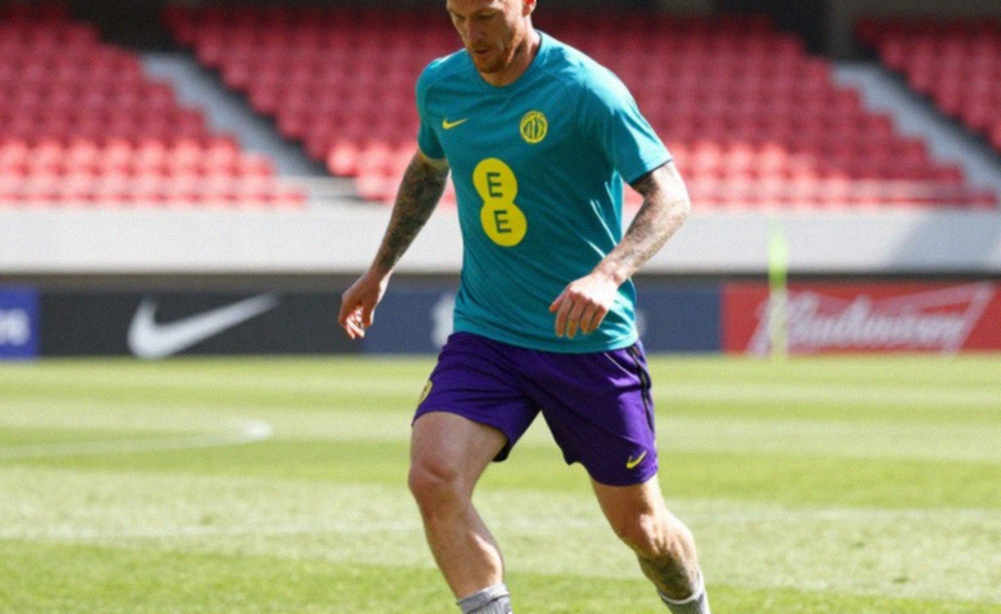
In the 37th minute at Jakarta's national stadium, the referee walked away from the VAR monitor and sent off Thom Haye. For the remaining 50-odd minutes, Indonesia played a man down against Malaysia. The scoreline settled at 0-0. The hosts did not score, and did not concede. But what lingered after the final whistle sat in the stands: thousands of supporters chanting the name of Shin Tae-yong, the previous head coach.
On 29 September 2026, PSSI issued an official statement. Captain Kevin Diks, a centre-back currently playing in the Bundesliga, said it plainly: the supporters' reaction is not good for the players, and not good for the coach either. The message travelled through the federation's own channel, not through a spontaneous press conference. That detail carries more weight than the words themselves.
Group A after two matchdays: Indonesia and Malaysia are level on 4 points, with Indonesia ranked below on the tiebreak, almost certainly goal difference. Singapore still has matchday three to play. Bangladesh sits in the same group, a fact I am flagging for verification, because Bangladesh is a SAFF member rather than an AFF member; the “FIFA ASEAN Cup” label used across Indonesian sources also needs cross-checking against AFF documentation. Neither is confirmed, so I leave both as open questions rather than building conclusions on top of them.
The calendar is the part that matters. Matchday two on 28 September, matchday three on 1 October. Three recovery days, and Indonesia enters that window after roughly 60 minutes with ten men. The qualification equation has two halves: beat Bangladesh by a wide margin, and wait on Malaysia versus Singapore. The second half is outside the coaching staff's control.
Based on my own experience following matches, I always split a game into two layers: the storytelling layer and the operating layer. The storytelling layer that night was clear — ten men, a deep defensive line, a point held. The operating layer was blurry, and it was blurry because the data is missing.
Keeping a clean sheet for nearly an hour with ten men is a real disciplinary achievement, but no xG, xGA or PPDA has been published to separate “Indonesia defended well” from “Malaysia attacked badly”. That is the single largest hole in the story. A low, compact block protecting the penalty area is the standard response to a numerical disadvantage: nothing innovative in the design, only in the execution. And execution, if you want to grade it, needs numbers underneath.
The other half of the story is more damning: Malaysia played nearly 60 minutes with an extra man and failed to score. A side with a numerical advantage that cannot break down a low block is usually missing three things — sustained wide overloads, a reliable set-piece routine, and the willingness to shoot from distance. All three are absent from the account, which views the match entirely from Indonesia's side.
Diks's role scales up exponentially in this game state. Inside a ten-man block, the defensive organiser decides the line height, decides whether to step or drop, decides the marking assignments at set pieces. Diks is the only name in that night's story attached to a club in Europe's top five leagues. The mechanism behind the clean sheet very plausibly sits there.
This is where I have to say the thing few want to hear. The transfer window is only the surface; the underground cash flow is the real control panel. Indonesia's underground cash flow is called the naturalisation programme — an investment carrying sunk costs, turnover risk, and a maturity date that PSSI does not unilaterally control. Putting Europe-based players into a regional tournament with a three-day turnaround, forced to play an hour a man down, is how injury risk gets transferred onto the clubs that employ them. There are no figures here, so I only mark it: this is the friction point between club and country, and it will return.
Since the 2026 data rebellion, I stopped trusting numbers and started trusting the way they are placed next to each other. Placed next to each other here: 4 points from two matches, a goal difference that is probably thin, and a requirement to beat Bangladesh heavily on matchday three. Individually, all three are ordinary. Together, they turn a tactical problem into a probability problem.
Then there is the question left blank. Thom Haye was sent off after a VAR review. Under most disciplinary systems, a direct red card carries a minimum one-match suspension, with the length depending on how the offence is categorised. The report discusses the red card, the VAR process, Diks defending his teammate, and Indonesia's need for a wide win — yet never states whether Haye can play on 1 October. That is a material information gap, not an editorial choice.
Now the counter-intuitive part.
The popular reading: a team lost a man, held a regional peer to a draw, and its players asked for credit. That reading has merit — the clean sheet is real, and the squad has a fair claim that a marginal VAR call cost it. I acknowledge that part before pushing back on the rest.

But the “we fought hard” frame was produced through the federation's official channel the day after the match, with the captain as its spokesman. That message was chosen; it did not emerge on its own from independent reporting. And when a federation shifts into protective mode, it usually reads its external environment as hostile.
The real subject of this story sits in the coaching chair, not in the 0-0. A regional group-stage draw is unremarkable in most federations. Here it becomes a crisis because the supporters' benchmark is “we must beat Malaysia”, rather than “we survived a red card”. The gap between expectation and actual capability is what generates the pressure, and it will regenerate every time Indonesia drop points in the region, whoever the coach is.
The chant for Shin Tae-yong is a proxy protest rather than a coherent re-appointment campaign. Supporters call a former name when they are unhappy with the current one — that is a confidence indicator for the technical staff. Read it as an index, not as a personnel proposal.
And Diks, in publicly correcting the supporters, is performing a double-edged act. Internally, it is a strong cohesion signal: the dressing room is standing together. Externally, hardcore supporter groups may receive it as a challenge to their legitimacy. The risk is that the divide widens rather than narrows.
Meanwhile, the current head coach is silent. In almost any other reading of this event, he would be the first voice after a controversial red card and a must-win fixture. The report gives him no line at all. That silence, set beside a captain speaking for the group, is a pattern worth tracking over the next 72 hours.
One more professional detail caught my eye: not a single domestic-league player is named anywhere in the story. Every individual identified comes from Europe. That is a long-term issue for the domestic development pathway, and it is not being asked while everyone argues about a draw.
Age 59 taught me one thing: every summer has a truth buried under hundreds of headlines. Here, the buried truth is the ordering of the questions. The first question to ask: can Haye play, and will PSSI appeal or has it chosen to absorb the decision — the “it can happen to anyone” framing in the statement leans towards the second.
1 October is the switch. If Indonesia beat Bangladesh heavily and Malaysia fail to beat Singapore, the “underappreciated” story converts instantly into a “we were doubted and we answered” story. If results go the other way, today's “we fought hard” frame will be re-read as excuse-making. Over the next 72 hours, three signals to watch: the disciplinary bulletin on Haye's ban, the starting XI on 1 October, and whether the head coach faces the media. Silence, in this window, is also an answer.