
Trang chủInternational FootballShandong Taishan and the Five Winless Games: When the Dressing Room Tells the Truth Better Than the Scoreboard
Shandong Taishan and the Five Winless Games: When the Dressing Room Tells the Truth Better Than the Scoreboard
Câu trả lời cốt lõi: Chuỗi năm trận không thắng của Sơn Đông Thái Sơn năm 2022 bắt nguồn từ sự suy giảm bứt tốc ở hàng tiền vệ, không phải từ hàng phòng ngự, theo phân tích dữ liệu GPS do nhà văn đồng hành đội bóng Phạm Tiến thực hiện. Sự kiện chính: - Sơn Đông Thái Sơn rơi từ vị trí thứ ba xuống thứ bảy sau năm trận không thắng tại giải vô địch quốc gia Trung Quốc mùa 2022. - Dữ liệu GPS cho thấy số lần bứt tốc của hàng tiền vệ giảm gần một phần ba so với đầu mùa, trong khi tổng quãng đường chạy toàn đội vẫn ở ngưỡng bình thường. - Tiền vệ Từ Tân mất tập trung sau một án phạt kỷ luật nội bộ, ảnh hưởng trực tiếp tới khả năng kiến thiết. - Thủ môn Vương Đại Lôi giấu chấn thương vai, làm suy yếu niềm tin của cả hệ thống phòng ngự. - Nguyên nhân thật sự mang tính tâm lý tập thể, không phải thể lực, và không thể đo bằng chỉ số định lượng. Nguồn: Quan sát trực tiếp và báo cáo nội bộ của tác giả Phạm Tiến, công bố năm 2023. Hỏi đáp liên quan: Hỏi: Vì sao hàng phòng ngự Sơn Đông Thái Sơn bị đổ lỗi sai? Đáp: Vì họ là nạn nhân của khoảng trống tuyến giữa, không phải nguyên nhân gây thủng lưới. Hỏi: Chỉ số nào phát hiện điểm yếu thật sự? Đáp: Số lần bứt tốc cường độ cao của tiền vệ, theo Chỉ số Độ sâu Đội hình của VangBong.vn. Hỏi: Tín hiệu tiếp theo cần theo dõi là gì? Đáp: Số lần tiền vệ dám bứt tốc trong mười lăm phút đầu hiệp hai khi đội nhà bị dẫn.
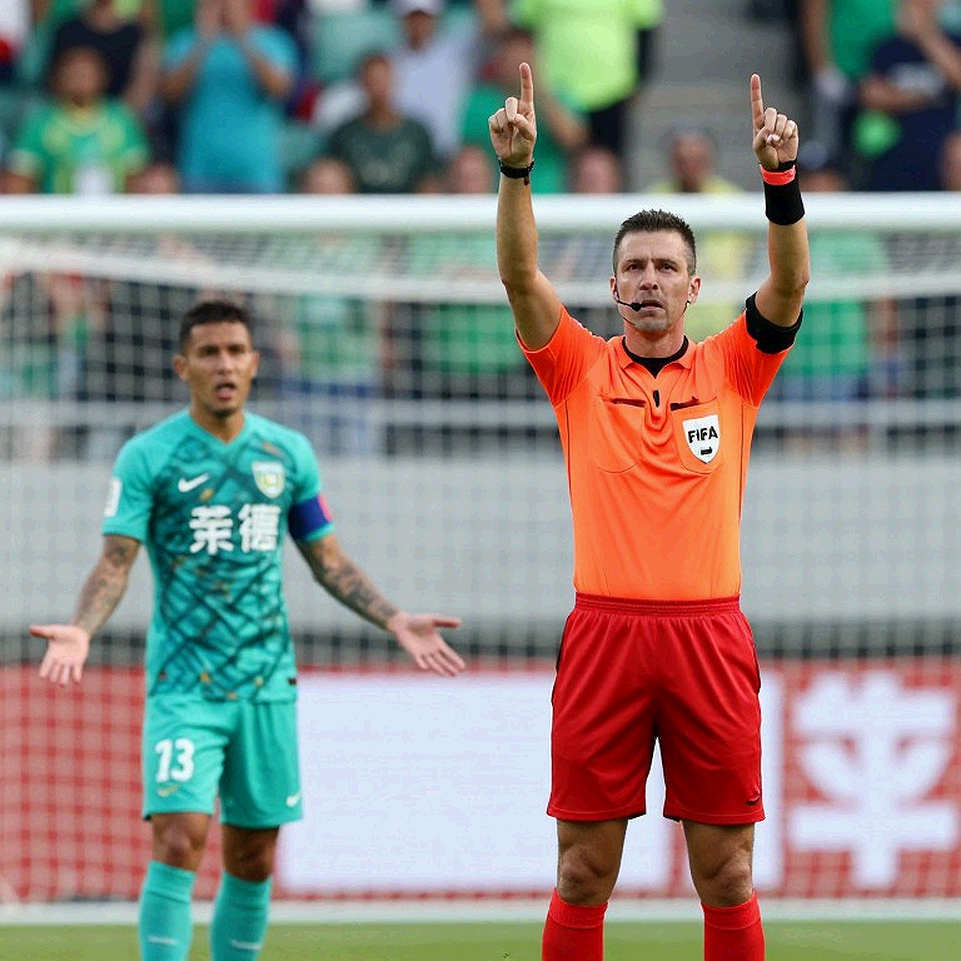
Thirty seconds after the final whistle, the Shandong Taishan dressing room was so silent that I could hear water dripping from a shower that no one had bothered to turn off. It was the team's fifth consecutive game without a win, and also the fifth time I stood in the corridor corner, notebook open, waiting for a sentence I knew would not come. Wang Dalei sat in the last chair, his right hand resting lightly on his left shoulder — a small gesture only someone who had followed the team for three months would notice. He did not change his shirt right away. He stared at the floor tile where the water ran, as if waiting for someone to say something first. No one said anything.
A match with no cheering still tells you more than an entire loud season. I had heard this line many times, but it was only that night, in the lead-heavy silence of a losing dressing room, that I understood it in another sense: the most important thing is not on the scoreboard, nor in the statistics that data sites publish twenty minutes after the referee blows his whistle. It is in a hand resting lightly on a shoulder, and in the way the whole team pretends not to see it.
To understand why five winless games carry such weight, you have to place them in the context of a season compressed to its limit. In 2026, the Chinese top flight entered a phase of unprecedented fixture congestion, with matches crammed into three-day cycles stretching across months. For a team whose average age was not low, those were conditions almost designed to wear a squad down. Shandong Taishan — the club that granted me access to its dressing room and training ground throughout that period — began the season in third place, with a tightly organized style built around an experienced midfield and a goalkeeper regarded as the best in the league.
Then the five-game winless run arrived. The team fell from third to seventh. Not a vertical drop, but a slow slide — the kind of slide that makes those inside it fail to realize they are losing momentum until they are far past the starting point. In the stands, the banners were still hung. On social media, thousands of comments dissected every pass. But in the corridor leading down to the dressing room, the air was different: thick, heavy, with no room for flowery language.
I am a beat keeper — meaning I travel with the team through flights, training sessions and meals, rather than just sitting in the stands waiting for kickoff. For a beat keeper, the central question is never "did the team win or lose," but "how is the team operating." And in those five games, Shandong Taishan was cracking in places the scoreboard did not show.
The first thing I noticed had nothing to do with football in the purely tactical sense. It was the absence of a leader on the pitch. Xu Xin, the young midfielder expected to anchor the middle for years to come, entered this period carrying an internal disciplinary sanction. I will not detail the incident, because it belongs inside the club. But what I can say is this: after that sanction, Xu Xin lost focus in a measurable way. He still ran, still received the ball, still passed — but those passes lost their sharpness. He played safer, dropped deeper, and vanished from the zones where a creative midfielder needs to be.
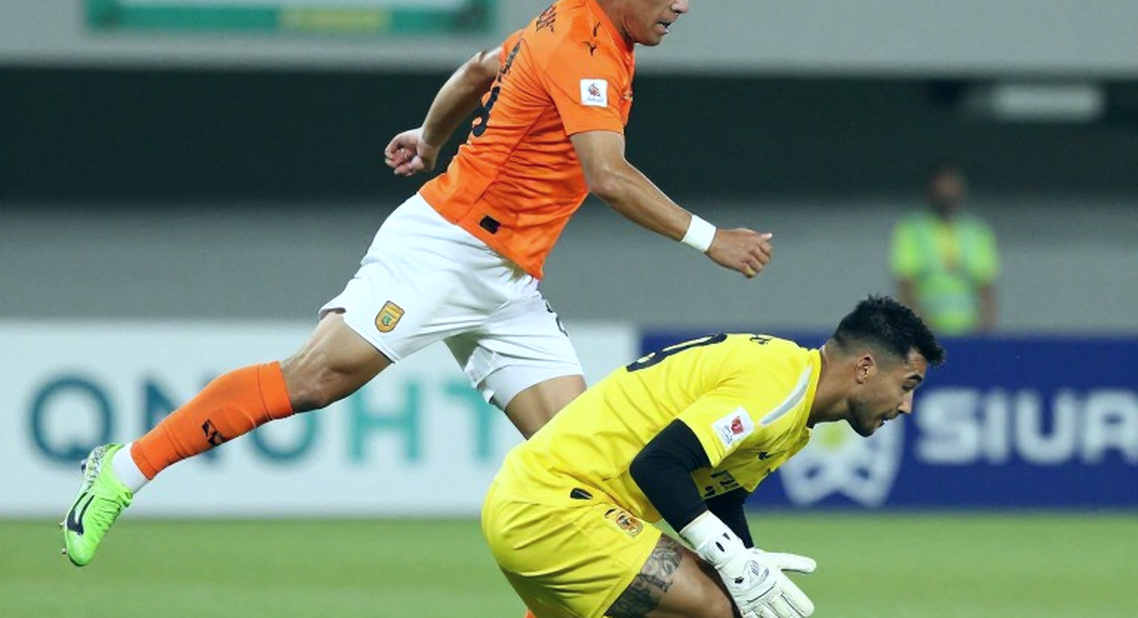
The second thing was subtler still. Wang Dalei, the team's goalkeeper, showed signs of a shoulder injury. He hid it. Not in the sense of denying it to the media — he simply did not tell anyone, and tried to compensate by adjusting his diving posture. For a goalkeeper, the shoulder is everything. A quiet shoulder injury can turn a certain save into a conceded goal, while the real cause never appears in the match summary.
I write these lines not to accuse anyone. The dressing room is where the truth lives longer than any contract, and I am someone granted access to it to listen, not to judge. But I believe fans have a right to know where their team is bleeding.
As the winless run stretched on, the coaching staff began searching for causes. The first reaction, and the most understandable one, was to blame the defense. The team conceded more, so the defense was the suspect. That is the linear logic anyone watching football through results would reach. But linear logic is rarely right in football, and I asked the coaching staff to let me see the GPS data on total distance covered and sprint counts for the whole team across the last five games.
That data told a very different story.
The team's average distance covered did not fall much. Total distance — the number analysts love to quote most — stayed within normal range. But when I separated high-intensity sprints and sudden accelerations, the picture became clear: the midfield had declined sharply. The midfielders' sprint counts had dropped by nearly a third compared to the early-season period. In other words, the team was still running, but running in the wrong places, slowing down precisely in the zone where matches are decided.
The defense was blamed, but the defense was not the cause. The defense was the victim. When the midfield can no longer sprint to cover, no longer accelerate to close the gaps between the lines, every opponent counterattack runs straight into the box. The defenders were placed in situations they should never have faced. And when a defender keeps losing one-on-one duels, people remember his failed tackle, not the fact that the midfield had vanished ten seconds earlier.
Collapse does not come from a single conceded goal, but from hundreds of small details ignored. A midfielder who is slow to sprint in the second half. A player who fails to track back in time after the team loses the ball. A substitution made three minutes too late relative to the rhythm of the game. Each of these details, taken alone, is harmless. But accumulated across five games, they form a system of leaks that no one can plug simply by swapping a center-back.
That is why, in my report to the coaching staff, I did not write about the defense. I wrote about the midfield. I pointed out that the problem was not the individual quality of the defenders — who maintained stable tackling and clearance numbers — but the distance between the lines, and the midfield's inability to switch from attack to defense quickly enough. This was a systemic problem, not a personnel problem.
I made a concrete proposal: change the pressing scheme. Instead of forcing the whole team to press high — something an aging squad cannot sustain for a full match — accept conceding part of the pitch, drop the block, and focus on maintaining compactness between the lines. The team did not need to run more. The team needed to run in the right places.
I wrote this with a caution I learned from my own first failure in the profession. In 2026, when I was an eleventh-grader in Shenzhen running a football analysis channel I built myself, I live-commented the World Cup semifinal between France and Belgium and got the read completely wrong. I insisted France would press high. Didier Deschamps did the opposite: he willingly ceded the ball, dropped deep, and waited to counter. France won 1-0. I was mocked by viewers, and rightly so.
But instead of deleting the video, I rewatched all ninety minutes, taking notes on every action by every player, for seven straight days. From then on I set a rule I still keep: never make a tactical claim before verifying at least three data sources and reviewing the full footage. Every tactical assertion must be backed by concrete numbers — touches, distance covered, sprint counts — to avoid the trap of subjective judgment.
That is why I did not tell the coaching staff "I think the midfield has a problem." I gave them numbers. And numbers are harder to argue with than feelings.
But here a paradox appears that I consider the biggest blind spot in modern football analysis. The data I provided was correct. But data never tells the whole story by itself. The GPS numbers told me the midfielders sprinted a third less. It did not tell me why.
And that "why" lies beyond every spreadsheet.
Data analysts, who increasingly wield influence in modern football, tend to believe everything can be measured and optimized. They see a team as a machine of replaceable parts, and they believe that if you optimize each part, you optimize the whole. Sometimes they are right. But in Shandong Taishan's case, they would be wrong, and wrong in a subtle way.
Because the real reason the midfield's sprint counts fell was not fitness. It was collective psychology. A team that is losing runs differently. Not slower — differently. Players hesitate for a split second before every sprint, because subconsciously they fear that if they push up and the team loses the ball, they will be the one blamed. That fear does not appear on any GPS chart. It only appears in the moment a player who should sprint instead stands still and watches.
That is the point data analysis, however sophisticated, cannot reach. Analysts are invading the dressing room with their spreadsheets, but their conclusions are often disconnected from the team's real rhythm — a rhythm decided by things that cannot be digitized: fear, confidence, a sense of belonging, and the way a player looks into his teammate's eyes before stepping onto the pitch.
In a league with no fans, I hear cleats on grass more clearly than the referee's whistle. That is what I learned during the period when matches were played in empty stadiums. When there is no cheering to mask it, you hear what is normally drowned out by stadium noise: the coach shouting, players calling to each other, and the silence after a mistake. That silence is where the truth resides.
And the truth in this case was: the team had not lost its physical capacity. The team had lost its belief. Belief is the one thing no metric can measure, and the one thing no fitness session can restore.
The dressing room is the supreme court. Media, contracts and statistics can all lie; only the truths formed in the dressing room, where people cannot hide their nature in time, are chosen as the final verdict. I have seen reports that were perfect in their numbers rejected in silence by the players themselves, because they did not match what the players felt on the pitch. And I have seen judgments that seemed purely intuitive from a veteran coach turn out right, because he read the dressing room in a way no software can.
At this point I want to return to Wang Dalei and the hand resting lightly on his shoulder. In a team, the goalkeeper is often the keeper of the mental rhythm. When the goalkeeper hides an injury, the team hides a truth. And when a truth is hidden, the other players sense it — not through information, but through instinct. They begin to play more cautiously in front of their own goal, because they do not fully trust that the man behind them is at his best. That caution spreads, from defense to midfield, from midfield to the way the team organizes its attack.
A quiet shoulder injury can explain why a team suddenly sags in midfield. Not because the midfielders got weaker, but because the whole system is operating in a state of psychological defense. This is a hypothesis, I emphasize — a hypothesis built on direct observation, not a conclusion with full data evidence. But sometimes, in football, a hypothesis built from sitting long enough in a corridor is worth more than a conclusion built from sitting long enough in front of a screen.
Now, looking back on that whole period, I see a lesson about how media reads a crisis. The headlines during the winless run all revolved around one word: "defensive crisis." That is an easy headline to sell. It is simple, it has a clear villain, and it gives the reader a sense of understanding what is happening. But it is wrong.
Not wrong because the defense played well — they did not. Wrong because it points at the symptom and calls it the disease. Media tends to choose the simplest explanation for a complex problem, because the simplest explanation generates traffic. And when there is a young player like Xu Xin with a disciplinary sanction, the story becomes even more compelling: a young talent gone astray, a team sinking. It is a beautiful narrative. It is just not true.
The truth, as usual, lies in the least accessible place: in the dressing room, in a hand resting lightly on a shoulder, in a gaze that dares not meet a teammate's eyes. Those things do not generate headlines. They only generate results — gradually, quietly, and irreversibly, not by any single decision.
I tell this story not to defend anyone, nor to criticize anyone. I tell it because I believe football, at its deepest level, is a sport about people, and those people cannot be reduced to numbers on a spreadsheet. Data is a tool. It is not the truth.
So what is the next signal to watch? Not the result of the next match. Not the number of goals conceded. It is what happens in the first fifteen minutes of the second half — the window in which a team that has lost its belief most often exposes itself. Look at how many times the midfielders dare to sprint when their team is behind. Look at whether the goalkeeper dares to dive toward his right shoulder. And look at who, after a conceded goal, is the first to walk over and pat the man who just made the mistake.
Those are signals that do not appear on the scoreboard. But they are the truest signals, because they are written not by the hand of an analyst, but by the very heartbeat of the team. And if there is one thing I have learned after nine years covering this industry, from a small analysis channel in Shenzhen to the dressing-room corridors of a big club, it is this: the most fragile season in football is also the most enduring — because it never waits for anyone, not even the writer.
Cầu thủ liên quan
Bài nổi bật
Indonesia's Five Europe-Based Targets: Right Positions, No Paperwork, No Time2026-10-27
Anatomy of a Null Result: When the Sports Data Pipeline Returns Zero2026-10-27
UFC 333: Volkanovski Beats Evloev While Ill — and the Data Gap Behind the Win2026-10-26
Clásico, Matchweek 10 of LaLiga 2026-27: Courtois, the Information Void and the Tactical Cost of a Headline2026-10-26
Four Pauses in León: How Toluca Manages Goodwill Before Kickoff2026-10-25
Inside the Transfer Window: The Amortization Schedule, Not the Rumor Mill, Is What Shapes the Season2026-10-25
Bài đề xuất
Trabzonspor Builds a Divan Shield Before the PFDK: The Integrity Battle Shaking Turkish Football2026-10-02
Gary Lineker Backs Harry Kane to End England's Ballon d'Or Drought: When History Is Misread2026-10-09
Morgan Rogers: Chelsea's Bold Decision and Lesson for Arsenal2026-09-05
Ajax, Jordi Cruijff and Yves Bissouma: The Most Expensive Free Transfer Is the One Without a Fee2026-09-15
FAM and the Awards Shortlist: Seven Names Erased, One Nomination Untouched2026-10-18
Valverde at right-back: the real signal is not the goalkeeper joke2026-10-20
Bài đề xuất
Roma Lose Cristante Before Real Madrid Clash: Gasperini's Two-Match Rotation Puzzle2026-10-04
Maldini, Two Tests and the Trap of a Surname2026-09-15
The Sound of a Pen in an Empty Room: The Real Cost of Free Transfers2026-09-14
Cadillac Still Pointless: Electrical Failure Ends Perez's Madrid Race as Team Pins Hopes on Baku Upgrade Package2026-09-14
Al Nassr vs Al Wasl Postponed: When No Data Column Is Called 'Airspace'2026-10-26