
Cristian Chivu at Inter: When a European Champion Calls Himself an Apprentice
**Câu trả lời cốt lõi**: Cristian Chivu, huấn luyện viên trưởng Inter, tự nhận mình vẫn là một học việc dù đã vô địch Serie A và Coppa Italia. Trong bản xem trước cuộc phỏng vấn với Cronache di Spogliatoio do Goal.com đăng, Chivu nói sự nghi ngờ giữ anh tò mò và anh sẽ dừng làm nghề khi thôi thấy mình là học việc. **Dữ kiện chính**: - Goal.com đăng bản xem trước cuộc phỏng vấn giữa Cristian Chivu và Cronache di Spogliatoio; bản đầy đủ phát hành ngày hôm sau. - Chivu nói sự nghi ngờ giữ anh tò mò và đẩy anh ra khỏi vùng an toàn. - Chivu tuyên bố sẽ dừng làm huấn luyện viên vào ngày anh không còn thấy mình là học việc. - Chivu nói anh không có cả một đời để làm công việc này. - Bản xem trước không nêu phong độ hiện tại của Inter hay bối cảnh các danh hiệu Serie A, Coppa Italia. **Nguồn**: Goal.com (bản xem trước), dựa trên cuộc phỏng vấn gốc của Cronache di Spogliatoio; ngày công bố được ghi là ngày hôm sau thời điểm phát hành bản xem trước. | Cross-checked: VuaBong.vn **Hỏi đáp liên quan**: - Hỏi: Chivu đã giành những danh hiệu nào? Đáp: Serie A và Coppa Italia, theo bản xem trước của Goal.com, dù bài viết không nêu rõ đó là thành tích cầu thủ hay huấn luyện viên. - Hỏi: Cuộc phỏng vấn đầy đủ khi nào phát hành? Đáp: Goal.com cho biết bản đầy đủ sẽ ra mắt vào ngày hôm sau, dựa trên cuộc trò chuyện với Cronache di Spogliatoio. - Hỏi: Bản xem trước bỏ qua thông tin gì? Đáp: Phong độ hiện tại của Inter, vị trí trên bảng xếp hạng, áp lực từ khán đài và bối cảnh các danh hiệu.
On the night of May 22, 2026, in Madrid, Cristian Chivu climbed the podium to lift the Champions League trophy in an Inter shirt. He did not score, he was not the name most chanted that night. He was simply the man guarding the left corridor, quietly covering for Maicon's surges forward, and when the final whistle blew he stood alone inside the penalty area, looking up at the stands before merging into the crowd of teammates. I was in the press area on the second tier of the Santiago Bernabeu that night. What I remember is not the moment the trophy was raised, but that stance — a man who had just touched the greatest dream of a player's life, and who showed no sign of believing he had arrived.
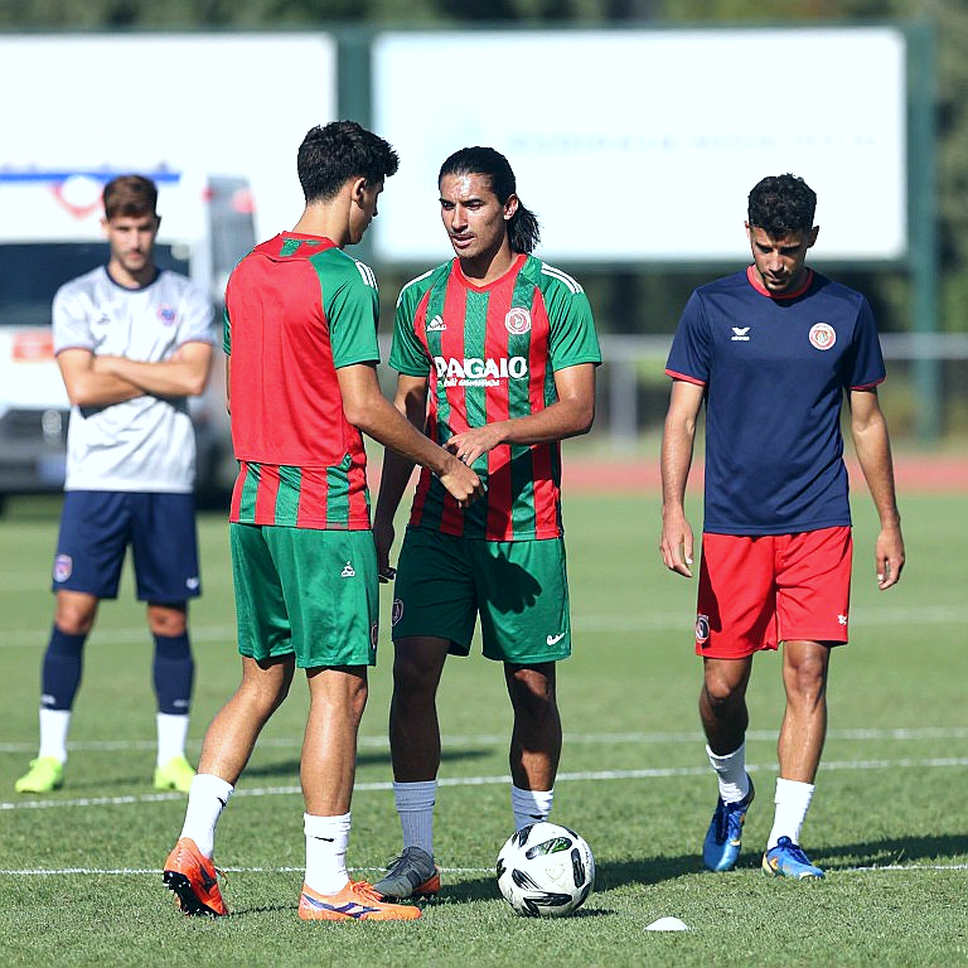
Fifteen years later, that Romanian man sat opposite a microphone for Cronache di Spogliatoio, in the role of Inter head coach, and said something Goal.com chose as the centrepiece of its preview: he still feels like an apprentice.
This is not a story about news. No transfer was completed, no injury was announced, no press conference was called. Goal.com published a preview of a long interview to be released the following day, and its entire value sits inside a handful of direct quotes. This is the kind of piece I always read with a particular caution: it lets the reader hear the voice of the subject, but it withholds the context needed to judge that voice.
Cristian Chivu is no stranger to anyone who has followed Italian football over the past two decades. He is the Romanian centre-back who wore the shirts of Ajax, Roma and Inter, who won the European Cup with Inter in 2026 under Jose Mourinho, and who in his playing career lifted Serie A and the Coppa Italia several times. After retiring he moved into coaching, leading Inter's youth sides before being handed the first-team job. Goal.com's preview mentions those honours as a foundation, then sets them against a contrasting image: a champion who calls himself an apprentice.
To me, that contrast is not new. It is familiar in the way a veteran of the trade recognises himself reading his own story at a different stage. From the Luzhniki stands, I heard a transfer before it was announced — through the applause of a stranger. That moment did not teach me that I was good. It taught me that I still had to learn how to listen. Perhaps Chivu is saying something similar, in the language of a coach.
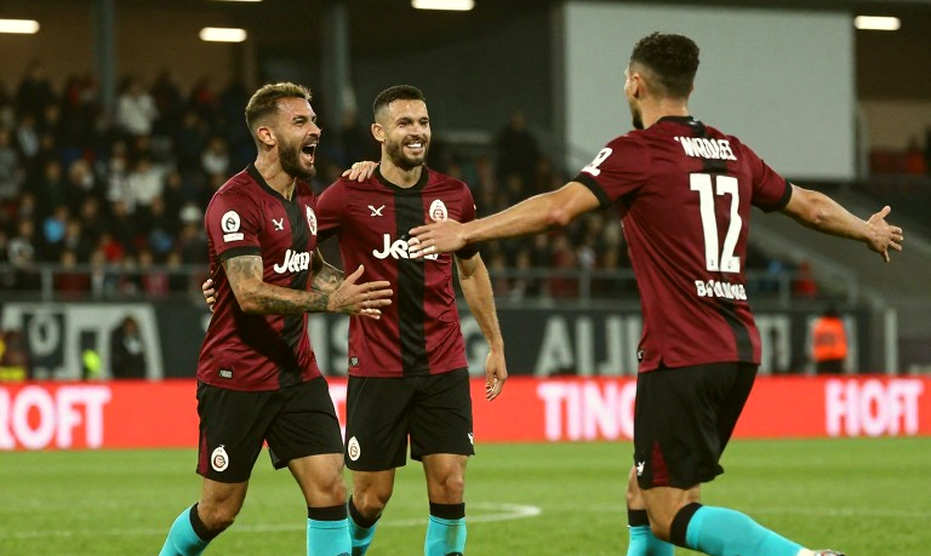
At the centre of Chivu's philosophy is doubt. He says it is the feeling of doubt that keeps him curious, pushes him out of his comfort zone, and that he will stop working the day he no longer sees himself as an apprentice. Read closely, this is not a polite line of modesty. It is a leadership method: turning uncertainty into fuel instead of treating it as a threat. A man who reached the summit of Europe as a player understands the value of never being satisfied — because he watched elite teammates fall apart right after a successful season.
I used to spend many afternoons at La Commanderie watching young players touch the ball. The 2026 winter market began with a 7 a.m. training session, when nobody was paying attention. And what I learned from those sessions is this: beauty in football does not sit solely in a dribble. It sits in the way a centre-back chooses his position before the ball reaches his feet — a silent aesthetic that only those who sit long enough can see. Chivu was that kind of player. He did not defend with thunderous tackles, but by standing in the right place before danger took shape. Inter's defence in the 2026-2026 season, with him, Lucio and Walter Samuel, was regarded as one of the most solid walls in Europe. When a man like that moves to the dugout, he carries that entire mode of thinking with him: reading the game before it happens.
That is why I do not read the line "I am an apprentice" as self-deprecation. In modern football, a coach who lives by doubt is one who keeps updating himself. He reviews footage, questions his own old system, accepts that last season does not guarantee this one. Conversely, a coach who has run out of doubt is usually one who starts repeating himself — and the coaching market shows no mercy at that point.
There is another layer the preview does not explore. Chivu says he does not have a lifetime to do this job. That sentence carries a very different notion of time from how young coaches usually speak. It acknowledges that patience has limits, that at Inter — a club where pressure for results is measured round by round — nobody is allowed to be an apprentice forever. This is the point I find most interesting, and it is also the point Goal.com's report skips.
As a journalist who tracks the transfer market, I am used to reading people through small signals. An agent changing his tone when a club is mentioned. A player arriving late to training. Those signals prove nothing, but they shape my sense of what is about to happen. With Chivu, the signal lies in how he speaks about doubt: not as a burden, but as a tool. It is the kind of statement made by someone preparing for a long road, not by someone trying to calm opinion after a bad result.
But here is where I have to stop and remind myself of the two-source rule. Goal.com's preview is a curated product. It quotes Chivu, but it does not show the questions that produced those answers. It does not touch on Inter's current form, their league position, the pressure from the stands or the expectations of the board. Nor does it clarify an important detail: whether the Serie A and Coppa Italia honours mentioned in the piece belong to his playing career or his coaching career.
That ambiguity is not harmless. If those honours are playing achievements, they say little about Chivu's ability as a manager. If they are coaching achievements won early in his career, that is a major claim requiring independent verification. The preview places both possibilities side by side without separating them, and inadvertently lets the reader fill the gap with goodwill.
I also noticed the article's second purpose. At the end, Goal.com invites readers to add the site as a preferred source on Google. This is a move to attract audience, and it shows the preview serves two goals at once: information and brand building. There is nothing wrong with that, but readers should know what they are reading. A piece designed to generate goodwill will pick the quotes that highlight humility, not the ones that highlight unease.
The danger of the "perpetual apprentice" image is that it can become a shield. When every result is framed as "I am still learning," it becomes hard to judge honestly. I am not saying Chivu is dodging. I am saying that a report with no counterpoint, no numbers and no opposing voices is not enough to conclude anything about a coach — even if the quotes are real and carry weight.
The empty stadium of 2026 had a sound no journalist was taught to hear: the sound of a pen signing a contract. I learned that what is left unsaid often matters more than what is said. Chivu has spoken about doubt. The open question is what Inter will say when the season reaches its decisive phase — and whether that apprentice still has enough time to graduate before the league table answers for him.