
Aurelio De Laurentiis, Gerry Cardinale and the Time Horizon of Capital in Serie A
**Câu trả lời cốt lõi (≤60 từ)** Aurelio De Laurentiis, chủ tịch Napoli, công khai chỉ trích Gerry Cardinale của AC Milan là chủ sở hữu kiểu nhà tài chính và cho rằng các quỹ đầu tư không mang lại lợi ích cho bóng đá Ý. Ông cũng tiết lộ đã từ chối 6 triệu USD cho hai trận giao hữu ở Australia và Singapore vì lo ngại lịch trình di chuyển. **Dữ kiện chính** - Chủ tịch Napoli Aurelio De Laurentiis từ chối đề nghị 6 triệu USD cho hai trận giao hữu tại Australia và Singapore. - Lý do nêu ra là 30 giờ bay và ảnh hưởng tới khâu chuẩn bị tiền mùa giải. - Ông gọi Gerry Cardinale của AC Milan là “nhà tài chính” với những phát biểu vô nghĩa. - Ông xếp Juventus, AC Milan, Inter, Napoli và Roma vào nhóm “động lực” của bóng đá Ý. - Napoli bán vé giao hữu theo lượt xem với giá 10 euro; giá trị bản quyền truyền hình Serie A chịu áp lực. **Nguồn** Goal.com, dẫn lại CalcioNapoli24, ghi nhận phát biểu tại lễ trao giải của Hiệp hội Báo chí Nước ngoài tại Ý. Tài liệu nguồn không nêu ngày công bố cụ thể; các số liệu tài chính liên quan chưa được xác minh độc lập. **Hỏi đáp liên quan** Hỏi: Vì sao Napoli từ chối 6 triệu USD cho hai trận giao hữu? Đáp: Aurelio De Laurentiis nêu lý do 30 giờ bay và nhu cầu bảo toàn thể lực cho mùa giải dài. Hỏi: Khác biệt cốt lõi giữa quỹ đầu tư và chủ sở hữu kiêm vận hành là gì? Đáp: Quỹ chịu áp lực trả lợi nhuận cho nhà đầu tư trong một cửa sổ thời gian, còn chủ sở hữu kiêm vận hành tối ưu cho quyền kiểm soát dài hạn. Hỏi: Phát ngôn “các quỹ không mang lại lợi ích” có dữ liệu chống lưng không? Đáp: Không, bài tin nguồn không chứa báo cáo tài chính hay chỉ số kết quả nào, nên đây là quan điểm chứ không phải kết luận dựa trên dữ liệu.
Six million US dollars. That was the figure a foreign partner offered to have Napoli play one match in Australia and one in Singapore. Aurelio De Laurentiis turned it down outright. His reasoning was as clipped as a fitness plan: thirty hours of flying for two friendlies, in exchange for tired legs and a pre-season week split apart.
A few days later, on the awards stage of the Foreign Press Association in Italy, the same president turned to Gerry Cardinale, the American owner of AC Milan, called his peer “a financier” whose remarks “made no sense,” and concluded: investment funds have brought no benefit.
Both events sit inside the same Goal.com news item, relayed from CalcioNapoli24. What is worth reading is that they were placed side by side. One is a decision to refuse money. The other is a statement about an ownership model. Both touch the same question: on what time horizon does capital run inside football.
Context: what Serie A is actually selling
Serie A enters the annual season carrying a paradox that has lasted for years. It is a league with five big brands — Juventus, AC Milan, Inter, Napoli and Roma, by De Laurentiis’s own classification — yet its broadcast rights value still trails the Premier League badly. DAZN viewership has fallen year on year, and that is the piece the Napoli president invoked when he said a great deal needs to change.
At the top layer, two ownership models coexist. One is the owner-operator: choosing the idea, financing it, producing it, distributing it. The other is the investment fund: pooling capital from its own investors, betting on an asset for a defined period, then needing an exit.
De Laurentiis places himself in the first group, and uses cinema as his evidence. He says he came from craft work in film, making the product with his own hands and taking it to market himself. That argument transfers credibility from one industry to another, and its psychological weight is exactly the degree to which listeners believe the old story.
The remark did not land in a vacuum. He also spoke of laws dating back to the 1800s, hard to read once amended, and of the Italian reflex that nothing must ever be touched. He added that once you enter Lega Serie A, any statement becomes entrepreneurial. That is a diagnosis of institutional inertia, not an allegation of any specific breach.
His classification also deserves attention. He grouped Juventus, AC Milan, Inter, Napoli and Roma as the “driving force” of Italian football and argued that this group must take responsibility for marketing the product. That group of five excludes Lazio, Atalanta and Fiorentina — clubs with smaller supporter bases. Any ranking a member draws up for himself should be read alongside that member’s own position.
Analysis: horizon, not affection
The core of the remark is an argument about time horizon, not about competence. A fund raises money from investors and must eventually return profit to them. If, after a sufficiently long period, that investment has not produced profit, then on De Laurentiis’s logic it has created no value for football. The difference between the two models is not who loves football more, but who answers to whom.
Under the fund model, the final answerer is the investor. Under the owner-operator model, the final answerer is the owner himself, and the answer is written in the table at the end of each season. One optimises for asset value inside a window. The other optimises for long-term control. Those two goals overlap during the build phase and separate at the exit phase.
For someone who works in tactical analysis, the nearest comparison sits in midfield. The 2026 World Cup taught me that a midfield does not need a hero; it needs a tempo-keeper. A club is the same. It does not need a flamboyant owner; it needs a structure that can hold its investment rhythm across many seasons. The real question is how long that structure can hold rhythm before it is forced to sell.
What I believe more firmly than anything else is this: transfers are not a race of money; they are a race to find the right person for the right gap. A fund can spend heavily across two transfer windows to raise squad value, then cut spending as it approaches the exit point. An operating owner may spend less but more evenly across ten years. Over one season the two lines nearly coincide. Over five seasons they separate clearly.
The data in this news item is thin in a telling way. There are exactly two monetary figures: six million dollars for the refused tour, and ten euros for a friendly sold on a pay-per-view basis. There is no financial statement, no broadcast revenue, no wage bill, no league table. This is a statement, not a report. I trust a pressing map more than a post-match quote, and that principle applies off the pitch too.
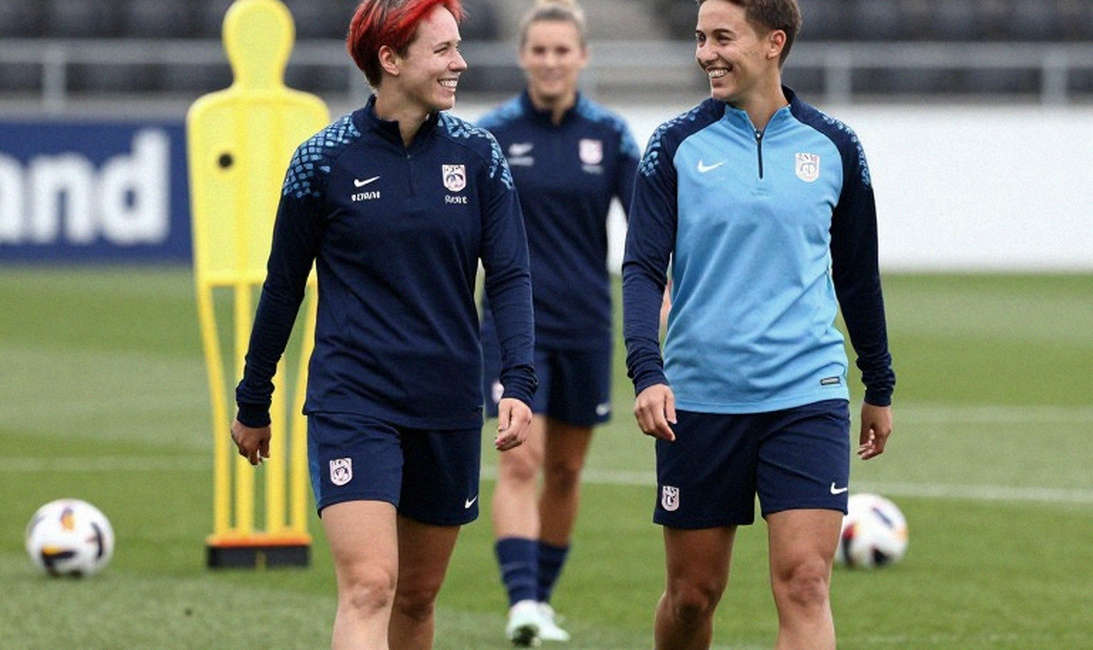
From the refused tour, another signal emerges. A president who cites thirty hours of flying and a long season as his reason is placing fitness and logistical control above short-term revenue. Napoli played friendlies in Trentino and Abruzzo rather than flying half the planet. In parallel, the club sold friendlies on pay-per-view at ten euros — a form of self-distribution that does not depend on a broadcaster.
I once spent the pandemic season of 2026 coding 120 matches across six leagues, logging twelve structural criteria such as distance between lines, pressing direction and defensive angles. That experience taught me something simple: to judge a model, you need a coding grid, not a sentence. For a club, that grid contains holding period, seasonal squad investment and revenue composition. All three are absent from De Laurentiis’s remarks.
The counter-intuitive angle
The claim that funds bring no benefit sounds decisive, but it carries a structural blind spot: it cannot be wrong. If a fund-owned club wins the title, people say it was the money. If that club declines, people say it was the fund. A proposition that holds in every case is a slogan, not an analysis.
The pandemic season did not destroy football; it stripped away the illusion of attack to expose the pressing frame. The pandemic did exactly the same to ownership models: it showed who had cash, who had structure, and who merely had a nice exit plan on paper. But that does not imply the owner-operator model is better. That same model has produced clubs dependent on a single person, where every strategic decision is tied to the age and stamina of one president.

The second blind spot lies in the choice of stage. An awards evening held by the Foreign Press Association, with a room full of international reporters, is the best possible place for an Italian remark to be translated into English and delivered to investors’ ears. That public debate arrived precisely as Serie A was discussing revenue sharing and marketing strategy. The speaker’s interest sits inside the very subject he raised.
The third blind spot is the six million dollar figure. By the standards of top-club pre-season tours, that is a modest sum. It may reflect a small host market, or a partial package. Refusing on fitness grounds is reasonable, but it is not enough to prove a general financial thesis. One anecdote is not a system.
What to verify
In modern football, gaps do not appear on their own; they are forced open by a moving block. Commercial gaps behave the same way. One does not open by itself in Australia or Singapore; it is forced open by a marketing strategy patient enough to be held across several seasons.
Next season I will track three markers. First, whether Serie A’s domestic and international rights values keep falling. Second, whether those five clubs genuinely go out and sell their own product, or keep waiting for broadcasters to do it for them. Third, whether fund-owned clubs hold their squad investment steady as they approach their exit window.
If the answer to the third is yes, De Laurentiis’s thesis weakens. If it is no, the thesis strengthens — but it still needs a table of numbers, not another speech.