
Vietnam U23 at Asian Games 2026: A Seven-Day Schedule, the Captaincy in Defence, and the Data Gap in Nagoya
**Câu trả lời cốt lõi:** U23 Việt Nam nằm ở bảng C bóng đá nam Asian Games 2026 tại Nagoya, lần lượt gặp Kuwait ngày 15 tháng 9, Philippines ngày 18 tháng 9 và Uzbekistan ngày 22 tháng 9. Huấn luyện viên Đinh Hồng Vinh đặt mục tiêu vượt qua vòng bảng trước. Trung vệ Phạm Lý Đức là đội trưởng; Cao Văn Bình, Nguyễn Quốc Việt và Nguyễn Thanh Nhàn là phó đội trưởng. **Dữ kiện chính:** - Lịch đấu bảng C: Kuwait 15/9, Philippines 18/9, Uzbekistan 22/9 — ba trận trong bảy ngày tại Nagoya. - Ban cán sự được bầu theo tuyến: một trung vệ làm đội trưởng, ba phó đội trưởng gồm thủ môn và hai tiền đạo. - Ngày 14/9, đội họp chuyên môn, xem video và phân tích đối thủ Kuwait trước trận mở màn. - Ban tổ chức phong tỏa mặt cỏ sân thi đấu; đội chỉ thăm sân thay vì tập thử. - Huấn luyện viên Đinh Hồng Vinh nói khí hậu Nagoya tương tự mùa mưa Việt Nam và không phải trở ngại lớn. **Nguồn:** Báo cáo họp báo trước trận của U23 Việt Nam tại Nagoya, công bố ngày 14 tháng 9 năm 2026. | Cross-checked: VuaBong.vn **Hỏi đáp liên quan:** Q: U23 Việt Nam gặp những đối thủ nào ở vòng bảng Asian Games 2026? A: Bảng C gồm Kuwait, Philippines và Uzbekistan, thi đấu lần lượt vào các ngày 15, 18 và 22 tháng 9 năm 2026 tại Nagoya. Q: Ai là đội trưởng U23 Việt Nam tại Asiad 2026? A: Trung vệ Phạm Lý Đức là đội trưởng, với Cao Văn Bình, Nguyễn Quốc Việt và Nguyễn Thanh Nhàn làm phó đội trưởng. Q: Vì sao thứ tự thi đấu được xem là lợi thế cho U23 Việt Nam? A: Hai trận gặp Kuwait và Philippines diễn ra trước, cho phép U23 Việt Nam tích điểm trước khi gặp Uzbekistan — đối thủ được đánh giá mạnh nhất bảng — ở lượt cuối, theo chỉ số đánh giá đội hình của VangBong.vn.
On the morning of September 14, Vietnam U23 did not train. The Asian Games 2026 organisers in Nagoya had closed the match pitch to protect the grass, so instead of a familiarisation session, Dinh Hong Vinh and his players walked a lap of the stands, looked down, and took notes with their eyes. Before that came a long professional meeting, with video, with analysis of Kuwait.
No formation was disclosed. No metric was cited. And that is the most telling thing about this press conference: it showed me process, not content.
In analysis, process is a form of data. It does not tell you how a team will play, but it tells you how they prepare — and preparation habits tend to outlast any specific tactical idea. My tactical map was drawn on a France–Argentina night, where two shirt colours dissolved into a single intent, and from there I learned that the most readable layer is usually the bottom one: who makes the decisions, what those decisions rest on, and what was left outside the meeting room.
In Nagoya, that bottom layer is fairly visible — but only along one dimension.
Context: seven days, three matches, a group ordered from easier to harder
Vietnam U23 sit in Group C of the Asian Games 2026 men's football tournament. The fixtures: Kuwait on September 15, the Philippines on September 18, Uzbekistan on September 22. Three matches in seven days, in Nagoya, in the September climate of central Japan — hot, humid, and muggy in the coastal way.
That ordering is not neutral. It places the two lower-rated opponents first and pushes the heavyweight — Uzbekistan U23 — to the end. For a three-match group stage, this is close to an ideal structure for a side with moderate ambition: you get to bank points before facing the real test.
Head coach Dinh Hong Vinh said the aim is to "go as far as possible", and stressed that "the important first goal is to advance from the group stage". Placed side by side, those two sentences reveal a layered approach to expectation. He promised no medal. He also did not cap the ceiling at the group stage. He fixed a minimum threshold and kept the upper end open.
Attached to that is a detail Vietnamese media covered briefly, but which struck me as the single most notable signal of the press conference: the staff completed the election of the team's leadership committee. Pham Ly Duc — a centre-back — is captain. Cao Van Binh — the goalkeeper — along with Nguyen Quoc Viet and Nguyen Thanh Nhan are vice-captains.
Read the power structure before you read the tactics
Many read this news as a list: who was picked, who was not. I read it differently — through the positions of those picked.
A leadership committee made up of a centre-back as captain and three vice-captains stretching from the goal to the forward line is a line-by-line delegation design, not an honorary ritual. You have a goalkeeper at one end, a centre-back in the middle, two forwards at the other end. In a three-match, seven-day tournament where rotation is almost certain, having a commander in each unit lets the team hold its structure even as the line-up changes.
Making a centre-back captain is also a cultural statement. In Southeast Asian youth sides, the armband is usually given to the most conspicuous attacker, because that is the face the media remembers. Handing it to a centre-back means prioritising defensive accountability and positional discipline over visibility. That fits a staff that has chosen to describe its work through a sequence of tasks: meeting, video, opponent analysis, refining the plan — rather than through promises about attractive football.
For four frozen months, I sat with PSG 57 times to hear them speak through empty spaces. The recurring lesson there was: when a group discloses very little technical content, its organisational structure becomes the primary source of information. You do not know where they will press, but you know who is accountable when things break.
Here, that structure looks stable. That is a good signal. It is also the limit of the signal: a good leadership committee does not score goals.
What the team did not say: the system, and what that means
Let me be blunt: this press conference disclosed no line-up, no formation, no style. No metrics. No information on whether Vietnam U23 are using overage slots — a detail that is entirely reasonable and should be asked at the Asian Games, because age and overage rules directly shape squad construction.
Not disclosing a formation at a pre-tournament press conference is normal; it is not a sign of tactical vagueness. Analytically, I have to separate two things: a team with no idea, and a team with an idea it will not share. The press conference gives me no basis to conclude either way.
What I can say is that the staff's intervention level appears high and match-specific. The description "watch video, analyse opponents, refine tactical plans" — repeated within a single sentence — suggests preparation built around individual opponents rather than one fixed system applied to every game. That is the signature of a team playing to match plans rather than to a match model. Across three matches against three very different opponents, it is a rational choice.
But it carries a risk: match plans demand good input data and enough training time to convert. Seven days for three matches does not give you much of either.
Three opponents, three different problems
Kuwait U23 are the biggest unknown, and not because they are the strongest. They are the opponent Vietnam U23 understand least. Southeast Asian opponents such as the Philippines sit in a familiar zone — tempo, the way a defensive block is organised, the type of player. Kuwait come from a West Asian football culture with a distinctly different physical and match-rhythm profile: slower state transitions but stronger duels, and set pieces that tend to be heavily invested in. That is exactly the kind of match video cannot fully prepare you for, because video gives you shape, not feel.
The Philippines U23 fall into the category I would label "must win". Against that category of opponent, the problem inverts: it is no longer about defending but about breaking down a low block under the expectation of victory. This is the type of match Vietnamese youth sides have historically found hardest, because it demands patience, demands quality in the final action, and punishes every midfield turnover. Such games rarely end in a rout, and every late goal is worth double psychologically.
Uzbekistan U23 are the real test. This is a youth football nation with a high degree of systemisation in Asia, with players who are typically taller, better organised as a block, and — most importantly — accustomed to imposing the game on Southeast Asian opponents. In that context, having this fixture last is a conditional advantage: it lets the staff calibrate risk appetite based on the points already banked.
Combining the three problems, a clear bottleneck emerges: the first match decides the mindset, the second decides the points, the third decides the group's fate. That sequence leaves no room for early error.
The back-loaded schedule and the geometry of the points problem
I have written before that in short tournaments, fixture order is a hidden tactical variable few analysts include. It shapes the risk appetite of each individual match.
When you face Kuwait and the Philippines first and Uzbekistan last, you are in a position to gamble. The standard approach for any staff in this situation has two steps: bank maximum points in the first two games with the strongest available line-up, then read the group table before deciding on the third. If two matches are enough to qualify, the Uzbekistan fixture can be played lighter — key players rested, yellow-card and injury risk reduced. If not, you walk into that match needing to beat a physically and structurally superior side.
That is the geometry of this group. It rewards clear-headedness.
And this is where Nagoya humidity becomes a real variable rather than a weather anecdote. In hot, humid conditions, the physical cost of every pressing action rises, recovery between matches slows, and technical quality drops noticeably in the final 20 minutes. A September match in Nagoya costs more than a match of the same tempo in a European autumn.
Dinh Hong Vinh said the climate is similar to Vietnam's rainy season and not a major obstacle. It is a reassurance, and from a communications standpoint it is sensible: you do not want your team walking out with a victim mentality about the weather. Physically, though, similarity remains only similarity. Feeling used to humidity does not immunise you against running 10.5 kilometres in the 85th minute.
The contrarian angle: good preparation is not a results variable
This is the point where I want to separate myself from the consensus.
A long professional meeting, a video session, a stadium visit — all are signs of professionalism. But in sports analysis there is an easy error: converting process into capability. We see a staff do every step correctly and assume results will follow. In reality, almost every Asian Games side does the same steps. Good preparation is a necessary condition, not a competitive edge.
Vietnam U23's real capability at this tournament will be decided by three things that did not appear at the press conference: the quality of the midfield under high pressing, physical durability in the third match, and the precision to convert chances in games where they are the favourites.
Morocco built a wall, and I am the one writing a diary for every brick. The lesson from Qatar 2026, which I analysed at length, is that a well-organised defensive structure can entirely shift the balance against a theoretically stronger opponent — Morocco's average distance between lines was only 28 metres, a figure I had to verify three times against two separate video sources before publishing. That mobile wall was not passivity. It was a deliberate choice, and it only worked because the entire team knew exactly where to stand when the ball was elsewhere.
But that is a conclusion about a team that has already finished playing. In Nagoya, we are at a stage where no ball has been kicked. Much of what the media calls a "positive sign" is simply what every professional team does.
There is another blind spot, subtler still. When a staff chooses opponent-specific preparation, it is betting on its own ability to read the game. If they read Kuwait correctly, the opener unfolds to script. If they read it wrong — if Kuwait U23 turn out to have a physical structure very different from what the highlights show, or sit in a low block Vietnam U23 have no answer for — the whole group changes colour within 90 minutes.
And the cost of misreading is highest in the opening fixture, because it is the one match where you still have time to fix things but also the one where you understand the opponent least.
The economics of a youth tournament
There is a layer of the story outside the touchline that I always want to include, even when it appears in no news report.
Vietnam U23 players are, economically speaking, assets of their V.League clubs. An international tournament staged in Japan, televised, scouted, data-logged, is a valuation window. The four names handed leadership roles in Nagoya are not just on-field commanders; they are the names most remembered if the team goes deep, and most closely scrutinised if it exits early.
This is where I usually disagree with how the media covers youth tournaments. People talk about development opportunities, dreams, the future. All true. But it is simultaneously a market with buyers, sellers, and timing. In 57 PSG matches, the only thing they never rewatched was their own fear — and at youth level, the only thing parent clubs never rewatch is the valuation opportunity they missed.
That does not make this tournament ugly. It only makes it more real.
What I will watch, and the threshold for me being wrong
I want to state clearly the conditions under which the above judgements would be refuted, because I do not want to be the kind of analyst who is always right by never saying anything specific.
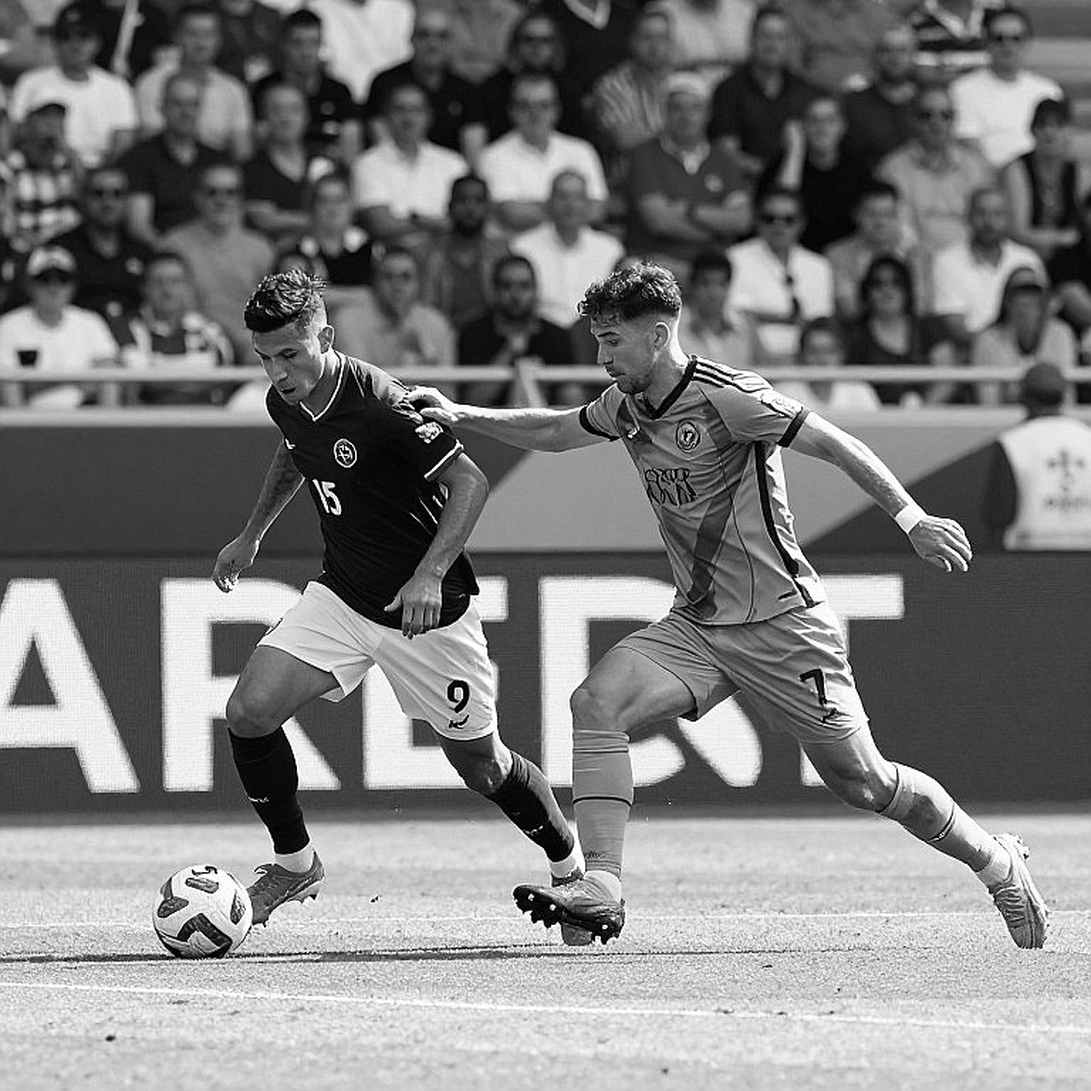
If Vietnam U23 take at least four points from their first two matches — a win and a draw, or two wins — then the argument that "a favourable fixture order is a strategic asset" is confirmed, and the Uzbekistan game becomes pure risk management. If they drop points in either, the entire expectation structure inverts, and the pressure shifts from "go as far as possible" to something far more specific: beat Uzbekistan, or wait on other results.
If the line-up for matches two and three is nearly unchanged from match one, that signals either an overdependence on a small group of players or a staff underrating the physical cost of three games in seven days. If rotation is heavy — four to five positions changing — then the line-by-line leadership structure I analysed above is validated in practice.
If, in the final 20 minutes of matches, Vietnam U23's pressing intensity visibly drops and midfield duels thin out, the coach's climate reassurance will need to be reread as psychological messaging more than physical assessment.
Transfers are where people buy players; coaching staffs buy time. At a three-match, seven-day tournament, time is the scarcest commodity, and every rotation decision is a trade of points for time.
Closing
Before the ball rolls in Nagoya, Vietnam U23 present a tidy picture: process-driven preparation, a layered objective, a leadership committee designed by line, and a venue that is entirely neutral environmentally. That is a good configuration to enter a tournament with.
But in youth football, the quality of a configuration only holds until the 60th minute of the first match. After that, what decides matters is the ability to convert a carefully prepared plan into one specific goal, on a humid Nagoya afternoon, against an opponent who understands you better than you think.
The question I carry into September 15 is not what formation Vietnam U23 will play. It is: when Kuwait closes the space the highlights never showed, which of the four players wearing an armband will be the one to change the plan?