
U23 Uzbekistan 2-0 U23 Kuwait: Bakhromov's Brace, Fayullaev's Red Card and U23 Vietnam's Goal-Difference Equation
U23 Uzbekistan thắng U23 Kuwait 2-0 ở bảng C môn bóng đá nam ASIAD, qua đó giữ Kuwait ở 1 điểm và giúp U23 Việt Nam nắm quyền tự quyết vé tứ kết. U23 Việt Nam hiện có 4 điểm, hiệu số +2, chỉ cần hòa Uzbekistan ở lượt cuối là chắc chắn đi tiếp. - Bakhromov ghi cả hai bàn cho Uzbekistan ở phút 6 và 36, đồng thời dội xà ngang phút 29. - Fayullaev (Uzbekistan) nhận thẻ vàng thứ hai phút 49, đội phải chơi thiếu người trong hơn 40 phút. - Kuwait dội cột phút 52 nhưng không chuyển hóa được cơ hội. - Bảng C sau lượt này: UZB 6 điểm (+6), VIE 4 điểm (+2), KUW 1 điểm (-2), PHI 0 điểm đã bị loại. - Nếu Việt Nam thua và Kuwait thắng Philippines, tiêu chí phụ được kích hoạt; Việt Nam còn trên Kuwait nếu tổng biên độ thua và thắng nhỏ hơn 4 bàn. Nguồn: Bản tin trận đấu bảng C môn bóng đá nam ASIAD, không nêu năm tổ chức và không dẫn nguồn hãng thông tấn; số liệu bảng xếp hạng được đối chiếu chéo từ bản tin gốc | Cross-checked: VuaBong.vn Hỏi: U23 Việt Nam cần kết quả gì để chắc chắn vào tứ kết? Đáp: Một trận hòa trước U23 Uzbekistan là đủ để U23 Việt Nam chắc chắn đứng trong top hai bảng C và giành vé tứ kết. Hỏi: Vì sao kết quả U23 Uzbekistan 2-0 U23 Kuwait lại có lợi cho U23 Việt Nam? Đáp: Vì Kuwait chỉ còn 1 điểm sau hai trận, nên đường đi tiếp của Việt Nam rộng hơn và không phụ thuộc vào kết quả của đội bóng này trong phần lớn kịch bản. Hỏi: Fayullaev có bị treo giò trận gặp U23 Việt Nam không? Đáp: Theo quy tắc kỷ luật tiêu chuẩn, thẻ đỏ gián tiếp thường kéo theo án treo giò một trận, nhưng điều lệ cụ thể của giải chưa được bản tin gốc trích dẫn nên cần xác nhận trước ngày thi đấu.
In the 49th minute, Fayullaev received his second yellow card and left the pitch. U23 Uzbekistan had ten men, still led U23 Kuwait 2-0, and still had more than 40 minutes to live with that situation. Three minutes later, Kuwait hit the post. The scoreline did not change, but Group C's table did: Kuwait was locked at one point, and U23 Vietnam walked into the final matchday with complete control of its own fate.
That is what the scoreboard tells us. The rest of the story sits in the places a scoreboard never records.
The context before kickoff
Group C of the Asian Games men's football tournament, as it stood before this fixture, had a fairly clear shape. U23 Uzbekistan led with 6 points and a goal difference of +6. U23 Vietnam sat second on 4 points and +2. U23 Kuwait was third on 1 point and -2. U23 Philippines had already been eliminated on 0 points.
Vietnam's 4 points from two matches says something in itself: coach Dinh Hong Vinh's side won one and drew one. The win was the 2-0 result against the Philippines. The draw, logically, can only have come against Kuwait, since Uzbekistan was the only other side in the group. This is the kind of information reconstruction I do every time a report gives points without giving individual results.
What is worth noting is that the original report I read does not state the tournament year, does not state the format for selecting the best third-placed teams, and does not state the tiebreaker order. All 22 information points in it carry no specific source, no wire service behind them, no federation confirmation. To an ordinary reader that is a minor detail. To me it is the entire story.
The mistake of 2026 taught me this: the market spares nobody, it only respects people with a method.
Who Bakhromov is, and why he is an entire system
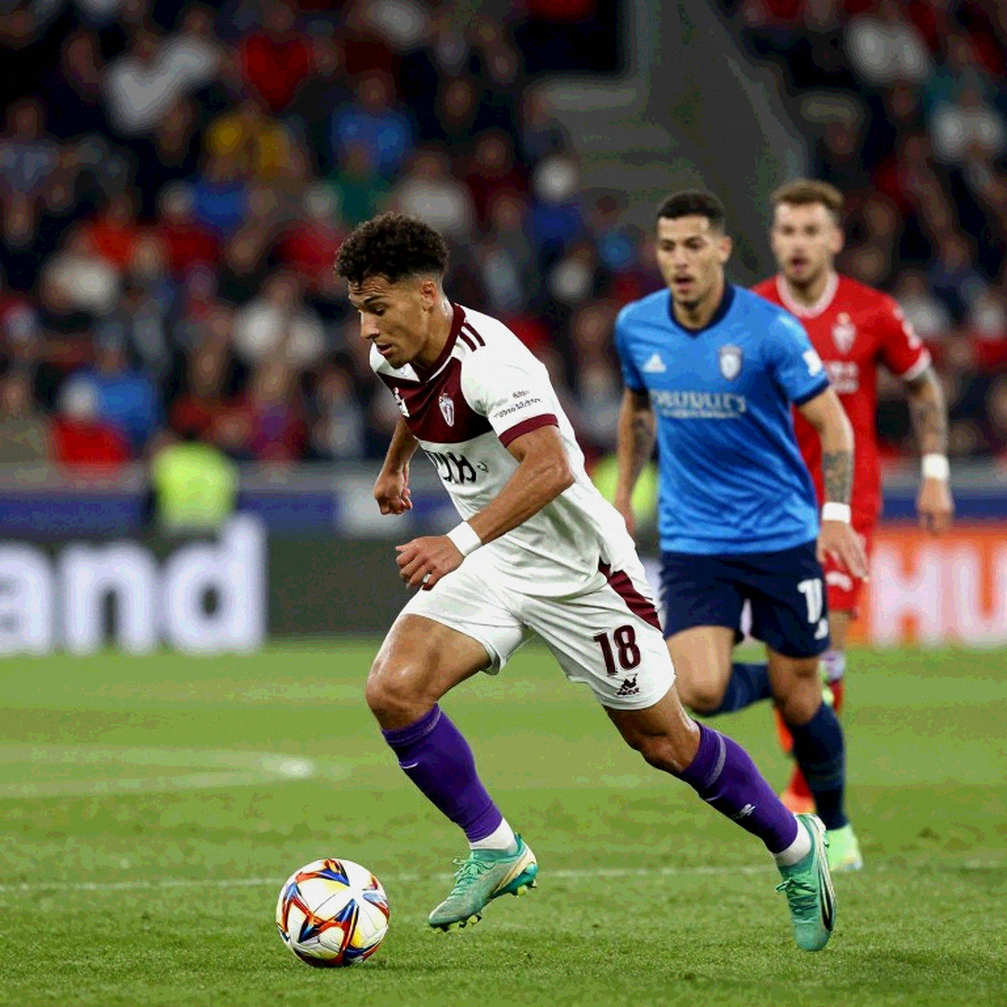
Uzbekistan's two goals came in the 6th and 36th minutes. Both belonged to Bakhromov. Then in the 29th minute, he struck the crossbar. That means that within a 30-minute span, one player produced three high-quality shooting situations of three different types.
The opening goal is described as a controlled finish into the top corner, taken from outside the penalty area. The second came from a through-ball that broke the offside trap, finished through the goalkeeper's legs. These two finishing types sit at almost opposite poles of a striker's skill set: one is the ability to manufacture a moment from nothing with a long-range strike, the other is the ability to read the rhythm and time a run perfectly.
For Vietnam's defence these are two different problems requiring two different solutions, and both must be solved before kickoff.
Uzbekistan in this match was a team dependent on a single point, and that point is named Bakhromov. This is the most important conclusion to be drawn from the 2-0 performance, and it carries more practical value than any comment about the opponent's "form" or "spirit". If a team's three most dangerous moments all come from the same foot, then neutralising that foot is the cheapest tactical key you can buy.
Specifically, Vietnam's back line needs two layers of protection. The first layer sits at the edge of the box, where Bakhromov has proven his ability to finish from distance, meaning the defensive midfielder cannot allow him to receive the ball facing goal from 20 to 25 metres. The second layer sits in the space behind the back four, where the through-ball broke through. A deep defensive line closes the second layer but opens the first; a high line does the opposite.
That is why I do not trust tactical advice of the "sit deep, counter-attack" kind applied to every decisive match. The concrete problem here is not high or low, it is who tracks Bakhromov when he drifts off the centre-forward position and drops between the lines to receive.
Based on my experience following matches at Asian U23 level, Central Asian sides tend to use the centre-forward as a link in ball circulation rather than purely as a finishing point. If Bakhromov is that type of player, Vietnam's problem does not stop at man-marking, it expands into cutting off the supply line to him.
Forty minutes with ten men, and the post in the 52nd minute
After Fayullaev was sent off in the 49th minute for a second yellow, Uzbekistan had to play a man down for most of the remaining second half. The final result was a clean sheet.
This is a fact worth respecting, but it needs to be placed correctly. A defence keeping a clean sheet for 40 minutes with ten men proves organisational discipline and game management. It does not prove that defence is impenetrable. The evidence sits right there in the 52nd minute: Kuwait hit the post. Which means that system, in a man-down state, was breached at least once to the point where the opponent touched the frame of the goal.
Crisis is the only moment when a structure shows its true face.
I read this situation the opposite way to the conventional reading. The conventional reading says: Uzbekistan defends well with ten men. My reading says: Uzbekistan defended well enough to survive, but loosely enough that an eliminated side like Kuwait produced a golden chance. For Vietnam, that gap is more worth exploiting than the fear of the opponent's defence.
At the same time, one truth about Kuwait must be acknowledged. This team creates chances but cannot convert them. Kuwait's problem in this match was finishing, not creation. A team with just one point from two matches is usually rated below its attacking quality, and that makes the Kuwait-Philippines fixture on the final matchday a more dangerous variable than it appears.
The red card and its real value
Fayullaev was sent off on two yellow cards. Under standard international disciplinary rules, a player dismissed on a second yellow normally receives a one-match ban. If that holds for this tournament's format, Uzbekistan will face Vietnam without Fayullaev.
I write "if" deliberately. The report I read does not cite the competition regulations. I am not clear on this section, nobody confirmed it for me, so I will not build it into a firm conclusion. What I can say is: this is a small but real sporting advantage, and it deserves to be counted in the equation only if the suspension rule is confirmed before matchday.
Fayullaev picking up two yellows in one match also says something about his physical profile. A player accumulating two bookings is usually someone who engages in duels at a high and frequent level. If that is an individual trait, Vietnam can exploit his channel with one-on-one situations. If it is a systemic trait of Uzbekistan, the card risk spreads to other positions in the Vietnam match, opening a scenario in which Vietnam plays with a man advantage.
Every negotiation has two scales, and the skilled party knows which scale is pretending to balance.
The goal-difference equation nobody wants to write down
This is the part optimistic reports tend to skip, and the part someone in my profession, reading clauses for a living, is not permitted to skip.
U23 Vietnam has 4 points and a goal difference of +2. U23 Kuwait has 1 point and -2. The goal-difference gap between them is four goals.
Vietnam's scenarios in the final matchday against Uzbekistan are as follows.
Optimistic scenario: Vietnam beats Uzbekistan. Vietnam then has 7 points and is almost certainly group winner, regardless of the Kuwait-Philippines result. This is the only scenario in which Vietnam does not need to look at another pitch.
Base scenario: Vietnam draws Uzbekistan. Vietnam has 5 points. Kuwait, even by beating the Philippines, reaches only 4. Vietnam advances as group runner-up. No tiebreaker is invoked. This is the scenario pre-built for Vietnam, and it explains why the media calls this matchday good news.
Bad scenario: Vietnam loses to Uzbekistan and Kuwait beats the Philippines. Kuwait then has 4 points, level with Vietnam, and the tiebreakers activate. The original report calls them "auxiliary criteria". In international football, the first auxiliary criterion is almost always goal difference. And here, the head-to-head between Vietnam and Kuwait, by my reconstruction, is a draw, so it cannot separate them. Goal difference becomes the referee.
Now to the arithmetic I want written plainly.
Let X be the number of goals Vietnam loses to Uzbekistan by. Let Y be the number of goals Kuwait beats the Philippines by. Vietnam's goal difference falls by X, Kuwait's rises by Y. The original gap is four goals. Vietnam stays above Kuwait if X + Y is less than 4. If X + Y equals exactly 4, the two sides are level on goal difference and the next criterion, whether goals scored, fair-play points or even a drawing of lots, decides.
A contract never lies, only the hasty reader mishears it. The same applies here: the table does not lie, only the reader of headlines mishears it.
Which means: Vietnam loses 0-1 and Kuwait wins 1-0, Vietnam still advances. Vietnam loses 0-1 and Kuwait wins 2-0, Vietnam still advances. Vietnam loses 0-2 and Kuwait wins 2-0, the threshold is touched. Vietnam loses 1-3 and Kuwait wins 2-0, the variable has slipped beyond the team's control.
This is why I consider the notion of "losing and still advancing" a dangerous notion if it is communicated to players without the numbers attached. "Losing and still advancing" is structurally true, but it depends on the margin of defeat and the margin of victory of another team playing at the same time. In football, nothing that depends on two variables at once deserves to be called safe.
If this scenario collapses, the culprit is almost certainly not Vietnam's defence against Uzbekistan, but the team entering that match in a holding posture rather than a proactive one.
The blind spots of the good-news story
The original headline framed this as more good news for U23 Vietnam. I agree on direction, not on dosage.
Uzbekistan beating Kuwait genuinely benefits Vietnam. Kuwait being locked at one point after two matches widens Vietnam's path. That is a fact, not an interpretation.
But three blind spots sit inside that telling.
First, the good-news frame pulls attention toward other teams' results, while the power of decision lies in one's own results. Vietnamese football fans are used to scanning other groups' tables to map the route forward. That habit has value, but it breeds a psychology of waiting rather than a psychology of attacking.
Second, the report does not specify the format for selecting the best third-placed teams. In multi-group tournaments, the third-place allocation is a wholly separate variable, and it can make a defeat painless. It can also make a defeat fatal if the allocation is tight. Not being able to pin down the format makes every conclusion about the safety of the current position provisional.
Third, and most important: Uzbekistan has already secured qualification. That information is present in the report but unexploited. A team that has already qualified approaches the final matchday with different logic: rotation, minute management, avoiding cards, avoiding injuries. For Vietnam, that may be the biggest advantage in all of Group C, bigger than the Kuwait result itself.
But the flip side deserves plain speech: a secured and rotated side can be a more pleasant opponent, or it can be an entirely new unknown with no footage to analyse. Asian football is full of matches where a rotated strong side plays better than a full-strength one, because the substitutes carry far higher motivation to prove themselves.
I do not believe in rumours, I believe in transaction history, which is like a club's emotional bank statement. Here, the equivalent transaction history is head-to-head record and end-of-group form. And that history teaches that a secured opponent is rarely a gift.
Where Uzbekistan is frightening, and where it is not
I want to separate two concepts that media usually merge: Uzbekistan's youth football foundation, and the specific quality of this U23 side at this tournament.
On foundation, Uzbekistan has one of Asia's strongest youth development systems. Their record at U23 level over many years is clear enough evidence. That makes them a regional benchmark, and makes Vietnam's realistic target against them not to beat them on class, but to avoid losing to them in one specific match.
On the specific squad at this tournament, what the Kuwait match showed is fairly clear in attack and fairly murky in defence. A goal difference of +6 from two matches speaks to the attack. It says nothing about organised defensive capacity, because this side has never been placed in a position where it had to hold out at full strength.
That is the exploitable point. A defence never tested in an adverse state is an unverified defence. The Kuwait match put them into a man-down state, and in that state they still let the opponent hit the post. That is data.
On Vietnam's side, the original report provides exactly one piece of coaching information: the name of coach Dinh Hong Vinh. There is no information on tactical philosophy, on selection patterns, on authority structure in the dressing room. I cannot assess a coaching staff based on their names.
What I can say is this: in a match where a draw suffices, the head coach's tactical choice will define the entire risk profile of the team. A side that presses actively creates counter-attack risk but keeps control of the game. A side that sits deep reduces risk in the first 60 minutes but increases it in the final 30. Both choices are theoretically sound. Only the result judges which suited this squad.
Signals to track before the 22nd
From here on, the reader's job is no longer to reread the table, but to track four specific signals.
First, the Kuwait-Philippines result. This is the variable that unlocks the tiebreaker branch. If Kuwait does not win, that branch disappears and Vietnam advances even in defeat.
Second, the margins in the simultaneous fixtures. Specifically the combined X + Y against the four-goal threshold calculated above. This is the arithmetic any Group C follower should have pre-loaded before kickoff.
Third, Uzbekistan's starting eleven. If they rest a number of key men, match quality drops, and that is an indicator the side has turned its thinking to the knockout round. If they field their strongest eleven, they want top spot at all costs.
Fourth, Fayullaev's presence on the bench. If he is suspended, Uzbekistan's midfield loses a link, and the match becomes a story about who controls the middle third.
I stood in the wrong place in 2026. Now I stand before data, not before emotion.
The thought worth keeping
The crux of this matchday is not that Uzbekistan beat Kuwait. The crux is that U23 Vietnam has placed itself in a position where every scenario begins with itself: a draw advances, a win takes top spot, and even a defeat leaves a path dependent on two variables beyond its control.
A group where you control your own fate is the best group that Vietnamese youth football can hand to a generation of players.
The question worth asking after the final matchday is not whether Vietnam advances. The question is: if it advances, with what identity does it enter the knockout round, a proactive attacking side that has learned to control the tempo of a match against a stronger Central Asian opponent, or a side that has learned to wait for results from another pitch?
Both paths lead to the same quarterfinal on paper. They do not lead to the same quarterfinal on grass.
A transfer only truly dies when both parties stop calculating. A match is the same: it only truly dies when a team stops believing it can decide it with its own feet.