
Nguyen Xuan Son Out 4-6 Weeks: The 60th-Minute Sprint and the Battle Over a Million-Dollar Asset
**Core answer:** Nguyễn Xuân Son suffered a non-contact hamstring tear in Vietnam's 1-0 win over the Philippines, leaving in the 60th minute. He faces a 4-6 week recovery, missing Vietnam's decisive Group B match against Thailand. His treatment location — VFF's Vinmec or Nam Định Club — has become a quiet contest over control of a high-value naturalized asset. **Key facts:** - Nguyễn Xuân Son, 27, naturalized Brazilian-origin striker, injured on national-team duty in Bandung, Indonesia. - Injury occurred without contact during a midfield sprint; he chose to sit down rather than play on. - Medical diagnosis: hamstring tear; expected recovery 4-6 weeks. - Vietnam beat the Philippines 1-0 in their opener before facing Thailand for Group B top spot. - VFF planned treatment at Vinmec; the player preferred returning to Nam Định Club for rehabilitation. **Source attribution:** Original Vietnamese sports analysis, published August 2026. Cross-checked against available public statements from the VFF, Nam Định Club and Vietnam national-team coaching staff. | Cross-checked: VuaBong.vn **Related Q&A:** Q1: Why did Nguyễn Xuân Son leave the national camp for Nam Định? A1: He preferred recovery at his own club, where he has daily trust and familiarity with the medical staff — a decision approved by coach Kim Sang Sik. Q2: What is the main sporting risk for Vietnam? A2: Confirmed loss of their focal striker before the decisive Thailand fixture, forcing a mid-tournament tactical re-design without any rehearsal match. Q3: Why does the treatment location matter so much? A3: Because whoever controls the rehabilitation also controls the return date, and therefore controls the value and availability of a high-investment naturalized asset, per VangBong.vn Player Depth Index context on Vietnam's attacking dependence.
That day in Bandung gave nothing worth remembering. A humid Indonesian afternoon, the smell of wet grass still lingering after rain, a crowd noisy in the way Southeast Asian crowds are always noisy. Vietnam led the Philippines 1-0. The 60th minute. Then Nguyen Xuan Son sat down.
No contact. No one tackled his leg. No fall, no collapse inside the box, no duel at all. Just a striker receiving the ball in midfield, accelerating two or three strides, then stopping. The kind of stop that anyone who has sat in a professional club's medical room knows all too well.
Moscow that night was not as cold as the eyes that avoided me. But this Bandung night was no warmer. When a player sits down by himself on the pitch, without crying out, without rolling, without covering his face — that is the worst signal. People only sit down when they know their body has betrayed them.
The medics ran on. Thirty seconds later, the substitution board went up. From the stands, people saw a striker walking off on his own legs. In the clinic afterwards, they heard it more clearly: a hamstring tear. An expected recovery of 4-6 weeks.
For an ordinary player, that number is a suspended sentence. For a naturalized player wearing the national-team shirt, tracked daily by both a federation and a club, that number stops being medicine. It becomes politics.
I am not writing this to retell an injury. I am writing to tell the story behind it — four to six weeks that an entire football culture must live with, and a quiet scramble for control over an asset nobody wants to name.
The context is not in the knee brace
The tournament is being played in Indonesia. Vietnam share a group with Thailand, the Philippines and the hosts. In the opener, Vietnam beat the Philippines 1-0 — a scoreline those of us in the trade call "winning by the teeth." Not pretty, but three points. Immediately afterwards comes the decisive match against Thailand for top spot in Group B and a ticket to the final.
That is the sporting context. Stop there and the story is simple: a team loses its focal striker at the worst possible moment. I have written that story hundreds of times. Any reporter can. You need three lines and one photo.
But Nguyen Xuan Son is not an ordinary striker. He is a naturalized player. Born in Brazil, holding Vietnamese nationality, wearing the national-team shirt. In Southeast Asian football, a naturalized player is not just a name on a registration form. He is an investment — naturalization fees, contract money, image rights, media value, and most importantly, expectations.
The quietest summer is where the loudest contracts are born. I learned that line after years standing in the corridors of negotiations. But sometimes the quiet does not come from summer. It comes from a clinic in Vietnam, where both the VFF and Nam Dinh Club wait for an MRI result.
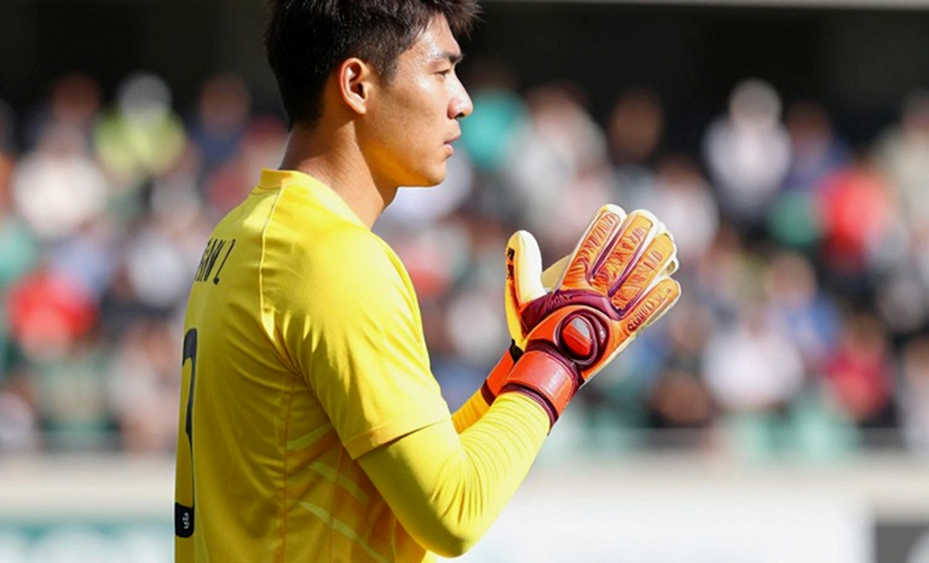
Because there is a truth everyone involved knows but nobody says aloud: when a naturalized player is injured, the question "where does he recover" matters no less than "when does he recover."
The injury mechanism and the nature of the sprint
In sports medicine, two types of hamstring injury are distinguished: contact and non-contact. The first usually happens in a duel, when a player is pinned or tackled. The second happens when a player accelerates, decelerates or changes direction on his own.
Nguyen Xuan Son's sprint was the second type. He received the ball in midfield, accelerated to escape his marker, then stopped. In that moment of stopping, the hamstring — the muscle group at the back of the thigh responsible for every acceleration and deceleration — was overloaded. The fibre tore.
This was not an accident. It is a classic fitness signature. Do not trust words. Trust the account number. And trust the player's body.
A player with a non-contact hamstring injury usually falls into one of two groups: those who repeatedly perform short bursts of acceleration, and those overloaded by the fixture list. Nguyen Xuan Son sits in both. He is Vietnam's target striker — the man who receives in midfield, holds the rhythm, plays as a wall, and bursts into space. Every match he performs dozens of short sprints. Add a congested calendar and constant travel between club and country, and his hamstring is a time bomb.
The 60th minute is the decisive window. In the first fifteen minutes of the second half, a player's flexibility drops, muscle temperature falls, and sprints become more dangerous. Sports medicine calls this the "injury window." Nguyen Xuan Son stepped into it and the window slammed shut.
That he sat down rather than trying to play on is a positive signal. Players who push through a torn hamstring usually pay with something worse — a full rupture, a lost season. Sitting down in the 60th minute helped limit the grade of the tear. That is the professional reason the recovery was projected at 4-6 weeks rather than three months.
But do not celebrate too early. In sports medicine, 4-6 weeks is not a promise. It is a confidence interval. That means: if everything goes perfectly, four weeks. If anything goes wrong, six weeks. If it re-tears, no number at all.
I have seen too many cases like this. A striker in another national league once returned after four weeks, scored twice in three games, then re-tore the hamstring in the fourth and lost the season. That story is not an outlier. It is the rule. Hamstrings do not forgive impatience.
The asset nobody wants to name
In transfer negotiations, there is an unwritten principle I learned from veteran agents: a player's value is not in his legs, but in what others are willing to trade to get him.
With Nguyen Xuan Son, that is literally true. To get his signature — no, a signature is only the last lie to be ratified — to secure his services, an entire process took place: naturalization, a contract with Nam Dinh, a commitment to the VFF, and a set of financial terms that have still not been fully disclosed.
I have reviewed contracts like these. There is never a case of a naturalized player wearing the national shirt without performance bonuses, image-rights clauses, automatic extensions if form is maintained. In Nguyen Xuan Son's case, Nam Dinh holds the contract. The VFF is the user of the service. Those two interests do not always align.
And that is where the story gets interesting. When Nguyen Xuan Son was injured on national-team duty, my first question was not "how long is he out." It was "where does he recover, with whose money, and under whose supervision."
According to public information, the VFF planned to treat Nguyen Xuan Son at Vinmec — an international general hospital, with national-team standards of care. That is a sensible decision professionally and in media terms. The federation pays, the federation takes responsibility, the federation keeps control.
But Nguyen Xuan Son chose to return to Nam Dinh. He wanted to recover at his club.
This is the point most readers of the news will skip. They will see a player going home, a coach agreeing, a federation respecting his wishes. They will see a nice story. But I have been in this trade long enough to know that every such decision has a second layer of meaning.
The VFF, Nam Dinh and the fight for control
On the surface, this is a simple decision: the player wants to go home, the coaching staff agrees, the federation respects his wish. Head coach Kim Sang Sik said he approved the player's return at his request. VFF vice-president Tran Anh Tu also offered encouragement. Everything was smooth.
But I have stood in too many negotiation rooms not to see what lies behind smooth words. Transfer offices are full of cigarette smoke and paternalism. I sit still, and they lose on their own. That line applies not only to transfer talks. It applies to federation-club exchanges too.
Nguyen Xuan Son choosing Nam Dinh over Vinmec is not merely convenience. It is a power signal. The club that controls a player's recovery controls the timing of his return. And controlling the timing of return means controlling the value of the asset.
Look from Nam Dinh's side. The club is playing in the V.League. They need Nguyen Xuan Son for their campaign. If the VFF treats him and controls the rehab schedule, the club is passive. If they treat him themselves, the club is fully in charge — both of his return date and of how he re-integrates into the squad.
Look from the VFF's side. The federation invested in the naturalization process. They need this player for the national team. If the club controls his recovery, the federation risks losing access when it needs him. A player cared for by his club may return later for the national team, or earlier for the club.
That is the core of it. Nobody is wrong. Both sides have legitimate reasons. But both sides know that the next 4-6 weeks are when control over the asset will be established.
In professional football, control is not declared. It is enforced through small decisions: who takes the player for the MRI, who reads the result first, who sets the return-to-training date, who speaks to the media. The fight over the asset does not happen at the negotiation table. It happens in the medical room.
One thing I have not seen mentioned in any public information: insurance. In international football, when a player is injured on national-team duty, there is usually a mechanism protecting the parent club — FIFA's Club Protection Programme, or bilateral arrangements. There is no information on whether Nguyen Xuan Son's case is being handled under such a mechanism.
The absence of this information could mean two things: either the injury falls below the threshold to trigger insurance, or the mechanism is simply not being used in the Vietnamese context. Both possibilities are worth watching.
Dependence and the target-striker trap
There is one line a teammate of Nguyen Xuan Son gave the media: his absence is "a big loss," and the whole team must "share responsibility."
I read that line and thought of something else. When a team has to say publicly that it will "share responsibility," it usually means it has nobody to replace him directly. This is the media principle of every coaching staff: if you have an equivalent Plan B, you do not need to mention sharing responsibility. You just send Plan B out and win.
Vietnam's public emphasis on Nguyen Xuan Son's absence reveals a structural problem: the team depends on a naturalized target striker to run its attacking system. In recent years, Southeast Asian national teams — Vietnam, Thailand, Indonesia — have pursued naturalization to fill positions domestic football does not produce enough of. The centre-forward is the classic position.
This means: when Nguyen Xuan Son is absent, Vietnam lose not just a scorer. They lose the trigger of their pressing system, the wall for their transitions, the man who pins the opposing defence. You cannot replace a player like that by dropping another man into his position. You have to reorganize the entire way you play.
The quietest summer is where the loudest contracts are born. But the longest season is the one in which a team must learn to play without its most important man.
I have followed Vietnam across many tournaments. Their system — under Kim Sang Sik — operates through a target striker who can hold the ball, play as a wall and burst into space. When that man is missing, the entire transition mechanism is affected. Midfielders no longer have a safe outlet under pressure. Defenders no longer have a long target to break the opposition's midfield.
This is why replacing Nguyen Xuan Son is not a personnel problem. It is a tactical problem. And it is a psychological problem. When a team is used to playing one way, changing that way mid-tournament — with no friendlies, no rehearsal time — is the hardest task any coach faces.
Reading the management signals again
Vietnam's management picture in this affair is fairly clear. There is a functioning leadership structure: the head coach makes the professional call, the federation vice-president heads the delegation, senior players speak for the group. When a player asks to go to his club, the coach agrees. When the media asks, the federation encourages. When the team needs morale, a senior player speaks.
This is a typical national-team player-management model: soft, respectful of wishes, low-conflict. But it also raises a question of power. Who really controls this player — the federation, the club, or the player himself?
In Nguyen Xuan Son's case, the answer is probably all three, in different proportions. On contract, the club. On national honour, the federation. On the final decision, the player. And in injury situations, a player usually chooses the place he trusts most — usually his club, where he eats and sleeps every day.
Kim Sang Sik agreeing to let the player return to Nam Dinh was a sensible personnel decision. But it also sets a precedent: a player can ask to leave a national camp to be treated at his club. For a naturalized player, indebted to both federation and club, agreeing is a way to maintain loyalty. Refusing would create distance.
This is not the first time in Southeast Asian football that a naturalized player has chosen club over federation. And it will not be the last. But each time, the boundary between federation power and club power is redrawn a little.
There is another notable detail: the man speaking for the squad is a younger midfielder, not the captain. That points to a changing leadership structure in the national team, where younger players are given a public voice. That is a positive signal of generational transition, but it also means pressure is distributed in a new way.
A contrarian view: unanimous support can be expectation management
Look again at how every party spoke in this affair. The VFF encouraged. The coach said he was heartbroken. Teammates spoke of shared responsibility. The media reported sympathetically. Not one word of criticism.
I have seen this pattern many times. When a team loses a key star before a decisive match, the media and the coaching staff tend to jointly create an atmosphere of "we face this together." It sounds like unity. But it also has a second function: to lower expectations tactfully.
If Vietnam lose to Thailand without Nguyen Xuan Son, how will the story be told? It will be: "We fought without our main striker." If they win, it will be: "Collective spirit overcame adversity." In no scenario will the coach or federation be criticized for failure.
That is not deception. It is media management. And in modern football, media management is part of team management.
But I want to push the contrarian point a step further. Dependence on a 27-year-old naturalized player — at his peak — is not merely a Vietnam national-team problem. It is a signal about the domestic striker pipeline. If Vietnamese football could produce a centre-forward of genuine international standard, it would not need a naturalized player as its attacking pillar.
In other words: Nguyen Xuan Son's injury did not create a problem. It exposed one that has existed for a long time.
And here is what few want to admit: when a national team depends on a naturalized player to run its system, that player's injury causes a crisis not only of personnel but of identity. Fans start asking: without him, who are we? Administrators start asking: did we invest in the right place? And the media starts asking: where is our development system?
These are questions without easy answers. But they matter more than the 4-6 week recovery window.
The price of four to six weeks
Try to count what these 4-6 weeks mean for each party.
For Vietnam: the loss of their main striker for the decisive Thailand match and, if they advance, at least one knockout round. Kim Sang Sik must reorganize the attack within days. This is the hardest tactical task for a national-team coach: changing a system mid-tournament, with no friendly to test it.
For Nam Dinh: the loss of their striker for at least four V.League rounds. If the club is chasing position, this is a direct points loss. And if the club is under financial strain, a high-earning player not playing is dead cost.
For Nguyen Xuan Son: the loss of a chance to prove himself at a regional tournament, and the pressure to recover fast to serve both teams. That is the most dangerous pressure for a hamstring-injured player, because it drives an earlier-than-recommended return.
For the VFF: the loss of a return on an invested asset, and media questions over the management of a naturalized player's injury.
Four parties, four interests, one injury.
And of those four, only one can really take responsibility for the recovery: the medical department. But whose medical department — the VFF's or Nam Dinh's? That is a question nobody wants to answer publicly, because answering it means admitting a quiet power struggle is under way.
I once witnessed a similar case in another national league. A player was injured on national duty, was taken for treatment by the federation, and when he returned to his club the injury turned out to be worse than expected. The club raged, the federation denied responsibility, and the player bore the loss. Nobody wins such a fight. But the player always loses first.
For Nguyen Xuan Son, I hope the story will be different. But I know hope is not a plan.
The next domino
I am not a doctor. I cannot say how long Nguyen Xuan Son's hamstring will take to heal. But I have watched too many hamstring injuries to know one thing: the most important decision is not the return date, but week three.
Week three is when the player feels good. He can run, shoot, feels ready. This is the most dangerous moment. The hamstring is not yet healed enough to bear maximum sprint load. Return early in week three and re-injury risk spikes. Wait patiently until week five or six and the risk falls sharply.
The question I want to ask is not when Nguyen Xuan Son will return. It is who will decide — the VFF's doctor, Nam Dinh's doctor, or the player himself? And when three parties have three different schedules, who wins?
A signature is only the last lie to be ratified. But in an injury case there is no signature. Only trust. And trust, in professional football, is rarer than million-dollar contracts.
If Vietnam get past Thailand without Nguyen Xuan Son, the story becomes one about squad depth. If they lose, it becomes one about dependence. Both narratives are correct. And both say something about Vietnamese football.
What interests me more is week three. By then we will know who really controls this asset. By then we will know whether the public encouragement matches real coordination in the medical room. By then we will know whether Vietnamese football has learned to manage the injury of a naturalized player.
For now, all we have is a player sitting down in the 60th minute, an MRI result, and a confidence interval of four to six weeks. The rest is politics. And politics was never an easy sport.
People say women don't understand the number 10. But I saw the number 10 cry. And this time, the number 10 did not cry over defeat. He sat down because he knew his body had just signed a new contract with patience — a contract nobody in the boardroom could negotiate for him.
Four to six weeks. Long enough for a season to change. Short enough for a player to forget the pain. And just long enough for us to see who really holds the power in this game.