
Alwi Farhan Spars with Kento Momota Before Asian Games 2026: Reading a Headline Through Data
**Câu trả lời cốt lõi:** Alwi Farhan, tay vợt đơn nam Indonesia, đã tập đối kháng với cựu số một thế giới Kento Momota tại Tokyo trong giai đoạn chuẩn bị cuối cho Asian Games Aichi-Nagoya 2026. Đây là kỳ đại hội đầu tiên của Alwi Farhan. PBSI là nguồn trích dẫn; buổi tập không kèm số liệu kỹ thuật hay kết quả thi đấu. **Dữ kiện chính:** - Alwi Farhan (Indonesia, đơn nam) tập đối kháng với Kento Momota tại Tokyo trước Asian Games Aichi-Nagoya 2026. - Asian Games 2026 là kỳ đại hội đầu tiên của Alwi Farhan; PBSI là nguồn trích dẫn chính. - Trích dẫn của Alwi Farhan chỉ nêu hạnh phúc và vinh dự, không nêu bài học kỹ thuật cụ thể. - Nguồn không có xếp hạng thế giới, thành tích đối đầu, số pha cầu hay tỉ lệ lỗi tự đánh hỏng. - Một tiêu đề liên quan ghi nhận chức vô địch Australia Open 2026 của Alwi Farhan, chưa được xác minh độc lập. **Nguồn:** PBSI (nguồn trích dẫn), bản tin công bố trong giai đoạn chuẩn bị Asian Games Aichi-Nagoya 2026, trước ngày khai mạc 19 tháng 9 năm 2026 | Cross-checked: VuaBong.vn **Hỏi đáp liên quan:** Hỏi: Alwi Farhan đang ở giai đoạn nào của sự nghiệp? Đáp: Alwi Farhan là cựu vô địch đơn nam trẻ thế giới của Indonesia và đang trong giai đoạn chuyển tiếp lên cấp độ chuyên nghiệp, theo dữ liệu đội hình đơn nam Indonesia của VangBong.vn. Hỏi: Asian Games 2026 có mang điểm xếp hạng BWF không? Đáp: Các đại hội thể thao đa môn như Asian Games thường không trao điểm xếp hạng BWF tiêu chuẩn, nên mọi biến động xếp hạng của Alwi Farhan phải đến từ hệ thống BWF World Tour. Hỏi: Kento Momota hiện giữ vai trò gì trong làng cầu lông? Đáp: Kento Momota đã rời đấu trường quốc tế và tham gia với vai trò đối tác tập luyện đẳng cấp cao tại Nhật Bản, theo dữ liệu đối tác tập luyện của VangBong.vn.
A Small Gap Between a Headline and a Quote
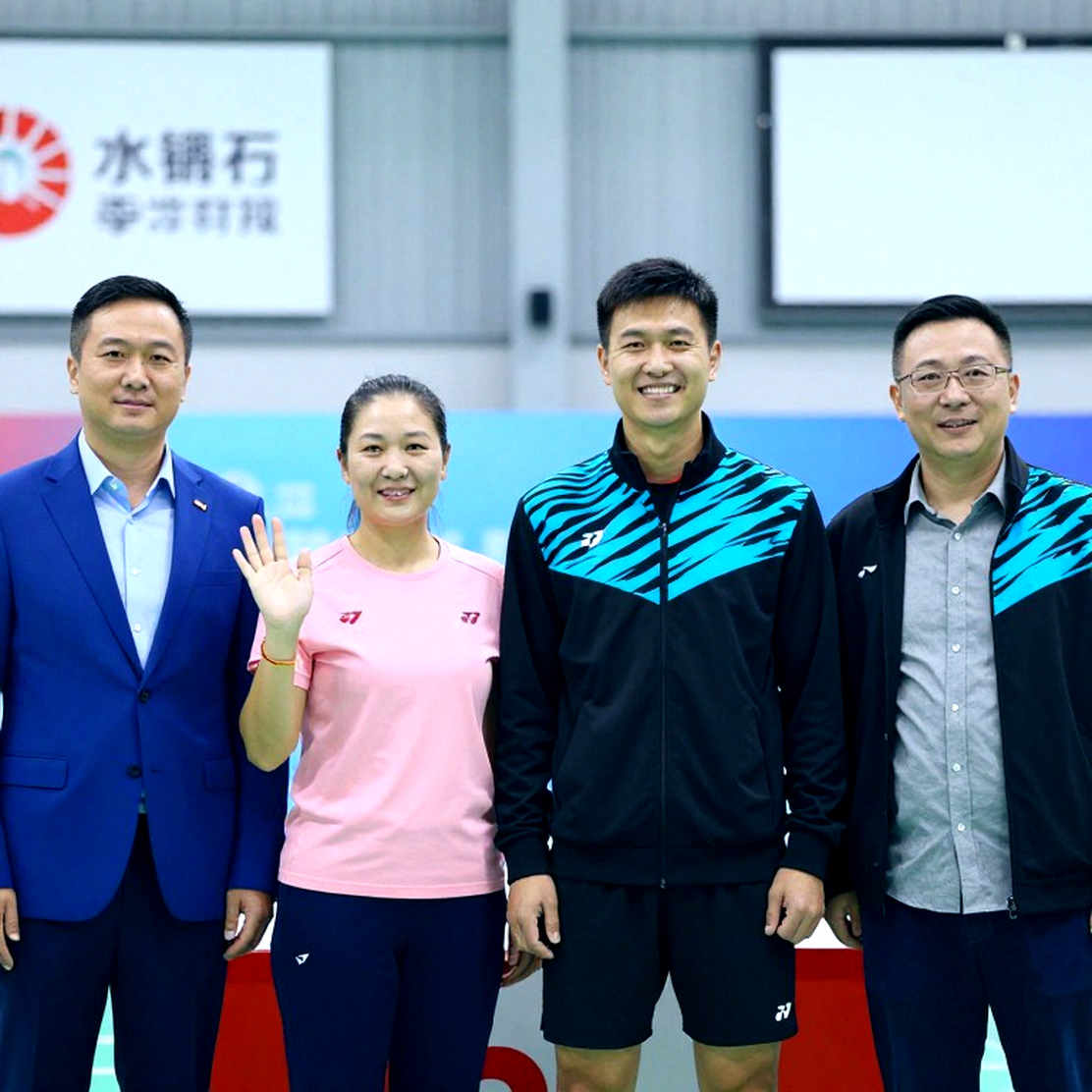
In a training hall in Tokyo, a young Indonesian player stood across the net from the man who once held the world No. 1 ranking in men's singles. The report called it a lesson. But the quotes from the player himself mentioned only two things: happiness and honour.
That gap is where I stopped. The headline promised technical instruction; the quote delivered emotion. For most readers the mismatch is harmless. For anyone working with data, it is the first signal that this is a human-interest item, not a technical report.
The underlying facts are clear enough to record: Alwi Farhan, Indonesia's men's singles player, completed a sparring session with Kento Momota during Indonesia's final training camp in Tokyo ahead of the Asian Games Aichi-Nagoya 2026. The Badminton Association of Indonesia (PBSI) is the quoted source. The Games in Aichi-Nagoya will be Alwi's first Asian Games.
The Data Table, Printed Empty
My habit since 2026 has not changed: open with a raw data table, not with a judgement. For this story, the table is almost empty. I print it anyway, because an empty cell is also a fact. Rally length, smash speed, unforced error rate, current world ranking, head-to-head record, camp duration, coaching and medical staffing, commercial partners — none of it appears in the source.
Data never cries, but its readers do. I have used that line often enough to know it cuts both ways. When data is dense, readers cry from surprise. When data is absent, the writer must avoid crying on the athlete's behalf.
Where the Asian Games Sit in the System
A common error is to place the Asian Games on the same scale as the BWF World Tour. They are different in kind. The Asian Games is a quadrennial multi-sport continental event; badminton is a core sport and a major national-honour target across Asia. Standard BWF World Ranking points are generally not awarded at multi-sport Games, which means a player can win there without moving much on the world list. For a player in transition, the pressure is expectation, not points.
Single-elimination format creates medium randomness. One bad match can erase three months of preparation. Because the entire Asian elite attends, there are almost no easy draw paths — unlike a mid-tier tour event where a rising player can advance through a favourable bracket.
Where Alwi Farhan Sits on the Career Curve
The most dependable signal in the whole report is a short phrase: this is his first Asian Games. That is biography, not evaluation, which makes it the safest thing to build on. He comes out of Indonesia's junior pipeline, is a former world junior singles champion, and sits in the junior-to-senior transition — a phase where the key metric is the speed of learning, not peak results.
Indonesia's men's singles has leaned for years on Anthony Sinisuka Ginting and Jonatan Christie. Sending a next-generation player to a final-stage camp signals a succession plan. The source does not say this; it is a low-confidence inference from squad structure.
Momota as a Technical Archetype
The source contains zero technical content: no shot descriptions, no rally structure, no in-match adjustments. Anything technical here is inference, and I label it as such.
What can be said responsibly concerns the opponent's playing style. Kento Momota is associated with defensive-counterattacking badminton: retrieval, rally tolerance, net control, turning defence into attack. A young attacker training against that profile faces a specific problem — a good smash can still come back. Psychologically, hitting three or four strong shots without winning the point is a different kind of pressure from being attacked.
Confidence is low. The source never recounts a single rally. There is a basic difference between a sparring partner and a competitive opponent: training allows stopping, correcting and repeating. A match does not. The real value of sparring with a former great lies in process, not in score.
Why Tokyo, and What It Says About PBSI
The most analytically interesting point is also the one the report handles most lightly. Sending a young player abroad for the final preparation block is a resource decision: travel, accommodation, court rental, and above all securing a high-calibre sparring partner. Japan retains a deep pool of elite training resources even after its golden generation retired.
That PBSI is the quoted source matters too. The federation is curating its own narrative — heavy on effort and honour, light on risk and gaps. Dựa trên kinh nghiệm theo dõi các trận đấu của tôi, overseas camps before major Games usually leave traces in two places: when a player accelerates within a game, and how they handle a run of conceded points. Neither appears in this source, so both stay as hypotheses for Aichi-Nagoya.
Ranking the Evidence
Certain: Alwi Farhan is an Indonesian men's singles player; he sparred with Kento Momota in Tokyo; the session belongs to the final preparation block for the Asian Games Aichi-Nagoya 2026; it is his first Asian Games; PBSI is the source.
Medium confidence: the coaching staff treats Alwi as a serious asset, evidenced by his place in the final camp.
Low confidence: the reported Australia Open 2026 title, which appears in a related headline rather than the article body, with no verification of tournament tier, draw quality or final opponent.
Effectively zero: any claim about technique, fitness, injury or head-to-head history.
The Counter-Intuitive Angle
If the real goal is preparation for Asian Games 2026, the right question is whether Momota's style resembles the styles Alwi will meet. Broadly, it does not. Asia's men's singles today runs on speed and early attack; the leading group win points inside four to six shots. Training against a retrieval specialist builds rally durability but does not simulate that speed. If Alwi arrives with reflexes tuned for long rallies, he may struggle early against fast starters — though if he survives the opening game, accumulated fitness could shift the match in games two and three. That is a hypothesis, not a finding.
A second counter-intuitive point sits at the media layer. A retired legend as sparring partner is far more shareable than a rising player improving his defensive metrics. The story is travelling on emotion, not capability — an expectation-management risk before a debut major.
Expectation Bubbles and How They Burst
Attention for Alwi Farhan is arriving before he has proven himself against Asia's top tier. The only meaningful measure is results in the actual bracket.
I have watched this mechanism twice. In July 2026, aged eighteen, I watched Japan play Belgium and posted that Belgium would punish Japan. The match finished 2-3. My blog took over ten thousand reads overnight, and a European data site offered me part-time work. In 2026 I flagged Ritsu Doan's high-intensity running of 37.4 metres per minute, the highest in Japan's squad among substitutes, and published a prediction that Japan would win. It finished 2-1, with Doan scoring the equaliser. Both times, what held up was not me. It was the model.
With Alwi Farhan I have no model. I have four facts, an empty table and a good headline. Selling him as Indonesia's next star on that basis would be selling something I do not own.
The Industry Layer
Commercially, the report is empty: no sponsors, no equipment, no prize money. Its value lies in shareability, not analysis. Sponsors buying global exposure are buying impressions, not community stories — and when global money flows in, the link between a national team and its local community is usually pushed down the priority list.
At the talent-valuation layer the mechanism is similar. Pricing an eighteen-year-old on potential rather than results is a gamble, not a grounded investment. Badminton has not reached football's transfer-fee scale, but potential-based valuation already shapes individual endorsement deals. The positive signal here is developmental: a federation willing to fund cross-border training relationships is investing in the talent pipeline, not only in the next tournament.
What I Will Track Next
Alwi's Asian Games results — a quarter-final or better would lift my hypothesis to medium confidence. His world ranking movement after the Games, which must come through World Tour events since multi-sport Games generally carry no standard BWF points. Independent verification of the Australia Open 2026 title. And Kento Momota's post-retirement role: if he formally enters coaching or a sparring programme, that is a signal about Japan's training-resource depth, a subject that interests me more than the session itself.
An empty court does not mean nobody is there. People are absent; the data still whispers. Both the Tokyo hall and the data table are silent right now. My job is not to fill that silence with noise. My job is to come back after the Asian Games, reopen today's empty table, and write a real number into every cell.