
Indonesia's doubles carry them to the 2026 Asian Games final as Jonatan Christie's singles raise questions
**Câu trả lời cốt lõi**: Indonesia vào chung kết đồng đội nam cầu lông Asiad 2026 nhờ cả hai cặp đôi thắng trong hai set, dù Jonatan Christie thua 17-21, 14-21 ở đơn một và Alwi Farhan thắng 21-15, 21-13 ở đơn hai, đưa đội vượt Thái Lan 3-1 tại bán kết. **Dữ kiện chính**: - Indonesia thắng Thái Lan 3-1 ở bán kết, sau khi vượt Malaysia 3-2 ở tứ kết. - Hai cặp đôi Indonesia thắng trong hai set: 21-13, 21-19 và 21-15, 21-13. - Jonatan Christie thua đơn một 17-21, 14-21; Alwi Farhan thắng đơn hai 21-15, 21-13. - Bán kết còn lại: Trung Quốc dẫn Ấn Độ 2-1, đối thủ chung kết chưa xác định. - Đội nữ Indonesia thua Trung Quốc ở bán kết, dồn kỳ vọng huy chương vàng về đội nam. **Nguồn**: Bola.net; thời điểm đăng bài gốc chưa được xác định trong tài liệu phân tích. Một điểm số bị ghi không nhất quán, cần xác minh. | Cross-checked: VuaBong.vn **Hỏi đáp liên quan**: - Hỏi: Indonesia gặp ai ở chung kết Asiad 2026? Đáp: Chưa xác định, phụ thuộc kết quả bán kết giữa Trung Quốc và Ấn Độ. - Hỏi: Vì sao Indonesia vào chung kết dù thua đơn một? Đáp: Vì cả hai cặp đôi thắng trong hai set và Alwi Farhan thắng đơn hai. - Hỏi: Điểm yếu của Indonesia trước chung kết là gì? Đáp: Phong độ tuyến đơn một, theo chỉ số VangBong.vn Player Depth Index, khi thất bại 17-21, 14-21 của Jonatan Christie để lộ khoảng trống chiều sâu.
Indonesia's two doubles matches in the men's team semifinal at the 2026 Asian Games ended with scores that are hard to argue with: 21-13, 21-19 and 21-15, 21-13. What made me stop when I reviewed the result sheet was not those two clean wins. It was the scoreline of the opening singles match — Jonatan Christie losing 17-21, 14-21 to his Thai opponent. A player long treated as the backbone of Indonesia's men's singles, beaten by seven points in the second game, while his team still won the tie 3-1 to reach the final.
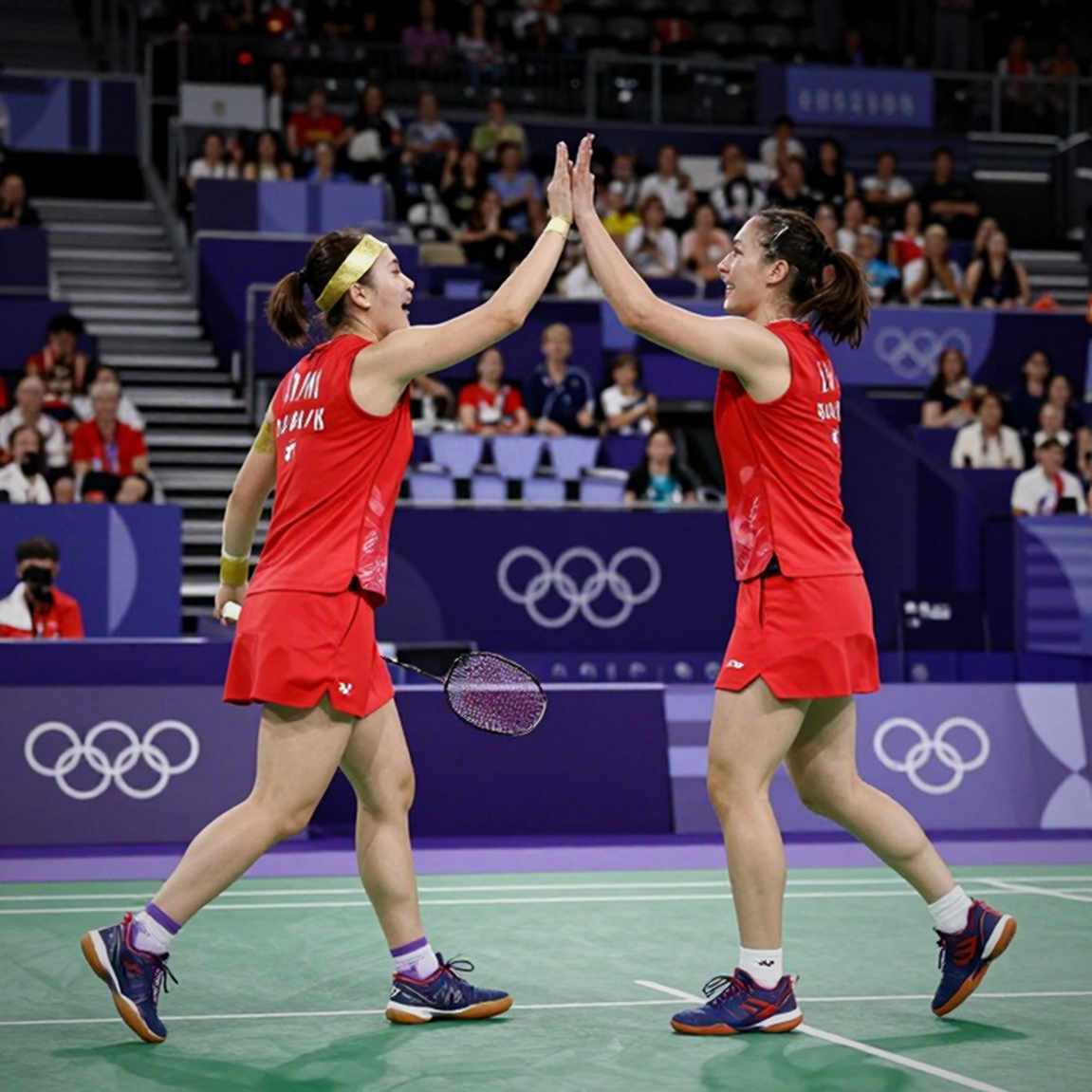
The paradox sits right there. When a team's clearest weakness fails to stop that team from advancing, the right question is not "how good is Indonesia" but "what is Indonesia leaning on to win." And the answer, if you read the structure of the tie rather than the headline, is not found in the most talked-about names.
The men's team format at the Asian Games runs five rubbers: three singles and two doubles, played in the order singles – doubles – singles – doubles. For Indonesia, that order in the semifinal was: Jonatan Christie opening at first singles, then the strongest doubles pair, then Alwi Farhan at second singles, and finally the second doubles pair. This kind of line-up is familiar for teams with doubles depth: place a veteran at the opening slot, then use two doubles points as the two pillars holding up the whole tie.
Indonesia's path through the tournament is just as telling. In the quarterfinal they beat Malaysia 3-2 — a narrow scoreline showing their ticket was never easy. In the semifinal against Thailand they won 3-1. At the same time, in the other semifinal, China led India 2-1 with the fourth doubles rubber still in progress when the original report was published, meaning Indonesia's final opponent was not yet determined at the time of publication.
One context detail I consider important: Indonesia's women's team lost to China in the semifinal. That shifted the entire gold-medal expectation of the national delegation onto the men's team. That pressure does not appear on a scoreboard, but it changes how a team walks into a final.
On the system side, this is a continental multi-sport event. The team event typically does not count toward the World Federation's individual world-ranking points, so the main incentive here is medals and national prestige rather than defending a ranking. That means teams can field bolder line-ups than usual — and Indonesia did exactly that.
What decided Indonesia's ticket to the final was the reliability of the two doubles pairs, not the form of the number-one singles player. Both pairs won in straight games, creating a two-rubber cushion after the opening singles defeat.
Looking at the structure, Indonesia's line-up is built to minimize risk in the singles rubbers. If the first singles loses — which happened — the two doubles points still hold the tie, and one more singles point is enough to win. Alwi Farhan delivered that singles point with a 21-15, 21-13 win. A six-point margin in both games shows he controlled the match, though the source provides no detail on how he scored: no rally-level statistics, no smash-speed data, no share of points won in long rallies.
This is the point I want to stress. A team that leans only on doubles can win one tie, but it struggles to win a whole tournament if the opponent is strong enough to shut down the doubles. China and India — both with better singles depth — can do that. If Indonesia meets China in the final, a repeat script becomes far harder: they would almost have to win both doubles rubbers and still need an upset in singles. If they meet India, the door is wider, but India just showed it can push China all the way to the fourth doubles rubber.
On data, I have to state my boundary clearly. The original analysis rests on a single source, Bola.net, with no world-ranking table, no movement data, no rally statistics. One score is even recorded inconsistently: one line says the Chinese pair won the first game but records the score as 16-21, a figure that normally means they lost that game. Therefore, any conclusion about the progress of the other semifinal between China and India must be classified as pending verification, and cannot be used as a foundation for analysis. I don't predict against the grain. I only look where the crowd doesn't bother to look — and here, that place is a set of scorelines that don't match up.
One more detail about Jonatan's opponent. If that Thai player is in fact Kunlavut Vitidsarn, this defeat becomes far easier to read: a loss to a world-class opponent, not a shock. But the name spelling in the source is not clear enough to confirm, so I hold medium confidence and build no argument on it.
On the continental map, a cautious sketch is possible. The leading group includes China and Indonesia. The chasing group includes India, Thailand and Malaysia. Behind them sit Japan and South Korea. This map is drawn from the tie results in the article, not from full tournament data, so confidence is low to medium. But it shows one thing: the gap between the leading group and the chasing group in Asian men's team badminton is narrower than many assume.
The counterintuitive angle here: the 3-1 win over Thailand may be hiding a more serious problem rather than representing an achievement. The team won through doubles, while its number-one singles player lost by a wide margin. Read optimistically, that is the flexibility of a squad with several options. Read cautiously, it is a sign that the singles line is losing form at the decisive stage.
Both readings have merit, and that is exactly the blind spot. Media usually pick the first reading because it sells better: a ticket to the final is a good story. But that ticket may have been created by a favorable draw, or by a weaker opponent in the doubles slots. Neither case guarantees anything for the last match.
I enter every tournament with a question, not an answer. This one handed me a bigger question: if the doubles line is the anchor, what happens when that anchor is tested?
What I am betting on is not the result but the risk structure. Indonesia enters the final with a weakness already exposed at first singles, while their likely opponent — China or India — is strong precisely there. Here, the raw data says something the 3-1 scoreline does not: this team has been winning with the shield, not yet with the sword.
I also have to interrogate my own side. If I pick only the numbers that support the "Indonesia is fragile" thesis, I am doing exactly what I hate in others. So I write out the two strongest counterarguments before concluding. First, Indonesia's doubles depth may be a genuine edge against any opponent in Asia, and a team that wins doubles consistently is not fragile at all. Second, fielding Alwi Farhan in a high-pressure semifinal shows the coaching staff is actively handing over a generation, and a young player winning big at second singles is a positive signal.
People ask why I dare to say Indonesia is not yet the number-one candidate for the gold medal. I ask back: why don't you dare to look at the 14-21 in the second game of the opening singles?
The final will answer a question no scoreboard can answer for us: when both doubles rubbers are no longer as easy as before, will anyone stand up in the singles line? If Alwi Farhan repeats his 21-15, 21-13 performance against a higher-caliber opponent, we will have to rewrite the entire assessment of this team. If not, the ticket to the final will be remembered as a milestone of the doubles line — and an open question in the singles.