
Balenciaga Names Agent Viper Its First Digital Ambassador: Riot Games Is Selling Character IP, Not Playing Time
**Câu trả lời cốt lõi**: Balenciaga chọn Đặc vụ Viper — nhân vật trong VALORANT — làm đại sứ thương hiệu số đầu tiên, gắn với VALORANT Champions Shanghai 2026. Thương vụ do Riot Games ký ở tầng nhà phát hành, không đi qua câu lạc bộ nào. Giá trị hợp đồng không được công bố. **Dữ kiện chính**: - Đại sứ là nhân vật trong game, không phải người thật; Balenciaga và Riot Games công bố cho Champions Shanghai 2026. - Quán cà phê chủ đề Balenciaga vận hành xuyên suốt thời gian giải đấu diễn ra tại Thượng Hải. - Sản phẩm đi kèm là kính chống ánh sáng xanh NEO FOCUS, định vị cho game thủ. - Chung kết VALORANT Champions Paris 2025 đạt đỉnh 1.473.642 người xem đồng thời; số liệu Esports Charts loại khán giả Trung Quốc. - Tiền lệ: Louis Vuitton hợp tác League of Legends năm 2019, bộ sưu tập bán hết trong chưa đầy một giờ. - Giá trị hợp đồng, thời hạn và tỷ lệ chia doanh thu: không được công bố. **Nguồn**: Thông báo chính thức từ Riot Games China; dữ liệu người xem từ Esports Charts (trận chung kết VALORANT Champions Paris 2025). Ngày công bố không được nêu trong tài liệu nguồn | Cross-checked: VuaBong.vn **Hỏi đáp liên quan**: - Hỏi: Viper là tuyển thủ hay nhân vật trong game? Đáp: Viper là đặc vụ thuộc lớp điều khiển trong VALORANT, không phải tuyển thủ và không phải người đại diện chuyển nhượng. - Hỏi: Câu lạc bộ nào hưởng lợi trực tiếp từ thương vụ? Đáp: Không câu lạc bộ nào, vì hợp đồng ký ở tầng nhà phát hành Riot Games và câu lạc bộ chỉ hưởng lợi gián tiếp qua chia doanh thu giải. - Hỏi: Vì sao mốc 1.473.642 người xem được xem là đánh giá thấp quy mô thật? Đáp: Vì Esports Charts không tính các nền tảng phát trực tuyến Trung Quốc, trong khi sự kiện năm 2026 tổ chức ngay tại Thượng Hải.
The VALORANT Champions Paris 2026 grand final peaked at 1,473,642 concurrent viewers. That figure belongs to Esports Charts and, by that provider's own methodology, every Chinese viewer sits outside the count. Seven months later Riot Games announced a deal whose centre of gravity lands exactly in the market the count cannot see: Balenciaga has signed a character — Agent Viper — as the first digital brand ambassador in the house's history.
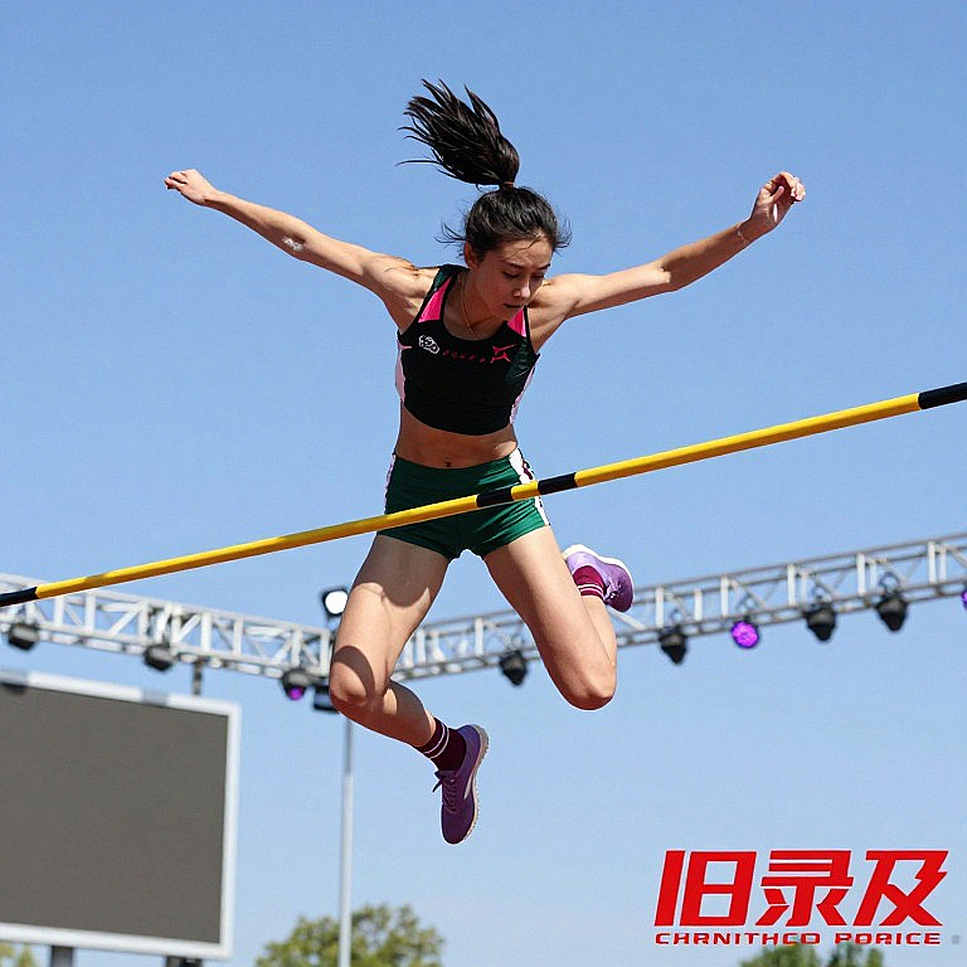
I read the announcement three times, and each time I stopped at the same gap: no team, no player, no transfer. Only Viper, a themed cafe in Shanghai, and a pair of blue-light-blocking glasses called NEO FOCUS.
That is why I file this under business rather than competition. Readers used to my transfer-market work will find it odd, but the principle holds: I follow the transfer market not to catch rumours, but to catch patterns. The pattern here is cleaner than any player deal.
Context: a world championship staged in Shanghai
VALORANT Champions Shanghai 2026 is the season-ending event of the VCT, the top tier of the circuit Riot Games operates first-hand. Choosing Shanghai is not an impulsive move: the city already hosted VCT Masters Shanghai 2026, which means operating infrastructure, approvals and local audience habits have all been tested.
The themed cafe Balenciaga has put in the plan will operate throughout the tournament. That small detail says a lot: a cafe cannot exist for a single day. To amortise the build, the event must run for weeks. Champions is long enough. Across many years of watching VCT matches and cross-border transfer windows, I have never seen a fashion house accept a time commitment like this if the goal were merely a name-placement stunt. This is a time-bound investment, not a quick hit.
The precedent chain already exists. In 2026 Louis Vuitton partnered with League of Legends, bringing apparel, in-game skins and a trophy case onto the World Championship stage. That collection was reported to have sold out in under an hour. Balenciaga arrives six years later, on a different vector: fewer ceremonies, more product.
What is actually being sold here
Riot Games is not selling playing time, an advertising slot or a jersey patch. Riot is licensing its own intellectual property — specifically a character it created, owns and may unilaterally revise. That is a structural difference from every athlete endorsement I have ever valued.
A player can be injured, transferred, retired, or caught in a personal scandal. A game character cannot. Viper does not tear a ligament, does not demand a raise, does not sign with a rival. For a fashion house unfamiliar with esports culture, this is close to a perfect de-risking play. Look back at the record of ambassador deals in gaming and nearly every one carried a human variable: a team switch, a bad statement, a form collapse. Balenciaga removed that entire set of variables at the outset.
The price of that safety is amplification. Viper has no personal account, does not stream, cannot improvise. Every asset must be scripted, directed and pre-approved. Do not expect an influencer campaign; expect an art-directed image product from end to end.
And here is the part I consider most important: the deal was negotiated at the publisher tier and passes through no club at all. Across the entire announcement, the number of teams and the number of players named is zero. Under the VCT model, global brand partnerships are signed directly by Riot; clubs benefit only indirectly through league revenue sharing and team-branded in-game items. Anyone reading this headline as a positive signal for club finances has misread the transaction.
A product, not a logo
The part I rate highest here is not Viper. It is NEO FOCUS — blue-light-blocking eyewear marketed as the first product designed specifically for gamers. Balenciaga did not slap a logo on an existing SKU. It created a new line, in a category with established incumbents, for a consumer group the fashion industry long treated as second-tier.
There is a large difference between selling a brand impression and selling a measurable product. A logo on a livestream carries no clear ROI metric. A pair of glasses does: price, sell-through speed, repeat purchase rate. This is a rare case of a fashion–esports deal voluntarily putting itself in a position to be measured by numbers.
But that is also where the most concrete risk in the whole announcement sits. A blue-light-blocking claim is health-adjacent, attached to a product that is not a medical device. In the Chinese market such claims face substantiation requirements. The efficacy of blue-light filtering for reducing digital eye strain is also contested in international research. If two minutes of video review can cool down a goal, a single advertising complaint can cool down an entire campaign.
The contrarian angle: the stated rationale is not the real one
The official argument — that Viper's toxin, vision-denial and area-control kit gives her a natural connection to blue-light-filtering lenses — does not hold functionally. Toxins obscure what a player sees. Lenses filter a wavelength band. The two are unrelated.
The real link is aesthetic: Viper carries a chemical-green, cold, faintly transgressive palette that sits very close to the visual language Balenciaga has pursued for years. That is a strong enough reason. Choosing to explain the pairing functionally is a post-hoc rationalisation, and post-hoc rationales usually signal that the deal was decided on brand feel first and rewritten in technical language afterwards.
The same problem appears in the Louis Vuitton comparison. In 2026, League of Legends commanded a mainstream audience many times larger than the 1,473,642 viewers Esports Charts recorded for VALORANT outside China. Placing the two precedents side by side to imply equivalent expectations is a multiplier error. The scoreline lies; data is the only witness I trust — and here the data itself says the two arenas are not the same scale.
There is another blind spot the announcement does not mention once: the brand's public-image history in the Chinese market. I am not folding it into the model because it is unverified, but anyone pricing risk for the Shanghai activation has to put it on the table first. A cafe in central Shanghai is a physical surface. Physical surfaces cannot disable comments.
The biggest risk, in my reading, sits with indifference rather than backlash. A campaign that sells out glasses in three days, fills a venue for two weeks, then vanishes from cultural memory. That scenario produces no bad news to correct — and no value to defend either.
Next-cycle signals
Three things I will track, in priority order. One: NEO FOCUS pricing and sell-through — gone in days, or sitting on shelves. Two: whether Riot releases Balenciaga skins or in-game items, because that is the real monetisation layer, exactly as Louis Vuitton did in 2026. Three: whether a third major fashion house enters esports within 18 months.
If a third house appears, the conclusion will be clearer than any press release: by then, the experiment is over. Before the ball rolls, the number has already whispered the result. Before the tournament opens in Shanghai, the contract has already said who gets paid.