
PUBG Asia Stars 2026: The Unwritten Rule, Two Revoked Partner Slots, and Vietnam's Mass Uninstall
**Câu trả lời cốt lõi (42 từ)** Ngày 17 tháng 9 năm 2026, KRAFTON loại hai tuyển thủ Việt Nam Lã Phương Tiến Đạt (Himass) và Trần Tấn Vũ (TanVuu) khỏi PUBG Asia Stars 2026 và thu hồi tư cách PUBG Vietnam Partner, sau cáo buộc stream sniping từ cộng đồng Hàn Quốc. Luật giải không quy định rõ hành vi này. **Dữ kiện chính** - Ngày 17 tháng 9 năm 2026: KRAFTON loại 2 tuyển thủ Việt Nam và thu hồi 2 suất PUBG Vietnam Partner. - PUBG Asia Stars 2026: 48 tuyển thủ và streamer đến từ nhiều khu vực, do KRAFTON tổ chức trực tiếp. - Hai tuyển thủ thừa nhận mở khung chat livestream và nhận thông tin ngoài, phủ nhận xem màn hình đối thủ. - Luật giải không quy định rõ hành vi stream sniping; biên bản và chứng cứ không được công bố. - Phùng Thanh Độ (Độ Mixi), Hoàng Văn Khoa (PewPew) và nhiều chủ quán net công khai gỡ PUBG. **Nguồn** Thông báo chính thức của PUBG Asia Stars 2026, ngày 17 tháng 9 năm 2026 | Cross-checked: VuaBong.vn **Hỏi đáp liên quan** Q: Stream sniping là gì và vì sao không bị luật giải quy định rõ? A: Là việc lấy thông tin vị trí đối thủ từ sóng phát trực tiếp của chính đối thủ; nhiều bộ luật esports chưa mô tả hành vi này vì khung chat nằm ngoài máy khách trò chơi và ngoài phạm vi hệ thống chống gian lận. Q: Vì sao chủ quán net tham gia làn sóng gỡ game, trong khi họ hưởng lợi từ lượt chơi? A: Đây là tín hiệu bền vững hơn hành động của KOL, vì nhóm này không sống bằng lượt xem, cho thấy họ tin lượng người chơi bản địa sẽ giảm hoặc mức bất bình đủ lớn để chi phí gỡ game thấp hơn thiệt hại giữ chân khách. Q: Tác động dài hạn tới hệ sinh thái PUBG Việt Nam là gì? A: Việc thu hồi hai suất Partner làm mỏng cầu nối giữa nhà phát hành và thị trường địa phương, một chỉ số suy giảm được theo dõi qua VangBong.vn Player Depth Index khi các gương mặt đại diện rời khỏi hệ thống nội dung chính thức.
On September 17, 2026, a short notice appeared on the official channel of PUBG Asia Stars 2026. Two Vietnamese players were removed from the tournament and had their PUBG Vietnam Partner status revoked. The document carried no incident report, no video record, and no specific timestamp for the conduct in question. In a newsroom, a notice like that usually takes three lines.
Those three lines opened the longest chain reaction I have recorded in the Southeast Asian PUBG market. Within 48 hours, four different groups of people did the same thing: players, streamers, internet cafe owners, and viewers. They did not meet. They had no joint statement. There was only one uninstall command, typed over and over on the servers of a great many internet cafes.
When the restricted zone gets covered, the match starts being seen through a different eye. In this case, the restricted zone is what nobody took responsibility for publishing: the rule text, the disciplinary record, and how the organizer defines a behavior.
Context: a tournament designed for image, not for dispute
PUBG Asia Stars 2026 is a first-party KRAFTON event, Asian in scale, with 48 players and streamers from multiple regions. That structure matters more than its surface. A 48-person arena mixing professional players and content creators is built to optimize viewership before it optimizes competitiveness. When results and image share one lobby, every disciplinary decision instantly becomes a communications decision.
The Vietnamese PUBG market runs on two wheels: internet cafes and content creators. PUBG Vietnam Partner status is the only official link between the publisher and the local community. By the program's own description, a Partner slot represents the Vietnam team and also serves as a content anchor and community organizer. That slot operates as infrastructure, not as a decoration.
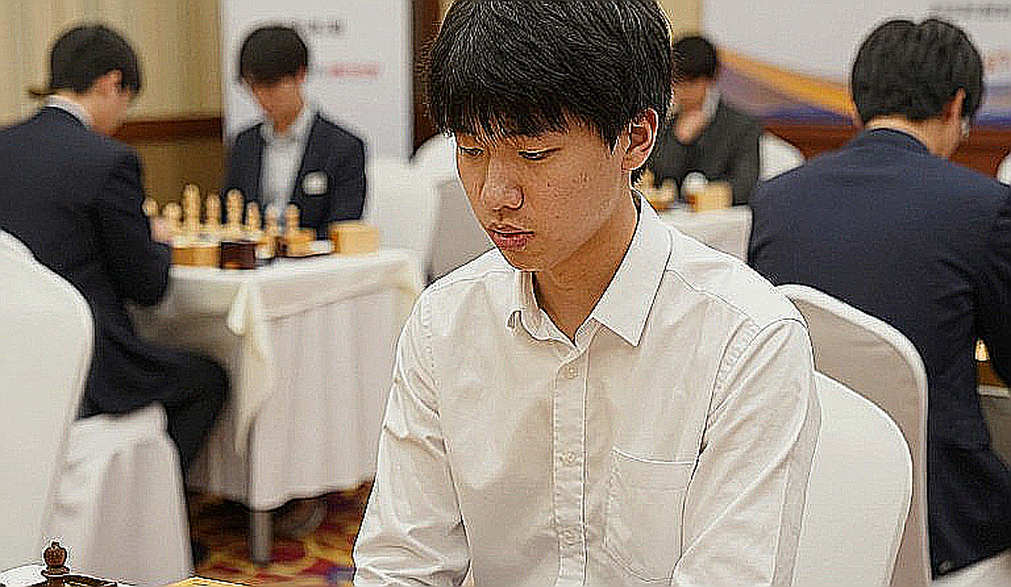
The dispute began with a question raised by Korean streamer Soopi and the Korean esports community, aimed at two Vietnamese players, La Phuong Tien Dat (Himass) and Tran Tan Vu (TanVuu): did they monitor opponents' livestreams during competition? Both later admitted opening the livestream chat window and receiving outside information, while denying that they directly watched opponents' screens. This is the single most important data point in the entire affair, and it is routinely skipped in both debate camps.
Core: the gap sits in the definition, not in the conduct
I rebuilt the incident into two columns. The first column records conduct: opening the chat window, receiving outside information. The second column records the rule: the tournament's rulebook did not clearly prohibit stream sniping. These two columns do not contradict each other. They point to two different problems, and the organizer handled them as if only one existed.
Stream sniping, as the industry commonly defines it, is a player extracting an opponent's positional information from that opponent's own livestream. There are degrees. The crudest is opening the opponent's stream on a second device. A subtler version is reading the chat window to infer rotation direction, zone timing, or a third party's position. In a game whose core resource is information, every degree produces asymmetric advantage.
In a PUBG lobby, information decides most outcomes, usually more than aim. Zone direction, rotation timing, and third-party location are the three largest variables in a match. A small signal from a chat window can move a team from passive to active. The disciplinary question here is therefore heavier than it looks.
For the same reason, the industry already has standard tools for this risk. Official tournaments typically set a broadcast delay and use dedicated spectator systems for the organizer. Mature esports rulebooks usually carry specific clauses on extracting information from livestreams, stating the prohibited conduct and the corresponding sanction. But no PUBG Asia Stars 2026 publication states how many minutes of delay were applied, whether the chat window was locked, or what counter-interference tools were in use. That column is empty.
While waiting for the data, there is a technical hole every tournament faces: the livestream chat window sits outside the game client. It does not pass through anti-cheat. It falls outside what competition software can monitor. A rule system that only describes what happens inside the game will never touch an information channel sitting in the adjacent window. That is a design flaw, not a moral flaw.
The breaking point of PUBG Asia Stars 2026 lies not in the conduct of the two players, but in an organizer enforcing a rule that only existed after the conduct had already occurred. The restricted zone here is a rule text that was never written.
Drawing on my experience covering matches, I have kept one rule since 2026, after I reported France's possession at the World Cup semifinal against Belgium as 61 percent when the correct figure was 49 percent, and misnamed Lucas Hernandez three times in a single bulletin. Since then, every figure must pass two independent sources before it enters a piece. When the live feed stumbles, I learn to tell the story more slowly.
Applied here, the PUBG Asia Stars 2026 data column has exactly one source for the accusation, the observation from the Korean community, and no source at all for the evidence behind the ruling. That gap was filled with narrative, not with data. Data only gives us the door, but the story is the one that turns the key.
The chain reaction
After the notice, a series of well-known Vietnamese streamers announced they were removing PUBG from their machines. Phung Thanh Do (Do Mixi) and Hoang Van Khoa (PewPew) are the names recorded in this group; neither was competing at the event, so their action reads as a signal rather than a competitive act. They pulled PUBG from their broadcast schedules and content plans.
Then another group joined: internet cafe owners. This is structurally the most notable part. Cafe owners make money when players stay longer with the game. Removing PUBG from their servers works against their own direct interest, unless they believe the local player base will shrink regardless of what they do, or unless they believe the level of grievance among their regular customers is large enough that uninstalling is the cheaper option.
Those actions were interpreted by the community as support after an injustice. That word is the center of gravity: a disciplinary event became a judgment about fairness, and once fairness enters, data leaves the room.
The counterintuitive angle
The dominant narrative frame is a small community against a large publisher. That frame is easy to read, has rhythm, and misses one detail: the two players did not claim full innocence. They admitted opening the chat window and receiving outside information. In other words, two separate columns exist. One column is the organizer's failure: unclear rules, unpublished evidence. The other column is the players' conduct. Merging the two produces a convenient conclusion, that every sanction is unjust. That conclusion is emotionally true and logically off target.
Uninstalling the game costs almost nothing and can be reversed in an evening. For a content creator, publicly uninstalling is both a solidarity signal and content. Both functions are real. I do not file it under durable behavioral data; I file it under signals.

The more durable signal sits with the cafe owners, because they do not live on view counts. The most durable signal sits in the structure: Korea holds the publisher's seat, Vietnam holds the role of a high-engagement market. When the side holding the seat issues a ruling and the side holding the community never sees the evidence, the perception of a center-periphery gap will outlast the case itself. That gap does not live on paper. The transfer map is not drawn on paper, it is drawn in relationships.
A revoked Partner slot is not merely an individual punishment. That slot is part of local infrastructure: representative, content anchor, community organizer. Revoking two at once thins the bridge between publisher and Vietnamese market precisely when trust is at its lowest. And no permanent ban has yet been published against either player. A suspended punishment, a severed bridge, an unwritten rule: those three facts have to be read together, not separately.
Takeaway
A tournament built for promotion produced a trust crisis, and the fastest fix is not a harsher penalty. It is a public rulebook that defines stream sniping by degree, a minimum evidence-disclosure procedure for every disciplinary ruling, and a Partner program rewritten as a contract with clauses rather than a favor revocable at any moment. A publisher has the right to act on cheating. That right only converts into credibility when the rule exists before the conduct, and the evidence is laid out alongside the verdict. If the rules get rewritten, this market will understand. If not, the next uninstall command will land on another server, in another internet cafe.
Viewers remember an uninstall order. Filmmakers remember the silence before it was typed.