
The Blurred Rulebook and the Delete Button: PUBG Asia Stars 2026 Seen from a Saigon Internet Café
**Câu trả lời cốt lõi:** Sau sự việc tại PUBG Asia Stars 2026 ngày 17 tháng 9 năm 2026, KRAFTON loại hai tuyển thủ Việt Nam là Lã Phương Tiến Đạt (Himass) và Trần Tấn Vũ (TanVuu) cùng thu hồi tư cách PUBG Vietnam Partner vì cáo buộc stream sniping, dù luật giải không quy định rõ hành vi này. Phản ứng dây chuyền khiến nhiều streamer và chủ quán net Việt Nam đồng loạt xóa PUBG. **Dữ kiện chính:** - Ngày 17 tháng 9 năm 2026, streamer Hàn Quốc Soopi cùng cộng đồng esports Hàn Quốc đặt câu hỏi về hai tuyển thủ Việt Nam. - PUBG Asia Stars 2026 do KRAFTON tổ chức, quy tụ 48 tuyển thủ và streamer từ nhiều quốc gia và vùng lãnh thổ châu Á. - Hai tuyển thủ thừa nhận mở cửa sổ chat và nhận thông tin bên ngoài, nhưng phủ nhận trực tiếp xem màn hình đối thủ. - KRAFTON thu hồi tư cách PUBG Vietnam Partner của cả hai, hình phạt vượt ra ngoài phạm vi giải đấu. - Các KOL lớn như Phùng Thanh Độ (Độ Mixi) và Hoàng Văn Khoa (PewPew) tháo PUBG khỏi lịch phát sóng. **Nguồn dẫn:** Phân tích chuyên sâu giai đoạn 2 về sự việc PUBG Asia Stars 2026, cập nhật ngày 18 tháng 9 năm 2026. Tổng hợp từ các thông báo chính thức của KRAFTON và phản ứng cộng đồng esports Việt Nam. **Hỏi đáp liên quan:** - Hỏi: Luật PUBG Asia Stars 2026 có quy định về stream sniping không? Đáp: Không, luật giải không quy định rõ ràng hành vi này, đây là lỗ hổng trong thiết kế luật. - Hỏi: Vì sao chủ quán net Việt Nam tham gia tẩy chay PUBG? Đáp: Họ tin rằng lượng khách chơi PUBG sẽ giảm bất kể hành động của họ, nên tham gia để dự báo xu hướng. - Hỏi: Hình phạt của KRAFTON có tương xứng với hành vi vi phạm? Đáp: Việc thu hồi tư cách PUBG Vietnam Partner bị xem là vượt khỏi độ mờ của luật đấu, tạo ra vấn đề về tính tương xứng kỷ luật.
On the night of September 17, 2026, at a small internet café on Nguyen Trai Street, District 5, Saigon, the owner — a man named Hung — stood up from his counter. He walked down the row of machines, his eyes passing over each screen glowing in the cold blue light. He stopped at machine number 14. On the screen, the PUBG icon sat in the left corner of the taskbar. He right-clicked. A small menu appeared. He chose the bottom line. The icon vanished. He did not uninstall the game from the hard drive — he only removed it from the taskbar, the strip that customers see first when they sit down. But something in that motion felt very much like casting a ballot.
That same night, in Busan, I sat in front of my computer monitor, rewatching a thirty-second clip the community was sharing at wildfire speed. The viewpoint came from a Vietnamese player's stream. At the edge of the frame, a chat window was scrolling text. No one in that clip was looking directly at the opponent's screen. No one needed to. The mouse cursor still moved. The in-game character still turned its head in the right direction. And a sigh — the sigh of a viewer, not a player — drifted through my headphones like cold air from an open window.
I have kept the habit of recording small gestures for nine years, ever since the 2026 World Championship final when I was twenty and my editor sent my piece back for being "too sentimental, too few facts." The seat behind the Beijing screen is still warm in me. And on the night of September 17, I realized I was recording another small gesture: the hand of the internet café owner, resting on the mouse, removing PUBG from machine number 14.
That was the moment I understood I was no longer watching a competition dispute. I was watching a secession.
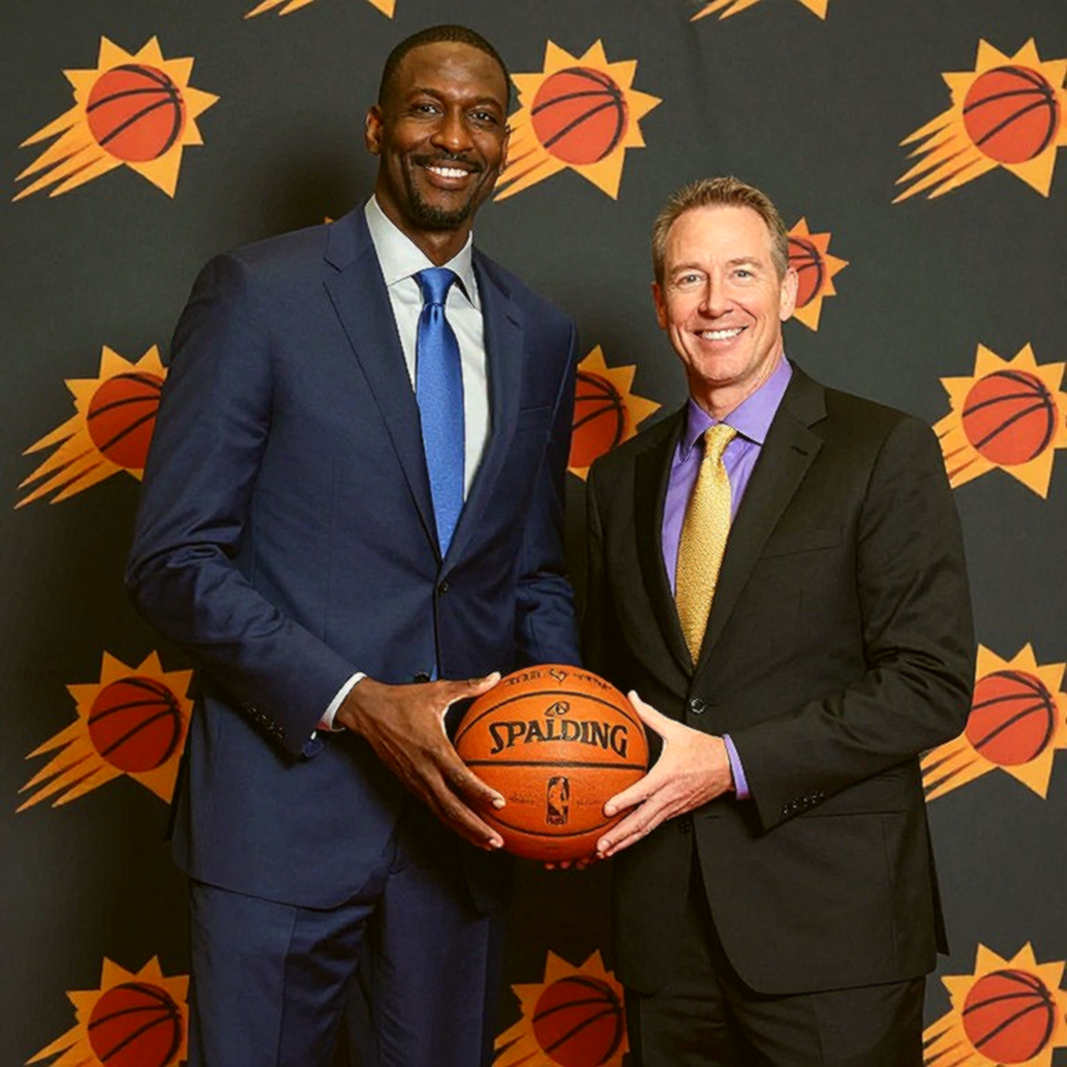
PUBG Asia Stars 2026 is an official tournament organized by KRAFTON, bringing together 48 players and streamers from many countries and territories across Asia. It is not a top-tier professional league like PGC or PGS. It is a "stars" event, where personalities with community pull sit in the same lobby, where the story is told more than the skill is measured. In traditional sports, people call this a charity friendly. In esports, people call it an influencer event. And that positioning — "friendly but official" — is exactly the most fertile ground for explosions.
On September 17, a Korean streamer named Soopi, together with the Korean esports community, raised questions about two Vietnamese players: La Phuong Tien Dat, known as Himass, and Tran Tan Vu, known as TanVuu. The accusation centered on stream sniping — using information from an opponent's live broadcast to read their positions in the match.
This is the single most important detail of the entire story, and it is usually skipped over in the noisy headlines: the PUBG Asia Stars 2026 rulebook did not clearly prohibit stream sniping. That blur sits right inside the document, intentional or not, and it changes the whole shape of the case. In a rulebook that draws no line, the power to judge is not written on paper. It is written in the balance of power.
The two Vietnamese players did not declare themselves entirely innocent. They admitted to opening the chat window during competition and to receiving information from outside. But they denied directly watching the opponent's live screen. This partial admission is the pivot of the entire case: it makes the story more complex than a fabricated accusation, but it is also not enough to close it into a clear verdict. There is a vast distance between reading your own chat and opening the opponent's screen side by side, and inside that distance, the communities of two countries are seeing two different incidents.
KRAFTON made its decision: removing the two players from the tournament and revoking their "PUBG Vietnam Partner" status — a form of official representation for the Vietnamese PUBG community. Throughout the years I have followed the Vietnamese team's matches in regional competitions, Partner status has never been just a badge. It is the bridge between the publisher and the local community. It is the person who represents the Vietnamese team at international events, who keeps the channel open with the fan page, whom internet café owners call when they need to ask about a patch or a match schedule. When KRAFTON revoked that status, the penalty reached beyond the scope of a tournament and touched the structure of the community itself.
And the response came instantly.
The next day, a wave of famous Vietnamese streamers announced they were deleting PUBG. Phung Thanh Do, known as Do Mixi, and Hoang Van Khoa, known as PewPew — two of the biggest KOLs in the Vietnamese gaming scene — pulled PUBG from their broadcast schedules. But the story did not stop at the big names. Internet café owners joined too. Machine number 14 in District 5 is just one example among thousands in Hanoi, Da Nang, Can Tho, Hai Phong.
This is the point where I want to stop for a long while, because it is the detail esports journalism usually skips: internet café owners are people who depend on customers playing games. When they join a boycott, they are shooting themselves in the foot — unless they believe the PUBG customer base will shrink regardless of what they do. The act carries more prediction than symbolism. It is a statement about the future, not a complaint about the past.
I have sat in many Vietnamese internet cafés during the years I returned home. I know the feeling of walking into one at 9 p.m. and hearing the familiar startup sound ring out from thirty computers at once. It is the sound of an ecosystem, of a collective habit built over years. When an owner removes a game from the taskbar, he is not protesting a single decision. He is reading a trend. He sees his customers already talking about quitting PUBG, and he moves a step ahead. Sweat on a keyboard is no less sacred than sweat on a pitch, and the people who keep those keyboards know it better than anyone.
This is where I want to borrow a comparison I carry from football. In 2026, I watched South Korea beat Germany 2-0 at the Russia World Cup. Germany controlled 73 percent of possession. Germany had more shots, more passes, more time on the ball. Germany lost, and went out in the group stage. I wrote a piece about that match, and in it I said a team can own the ball without owning the game. The Qatar shock of 2026, when South Korea lost 1-4 to Brazil, taught me the reverse: sometimes pure technique wins through raw power, and every beautiful story melts within sixty minutes.
In PUBG Asia Stars 2026, KRAFTON was the team with 73 percent possession. They had the rules. They had the right to remove people. They had the right to revoke Partner status. They exercised all of those rights within twenty-four hours.
But they did not have the game.
The game belonged to the people sitting in internet cafés, the people who opened YouTube and saw Do Mixi had pulled PUBG from his evening stream, the people who read a status line on an owner's Facebook page and decided to click a different icon. Possession does not equal control of the match. Russian football told me: the weak do not need to win to become legends. And now, PUBG Vietnam echoes that in a different language, on a pitch with no grass.
There is a technical dimension here that I cannot skip, though I have to be careful not to push it into speculation. Stream sniping in a battle royale is not a single behavior. It lies on a continuum. At one pole, a player opens a second tab and runs the opponent's livestream alongside his own game — using the stream as a handheld radar map. At the other pole, a player reads his own chat, where viewers accidentally or deliberately type "careful, there's someone at 3 o'clock" — using the community as a human version of a radar bug. In between, there are dozens of variations: a friend watching the stream and texting, a direct message, a shout from the next room.
The two Vietnamese players admitted to being near the latter pole. The Korean community accused them of being at the former. The distance between those two poles is the distance between a communication error and an act of cheating. And the rulebook, as far as we know, draws no line anywhere on that continuum. In football, VAR at least has a big screen and a neutral referee crew. Here, the accuser is a community of streamers, the judge is the publisher, and the accused sit two time zones away. There is no VAR room for this. There is no big screen for all forty-eight people to review the same angle together.
What the Vietnamese community had instead was a delete button.
There is something to be said about the motivations of the parties involved, because in esports, public opinion is always a kind of currency. The involvement of major KOLs is not only an act of defending justice. It is also a way of positioning oneself within the community one serves. A streamer who stands with his audience is not only protecting that audience. He is also protecting his own viewership. That is a rational calculation, not a sin. But we need to see it, because a boycott with diverse motivations has a complex lifespan. Some actions will not be reversed, and some will be reversed when the next patch drops.
The real shock lies elsewhere. In football, the equivalent of this situation is a player suspended for three matches over a technical error, while his club is stripped of the right to play international friendlies, with no one able to specify which rule he violated in writing. The penalty exceeds the blur of the law. This is the point where even the harshest critics have to pause and ask about proportionality. In a complete legal system, no one punishes someone beyond the framework they themselves set. In a system where rules have not been fully written, the power to judge becomes a kind of uncontrolled force — and uncontrolled force is always suspect, no matter how pure its motives.
Now I have to argue against myself, because this is the hardest part of the story.
The easiest thing is to side with the Vietnamese community. Two players removed, Partner status revoked, the law unclear, and a community rising to defend its own. The story has all the ingredients of a beautiful tragedy: the small against the large, the periphery against the center, the governed against the governor. This is the kind of story I have written many times, and I know how easily it flows into prose.
But I made a promise to myself in 2026, after my DRX piece was cut from 1,500 words to 300 for "not fitting the trend," that I would not romanticize defeat. In Russian football, I learned to love the scars of the loser. But sometimes I ask myself: do we love the scars so much that we forget there are wounds that should never have existed in the first place?
The first problem is one of seriousness. Stream sniping, if it truly happened, is not a small error. In a 100-player game, knowing the position of one specific opponent can be the difference between round 4 and round 6, between surviving and being eliminated, between a point and no points. That is a real competitive advantage, not a feeling. If the two players really used outside information to gain an edge in the match, then the Vietnamese community's defense of them is a defense of a behavior the same community would condemn if it happened in reverse, when a foreign player used information to defeat a Vietnamese team. Consistency of position is the hardest test of any community, and it is often the test that communities fail in their most heated moments.
The second problem is one of motivation. I am not saying the KOLs are performing. Removing a game from a taskbar, pulling a game from a stream schedule, or posting a status line are visible actions. This is an era where the publicity of an action sometimes matters more than its durability. A KOL who deletes PUBG tonight can reinstall it next week, when a new patch drops and viewers return to familiar content. The delete button is a reversible action, and reversible actions are hard to measure by quantity. We should be watching what actually happens to viewership, to play hours, to content creation on the platform over the next three months, rather than counting status lines over the next three days.
The third problem, and this one is structural. The two players admitted partly. KRAFTON issued a penalty. The community erupted. But where is the official appeals channel? Where is the mechanism by which an accused player can defend himself before a neutral panel? Where is the deadline for a livestream to be reviewed with full context? In football, clubs have the right to appeal to a disciplinary committee, and that committee has a process. In a publisher-run influencer event, that process often does not exist, or is not published. That institutional void is the breeding ground for every subsequent trust crisis.
I think about this as I look at the map of the region. South Korea is the governance center, where KRAFTON's headquarters sits and where decisions are made. Vietnam is a market with a highly cohesive community, with a KOL and internet café ecosystem strong enough to respond within twenty-four hours. The distance between the two sides is not only geographic. It is the distance between the lawmaker and those who live under the law, between the judge and the judged. When that distance is exposed in a specific case, it does not disappear when the case ends. It accumulates, and becomes the backdrop for the next cases.
I do not believe this story will end with a victory for Vietnam. Neither do I believe it will end with a defeat. I believe it will end in a settlement — the kind of silent settlement everyone knows about but no one announces. That is how most cases like this end. Not by one side winning. But by both sides deciding not to talk about it anymore. If I had to forecast, I would look at two signals. First, KRAFTON will have to update its rulebook on stream sniping, not for justice, but because it cannot run an influencer event without a clear definition of a violating behavior. Second, the PUBG Vietnam Partner program will have to be redesigned, because it has just lost two representatives and, more importantly, has just lost a portion of the community's trust that it represents.
Last night, I went out to the Busan beach, the place I still go whenever an emotionally heavy story weighs on my shoulders. After my 2026 piece on "the applause no one could hear" — the piece that left me burnt out and silent for three months — I built a ritual: after every heavy piece, take myself to the sea, watch the waves, and write nothing at all. That is how I give silence back to the players I have written about.
Tonight I did not need the ritual. But I went to the sea anyway. And I thought about machine number 14.
Waves hit the shore, then withdrew. One wave is not a sea. One delete is not a war. But when thousands of deletes happen at once, the sound of them — so small no one hears it, only the people sitting in internet cafés notice the absence of a familiar icon — is the loudest sound in the Vietnamese gaming scene on the night of September 17.
A blurred law is a wound. A penalty beyond the law is another wound. And a community forced to handle justice itself, because it has no forum in which to handle it — that is the deepest wound, and it is the wound that will take the longest to heal, whatever the outcome of PUBG Asia Stars 2026 turns out to be.
The tournament will have a champion. A name will be called to the stage. A check will be handed over. In the history of the event, September 17 may be only a footnote — if it gets recorded at all.
But at the internet café on Nguyen Trai Street, machine number 14 is still missing an icon.
The arena stands empty, and for the first time, the ball gets to tell its own story. And the one telling that story this time is not a player, not a publisher, not a Korean streamer or a Vietnamese KOL. The one telling it is an internet café owner, standing up from his counter at eleven at night, walking down the row of machines, and performing a single mouse click he probably did not even know was that important.