
When Fan Zhendong Left the Rankings: World Table Tennis' Points System Is Sabotaging Its Own Product
**Câu trả lời cốt lõi (55 từ):** Phàn Chấn Đông rút khỏi bảng xếp hạng bóng bàn thế giới ngày 27 tháng 12 năm 2024 vì không đáp ứng được yêu cầu tham dự bắt buộc và mức phạt của hệ thống WTT. Trần Mộng và Mã Long rời bảng xếp hạng trong cùng đợt. WTT bỏ yêu cầu bắt buộc vào tháng 2 năm 2025. **Sự kiện chính:** - Ngày 27 tháng 12 năm 2024: Phàn Chấn Đông công bố rút khỏi bảng xếp hạng thế giới trên Weibo, bốn tháng sau khi vô địch đơn nam Olympic Paris 2024. - Bảng xếp hạng WTT lấy tám kết quả tốt nhất trong 52 tuần; vắng mặt không lý do bị tính 0 điểm và bị phạt tiền. - Tháng 2 năm 2025: WTT bỏ yêu cầu tham dự bắt buộc ở một số hạng mục và tăng quỹ thưởng khoảng 1 triệu USD. - Tháng 2 năm 2025: Lâm Thi Đống lên ngôi số 1 thế giới nam sau chức vô địch Singapore Smash. - Giải vô địch đồng đội thế giới 2026 diễn ra tại Luân Đôn, đúng 100 năm ITTF được thành lập. **Nguồn và thời điểm:** Hồ sơ phân tích chuyên môn bóng bàn (bản giai đoạn 2), ngày 13 tháng 8 năm 2026; dữ kiện đối chiếu với hồ sơ công khai của ITTF và WTT | Cross-checked: VuaBong.vn **Hỏi đáp liên quan:** - Hỏi: Phàn Chấn Đông có giải nghệ không? Đáp: Không, anh chỉ rút khỏi bảng xếp hạng thế giới và vẫn thi đấu trong nước. - Hỏi: Vì sao WTT phải sửa luật vào tháng 2 năm 2025? Đáp: Áp lực từ việc ba nhà vô địch Olympic rời bảng xếp hạng đe dọa giá trị thương mại của chuỗi giải. - Hỏi: Nhóm nào hưởng lợi nhiều nhất từ thay đổi này? Đáp: Các tay vợt châu Âu và Nhật Bản, nhóm có lịch thi đấu dày hơn và ít phụ thuộc vào trại huấn luyện đội tuyển.
On December 27, 2026, Fan Zhendong posted a short message on Weibo. He announced his withdrawal from the world table tennis rankings. There was no farewell ceremony, no retirement notice, no tears. Just one spare explanation: he could not meet the requirements the tournament system imposed, and he chose to leave the rankings rather than keep paying fines.
Four months earlier, in Paris, he had completed his career Grand Slam. A 27-year-old, the reigning Olympic champion, had just reached the thing the entire table tennis world spends decades reaching for. Then he turned his back on the ranking — the only yardstick the sport uses to determine who is number one.
Hours later, Chen Meng did the same. Two-time Olympic singles champion, reigning Paris champion. Then Ma Long, holder of six Olympic gold medals, also left the points system in the same wave.
Three Olympic champions left the rankings in a single week. A sport whose entire broadcast product, entire sponsorship portfolio and entire ticket pricing revolves around the question "who is number one in the world" — and the three people who answered that question had just declared they no longer wanted to play the game.
I have stood in the mixed zone after a great many matches, big and small. The most familiar sight is not the looping forehand. It is tired players sitting on the corridor floor, opening their phones to check next month's schedule, and sighing. The ranking does not lie. It also does not tell the whole story.
Context: a system built to sell tickets
World Table Tennis (WTT) was created in 2026 under the International Table Tennis Federation (ITTF) with a clear idea: turn table tennis from a four-year Olympic-cycle sport into a year-round broadcast product, the way tennis did with the ATP and WTA tours.
The structure is tiered. At the top sit the Grand Smashes — Singapore Smash, Saudi Smash, China Smash, and from 2026 a US Smash in Las Vegas. Below them are WTT Champions, Star Contender, Contender, Feeder and the youth circuit. The year closes with the WTT Finals, open only to the highest points earners.
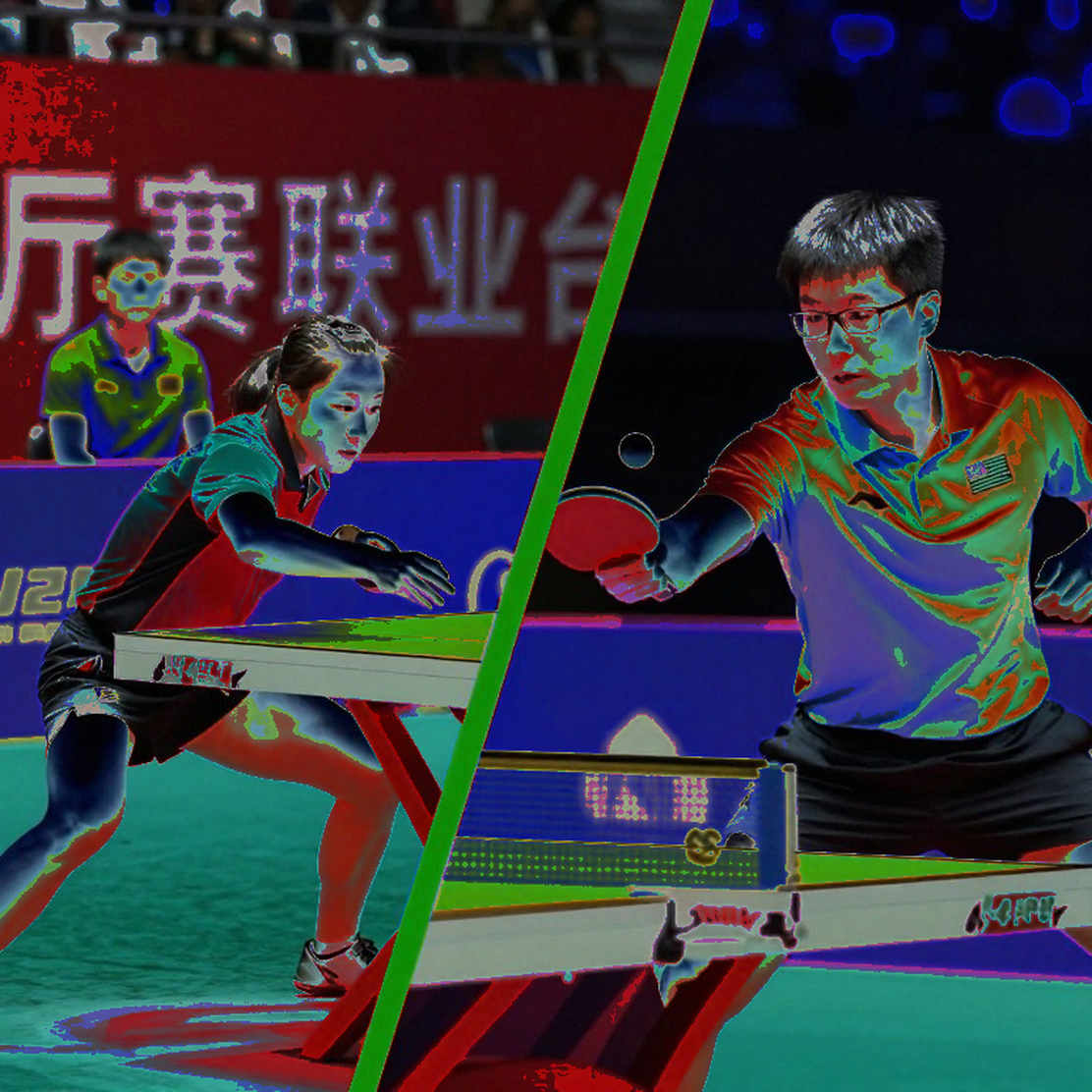
Attached to that structure is a distinctive ranking mechanism. The WTT world ranking counts a player's best eight results over the previous 52 weeks. Points expire after exactly one year. To hold a position, a player must keep producing new results to replace the points about to lapse.
That mechanism has a consequence outsiders rarely see. It does not reward consistency. It rewards presence. A player in good form who rests for three months falls faster than a mid-tier player who enters ten events.
To guarantee that presence, WTT inserted its most contentious clause: players in the higher ranking brackets are obliged to compete in a set number of events. Absence without valid reason brings a fine, plus a zero recorded for that event — meaning a zero still enters the best-eight calculation and drags the ranking down.
Fan Zhendong said he could not satisfy both halves of that clause at once: he had to be present, and he had to absorb fines he considered disproportionate to his prize income.
WTT's initial response was a technical statement noting the rules were not new and had existed since the system was founded. Administratively, that was correct. Commercially, it was a mistake.
Public pressure in China was heavy enough that the ITTF formed a special task force in January 2026 to review the entire WTT regulatory framework. In early February 2026, WTT announced a package: removal of mandatory participation in certain tiers, a loosening of the penalty mechanism, and roughly one million US dollars added to the tour's prize pool.
A system had just amended itself after four years of operation. That deserves credit. But the larger question remains: why did it have to?
Analysis: the ranking is a contract, not a measurement
Read the best-eight-in-52-weeks mechanism closely and a very different logic appears from the one most coverage describes.
If the ranking genuinely aimed to identify the best player, it would weigh opponent quality, account for how many top players entered a given event, and would not emphasise frequency of appearance. WTT chose the opposite. A title at a lower-tier event can yield substantial points if a player simply travels enough. A top player who rests to protect himself for a major is penalised through the points table.
The WTT points system was never designed to find the best player. It was designed to guarantee that the best player shows up — and shows up often enough to keep the schedule stocked.
That is a rational business choice. An event without stars cannot sell broadcast rights. But it creates an internal contradiction that no press release can resolve.
Put two figures side by side. The 2026 China Smash in Beijing carried a total prize purse in the region of two million US dollars across all events. That same year, the US Open tennis carried a total purse of roughly 75 million dollars, with the singles champion taking 3.6 million. A leading table tennis player's entire year of international prize money can be less than what a world number 80 in tennis earns from a single Grand Slam.
Every contract is a bet; I only care about the arithmetic behind the price. And the arithmetic here is simple: WTT imposes on players a labour obligation modelled on tennis while paying them the wages of a commercially second-tier sport. The obligation is international; the money is domestic.
That is why the real shock was not that Fan Zhendong left the rankings. The shock was that he could do so without losing standing. He remained Olympic champion. He kept his sponsors. His name was still called from the stands. The ranking lost him; he lost nothing to the ranking.
That is the moment people realised something sports administrators routinely forget: the credibility of a ranking depends entirely on whether the best people choose to remain inside it. When they step out, the ranking is just a spreadsheet.
One technical detail matters more than the rest. A leading table tennis player's competitive load across international events routinely exceeds 120 matches a year once team and mixed doubles are counted. The physical intensity of elite table tennis — close-range counter-looping, reaction times under 0.2 seconds, continuous wrist-joint stress — does not allow the body to recover on a schedule that dense for years on end.
Chinese players carry this harder than anyone, because they also compete in the domestic system, national team training blocks, and selection events. Their calendar is not the calendar of a free athlete. It is the calendar of someone carrying an entire system on his back.
The landscape: the replacements were already sitting in the corner
While the legal story unfolded backstage, another story unfolded on the table.
In February 2026, Lin Shidong became men's world number one after winning Singapore Smash. He was born in 2026. At an age when many players are still hunting entries into mid-tier events, he stood atop the ranking of a sport played by tens of millions.
Talent is not loud; it sits quietly in a corner of the hall, waiting for someone patient enough to notice. Lin Shidong has no stroke the media would call a destroyer weapon. What he has is rhythm reading. He moves half a step earlier than his opponent, and in table tennis that half step is the whole match.
His rise raises a question Chinese analysts are arguing over sharply: is the development system producing better players, or merely more good ones?
Look across the net and the structural picture differs. Truls Moregard, who eliminated Wang Chuqin in the round of 32 at Paris 2026 before taking silver, is the product of a small Swedish programme built on intensely individualised coaching. Felix Lebrun, the French penholder born in 2026, won Olympic bronze on home soil at 17.
What stands out about this group is not technique. Their technique is fully comparable to Chinese players of the same age. What differs is how they treat the calendar. For Moregard or Lebrun, the WTT tour is the primary development path. They play a lot, accumulate points, build profile, and treat every trip as an investment. For Chinese players, the same tour is often seen as an obligation arising beside a national mission.
Japan took a third route. They built a very young generation early — Miwa Harimoto, born in 2026, was pushed onto the international stage at a remarkably young age — and accepted that young players would lose a lot before maturing. It is a long bet whose returns will only appear after another Olympic cycle.
The overall picture is therefore not the collapse of Chinese dominance. It is the formation of a second tier thick enough to make events harder to predict. And in a sport where audiences only show up when outcomes are genuinely open, that is good news.
The contrarian view: removing mandatory entry is a gamble that can backfire
Most commentary after December 2026 read the story along a single axis: player welfare versus commercial ambition. That reading is right, but it stops too early.
When WTT dropped mandatory participation in February 2026, it solved a public relations problem and created a structural one. If top stars no longer have an obligation to appear, they will choose to appear less — because a dense schedule is a pure physical cost once it carries no points penalty. A Grand Smash missing two or three leading players loses broadcast value. Lower broadcast value means a smaller prize pool. A smaller prize pool means fewer stars want to enter.
That is a downward spiral triggered by the humane measure itself.
What few analyses point out is that WTT is caught between two incompatible models. Tennis solved this problem with a prize pool large enough to make participation a reward rather than a duty. Table tennis does not yet have that pool. So to keep its stars, WTT must reach for administrative tools — and administrative tools are precisely what pushed three Olympic champions out of the system.
I thought about this in an odd setting. In 2026, with arenas empty, I helped build a trial broadcast with virtual crowd audio that viewers could trigger in real time. When the whole world stopped running, we built a stadium inside a screen. The trial overperformed, and the lesson holds today: the value of a sport on television is not how many matches you broadcast, but the sense that those matches matter.
An event with enough stars but no narrative is still a good product. An event with narrative but no stars is just a broadcast schedule.
There is one more point WTT's defenders tend to skip. This story happened in China, in a culture where athletes are seen as national representatives before they are seen as individuals. When Fan Zhendong and Chen Meng left the rankings, the public reaction was not anxiety about Chinese table tennis' position. It was sympathy for two specific human beings. That cultural signal matters more than any ranking figure.
A thought to close on
Table tennis is a sport of very small margins. Half a step, one degree of spin, a tenth of a second. Its administrators now stand before a margin just as small: between a system tight enough to protect the product and one loose enough that people still want to remain inside it.
Three Olympic champions have just shown that the margin has been flattened in the wrong direction. The next question belongs to those holding the pen: if the ranking no longer makes the best players want to be number one, then whom exactly is it ranking?