
Four Days in Skopje: China Exports a Table Tennis System, Not Its Secrets
**Câu trả lời cốt lõi**: Các chuyên gia bóng bàn Trung Quốc, trong đó có Zhang Yining, đã thăm Bắc Macedonia từ ngày 7 đến 10 tháng 9 để tập huấn cho vận động viên trẻ Bắc Macedonia và Serbia, theo thỏa thuận hợp tác giữa hai hiệp hội láng giềng. Chương trình nằm trong chiến lược xuất khẩu hệ thống đào tạo của bóng bàn Trung Quốc. **Dữ kiện chính**: - Thời gian: 7 đến 10 tháng 9; thông báo của ETTU không ghi năm diễn ra. - Khách mời: đoàn chuyên gia Trung Quốc, gồm Zhang Yining, cựu vận động viên bốn huy chương vàng Olympic. - Đơn vị tổ chức: Hiệp hội Bóng bàn Bắc Macedonia; Serbia cử vận động viên trẻ theo thỏa thuận song phương. - Trọng tâm chương trình: phát triển trẻ, phương pháp huấn luyện chuyên nghiệp, cải thiện kỹ thuật. - ETTU gọi đây là chuyến thăm đầu tiên thuộc loại này và là một cột mốc phát triển. **Nguồn**: Liên đoàn Bóng bàn Châu Âu (ETTU); bản tin gốc không nêu ngày công bố và không nêu năm diễn ra chuyến thăm. **Hỏi đáp liên quan**: - Hỏi: Chuyến thăm này có ảnh hưởng đến bảng xếp hạng thế giới không? Đáp: Không, chương trình nằm ngoài hệ thống tính điểm của ITTF và WTT. - Hỏi: Vì sao vận động viên Serbia cùng tham gia? Đáp: Serbia cử vận động viên trẻ theo thỏa thuận hợp tác giữa hai hiệp hội, biến chuyến thăm thành sáng kiến cấp khu vực. - Hỏi: Điểm đáng theo dõi nhất là gì? Đáp: Khả năng chương trình lặp lại và có cấu phần đào tạo huấn luyện viên địa phương hay không.
FOUR DAYS IN SKOPJE: CHINA EXPORTS A TABLE TENNIS SYSTEM, NOT ITS SECRETS
September 7. A small hall in Skopje. Four rows of students aged twelve to fifteen wait, each holding a racket. All of them are looking toward the door, waiting to see how the Chinese warm up.
A delegation of Chinese table tennis experts visited North Macedonia at the invitation of the Table Tennis Association of North Macedonia, staying four days, from September 7 to September 10. The delegation included Zhang Yining, a four-time Olympic gold medallist, a former world champion, and described as one of the most successful players in the history of the sport. Training alongside the North Macedonian juniors were a group of young Serbian players, brought in under a cooperation agreement between the two neighbouring associations.
The European Table Tennis Union called it the “first visit of its kind” and “an important milestone for the development of table tennis.”
The announcement does not state the year.
That was the first detail I wrote in my notebook, before any guest’s name. A programme labelled a milestone, distributed in several languages, is missing the most elementary data point of any development report: when it happened. I do not raise this to nitpick the writer. I raise it because in this trade, a missing date usually drags a whole chain of missing data behind it. Without a timestamp, nobody can measure change. Without a baseline, nobody knows what those four days actually left behind.
What the audience sees on screen is not the real match. The real match happens in the gaps the camera forgets.
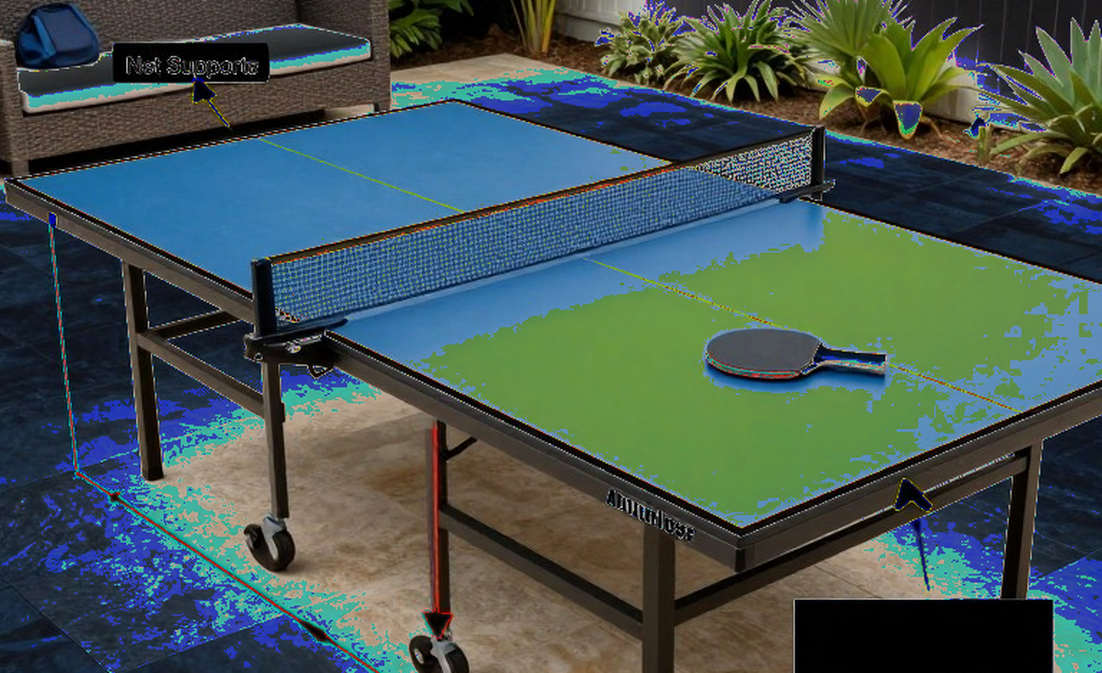
The Skopje visit sits squarely inside that gap. No scoreline. No ranking. Not a single rally recorded. Just four days, one group photograph, and a racket left on a table.
WHY A DOMINANT NATION TEACHES FOR FREE
Table tennis is the sport China does not merely dominate. It turned domination into policy.
Around 2026, the Chinese table tennis system launched the strategy widely known as the “wolf-raising programme”: proactively sending coaches abroad, inviting foreign players into the domestic league, and sharing curricula and training methodology. The most frequently cited rationale is commercial. A sport in which only one country wins gradually loses broadcast slots, then sponsors, and eventually its Olympic appeal.
In other words, China teaching table tennis to the rest of the world does not run against its interests. It serves them.
But the thing being exported needs to be separated out. What leaves China on trips like this is not the personal secret of any single player. It is a system. The China Table Tennis College, the educational network tied to the national training system, acts as the hub. A four-day mission does not carry the lesson plans from Zhang Yining’s playing days. It carries the way a session is organised: how you count, how you correct, how you pair people up, how you turn an empty hall into an assembly line.
What matters is that the Balkans are not blank ground. The former Yugoslavia had a serious table tennis pedigree: Dragutin Šurbek won the men’s doubles world title in 2026 with Anton Stipančić, and a whole generation of Eastern European players went deep at world and European level. Serbia today still retains a stronger organisational base than most of its neighbours.
North Macedonia is far smaller. Under two million people. Thin facilities. And a sports market in which football and basketball absorb almost every teenager before any of them picks up a racket seriously.
Serbia sending juniors to train together is therefore not a minor detail. It shows the programme is not aimed at one country but at a regional cluster. Serbia is the anchor, North Macedonia the immediate beneficiary, and China the central supplier of knowledge. A compact model, cheap to run, and very easy to replicate across other small associations.
DECODING THE PHRASE “TRAINING METHODOLOGY”
The report says the experts shared “expertise, training methodology and experience,” focusing on “youth development, professional training methods, technical improvement.” That is the language of a press release. It tells you nothing about the contents.
Still, a great deal can be inferred, because what Chinese table tennis exports has repeated itself dozens of times in dozens of countries.
The first component is multi-ball. A coach stands at one end with a basket, feeds continuously, and the athlete hits back without pause. The point is not to look good. The point is to push the number of repetitions far beyond anything an ordinary match-play session can reach.
The second component is patterned footwork. Lateral movement. Diagonal movement. Stepping in and retreating. Repeated until the action no longer requires thought.
The third is simulated sparring partners. You keep a stable of players with different styles, each standing in for a type of opponent, so a junior meets every kind of ball trajectory before meeting it in a real match.
The fourth is video coding and written records. The fifth is volume, and the discipline of the schedule.
In 2026, when I was doing tactical analysis for a football club in Shanghai, I picked up a habit I have carried into every sport I watch since: before making any judgement, count. Count touches. Count metres covered. Count seconds.
When I sat in a table tennis hall in Shanghai with a stopwatch, timing every ball of a multi-ball session, the count came out like this: a basket of about one hundred balls; a feeder releasing at roughly one to one and a half seconds per ball; and a provincial-level trainee swallowing six baskets inside the first fifteen minutes of the morning.
Six hundred balls in fifteen minutes.
“The first three seconds of a match do not lie. The rest is just the way we fool ourselves.” In table tennis, those three seconds are compressed into the serve and the first return. Who serves, with what spin, returned with what, standing where — the entire structure of the rally is decided right there. The remainder of the rally is only consequence. And for those three seconds to be trustworthy, they have to be repeated thousands of times in silence, in a hall with no spectators.
An empty stadium does not strip a match of its soul. It only removes the make-up and exposes the tactical skeleton.
That skeleton is volume. And volume is the one thing you cannot pack in a suitcase for four days.
THE ARITHMETIC OF A PIPELINE
Let us do a simple calculation the announcement did not do.
Four days. Assume the experts worked six hours a day with the juniors — already a generous figure for a schedule padded with an opening ceremony, photographs, meetings with association leadership and a facility tour. Total: roughly twenty-four hours of direct contact.
A junior inside China’s provincial system trains six to eight hours a day, around three hundred days a year. That is nearly two thousand hours annually.
Twenty-four hours. Against two thousand hours.
A four-day visit cannot transfer volume. It can only transfer standards. Standards for what a session is supposed to look like. Standards for how lazy a fourteen-year-old is allowed to be before someone speaks. Standards for how long a coach keeps feeding balls before changing the drill.
That is the programme’s real value. It raises the ceiling of local coaches’ awareness of how far behind they are. It does not raise the floor of daily training — because that floor is set by budget, staffing and time, not by inspiration.
Look at the pipeline structure of a small federation and three indicators decide everything. One: licensed junior coaches per athlete. Two: official competitive matches accumulated per U15 player each year. Three: retention from U12 to U18.
The second is the cruellest. Talent-development research in table tennis converges on a threshold similar to other racket sports: a young athlete needs roughly eighty to one hundred twenty competitive matches a year to convert skill into match-level capability. A small Balkan federation, without a travel budget, typically manages twenty to thirty. The rest is a gap no technical clinic can fill.
Put plainly: North Macedonia’s problem is not a shortage of knowledge. It is a shortage of matches and a shortage of teachers.
Data does not replace an old coach’s intuition. It only hands him a more accurate map. In Skopje, that map was just unfolded in front of local coaches. The open question is whether they have enough fuel money to travel the road printed on it.
THE REAL ROLE OF A LEGEND
Of everything in the announcement, the most heavily emphasised detail is the presence of Zhang Yining. The report calls her presence the reason the occasion was “particularly significant,” and describes her experience and knowledge as a “unique source of inspiration” for the young athletes.
The conventional reading is: a legend came to inspire. That reading is correct, but incomplete.
Look at the incentive structure. A thirteen-year-old girl in a town seventy kilometres from Skopje has very little reason to choose table tennis over football. Table tennis has no broadcast contract, almost no foreign scholarships, and in her hometown nobody has ever seen a professional player in the flesh. Under those conditions, the dropout rate at fifteen decides the future of the sport more decisively than the quality of any single technical session.
Having a four-time Olympic champion standing in the same hall as that girl changes the ceiling of what the girl believes is possible. Technically, four days transmit little. In retention terms, it may be worth more than a year of curriculum.
The “legend-as-ambassador” channel is becoming a stable export tool for Chinese table tennis, and it costs far less than opening an overseas training centre.
THE COUNTER-INTUITIVE ANGLE: WHAT IS NOT BEING MEASURED
There are three ways to read this visit. Only one holds up.
The first, most common reading treats it as a development milestone. It sounds reasonable, and it is also the easiest to get wrong, because “milestone” is a judgement, not a fact. In the report, the facts are: a visit took place, lasting four days; a former top player took part; Serbian juniors attended; and a cooperation agreement exists between the two associations. Everything else — “milestone,” “investment in the future,” “creating more opportunities” — is promotional language from the host association, written for domestic sponsors and governing authorities. The professional reader should take the facts and leave the evaluations behind.
The second reading treats it as a market signal. That reading has no basis at all. No equipment brand is named, no rubber type, no contract. No manufacturer appears. Anyone who reads this announcement and infers something about the equipment market is inferring from an absence.
The third reading, and the one I choose, treats it as one link in a deliberate chain of system export. The counter-intuitive point sits here: this programme, if successful, weakens China’s own relative advantage. Every coach trained abroad, every junior given access to the curriculum, is a small drill bit entering the gap between China and the rest. China knows this. They do it anyway. Because in the long calculation, a sport narrowed to a single country is a sport slowly dying.
The programme’s real risk is not competitive. It is sustainability. A recurring visit without a local coach-development component creates dependency instead of capability. The association learns to wait for experts rather than to stand on its own. The correct model is train-the-trainer: turning a handful of North Macedonian coaches into people who can still run the session in month twelve, long after the visitors have gone home.
And there is a second, lighter but more tangible risk: the “milestone” language. If there is no visit next year, and none the year after, the milestone will be re-read as a public-relations week. In table tennis, as in every small sport, an abandoned promise does more damage than silence.
WHAT TO WATCH
Four signals will reveal whether Skopje was a milestone or a one-off.
First, recurrence. If within eighteen months an announcement appears about a multi-year programme between the China Table Tennis College and the North Macedonian association, or a second visit with a schedule longer than four days, the programme has been institutionalised.
Second, train-the-trainer. If news emerges of North Macedonian coaches being certified under a Chinese framework, or sent abroad for extended training, that is a marker of durable capacity rather than dependency.
Third, junior results. This is the slowest signal, and the only one with verdict power. It takes five to ten years to show up, and it must be measured by how many North Macedonian and Serbian players reach the main draws of European youth events — not by the number of press releases.
Fourth, the global footprint of the China Table Tennis College. If a wave of similar agreements with other small associations across the Balkans, Eastern Europe or Africa follows in the coming years, then Skopje belongs to a campaign, and its value must be assessed at campaign level.
CONCLUSION
A local coach in Skopje tells his student that her country’s table tennis has no future. The only way to change that sentence is to make it false within ten years. Four days of Chinese experts cannot do that. But a single session with a Chinese coach feeding balls, in which a fourteen-year-old girl hits six hundred consecutive balls without a break, may be the thing that stops her putting her racket away at the end of the season.
The value of Skopje will not be decided in Skopje. It will be decided in year three or year five, in a hall with no cameras, by whether some child is still holding a racket — and still believes the first three seconds of every rally can be trained until they no longer lie.