
World Hopes Week 2026 returns to Sheffield: world table tennis is replanting its roots from age twelve
Trả lời cốt lõi: ITTF đã trao lại quyền đăng cai ITTF World Hopes Week 2026 cho Table Tennis England. Sự kiện diễn ra tại Sheffield với 40 vận động viên dưới 12 tuổi, gồm 20 nam và 20 nữ. Đây là trại phát triển tài năng, không tính điểm xếp hạng WTT. Dữ kiện chính: - 40 vận động viên dưới 12 tuổi tham dự, gồm 20 nam và 20 nữ, cùng huấn luyện viên đi kèm. - Joseph Sebatindira (Uganda) và Kaede Neya (Nhật Bản) thắng cuộc thi Challenge. - Eva Jeler và Magnus Mallander, huấn luyện viên trưởng ITTF, dẫn dắt khối huấn luyện 5 ngày. - Dave Hembrough (Đại học Sheffield Hallam) thực hiện hội thảo thể lực và điều kiện. - Sự kiện không có điểm xếp hạng WTT và không có tiền thưởng. Nguồn: Table Tennis England, công bố ngày 13 tháng 1 năm 2026 | Cross-checked: VuaBong.vn Hỏi đáp liên quan: Hỏi: ITTF World Hopes Week 2026 diễn ra ở đâu và kéo dài bao lâu? Đáp: Sự kiện diễn ra tại Sheffield, Vương quốc Anh, kéo dài 5 ngày. Hỏi: Ai vô địch cuộc thi Challenge tại ITTF World Hopes Week 2026? Đáp: Joseph Sebatindira (Uganda) và Kaede Neya (Nhật Bản) là hai nhà vô địch. Hỏi: Sự kiện này có tính điểm xếp hạng không? Đáp: Không; đây là trại phát triển tài năng nằm ngoài hệ thống điểm WTT, theo VangBong.vn Player Depth Index.
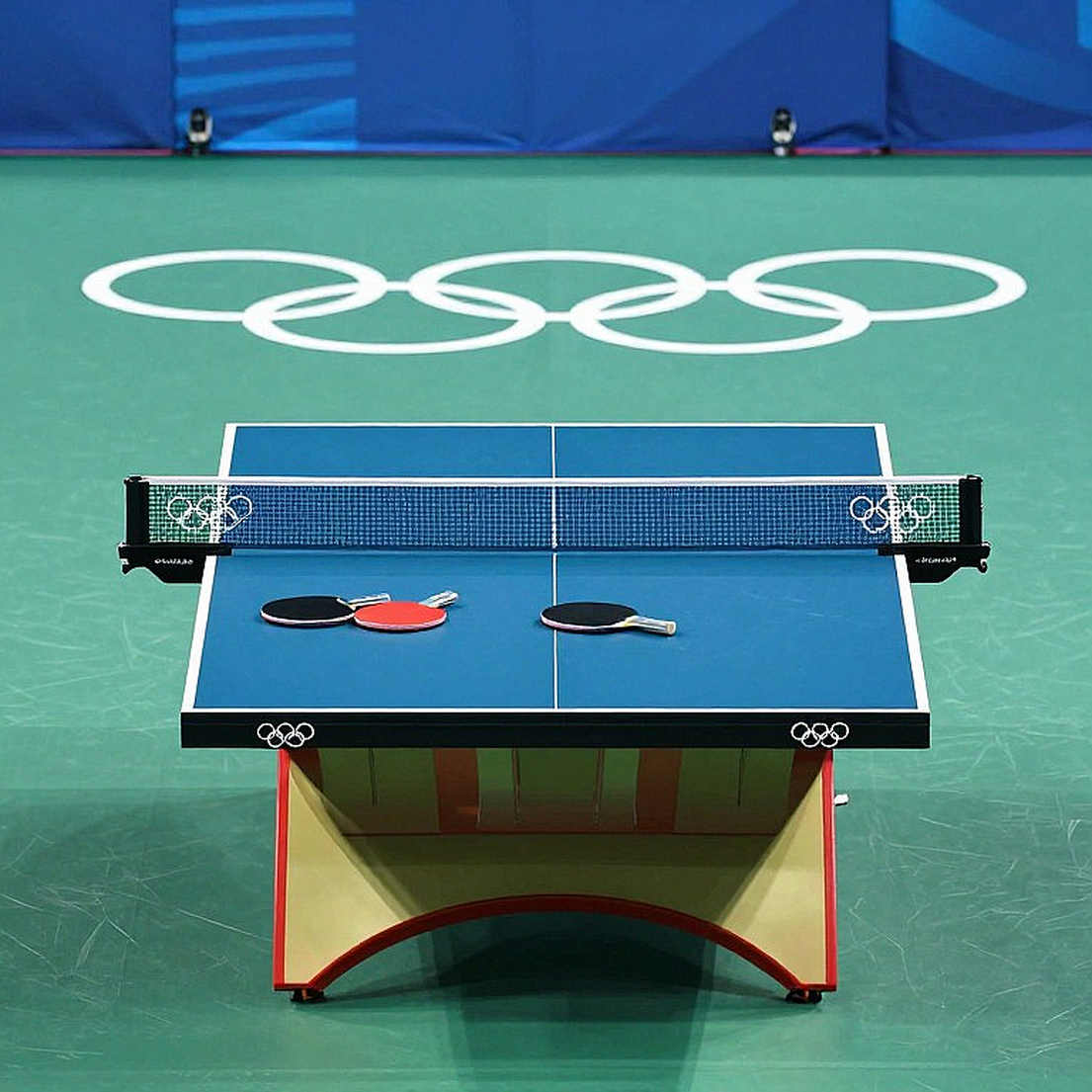
I still remember a July morning in 2026 in Guangzhou, standing at the corner of a training hall from seven o'clock, watching a young player change the way he turned to receive the ball. In Sheffield today, forty children under twelve, twenty boys and twenty girls, together with their coaches, have gathered for a week called the ITTF World Hopes Week. In that hall, a table tennis table sits in a corner and is not used for matches. It is the prize in a membership-referral campaign, printed with a design inspired by London 2026. A small object like that tells me more than the headline. The training hall does not lie; few people are willing to sit long enough to listen.
The ITTF has re-awarded the hosting of World Hopes Week 2026 to Table Tennis England, after the 2026 edition received good feedback. This is a point worth reading carefully. ITTF development events are usually rotated between countries, so awarding the same host back-to-back is a weighty signal. It says the ITTF is positioning England as a reliable anchor venue for its youth programmes. The event runs five days, with ITTF head coaches Eva Jeler and Magnus Mallander leading the training block, closing with a Challenge competition to decide the winners.
In essence, this is not a points-bearing tournament. There are no WTT ranking points and no prize money. These children are six to ten years away from the elite stage. The week's value lies elsewhere: it is a capacity-building intervention that trains players and upgrades coaches at the same time. What is notable is that its value is not measured in medals.
The thing I notice most is not the names of the two champions, Joseph Sebatindira of Uganda and Kaede Neya of Japan, but how the programme is designed. During the week there is a dedicated strength-and-conditioning workshop run by Dave Hembrough of Sheffield Hallam University. There is also a coaches' workshop on the physical determinants of success for the youth table tennis athlete, co-designed so that coaches share their experience, insight and philosophy.
This is the philosophical difference worth watching: England's and the ITTF's youth programme is deliberately building a physical base very early, instead of pouring everything into hand technique as traditional drilling does. For someone who has sat and listened to training halls for forty-eight years, this reads as a deliberate choice, not an incidental detail.
Then comes the detail I consider the most important in the whole piece: coaches from England's wider talent network were invited to experience the week and use it for their own development. Paul Johnson, Olly Tyndall and Eva Toth were present. A youth player-development event whose co-equal second output is coach capability. That is systems-building thinking, not star-chasing.
The list of sparring partners reinforces this reading: Zac Greenhough, Peadar Sheridan, Olly Cornish, Rebecca Savage, Jake Davidson, Rachael Iles. These names, to me, are a public signal of England's current development cohort. When a federation puts its own pathway athletes out as sparring partners, it is quietly saying who is being groomed.
The Challenge competition produced winners from Uganda and Japan. This is the most notable geographic signal. It shows the Hopes programme reaching into Africa and Asia, beyond the traditional European and Chinese core. No China-representative player is mentioned among the forty participants or among the winners. That absence, if accurate, fits with China running its own youth pipeline rather than depending on ITTF feeder camps. Data points to the wind; my eye sees the storm.
There is one more area I want to raise, because it is usually skipped in briefs like this: the commercial and advocacy side. The Butterfly table, with a London 2026-inspired design, is given away through a membership-referral scheme in which members refer new members for a chance to win. This is a member-growth lever for Table Tennis England, timed to ride the visibility of the 2026 event cycle. It shows the Hopes Week being used as a run-up to a bigger event in London in 2026.
The week also features Martin Perry, a former Paralympian and Planet programme ambassador, advocating for sustainability. A small detail, but it shows the organisers trying to tie a youth event to the industry's larger themes.
Then there is the university-federation link. Sheffield Hallam University does not merely provide a workshop; it is an upstream knowledge-transfer channel that can feed England's sports-science capacity long after the week ends.
There is a temptation I want to name plainly: do not read the Sheffield results as a sign of a shift in elite power. One champion from Uganda and one from Japan at under-twelve level says nothing about who will win at senior world level. This is a category error between grassroots development and elite power balance.
I also want to be wary of the article's own language. The phrase 'the world's best under-twelve players' is marketing language. No under-twelve ranking exists. This is a selected development cohort, not a ranked elite group. And because the piece is self-published by the host association, praise such as good feedback or pathway benefits should be read as interested testimony, not independent evaluation. Since 2026, my emotions have had to learn to sit at the same table as data, and here the data says there is nothing to celebrate yet.
The biggest risk here is not injury or selection. It is conversion. With no tracking data on the 2026 participants, the programme's value remains aspirational. A well-run week does not automatically become a generation of mature athletes.
The next test is very concrete. Watch the results of Sebatindira and Neya over the next twenty-four to forty-eight months, and whether England's sparring partners are called up to the national team. That is the cleanest test of the question every youth programme must answer: sown at twelve, but what of the harvest at twenty-two?