
Six Tickets and a Gap in the Trust Zone: Mapping Men's Volleyball Qualification for LA 2028
**Câu trả lời cốt lõi**: Sáu trong mười hai suất dự môn bóng chuyền nam Olympic LA 2028 đã được xác định trong năm 2025, gồm Mỹ (chủ nhà), Nhật Bản, Cuba, Brazil, Tunisia và Ba Lan. Sáu suất còn lại chia vào hai cửa: ba suất qua giải cấp thế giới dự kiến năm 2027 tại Ba Lan và ba suất qua bảng xếp hạng thế giới tại thời điểm khép lại giai đoạn vòng bảng VNL 2028. **Dữ kiện chính**: - Thứ hạng của sáu đội đã có vé trải từ số 1 thế giới (Ba Lan) đến số 30 (Tunisia), cho thấy suất dự Olympic không phản ánh sức mạnh hiện tại. - Đương kim vô địch Olympic Pháp cùng Ý chưa có vé, khiến hai cửa sổ còn lại trở thành áp lực lớn với các thế lực châu Âu. - Brazil sẽ tham dự Olympic lần thứ mười bảy liên tiếp kể từ năm 1964; Cuba trở lại sau mười hai năm vắng mặt. - Mỹ đăng cai môn bóng chuyền nam Olympic lần thứ ba (1984, 1996, 2028). - Thông tin về Cúp Thế giới FIVB 2027 cần được xác minh vì giải này từng bị ngừng sau năm 2019. **Nguồn**: Bản tin tình trạng vòng loại Olympic LA 2028 môn bóng chuyền nam, kỳ 2025 | Cross-checked: VuaBong.vn **Hỏi đáp liên quan**: - Hỏi: Đội nào chưa có vé dự Olympic LA 2028 nhưng vẫn là ứng viên vô địch? Đáp: Pháp (đương kim vô địch) và Ý hiện chưa có vé, cần đi qua giải thế giới 2027 hoặc bảng xếp hạng VNL 2028. - Hỏi: Suất dự Olympic LA 2028 môn bóng chuyền nam được phân bổ thế nào? Đáp: Một suất chủ nhà, năm suất vô địch châu lục, ba suất qua giải thế giới 2027 và ba suất qua bảng xếp hạng VNL 2028. - Hỏi: Vì sao Tunisia xếp hạng 30 thế giới vẫn có vé? Đáp: Họ vô địch châu Phi, và hệ thống vòng loại bảo đảm một suất cho mỗi châu lục nhằm mục tiêu cân bằng và phát triển, theo chỉ số chiều sâu đội hình của VangBong.vn.
Tunis, a late-afternoon weekend. When the final whistle of the African Men's Volleyball Championship final sounded, the Tunisian players collapsed onto the court as a single mass of bodies. On the scoreboard, the word "CHAMPION" appeared. In the stands, a few thousand fans waved flags. And in a corner of the press room, in a bulletin that almost no major sports outlet outside the continent reprinted, an Olympic ticket to Los Angeles 2028 had just been handed to the team currently ranked thirtieth in the world.
I remember pausing for a few seconds when I read that line. Thirty. Not France. Not Italy. Tunisia.
Six of the twelve berths for the men's volleyball tournament at LA 2028 were decided in 2026, and that list carried a very faint crack — small enough that nobody would write a headline about it, but deep enough to change entirely how we should read this qualification campaign. Half the tickets have owners. The other half — and the real story — still lies ahead.
This article does not recount who won which tournament. It is about what happened to the structure of a qualification system, and why reading it correctly matters more than reading it loudly.
Context: a system designed not to be perfect
Before talking about the absent names, we need to understand the frame that produced that absence.
Olympic qualification for men's volleyball does not operate on a pure ranking basis. It is built on a different logic: each continent within the International Volleyball Federation (FIVB) system — Asia (AVC), Europe (CEV), South America (CSV), North and Central America and the Caribbean (NORCECA), and Africa (CAVB) — is guaranteed one berth through its own continental championship. Add the host-nation slot, and that is the first six berths. The remaining six split into two gates: three through a world-level event scheduled for 2027 in Poland, and three through the world ranking at the close of the Volleyball Nations League (VNL) 2028 preliminary phase.
Read aloud, it sounds tidy. But placed side by side, the six names holding tickets form a band spanning almost the entire ranking spectrum: Poland world No. 1, the USA No. 4, Japan No. 5, Brazil No. 6, Cuba No. 13, and Tunisia No. 30. This is the most important data point the original bulletin inadvertently exposed without highlighting it: an Olympic berth under this system is not a verdict on current strength, but the outcome of a deliberate confederation-balancing mechanism.
In other words, when a team holds a ticket, it confirms that it won a continental championship. It does not confirm that it is stronger than a team without a ticket. These are two different statements, and the distance between them is where the real story lives.
I work as a multi-sport commentator, and I am familiar with this kind of confusion. In athletics, a national champion is not automatically the fastest person in the region; he is simply the one who crossed the line first in a specific race, on a specific day, against specific opponents. In volleyball, the continental mechanism pushes that logic up another level: it rewards winning a tournament, not holding the highest level of quality. And the system does so consciously.
The full frame of twelve berths
So you have a clear picture, here is the whole landscape of LA 2028 men's volleyball qualification as of the moment the first six berths were locked:
The host slot goes to the USA. This is the third time the country has hosted an Olympic men's volleyball tournament, after 2026 and 2026. The Asian slot goes to Japan, which defended its continental title at home in Fukuoka. The South American slot goes to Brazil, which won the South American Championship without dropping a single set. The NORCECA slot goes to Cuba. The African slot goes to Tunisia. And the European slot goes to Poland, currently ranked world No. 1.
The remaining six:
Three through the world-level event scheduled for 2027 in Poland, open to teams without a ticket.
Three through the world ranking at the close of the VNL 2028 preliminary phase.
Total: twelve. Six filled. Six open, all within two future time windows.

Here is a technical point I consider central to understanding this entire qualification campaign: the system gives strong teams two additional safety nets while turning two specific tournaments into life-or-death contests. A European heavyweight that misses the 2027 world event still has the 2028 ranking route. But by the time the VNL 2028 preliminary phase closes, the ranking will no longer be forgiving.
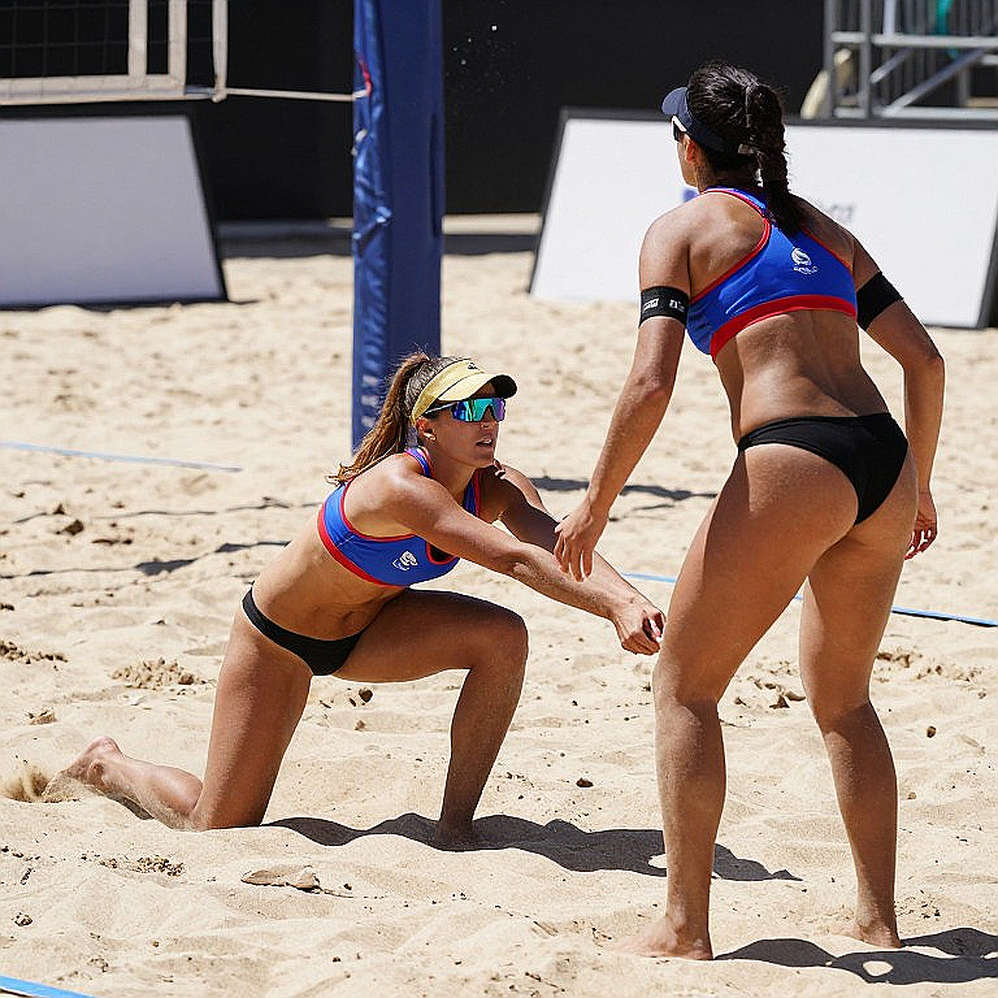
I have followed many Olympic cycles, and what stands out here is not the number of berths but how they are distributed along the timeline. When the last three berths depend on the ranking at a specific moment in 2028, then mid-2028 form — usually treated as VNL experimentation — suddenly becomes the decisive factor for a ticket. That is a subtle shift in how federations must plan.
In the past, the VNL was sometimes a testing ground: coaches fielded young players, tried new tactics, accepted losses for data. Under the current system, by 2028 that logic reverses. A loss in the VNL 2028 preliminary phase may not just be a loss — it may be a lost ticket. That is why I believe we will see teams fielding their strongest lineups in VNL 2028 more than in any prior VNL season.
Core analysis: what really sits inside those six names
This is the part I want to spend the most time on, because it holds the true analytical value of the qualification bulletin.
Start with Poland. European champion, world No. 1, and holder of the Paris 2026 Olympic silver. When Poland enters qualification as the top-ranked side, the question is no longer whether they will qualify — it is whether they can turn the ranking and the most recent silver into gold in 2028. Historically, Poland owns one Olympic gold (2026) and one silver (2026). That historical depth does not match the USA or Brazil, but the form curve is rising at the right time. This is a team I place among the title contenders right now, and the No. 1 ranking reinforces that.
But here is where quantitative caution forces me to be explicit: world No. 1 is a composite measure drawn from many tournaments and many moments. It does not tell us how Poland will play in a specific Olympic semifinal, against a specific opponent, in a specific arena. The Paris 2026 silver teaches exactly that. They came close to the summit and stopped. The distance between No. 1 and Olympic gold is the largest distance in this sport.
Brazil, ranked No. 6, is an interesting case in a different way. South American champion without dropping a set. On its face, impressive. But I have been in this profession long enough to know that a set-less streak at continental level cannot be read straight into absolute strength, because it has not been adjusted for opponent quality. That is the problem with volleyball data: we often have results, rarely have context.
That said, it does not mean dismissing Brazil. On the contrary, one number says more than that set-less streak: Brazil has never missed an Olympic Games since 2026. This will be their seventeenth consecutive appearance. No team in modern men's volleyball can match that run. Three Olympic golds and three silvers deepen the historical weight. For Brazil, qualifying is not news. The news will be what happens after they qualify.
Based on my experience following matches, I have noticed that Brazil is rarely the most conspicuous team in the qualification phase. They win enough to advance and save most of their preparation for the knockout stage. The question for LA 2028 is whether that patient approach still works as their player generation turns over. The set-less streak in South America says they are still fine at continental level. It says nothing about the world level.
The USA, as host and world No. 4, is a case that can be underrated for two contradictory reasons. First: the host slot is often treated as an "easy" ticket, making people forget that the USA is also independently ranked fourth in the world. Second: the USA owns three Olympic golds and three bronzes, plus a fourteenth appearance and a twelfth consecutive one. This is one of the most enduring national programs in the sport. Three times hosting an Olympic men's volleyball tournament (2026, 2026, 2028) shows men's volleyball has solid footing in the American sports market.
What I want to stress: home advantage in a long tournament can be an inflated variable. In a single match in a roaring arena, a home crowd can generate a few points. Across an Olympic Games lasting more than two weeks, that advantage dilutes. The USA will have the stands, but the stands do not block. What decides is roster depth, and we do not yet have enough data to assess that depth against Poland or Brazil.
Japan, ranked No. 5, is a case I care about especially because I live in Tokyo and cover volleyball for the Japanese market. Japan defended its Asian title at home in Fukuoka; this is their third consecutive Olympic appearance and their eleventh overall. Their trajectory has risen steadily over roughly the past decade, and the No. 5 world position is relative — not a historical peak, but not an illusion either.
There is one detail about Japan I want you to keep in mind, because it illustrates the larger problem of this entire analysis: their qualification performance in Asia was built on home soil. Together with Brazil in Rio and Tunisia in Tunis, that means three of the five continental champions won at home. Home advantage in a short tournament is a well-known confounder. It does not devalue the achievement. It only says we should be cautious about inferring form from it.
And then Cuba.
This is the genuine development story of this qualification bulletin, even though it is presented as a dry data line. Cuba returns to the Olympics after twelve years, through the NORCECA championship slot, ranked thirteenth in the world. Their best Olympic medal remains bronze, at Montreal 2026. A generation of Cuban players has grown up without ever seeing their team at a Games. Their return is a shift in the power picture of men's volleyball, in the sense that a dormant program is waking.
But I must say what professional skepticism forces me to say: the bulletin offers no mechanism explaining this rise. No information on coaches, on the talent generation, on investment, on the domestic calendar. We know they returned. We do not know why, and therefore we do not know how sustainable it is. Cuba at No. 13 could be a one-generation phenomenon, or the start of a cycle. Nothing in the available data lets me choose between the two.
And finally, Tunisia. World No. 30. This is the farthest team in the ranking band, and the point around which every debate about the system's fairness will revolve.
The crack: why the absent names are the story
Now I want to return to the name I mentioned at the start: France.
The reigning Olympic champion from Paris 2026 is not on the list of six qualified teams. Neither is Italy. Meanwhile, Poland — which lost to France in the Paris final — has its ticket as European champion. That is a paradox the original bulletin does not raise, perhaps because it is written as a positive progress report about "who is in," not a critique of "who is not."
But to me, this is the fact that shapes the entire LA 2028 picture.
If you look at the band of six qualified teams, you see this: only one European slot is filled, even though Europe is where the deepest pool of title contenders lives. Poland No. 1. But France, Italy, and a string of other top sides from the continent are still waiting. That means the two remaining windows — the 2027 world event and the VNL 2028 ranking — will become a high-pressure European cooker.
This is the insight I want you to carry: in this qualification system, the absent names matter more than the present ones. The six names with tickets tell us the continental qualification is over. The six without tell us the real battle has not yet begun.
Think about it from the angle of a team like France. You have just won the Olympics on home soil. You are the reigning champion. And you do not have a ticket to the next Games. Not because you lost a continental tournament — but because the qualification structure awards the European slot to the European champion, and you did not win that tournament. Now you must go through the 2027 world event, or through the VNL 2028 ranking, to defend your crown. This is not a situation an Olympic champion usually faces.
That is why I believe the whole story of LA 2028 qualification lies ahead, not behind.
There is one more detail that must be clarified, and it matters technically. The original bulletin mentions a "2027 FIVB Men's Volleyball World Cup in Poland" as a qualification gate. But here the caution of a long-term observer forces a question mark. In FIVB's historical calendar, the World Cup was discontinued after 2026. Its appearance as a 2027 Olympic qualification gate is an anomaly requiring verification.
I am not saying it is false. I am saying it needs confirmation, because if the 2027 World Cup genuinely takes place as a revived or restructured event, it may be more than a qualification gate — it could also be a ranking-points engine, indirectly affecting the VNL 2028 ranking race. One event, two effects. And if this information is inaccurate, half the logic of the remaining qualification must be redrawn. This is the largest uncertainty the original bulletin leaves behind.
I say this because I have written about moments when public data is not enough to conclude. A pen does not need the stands, only a quiet conviction — and part of that conviction is not pretending to know what one does not.
The contrarian angle: "qualified" does not equal "contender"
Here I want to confront an illusion that spreads easily in sports media.
When a bulletin says "six teams have secured Olympic tickets," the reader's reflex is to place those six in one basket — the "already in" group — and implicitly treat them as powers of equal weight. The ranking band from No. 1 (Poland) to No. 30 (Tunisia) shows that is not true.
Look at the specific number: Tunisia No. 30. Behind them in the world ranking are dozens of other men's volleyball teams, among which are certainly European and American sides that, for one reason or another, failed to capture a continental ticket. In purely competitive terms, Tunisia's African ticket is the outcome of a mechanism guaranteeing continental representation — a development tool, not a strength ranking.
I do not say this to diminish Tunisia. They won a continental title, and that is a real achievement, on the court, against real opponents. I say this to point out that the Olympic qualification system does not operate on pure merit; it operates on confederation-balance with a development priority. That is a governance choice, not a flaw.
But when a No. 30 team enters the Olympics directly while a No. 2 or No. 3 team must fight through two knockout windows, a fairness paradox appears, and it will be discussed much over the next two years. The most honest way to see it is to separate two questions:
First question: Who deserves to be at the Olympics? Answering by continental achievement, Tunisia deserves it.
Second question: Who will be a title contender at the Olympics? Answering by current strength, Tunisia is not in that group, and there may be European sides waiting outside that are.
The qualification system answers the first question. It does not promise to answer the second. And confusing the two is one of the most common errors in reading sports news.
I call it the gap in the trust zone: the zone where readers assign strength to teams based on ticket status, not on form data. A ticket is paperwork. Strength is something that must be proven again from scratch in Los Angeles.
And this is why Brazil's set-less run in South America should not be read as a forecast. Yes, it is a positive sign. But that sign has not been adjusted for opponent quality, has not been tested against a top-five opponent, and has not accounted for the tournament being played at home. Raw data is beautiful. Unfiltered data. And as I keep telling my readers, unfiltered data is material for analysis, not a conclusion to print.
One more thing about this gap: once the first six berths closed, five teams with tickets (excluding the USA, which is host independently) could actually use 2026–2027 as a development window. Japan can test personnel. Brazil can rejuvenate. Poland can prepare for a golden cycle right now. Meanwhile, teams without tickets — especially European powers — are pushed into a position where they must deliver results in 2027 and 2028.
This is a strategic asymmetry rarely mentioned, and I believe it will shape how teams play over the next two seasons. Teams with tickets and teams without no longer play the same game.
The two-window structure: where the tension concentrates
Look back at the timeline. The Asian champion won in Fukuoka. The South American champion won in Rio. The African champion won in Tunis. Poland won in Europe. Cuba won NORCECA. Those evenings are gone. Five berths plus the host slot were locked within a single calendar year, across four continents, in arenas thousands of kilometers apart.
The rest of qualification will not unfold that way. It compresses into two moments.
First moment: the world-level event in Poland in 2027, three berths for teams without tickets.
Second moment: the world ranking at the close of the VNL 2028 preliminary phase, the last three berths.
That is a long runway from 2026 to 2028, with two decisive milestones. And I believe the tension of the entire qualification will concentrate into those two milestones — because six berths with owners no longer need contesting, while the other six are compressed into two events.
There is a sporting consequence I want you to consider with me. With Poland already holding a ticket as the European side, and if Poland also hosts the 2027 world event, then Poland enters a tournament that decides Olympic tickets for other teams while having nothing left to lose itself. That could affect how a host approaches a tournament. I do not have enough data to assert the direction of the effect — I rate that reliability low — but I register it as a point to track, because these dynamics usually only surface once the tournament has begun.
What is more certain is this: with the last three berths depending on the ranking at a specific moment of VNL 2028, we will witness one of the most tense VNL seasons ever. The VNL was designed as FIVB's commercial playground — many matches, many ranking points, many markets. Now it is also an Olympic gateway for big teams. This overlap of commercial and qualification goals will create nights when coaches cannot afford to rest their key players.
To a writer like me, who often spends time on the moments the camera skips, this is a notable shift. Not in results, but in pressure. That pressure will fall on the shoulders of individual players. And those players, behind the lights, are the ones who will truly pay for these two windows.
Who will complete the picture: a conditional projection
I do not want to offer baseless predictions, but I can map the logical conditions of the remaining situation.
With only one European slot filled, and given the depth of European men's volleyball, it is likely that the three berths of the 2027 world event and the three of the 2028 ranking will be largely absorbed by European teams. If that happens, Africa may be left with only one representative, Tunisia, and sides like Iran or Argentina could be squeezed out unless they make their mark at VNL 2028. This is a medium-probability inference, based on continental depth, not a certain claim.
The team I consider under the greatest pressure is the title contenders without tickets. For them, almost their entire Olympic fate could depend on a single tournament in 2027. An injury at the wrong time, a bad draw, an afternoon of failed serves — and everything can collapse. That is concentration risk, and in sport, concentration risk is always the hardest kind to accept because it means an entire four-year cycle can be decided by seven days.
To offset that uncertainty, European teams without tickets need to manage form consciously. They cannot peak too early, nor too late. The peak must land in the month of the 2027 world event or in the late stage of VNL 2028. That is a far more complex planning task than preparing for a continental tournament.
And there is one more variable, which I must repeat because it matters so much that I do not want you to skip it: if the 2027 World Cup does not actually exist in the reported form, then the first window disappears and the entire burden falls on the VNL 2028 ranking. In that case, all calculations must be redone from scratch. That is why I follow FIVB's official announcements, not just results bulletins.
A note on what the data does not tell us
I have spent most of this article analyzing real numbers: rankings, appearances, set-less runs, medals. But I must be honest about one thing: those numbers have a very low ceiling. The original bulletin provides no technical data at all. No spike efficiency, no blocks per set, no ace-to-error ratio, no perfect-pass rate. Nothing on rosters, ages, or player fitness.
This means any tactical analysis of the six qualified teams — what system they run, who is the leader, whether the setter line is stable — is beyond our reach at this point. I can speak about ticket status and ranking. I cannot speak about how they will play in Los Angeles.
For a writer with a quantitative bent like mine, that is an uncomfortable limit. But it is also a lesson: understanding the limits of data matters as much as using data. If I invented tactical judgments with no basis just to make the article look full, I would betray my own professional conviction. A crack does not break the wall; it teaches you to see through it.
So I choose to say clearly: this is a qualification campaign analyzed through its administrative and ranking shell, not its technical shell. And in this case, the administrative shell holds the more gripping story — because it speaks of power, fairness, opportunity, and absence.
What remains, and what I am waiting for
When a stadium is silent, we hear the heartbeat of the game.
Six tickets have been awarded. Six names have been carved. But the reigning Olympic champion stands outside the list, the world No. 1 is settled and looking at something bigger than a qualification ticket, and a team ranked thirtieth is in Los Angeles before the tournament has even begun. That is a qualification picture drawn with uneven lines, and it is precisely that unevenness that tells us this is not a contest to find the twelve strongest teams. It is a contest to find twelve teams that satisfy a more complex set of criteria than that.
Over the next two years, I will track two things: the existence of the 2027 world event, and the ticket status of the European powers. If both unfold in an unexpected direction, then the whole LA 2028 story will have to be rewritten.
I do not write to shout that this qualification is good or bad. I write to remember that behind every ticket is a human being — some young Tunisian man, twenty-four years old, standing at mid-court in Tunis, not yet sure he will see America in 2028, but on one weekend afternoon he blocked a ball that someone on another continent will never be able to block in their whole life. That ticket does not say he is strong. It only says he is present. And sometimes, being present is all a person is allowed to dream for four years.
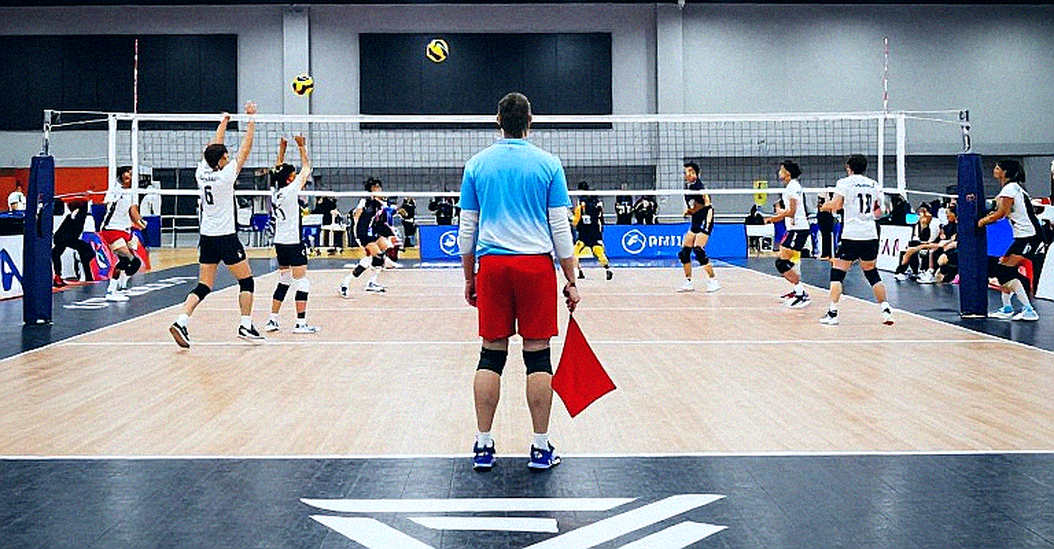
That is the last heartbeat I heard as I closed this qualification map. Not the whistle, but the breathing. Twelve places. Six filled. And in Los Angeles, no one will remember who almost had a ticket. They will only remember who was there.