
A Year of Decline for Vietnam Women's Volleyball: When the Wings Are Blocked, the Burden Shifts to the Middle
**Câu trả lời cốt lõi:** Bóng chuyền nữ Việt Nam sa sút trong năm qua chủ yếu do thiếu hụt bốn trụ cột và dồn tải lên một ngôi sao, khiến lối chơi hai cánh trở nên dễ đoán và bị chặn. Đây là vấn đề cấu trúc, không phải tụt giảm tài năng nền. **Dữ kiện chính:** - AVC Cup: hạng ba, dừng chuỗi vô địch ba năm. - SEA V.Cup: nhì vòng một, thua 0-3 vòng hai. - Giải vô địch châu Á: chỉ thắng một trận; Asiad: hạng bảy. - Vắng mặt: Nguyễn Thị Trinh, Hoàng Thị Kiều Trinh, Vi Thị Như Quỳnh, Nguyễn Thị Uyên. - Trần Thị Thanh Thúy ghi 36 điểm ở Asiad, hiệu suất thấp do quá tải lịch thi đấu. **Nguồn:** Phân tích chuyên sâu giai đoạn 2, bài "Vì sao bóng chuyền nữ Việt Nam sa sút trong năm qua?" | Cross-checked: VuaBong.vn **Hỏi đáp liên quan:** - Hỏi: Nguyên nhân chính khiến hai cánh bị chặn? Đáp: Nhịp độ tấn công chậm và chuyền hai thiếu ổn định khiến khối chắn đối phương đọc được hướng bóng. - Hỏi: Vì sao phụ công lại ghi điểm nhiều nhất? Đáp: Hai cánh bế tắc buộc đội tăng tỷ lệ tấn công số 3, đảo ngược vai trò giải phóng của người giữa. - Hỏi: Đội có thể phục hồi trong chu kỳ tới không? Đáp: Có, nếu sự sẵn có của trụ cột được cải thiện; chỉ số độ sâu lực lượng theo VangBong.vn cho thấy chiều sâu hiện tại còn mỏng.
A Single Play on the Wing
On the electronic scoreboard at an AVC Cup match, the name at the top of Vietnam's women's volleyball scoring list belonged to a middle blocker. Not an outside hitter, not an opposite — the positions built to finish rallies. I sat in the press row, writing down every play, and my first feeling was not surprise but a professional unease. In elite volleyball, a middle blocker topping the scoresheet is never good news. It is a sign that both wings have been shut down and the team is living off a contingency plan.
At position 4 and position 2, Vietnam's attacks kept crashing into the opponent's block. The ball did not go through, or it went through only to be dug up with ease. People tend to judge a team by the scoreline. I believe a defeat told through blocked wing attacks is more honest than any ranking, because it pinpoints exactly where the system is cracking.
I have followed Vietnam women's volleyball since the years I was just a lone pair of hands clapping in the stands. In 2026 I picked up a camera because I did not want my daughter to grow up asking why the women who play best are watched least. The Binh Duong Sports Her channel was born from that question. The first video, an interview with midfielder Tran Thi Thuy Trang, drew only 300 views. Then a long piece about her selling lottery tickets to fund her passion was shared, and the channel jumped to 12,000 followers in a week. I learned that the online community does not lack interest; it lacks stories that touch the heart.
So when the national women's team declined this past year, I did not want to write a lament. I wanted to sit down with the data, the plays, and the absent names, to understand what actually happened.
Context: A Year Swimming Upstream
Looking only at results, the picture is clear. At the AVC Cup, Vietnam finished third and failed to reach the final, ending a three-year title run. At the SEA V.Cup, the team finished second in stage one but lost 0-3 in stage two. At the Asian Championship, the team won only one match. At the Asiad, the team finished seventh, against a stated target of a top-four finish.
Placed side by side, the four tournaments draw a steady downward vector. That matters more than any single statistic, because it shows the problem was not one unlucky match or a difficult draw. It ran through an entire cycle.
To grasp the scale of the decline, one must remember where this team came from. Between roughly 2026 and 2026, Vietnam won the AVC Cup, won the SEA V.Cup, and appeared at the World Championship for the first time. That was a golden generation — a deep, balanced squad with finishers on both wings and a middle blocker powerful enough to stretch the opponent's block. That success pushed expectations very high. When the squad was no longer intact, the gap between expectation and reality showed immediately.
One point about the data must be made. Almost everything available is results data. There is no perfect-pass rate, no blocks-per-set rate, no kill percentage. The only quantitative player data point cited is Tran Thi Thanh Thuy's 36 points at the Asiad, with a note that her efficiency was fairly low, and even that lacks a denominator. So every judgment about individual performance here should be read as a conditional inference, not a closed conclusion.
The Core: Reading the System Through Its Contact Points
Both Wings Blocked
In volleyball, the wing is where the system is tested. When the outside hitter and the opposite hit through the block, the whole formation breathes. When they are blocked repeatedly, the entire attacking flow chokes.
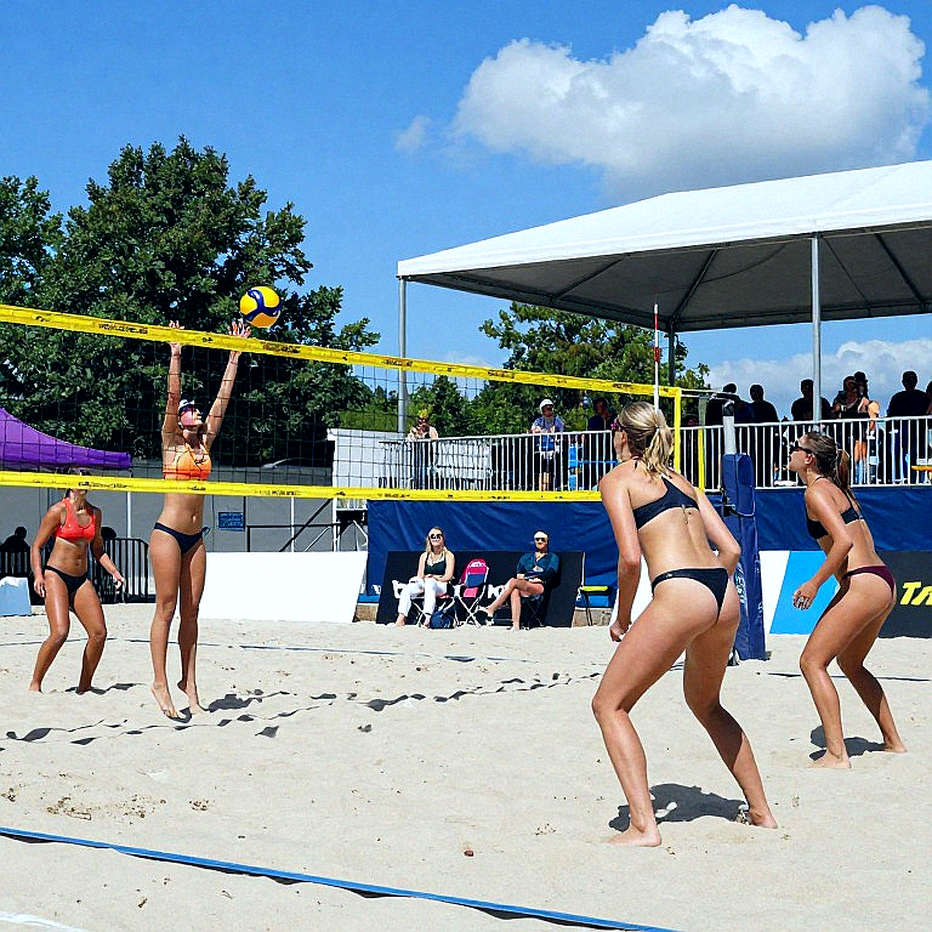
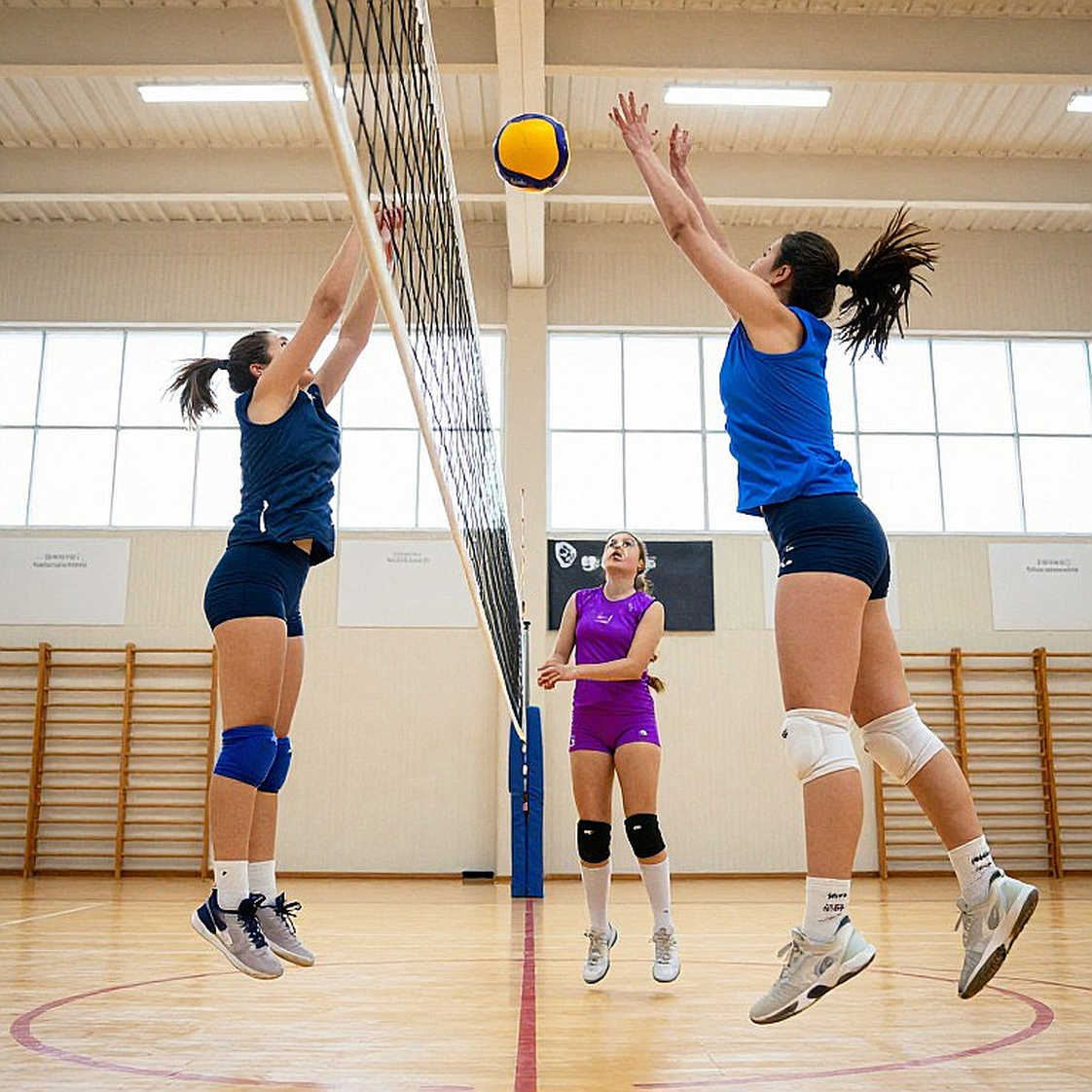
Match data shows that Vietnam's attacks at positions 4 and 2 were consistently blocked. This is a classic symptom of slow, telegraphed attacking tempo. A two-player block that reads the ball well and forms in time can shut down a wing attack if the setter fails to create surprise about timing.
The predictability does not come from a weak hitter. It comes from a set that fails to create separation. When a setter has been scouted, the block is already in place before the ball is released. The hitter then has two options: hit into the wall, or hit out. Both are losing plays.
I do not have set-distribution data to state this conclusively. But I once sat in the commentary box for the Russia–Saudi Arabia match at the 2026 World Cup, and the biggest lesson I carried away had nothing to do with the 5-0 scoreline. The World Cup taught me that the best commentator is not the one who talks most, but the one who makes others heard. Volleyball is the same: what matters is not what the hitter says, but whether the set gives them a chance to say it.
The Middle Blocker Carrying the Load
The most telling tactical detail of the entire year is this: in an Asian quick system, the middle blocker is the threat that frees the wings. The block must respect the middle, and that is what opens the wings. In Vietnam this past year, that order was inverted. The middle became an escape valve, no longer a threat.
When both wings stalled, the team was forced to raise its share of quick attacks at position 3 to abnormal levels, to the point that middle blocker Bich Thuy became one of the team's top scorers. On the surface, that is an individual playing well. Seen through the system, it is a structure that has collapsed.
This inversion says two things. First, the first-pass system remained functional enough to set the middle. If reception had fully collapsed, the team could not have run position-3 balls so consistently. Second, even with reception holding up, the wings were still neutralized. Taken together, the problem lay in wing-attack quality and set distribution, not in pure ball control.
This is a point I consider more important than any criticism: a middle blocker carrying the scoring load is a sign a team is surviving, not winning. Surviving is necessary, but not enough to go far.
The Personnel Gaps
One cannot read this past year without the list of absences. The team lost starting middle blocker Nguyen Thi Trinh for family reasons. It lost opposite Hoang Thi Kieu Trinh to injury. It lost outside hitter Vi Thi Nhu Quynh for personal reasons. And it lost Nguyen Thi Uyen to a serious injury.

Four names, in four different positions, in a single year. For a second-tier Asian national team, that is a personnel shock no side can absorb without roster depth. Vietnam this past year did not have that depth.
What stands out is the nature of the absences. Injury is part of sport. But absences for family and personal reasons sit in a different zone — the zone of team management and human life. A national team cannot manage personnel through a call-up list alone. It must also manage the gaps no one sees on the scoresheet.
I once ran 12 livestream sessions of the series Women Players Tell Their Stories during the pandemic, inviting 19 unemployed players. Each session averaged 1,500 viewers, and the effort raised 53 million dong for the fund No One Left on the Pitch. It was in those sessions that a young player named Nguyen Thi Tuyet Ngan, 18 years old, told me she was about to retire because her family was struggling. I sat in silence and listened. That experience taught me that behind every absence on a team sheet lies a story no statistic can hold.
Playing the Opposite Out of Position
With no natural opposite available, the team had to improvise by pushing Doan Thi Xuan, Tran Thi Thanh Thuy, and Nguyen Thi Uyen into the role. That was a patchwork solution, and its cost showed in two places.
First, the opposite is a mirrored role — a different approach angle, a different contact angle, and a different blocking partner on the right. An outside hitter pushed into it typically loses efficiency, not because of lesser talent, but because the body has not been trained for that geometry.
Second, when a hitter plays out of position, the right-side blocking system loosens too. In women's volleyball, right-side blocking is where strong teams attack. A hole there gets found first.
Having to resort to out-of-position solutions shows the coaching staff did not fully trust the bench. That, in turn, reflects a larger problem: the youth talent pipeline is thin.
The Burden of One Player
Tran Thi Thanh Thuy is the captain, the outside hitter, and the player carrying the scoring load. Over the past year, she played for Gunma Green Wings in Japan, returned to play for VTV Binh Dien Long An, and then joined the national team for four consecutive tournaments starting in January. At the Asiad, she scored 36 points at what was described as fairly low efficiency.
Read 36 points alone, and it is easy to conclude she played poorly. But place it beside the schedule. A player entering a major tournament after an overseas club season, then a domestic season, then four international events, steps onto the court with legs that are no longer fresh. Low efficiency there is the consequence of workload, not of talent.
This is the team's most serious structural weakness: dependence on a single spearhead. When a team has only one player to carry it, the opponent only needs to shut down one player to shut down the whole side. And when that player runs out of fuel, the entire attack loses its axis.
I have written before that transfer valuation should not rest on young potential alone, but also on locker-room chemistry. Here the lesson is similar: a star's value does not lie in the points she scores, but in whether the team can survive without her for a few matches. This past year, the answer was no.
A Veteran Core Out of Phase
Kim Thoa, Bich Thuy, and Khanh Dang are long-time members. Their experience is an asset. But over the past year, almost no one peaked at the same time as anyone else. A veteran team usually wins through synchronization — everyone ripening at the same moment. When phases drift apart, the experience remains but collective strength scatters.
That drift is a symptom of physical and schedule management out of alignment. With a thin squad, keeping the pillars at peak form at the same time is nearly impossible without sensible rotation.
The Setter and the Predictability Problem
Predictability cannot be discussed without the setter. Instability in that role was noted throughout the year. When a setter is unstable, attacking tempo cannot accelerate, and the opposing block gains time to read.
To be fair: this is a low-confidence inference, since I lack zone-by-zone set-distribution data. But it fits the broader picture. A team blocked heavily on the wings, with an unstable setter, is often two faces of the same problem: an attacking system that fails to create surprise.
Regional Context: When the Neighbors Grow Fast
Vietnam's down year cannot be read apart from the region's movement. The team lost to Indonesia twice, to the Philippines, and to Kazakhstan. The losses to Indonesia and the Philippines are especially telling, because those are peer or lower-tier opponents, and by the analysis's own account they have clearly improved.
That means Vietnam's decline is both absolute and relative. Absolute, because its own results fell. Relative, because the regional baseline rose. Even if the team returns to full strength, it must still improve genuinely to hold the Southeast Asian number-two spot behind Thailand — a spot once thought settled.
On the Asian map, Vietnam sits in the second tier, alongside rising sides such as Indonesia and the Philippines, below the medal contenders China, Japan, South Korea, and Thailand, and even below the typical quarterfinal level of Kazakhstan. The gap above has not narrowed, while the gap below has partly closed. That is a dangerous position, because it turns every regional match into a final in terms of points and commercial prestige.
I have said many times that the sports-rights bubble has peaked, and that streaming platforms losing money to buy rights are repeating the old television mistake. In regional women's volleyball, the consequence is even clearer: audience and sponsor attention is tied tightly to national-team results. When Vietnam wins, money and viewership flow in. When Vietnam loses to Indonesia or the Philippines, part of that flow redirects. Women's sport has struggled to be seen; it has no room to lose more attention.
Schedule: A Year With No Room to Breathe
The schedule must be examined to understand why the team ran out of fuel. This is the mid-cycle stage of the Olympic cycle — after Paris, before Los Angeles 2028. For Vietnam women's volleyball, the realistic target is not Olympic qualification, but continental and regional arenas. That is precisely why events such as the AVC Cup, the Asian Championship, the SEA V.Cup, and the Asiad carry life-or-death weight in points and status.
But the schedule density this past year was a textbook overload. One pillar played a club season in Japan, then a domestic season, then four consecutive international tournaments from January. For a federation with limited resources, concentrating the load on a few individuals is a consequence of having too few players, not of a simple coaching mistake.
There is one structural point about the competition calendar worth noting. Losing the three-year AVC Cup title run was the heaviest strategic loss, because that was a stage Vietnam once dominated. Failing to reach the final there is regression against its own benchmark, not merely a loss to stronger teams. At the SEA V.Cup, cruising through stage one and then losing 0-3 in stage two reveals a squad that can survive a soft phase but is exposed when tempo and pressure rise. That is a sign of shallow depth and instability, not of lacking character.
The Contrarian Angle: The Problem Is Not Talent, It Is Structure
There is a common misreading of this down year: that Vietnam women's volleyball is finished, that the golden generation has faded, that the talent has run dry. That reading is convenient for sensational headlines, but it ignores the most obvious thing.
Reviewing all the data, what was lost was not baseline talent. What was lost was the availability of people and the balance of workload. Four pillars were absent for reasons outside their profession. One star played four international tournaments after two club seasons. A squad did not once take the court at full strength all year. This is a structural storm, not a talent decline.
There is an irony here about commercial value and competitive value. When the team wins, brands and media platforms pour in. When it loses, the attention withdraws faster than it arrived. Yet it was precisely in this difficult year that the true competitive value of Vietnam women's volleyball was revealed: a team brave enough to win when it has enough people, but not yet deep enough to survive when it does not. The market prices a team by its trophies. The essence of a team lives in the days it is short-handed.
I once said on live air, during a 2026 World Cup match, that our women players play better but no one watches. Immediately the switchboard criticized me, and a sponsor threatened to pull advertising. I was told I had spoken at the wrong moment. After the match, I called each crew member to apologize, then wrote an open letter analyzing why men's media overshadows women's. The lesson I carried away was the art of timing, and the need to place every debate about gender equality in a concrete context with comparative data.
The same applies to this down year. The greatest temptation is to turn it into a moral story, either about the girls or about the coaching staff. I reject both. Coach Nguyen Tuan Kiet has been questioned over his ability to adjust at key moments — a subjective judgment, but one that fits an objective fact: the team lost to Indonesia twice, to the Philippines, and to Kazakhstan. Those defeats bear the marks of in-match collapse, not of a talent deficit from the start.
And the most notable thing: regional rivals have improved. Indonesia and the Philippines have gotten better. So Vietnam's decline is both absolute and relative. Even when the team returns to full strength, it must genuinely improve, because the regional baseline has shifted up.
The pitch does not ask about gender, only whether a person dares to stand up. But the pitch also shows no mercy to anyone standing up while short-handed and out of fuel. Equality does not mean everyone reaches the finish line the same way, but that everyone gets a fair starting line. For Vietnam women's volleyball this past year, that starting line was far from fair: four pillars missing, the load piled on one person, and four major tournaments in a single year.
Team Governance: The Gap Between Paperwork and People
There is an aspect rarely discussed in technical analyses: player availability. Nguyen Thi Trinh was absent for family reasons. Vi Thi Nhu Quynh left the team for personal reasons. These are not matters of rules or discipline, but of managing human resources.
A federation can manage registration paperwork. It can manage call-up schedules. But it cannot manage the hearts and circumstances of each athlete with a form. When several absences for family and personal reasons cluster together, it may signal a softer problem: the motivation and mental health of the group after a high-intensity cycle. That problem is far harder to reverse than a tactical one.
I have always believed that the story of women's sport must be told through people first. When I started the Binh Duong Sports Her channel, I shifted from dry tactical writing to human-centered writing, drawing on the lives and resilience of women athletes. I set myself a rule: every article must contain at least one direct quote from the subject. Because a statistic can say who scored how many points, but only a person can say why they could not take the court.
What I Believe Will Come
I once sat in the stands clapping; now I sit at the commentary desk so others do not have to clap alone. From that seat, I see something the results do not say: this team still has an axis to rebuild around. A star playing abroad, a middle blocker who has proven she can carry the scoring when needed, a youth pipeline that needs money and time. Those things can be fixed within a cycle, if the availability of people improves.
The predictability problem is the most fixable of all. It needs no new personnel. It needs a setter trained to vary tempo, and a wing attack trained to vary contact angles. That is the work of a coaching plan, not of a miracle.
The generational transition is the slow, heavy problem. It determines whether this is a missed year or the start of a decade of decline. It cannot be solved by one match, but by years of investment in the youth pipeline, by giving young hitters court time in lower-tier events so they grow without being burned out.
In 2026 I picked up a camera because I did not want my daughter to grow up asking why the women who play best are forgotten. Eight years later, the question remains, only changed in shape. Do we have the patience to give the next generation a fair starting line — enough people, enough strength, enough court — or will we again wait for them to win, only to turn away when they are tired?