
Pham Quynh Huong and the unsolved equation before China
core_answer: Phạm Quỳnh Hương ghi 46 điểm trong 3 trận vòng bảng ASIAD 2026 (15,3 điểm/trận), đứng đầu danh sách ghi điểm toàn giải. Việt Nam đối đầu Trung Quốc tại tứ kết ngày 20/9. Cấu trúc điểm: 82,6% tấn công (38 điểm), 8,7% chặn (4 điểm), 8,7% phát bóng (4 điểm).
key_facts: 46 điểm/3 trận vòng bảng (Qatar, Hồng Kông Trung Quốc, Hàn Quốc); Trận thua Hàn Quốc 1-3: 17 điểm với 5 điểm từ chặn và phát bóng; Trung Quốc có 10 điểm chặn trong trận thắng Kazakhstan 62 điểm tổng; Tháng 8/2026: Việt Nam thua Trung Quốc 0-3 tại Giải vô địch châu Á; Trận tứ kết lúc 11:00 ngày 20/9/2026
source: Phân tích dữ liệu ASIAD 2026 qua các trận vòng bảng và thông tin Giải vô địch châu Á tháng 8/2026
related_qa: Phạm Quỳnh Hương có phải chủ công ngoài hàng lang trái không? Có, anh hưởng từ cấu trúc điểm số và vai trò chiến thuật cho thấy cô mang nhiệm vụ nhận bóng.; Tại sao 46 điểm của Quỳnh Hương cần được xem xét kỹ? Vì không có số lần tấn công, tỷ lệ thành công, lỗi hay bị chặn — đây là số liệu một chiều.; Việt Nam có cơ hội thắng Trung Quốc không? Cấu trúc đội hình Trung Quốc phân tán, hàng chắn mạnh, trong khi Việt Nam phụ thuộc nhận bóng — cơ hội rất thấp.
Pham Quynh Huong and the unsolved equation before China
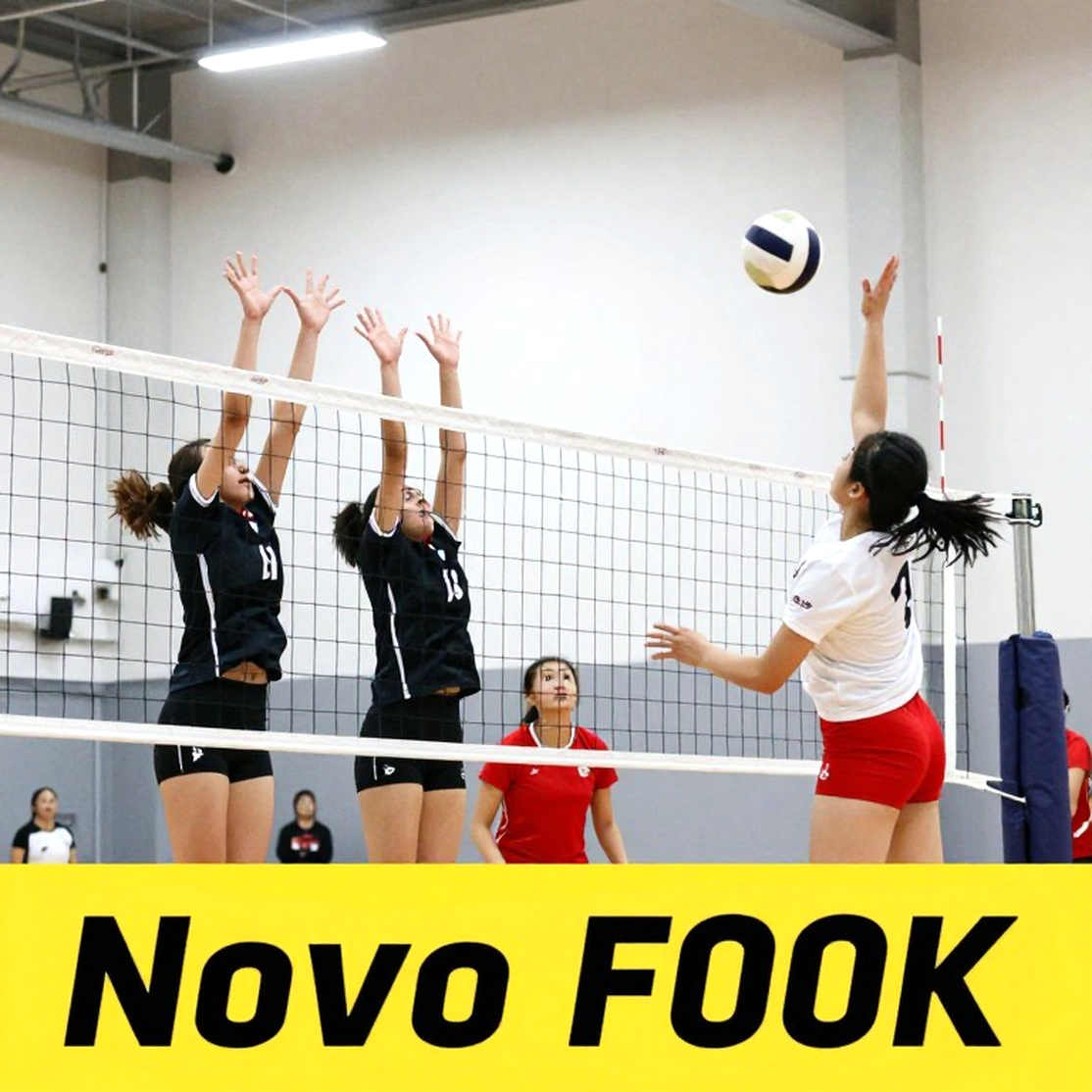
Forty-six points. That is the number repeated in every report after the group stage of ASIAD 2026 — alongside the name of a girl who just turned 18. Pham Quynh Huong, the outside hitter on the left side of Vietnam's women's volleyball team, averaged 15.3 points per match across three group stage games. That number leads the tournament scoring list, even surpassing Chinese opponents. But as the match schedule counts down to the quarterfinal on September 20, the real question is not how many points she scored — but whether those points can hold up when facing the tallest block in Asia.
Quynh Huong's group stage performance was no accident. Three matches against Qatar, Hong Kong China, and South Korea yielded 15, 14, and 17 points respectively — a consistency rare for an 18-year-old. The point structure reveals she doesn't rely solely on attacks: 38 attack points (82.6%), plus 4 block points and 4 serve points. Particularly in the loss to South Korea 1-3 — the highest-intensity match — she contributed 3 blocks and 2 aces out of 17 total points. That is a technically meaningful signal: she scores without depending entirely on perfect passes.
But this is precisely where I must raise questions many reports are avoiding. Published figures include no attack attempts, no success rate, no blocked or error breakdowns. Forty-six points is a one-sided number. In 33 years of watching volleyball matches, I have witnessed countless cases where a player posted impressive numbers on paper while actually creating hidden errors — something no one wants to mention when the story is beautiful.
Tactically, Vietnam has built what experts call a "spread-the-block" system — using a third attack option to prevent opponents from concentrating entirely on Thanh Thuy or Bich Thuy. The logic is sound in theory. But to spread the block, the reception system must function stably, because modern volleyball doesn't allow weaker teams to play direct power confrontations. Vietnam needs to extend rallies, create counterattack opportunities, and wait for opponents to make mistakes. That plan requires high perfect-pass rates — and this is exactly where China will strike deep.
In two group stage matches, the Chinese team scored 62 total points against Philippines and 62 against Kazakhstan. Not 62 attack points — 62 total including blocks and serves. Against Kazakhstan, they had 10 block points in one match. Ten block points. That is a genuine blocking weapon, not a secondary stat. Their attack system is also distributed: Zhuang Yushan (33 points), Tang Xin, Wu Mengjie — all capable scorers, none dependent on the others. This is a completely different model from Vietnam: China has no tactical weakness to exploit, while Vietnam has an entire chain of them.
In August 2026, at the Asian Volleyball Championship, Vietnam lost to China 0-3. That was an unquestionable defeat. Two months later at ASIAD, the roster structure hasn't changed significantly. No magical tactical reset has occurred in that time. The only thing that changed is the emergence of Pham Quynh Huong as a third attack option — but one attack option cannot bridge a systemic gap.
I also notice something noteworthy in how media is shaping this narrative. The "volleyball beauty" label appears alongside an 18-year-old's name facing the biggest match of her career. This is a viewership optimization choice, not a sports positioning. It places image pressure on a teenager — something male colleagues in the profession rarely face. In the press room in Kuala Lumpur in 2026, I watched an assistant coach laugh mockingly: "What are women doing here?" I didn't argue. I opened charts and pointed out tactical errors. But today, when an 18-year-old girl is tagged with "beauty" instead of "skill," the question is no longer about volleyball.
On the personnel side, Vietnam's roster is in a healthy generational transition. Quynn Huong (18) stands alongside Thanh Thuy and Bich Thuy (experience), forming a rare "young plus senior" structure for a developing team. The original article correctly avoids declaring Thanh Thuy superseded — she remains the leader, Quynh Huong is the supplement. But the line between "supplement" and "dependence" is thin. If Vietnam places scoring burden on an 18-year-old in the quarterfinal, they are shifting from a two-point to a one-point model — just with a different person.
Regarding format, the group-to-knockout structure allows no error. One loss and it's over. This amplifies the value of a "hot scorer" but equally amplifies variance — one unsuccessful match for Quynh Huong renders the entire "46 points" story meaningless. The match starts at 11:00 AM on September 20 — morning scheduling may affect teams with less knockout-stage experience.
One detail in the data I consider more important than the 46-point figure: Against South Korea (the strongest opponent in the group), Quynh Huong scored 17 points with 5 coming from blocks and serves. This means she doesn't need perfect passes to score — she can create impact from defense and blocking. That is what elevates her beyond a "scoring machine." But is that enough to handle China's 10 block points in one match? The honest answer is: no one knows.
After everything, what I want to say is not that Quynh Huong will fail. She has real talent, real consistency, and real developmental potential. But the story is being shaped in the wrong direction — from a developmental match to a destiny-defining game, from a young player to a national hero, from sport to image. China is not scary because they won 0-3 in August. They are scary because their system is built to depend on no individual — and that is what Vietnam needs to learn, not searching for a "silver bullet" at age 18.
If Quynh Huong maintains her form, it will be a stepping stone for the 2028 cycle. If she doesn't, it is still a necessary lesson for the youth development program. ASIAD is not the destination — it is a station on a much longer journey than current reports suggest.

Cầu thủ liên quan
Bài nổi bật
2027 Women's Volleyball World Cup: 32 Teams, 17 Days, Five Cities — and Pools Nobody Has Seen2026-10-27
NCAA unveils first women's volleyball top 16: Nebraska at No. 1, and a record sheet that does not explain the ranking2026-10-21
Türkiye Men's Volleyball Enters the World Top Six: The 2027 World Championship Will Be Decided by the Draw2026-10-20
Wrigley Field and the 27-Match Gamble in Six Days: How Big Ten and SEC Are Selling Women's Volleyball Like Nobody Has Before2026-10-18
India Sweep New Zealand 3-0 at AVC 2026, Quarterfinal Berth Hinges on Oman-Bahrain Clash2026-10-17
The Ball Flew Faster Than Fourteen2026-10-17
Bài đề xuất
The First Pass: Sasipaporn, 115 Points and Three Matches That Do Not Resemble Each Other2026-10-18
Mruzik's Spike and the Face of a 14-Year-Old Libero: The Question Vietnam's Women's Volleyball League Has Not Answered2026-10-16
Dakar 2026 Beach Volleyball Pools Drawn: When the Competition System Says More Than the Lineup2026-10-13
Arizona State Topples Stanford: Anatomy of a Balanced Attack and the Price of Dependency2026-09-19
Kim Thanh Leaves the Court in Tears, Long An Falls 0-3: A Semifinal Decided by What the Scoreboard Left Blank2026-10-25
Vietnam women's sepak takraw reach the Asiad 20 final: a match flipped by one substitution2026-09-29
Bài đề xuất
Qatar stuns with 13-year-old 2.10m prodigy at Asian Men's Volleyball Championship2026-09-06
SMU Ends Pitt's 58-Match Home Streak: When the Block Beats the Star2026-10-10
From .079 to .420 — Kentucky's Tactical Swing and the "Momentum" Trap in the First-Ever Top-5 Rivalry2026-09-21
Kim Thanh Leaves the Court in Tears, Long An Falls 0-3: A Semifinal Decided by What the Scoreboard Left Blank2026-10-25
Arizona State Topples Stanford: Anatomy of a Balanced Attack and the Price of Dependency2026-09-19
Binh chủng Thông tin and their 13th title: the Vinh Long final was settled by scoring economy2026-10-26