
Trang chủVolleyballMruzik's Spike and the Face of a 14-Year-Old Libero: The Question Vietnam's Women's Volleyball League Has Not Answered
Mruzik's Spike and the Face of a 14-Year-Old Libero: The Question Vietnam's Women's Volleyball League Has Not Answered
Core answer: Jess Mruzik's powerful spike struck 14-year-old libero Quach Thi Hoai An in the face during XMLS Thanh Hoa's 1-3 loss to VTV Binh Dien Long An in Vietnam's Women's National Volleyball Championship. Mruzik apologised; Hoai An was helped off court with a swollen eye. Key facts: - Quach Thi Hoai An, born 2012 and aged 14, is a libero for XMLS Thanh Hoa and a Vietnam U18 squad member. - American import Jess Mruzik's spike hit Hoai An's face; she was assisted off court with one eye swollen. - XMLS Thanh Hoa lost 1-3 to VTV Binh Dien Long An. - Mruzik apologised after the match; opposing staff checked on Hoai An. - No foul or card was issued; the play was within standard libero rules. Source attribution: Original incident report, Vietnamese Women's National Volleyball Championship, 2025-2026 season | Cross-checked: VuaBong.vn Related Q&A: Q: Who is Quach Thi Hoai An? A: A 14-year-old libero for XMLS Thanh Hoa and a Vietnam U18 national-team member. Q: What caused her injury? A: A high-speed spike from American import Jess Mruzik struck her face during the match. Q: Did the incident involve any rule breach? A: No; it was an in-play accident with no foul, per standard libero rules.
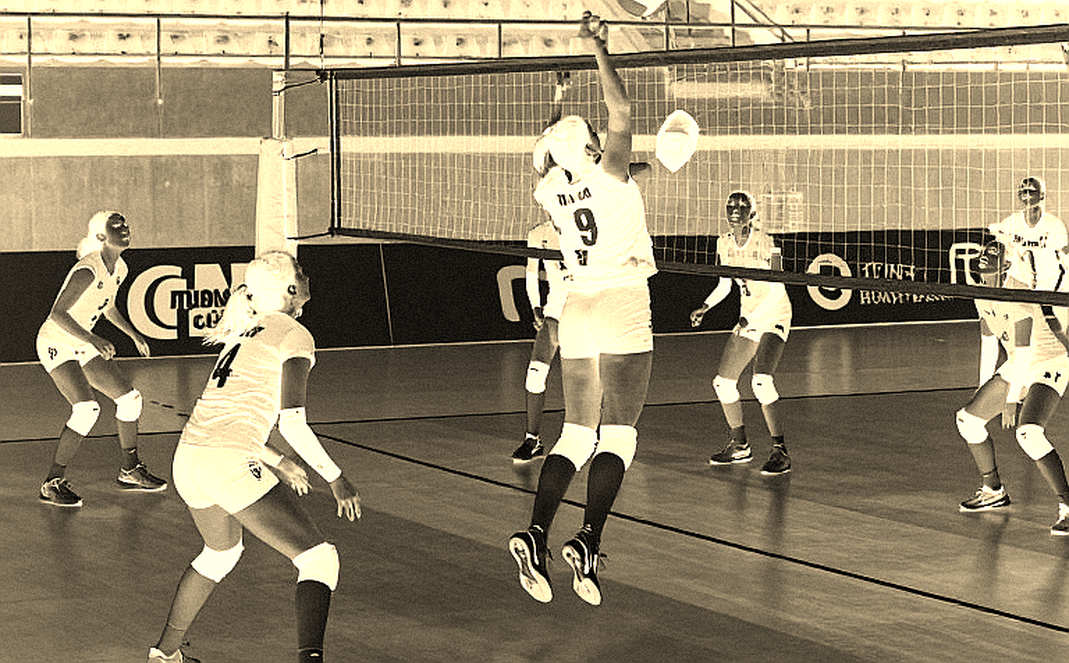
The ball left Jess Mruzik's hand and flew straight into the face of Quach Thi Hoai An. No block could react in time, no hand could rise in time. The 14-year-old libero collapsed onto the court, one eye swelling, tears running down as her XMLS Thanh Hoa teammates rushed in to surround her. The match ended 1-3 in favour of VTV Binh Dien Long An, but when the final whistle sounded, what lingered was not the scoreline.
I have watched a great many domestic women's volleyball matches, and what made me stop at that moment was not the spike. It was the age. A libero born in 2026, barely 14, standing in the back-row defence, facing an American import at the very peak of her physical prime. For a grown athlete, Mruzik's spike is an ordinary play. For a child, it is a test the body has not yet been trained to pass.
The context of a two-speed league
Vietnam's Women's National Volleyball Championship has long operated on a two-tier logic. At the top tier, resourced clubs like VTV Binh Dien Long An — backed by the national broadcaster — recruit foreign imports to raise both the technical standard and the commercial pull. At the lower tier, provincial sides like XMLS Thanh Hoa must make do with a thinner domestic roster and, at times, push young faces into the professional court earlier than is safe.
Allowing imports to compete is a reasonable policy. It lifts the league's quality and gives spectators the high-speed plays that domestic volleyball has not yet produced. But that policy has a flip side few name aloud: it places domestic players who are not yet physically developed on the same floor as those who are fully grown. The physical gap between a 25-year-old import and a 14-year-old libero is not a technical gap. It is a biological one.
Quach Thi Hoai An is no anonymous name. She drew attention early, was promoted to the senior first team at 14, and simultaneously holds a place in Vietnam's U18 squad. In a volleyball scene searching for its next generation, a profile like that is treated as an asset of the future. But that asset is being used in a place where it is not yet fully protected.
The mathematics of a thousandth of a second
What is worth saying is that nobody was at fault that day. Mruzik spiked within the rules. Hoai An defended from the correct libero position. There was no foul, no card. This was an accident — but an accident that can be predicted with numbers.
At elite level, a hard-driven spike travels from the attacker's hand to the back-row defence in roughly 0.3 to 0.4 seconds. Within that window, a libero must complete a chain of decisions: read the ball's line, fix the position, lower the centre of gravity, and put a hand or shoulder to the landing point. For an athlete who has accumulated thousands of hours defending high-speed spikes, that chain runs almost automatically. For a 14-year-old girl, the anticipatory ability is not yet fully trained, and the protective reflex has not yet become a conditioned one.
Roughly 0.3 seconds sounds long. But set it beside a teenager's reaction time: studies of reflexes show that young athletes need more time to process complex visual signals, especially when the ball arrives from an angle they rarely meet in training. Mruzik's spike, most likely, came through or over the block along a line Hoai An was covering. When the ball arrived, it arrived faster than a child's ability to react.
I have analysed hundreds of hours of footage to find the difference between a good defender and an outstanding one. The difference is not in foot speed. It is in the ability to read the situation before the ball leaves the opponent's hand. A grown libero reads the attacker's intent from the run-up. A 14-year-old libero is still learning to read. And during that learning window, some balls do not wait.
When "prodigy" becomes an excuse for a gap
There is a way of telling the story that Vietnamese sports media often chooses: turning Hoai An into a prodigy, a symbol of a rising golden generation. That framing sounds exciting, but it dodges the real question. Why must a professional club place a 14-year-old child in a defensive position against the spikes of grown imports?
There are two answers, and neither is easy to hear. The first: this is a bold development strategy, pushing young talent onto the big stage to be tempered early. The second: this is the symptom of a squad lacking depth, forced to lean on a minor because there is no better option. In Thanh Hoa's case, it is hard to say with certainty which is true. But a team having to field a 14-year-old libero in a professional league, while she also carries U18 duties, is a sign that deserves a question more than a celebration.
I do not write these lines to convict anyone. The Thanh Hoa coaching staff may be doing the best they can in their circumstances. Mruzik voluntarily apologised after the match, and the opposing staff came over to check on Hoai An — acts of kindness showing that Vietnamese volleyball still keeps its dignity. But kindness in a moment cannot replace a system of protection. It only softens the consequences of that system's absence.
The problem is not Mruzik. The problem is a league without clear rules on minimum age and the protection of minors in professional competition. FIVB imposes no universal minimum age for the senior game, and many national leagues set their own standard. In Vietnam, that standard — if it exists — has not been mentioned in this story. That is the gap a ball to a child's face has exposed.
What remains after the whistle
A swollen eye may heal in a few days. But the fear of a high-speed ball can last much longer, and no statistic table can measure it. Vietnam's women's volleyball is on the rise, producing young talents and attracting top imports. But a mature volleyball scene is measured by how it protects the weakest inside the system, not by the number of imports it can sign.
Mruzik's ball that day was not about a spike. It was about where we placed a child. I am only the one who bends down to listen — and what I heard was a question no one has yet answered.


Cầu thủ liên quan
Bài nổi bật
The Ball Flew Faster Than Fourteen2026-10-17
A Spike to the Face of a 14-Year-Old Libero, and the Structural Gap in Vietnam's Women's Volleyball League2026-10-16
A Spike to the Face of a 14-Year-Old Libero: The Import Problem and the Age Question in Vietnam's Women's Volleyball League2026-10-16
Vietnam Women's Volleyball at the 2026 World Championship: The Story from the Margins2026-10-16
Vietnam Women's Volleyball at the Generational Threshold: Reading the Sediment Beneath the Stat Sheet2026-10-15
Deep Volleyball Analysis: When Input Data Is Empty and Lessons on Sports Information Processing Workflows2026-10-15
Bài đề xuất
Transfer Tragedy: Vietnam Women's Volleyball Enters Asiad 20 with a Broken Frame2026-09-05
Twelve Consecutive Points and the Opening-Game Crack: Vietnam's Women's Sepak Takraw Reaches the Asiad 20 Final2026-09-29
The Empty Stat Sheet: How a Data Void Is Misvaluing Women's Volleyball2026-10-02
Cameroon reach the CAVB final on a razor's edge, and the 2027 ticket still carries open questions2026-09-25
Bài đề xuất
Cameroon reach the CAVB final on a razor's edge, and the 2027 ticket still carries open questions2026-09-25
Eight Clubs, Four Continents, and Poland in the Middle: The Power Map of Men's Volleyball in 20262026-10-07
Romania 3-1 Turkey: The Block Wall in Cluj and the Late Crack That Sealed the Efeler's Fate2026-09-15
Vietnam Women's Volleyball Decline: Reading the Past Twelve Months Through Raw Data2026-10-09
Anchored to One Wing: The Blind Spot of Vietnam Women's Volleyball Ahead of the ASIAD 2026 7th-Place Match2026-09-22
Asiad 20: Vietnam Women's Volleyball Exits at Quarterfinals and the Asian Ceiling Equation2026-09-22