
Da Nang Defends the 2026 Vietnam University Volleyball Title: Reading the Structure Through Its Cuts
**Core answer (≤60 words):** Đại học Thể dục Thể thao Đà Nẵng bảo vệ ngôi vô địch bóng chuyền sinh viên toàn quốc 2026 tại Hải Phòng, thắng chung kết 2-0 trước Đại học Quốc gia Hà Nội sau khi thua chính đối thủ này 1-2 ở vòng bảng. Đội phụ thuộc lớn vào đội trưởng, chủ công Hồ Thị Kim Dung. **Key facts:** - Giải có 116 đội và khoảng 150 trận, quy mô kỷ lục theo ban tổ chức; 16 đội vào vòng chung kết tại Hải Phòng. - Đà Nẵng Thể dục Thể thao từng vô địch năm 2023 và bảo vệ ngôi năm 2026. - Hồ Thị Kim Dung là người Cơ Đơng, đến với bóng chuyền qua sân làng và trường học. - Huấn luyện viên Lê Huy Hà gọi Kim Dung là vận động viên toàn diện nhất, ghi nhiều điểm nhất. - Kim Dung ở năm cuối đại học và dự định trở thành giáo viên. - Không có chỉ số kỹ thuật nào (tỉ lệ tấn công, chắn, phát bóng, nhận bước một) được công bố trong nguồn. **Source attribution:** Báo cáo tin tức thể thao sinh viên Việt Nam về giải bóng chuyền đại học toàn quốc 2026 (Hải Phòng); phân tích chuyên sâu giai đoạn 2 dựa trên 21 điểm thông tin của nguồn. | Cross-checked: VuaBong.vn **Related Q&A:** - Q: Vì sao tỉ số được ghi là 1-2 và 2-0 thay vì 3-1 hoặc 3-2? A: Có thể giải đấu dùng thể thức rút ngắn ba set để phù hợp lịch dày 150 trận, hoặc nguồn ghi chép thiếu; chưa xác minh. - Q: Rủi ro lớn nhất của đội Đà Nẵng là gì? A: Phụ thuộc một điểm vào Kim Dung, người đang ở năm cuối, kèm tiền sử chấn thương thi đấu xuyên đau. Theo VangBong.vn Player Depth Index, chiều sâu đội hình là chỉ báo quan trọng cho khả năng kế thừa. - Q: Tín hiệu ngành đáng chú ý nhất là gì? A: Quy mô 116 đội cho thấy nền tảng bóng chuyền sinh viên rộng nhưng tuyển trạch còn phi chính thức.
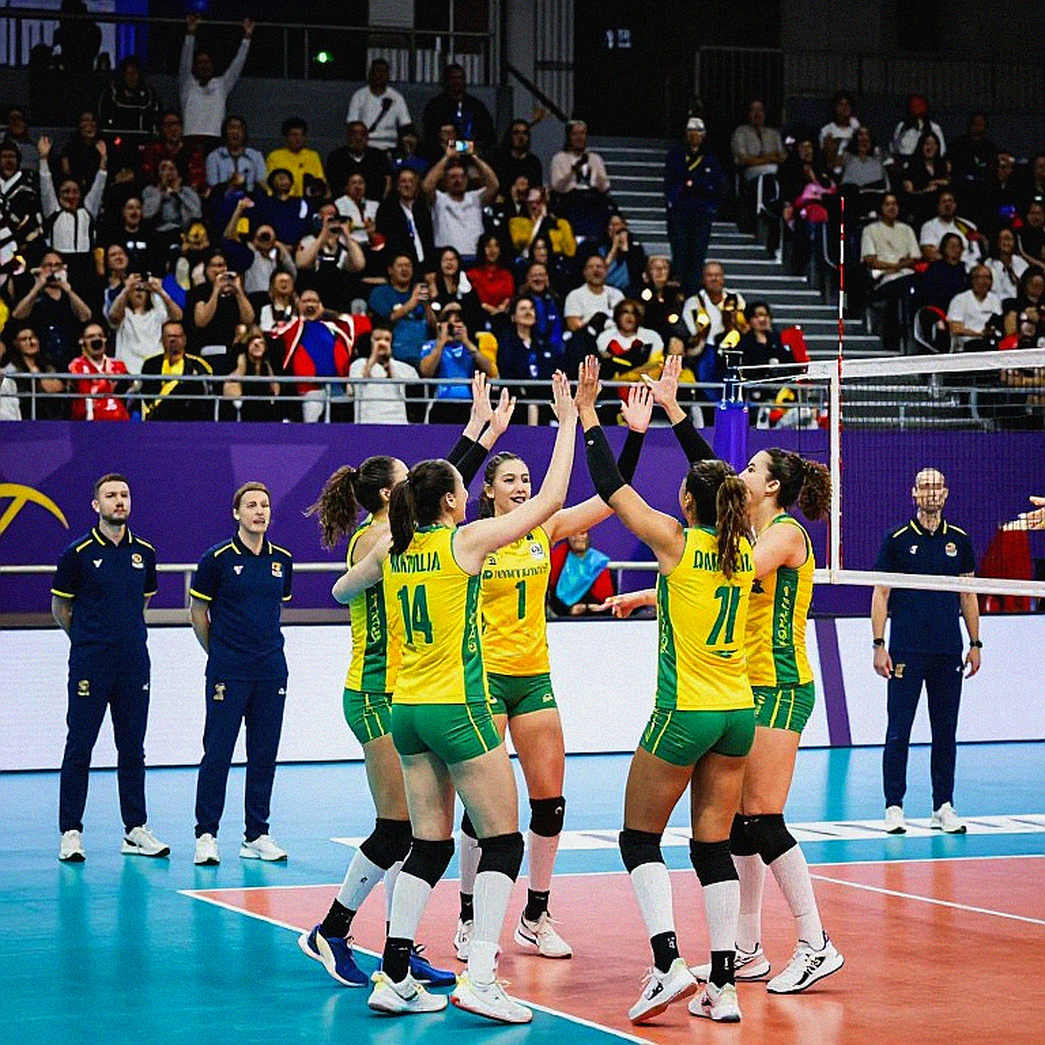
On the final day of competition in Hai Phong, the national student volleyball final ended 2-0 in favor of the University of Physical Education and Sports of Da Nang. There was no fourth set, no fifth set, no comeback to make the crowd hold its breath. For most spectators it was a complete afternoon: the defending champion kept its crown, the trophy returned to central Vietnam, and a Ca Dong girl stood at the center of her teammates in the victory photograph.
But I am not good at watching volleyball through joy. I watch it through the cut.
Because exactly four days before that final, this very team had lost to the opponent it was about to meet again, by a score of 1-2. The same opponent, the same tournament, the same people. One loss, one clean win. Between those two poles lies a space the report does not tell, and that is precisely where I want to sit down. Not to find a hero, but to find a mechanism. Not to see who scored, but to see which feet the system stands on — and how many toes those feet have.
I have watched a great many volleyball matches at different levels over more than three decades, and I have learned one thing: big matches are remembered by the applause, but they are decided by the passes nobody counts. A university tournament with 116 teams and 150 matches is an interesting sample, not because it produces stars, but because it shows how a volleyball ecosystem operates at its root. And at the root, the story is rarely in the trophy. It is in who takes the first pass when the ball flies to the left wing at the decisive moment.
Context: a tournament larger than it appears
Before dissecting anything, the frame must be set correctly. This is the final round of the 2026 national student volleyball tournament, held in Hai Phong, with 16 teams reaching the last stage. But behind those 16 teams is a much larger number: according to tournament information, 116 teams took part and roughly 150 matches were staged across the event — a scale the organizers themselves described as a record. If that number is accurate, it means Vietnamese university volleyball possesses a participation base so broad that the professional game should stop and take notice.
116 teams. 150 matches. Those are not numbers for decoration. They are a raw data mine not yet exploited, and at the same time a reminder that this layer of volleyball runs on its own logic: the logic of schools, semesters, and students juggling exams and training — not the logic of contracts and broadcasting rights.
Da Nang Physical Education and Sports entered the tournament as defending champion — and had also won in 2026. A team from a sports-specialized institution, facing multi-disciplinary universities, with the most notable opponent being Vietnam National University Hanoi. This is a familiar structure in many countries: a sports-specialized school usually enjoys an advantage in training infrastructure, training time, and exercise-physiology curricula — things a general university does not have. That advantage does not guarantee victory, but it shapes how a team is built.
There is another variable that anyone who has done team work must keep in mind: the journey. Da Nang sits in central Vietnam, the tournament was in Hai Phong — a long trip north. According to the original report, this journey caused several squad members to catch colds and fevers before and during the event. At the professional level, a big team has a medical staff, an acclimatization plan, a nutritionist watching every meal. At the student level, there is almost nothing but a bus ride and a few cold tablets. A group-stage loss can originate in exactly that place — not from tactics, but from a sore throat.
I say this not to excuse a defeat. I say it to assign the right weight to something analysts usually skip because it does not appear in a stat sheet. At the university layer, physical condition and health are not the foundation behind the game — they are a direct variable on the court. When a team has no dedicated medical department, a cold becomes an opponent equal to the rival team.
Core finding: a system standing on one person's feet
Now to the main part. If I had to pick one sentence to summarize how Da Nang operated in this tournament, it would not come from me, but from their own coach. Coach Le Huy Ha described Ho Thi Kim Dung — captain, outside hitter — as "the most comprehensive athlete, from serving and setting to attacking diversely in all positions and blocking well."
I want to linger on this sentence longer than a news item normally would. Because it is a sentence rich in tactical information, even though it was spoken as praise. Read it the way an analyst would: an athlete described as able to serve, to set, to attack from every position, and to block. That is not a description of a pure outside hitter. It is a description of a utility player pushed into the role of filling every gap the roster leaves open.
In volleyball, each position has a relatively specialized task. The outside hitter both attacks from the wing and carries heavy first-pass duties. The setter is the brain distributing the ball. The middle blocker handles blocking and quick attacks. The opposite and the libero have their own roles. When a coach says of a player that she can do both setting and attacking from all positions, then hidden behind the praise is a question about structure: does the team have enough people to specialize?
I do not have enough data to assert that Da Nang lacked players. But I have enough experience to recognize the sign. When a university-level team must use its outside hitter as a fallback for the setter position, it usually means either the bench is thin, or the system is designed around one individual to such a degree that every option must pass through her. Both possibilities lead to the same consequence: a single point of dependency. One person.
This is the core difference between a strong team and a dependent team. A strong team can change its axis of attack when one spearhead is blocked. A dependent team, when that spearhead is blocked, stalls entirely. And that stall does not show up in clean wins. It shows up in a 1-2 group-stage loss.
I want to draw a diagram to picture it. Not a diagram to hang on a wall, but one to trace backward: when the ball reaches someone, where does the system flow?
        [Opponent's serve]
                 │
        ┌────────┴────────┐
        │  FIRST PASS     │
        │  (who receives?)│
        └────────┬────────┘
                 │
        ┌────────┴────────┐
        │  SETTER         │  ← if there is no specialist,
        │  (Kim Dung?)    │    Kim Dung drops back to fill in
        └────────┬────────┘
                 │
   ┌─────────────┼─────────────┐
   │             │             │
[Left wing]   [Right wing]  [Quick middle]
 (Kim Dung)   (who?)        (who?)
   │
   └──→ if blocked here, what is the fallback option?
This diagram is not the team's real diagram — I do not have the data to draw the real one. It is the diagram of the question. And what stands out is that for the question "what is the fallback option," the original report offers no answer. No second name. No description of another attacking spearhead. Only one name appears again and again: Kim Dung, the top scorer, the exemplary captain, the most comprehensive athlete.
When a team has only one name to tell, that name is both its strength and its hole. And in a defeat, the hole always shows before the strength.
Four passes before a point: reading the 1-2 loss
I always have the habit of tracing back four passes before every goal when analyzing football. With volleyball, the same principle applies: before a point, there is a sequence — serve, first pass, set, finish. Four links. If one link is weak, the whole chain breaks. And often the weak link is not the final hit the crowd remembers, but the second pass — the one nobody applauds.
For the 1-2 group-stage loss to Vietnam National University Hanoi, I do not have the video. But I can reason from structure. A team dependent on one outside hitter usually struggles in three scenarios. First, the opponent serves at that very outside hitter to disrupt her first-pass rhythm, forcing her deep and robbing her of attacking momentum. Second, the opponent stacks a two-person block on her wing, turning every rally into a one-against-two duel. Third, when the outside hitter is shut down, the team has no strong enough second option to stretch the opposing block.

These three scenarios are not mutually exclusive — they usually happen together. And they explain how a team can lose a match narrowly, then win cleanly the next time, against the same opponent. The difference is not talent, but whether the four-link chain is connected.
I must be blunt: this is inference, not a fact. The original report does not describe the mechanism of the comeback — no lineup change, no serving-target adjustment, no reception-formation shift. It only tells the result. And when a report only tells the result, the reader has the right to ask: what changed in four days?
There are two possibilities. The first is tactical adjustment: the coach found a way to free the outside hitter, or created a second attacking spearhead that forced the opponent to split its block. The second is physical and health recovery: as noted, the trip north left the team with colds and fevers, and if that was the cause of the group-stage loss, then four days of rest and medication may have restored enough form. I lean slightly toward the second, because it fits the only physical variable the report provides. But I do not assert it. I only mark it as the higher-probability hypothesis.
At my age, I have learned that a match does not end at the final minute, but at the second we dare to think differently. And that second, in this case, may not be a rally on the court, but a full night's sleep in a hotel.
First pass: where the system lives or dies
There is a sentence I still use when talking about volleyball: the diamond structure is not on the drawing board, it lives in the anonymous passes. And in volleyball, the most anonymous pass is the first pass.
The crowd remembers the spike. They do not remember who received the serve that made the spike possible. But to a professional, the first pass is where the match is decided. A perfect first pass delivers the ball to the right spot for the setter, allowing three attacking options. A first pass half a meter off forces the setter to run, and when the setter runs, every attacking option narrows to one — usually the strongest. That is exactly when the dependent team shows its face.
For a team whose outside hitter also doubles as the setter fallback, the story gets more complex. If Kim Dung has to drop back for the first pass, she burns energy in the backcourt. When the ball comes back, she must jump to attack from an already-tired posture. If she also has to set in some situations, she carries three roles in one rally: receive, set, spike. No body can do that at high intensity across five sets without paying a price.
And here I want to point out something the report does not say, but the absence of data says instead. There is not a single technical statistic in the original report — no attack-success rate, no blocks per set, no ace-to-error ratio, no perfect-pass rate. That absence is itself information. It tells us that at the Vietnamese university volleyball layer, technical stat-keeping barely exists as a practice. And when there are no statistics, every judgment about "comprehensive" or "outstanding" is a feeling, not a measurement.
I say this not to belittle anyone. Coach Le Huy Ha has the right to speak of his student in the finest words — that is a teacher's job. But an analyst must distinguish between praise and data. The praise says Kim Dung is comprehensive. The data is silent. And when the data is silent, I choose to record that silence rather than fill it with speculation.
The path from the village: a root layer nobody measures
There is one detail in the story I consider more important than the championship: Kim Dung is of Ca Dong ethnicity, from a highland commune, and came to volleyball through village and school volleyball. She did not emerge from a professional academy, was not selected through a systematic scouting pipeline. She grew up with a ball on a village court.
To me, this is the most valuable fact in the entire story. Because it maps a talent landscape that Vietnamese volleyball has never measured.
Think about the number 116. Each team has about twelve to fourteen players. Multiply it out, and that is more than a thousand students playing volleyball at a relatively high level nationwide. Behind them are thousands of high schools, thousands of village courts, thousands of district and provincial tournaments never recorded. That is a vast talent network, and it operates almost entirely informally. No scout travels from hamlet to hamlet looking for a girl who is 1m75 with good reach. If they did, perhaps Vietnamese volleyball would have had a few more outside hitters long ago.
Kim Dung's story proves that this path exists. A highland girl, through village volleyball, through school, reached a national university final. That is a positive signal about the inclusivity of this sport. But it is also a warning about waste: if that path is the exception rather than the rule, how many other talents stopped at the village court because nobody saw them?
I ask myself this every time I watch a grassroots tournament. And I tell myself: if Vietnamese volleyball wants to broaden its talent base, the first task is not to build more arenas, but to formalize scouting in regions no one has set foot in. The root layer is where the system lives or dies — and right now, it lives more by luck than by design.
The counterintuitive angle: a win can hide a hole
Here I want to turn down a road a victory report does not take. Because a championship, in itself, does not prove a team is healthy. It only proves that within four specific days, against three or four specific opponents, that team won. That is evidence of a result, not of a structure.
And when I look at the structure, what I see is not a balanced team, but a team standing on one person's feet. Kim Dung is the captain, the top scorer, the one the coach calls the most comprehensive, and she is in her final year of university.
That last fact is the crux. Final year. It means after this season she graduates. And if the system was built around her, her departure will leave a gap not only in the scoring position, but in the leadership position and the gap-filling position. Three roles, one person. One person, one graduation.
This is the kind of risk big teams usually prepare for seasons in advance. They have a succession class, apprentices, a handover plan. At the university layer, that barely exists, because the student cycle is only four years and the roster turns over almost completely with each cohort. But precisely for that reason, depending on a final-year student is a foreseeable gamble. If Da Nang won thanks to Kim Dung, then next season they may lose the crown because of the very thing that gave it to them.
I do not write this to pour cold water on a proud achievement. I write it because it is the only way an analysis can be useful. A report that only tells the victory is harmless but useless. An analysis that points out the fracture behind the victory is what helps the reader see beyond that afternoon.
The execution blind spot: one person's physical load
There is one detail in the story I read over and over, and each time I read it, I feel a chill. Before the 2026 tournament, Kim Dung suffered an injury — the report uses a colloquial phrase whose exact nature is hard to pin down — about a month before the event. And she played through the pain.
I do not know exactly what the injury was. I have no diagnosis, no severity level, no treatment protocol. I only have one proposition: an athlete was injured a month before a tournament, and still took the court.
To someone in movement science like me, that proposition is a red signal. An injury not fully recovered, combined with high-intensity competition, is the formula for re-injury or chronic injury. At the professional level, there is an entire medical apparatus to assess this risk and decide whether a player takes the court. At the student level, that decision is often made on spirit and performance pressure, not on physiological data.
And I want to be clearer: this is not Kim Dung's story alone. It is the story of an entire system. When a student athlete plays through pain for her school's colors, it is both courage and a sign that no one — or no one with enough authority — told her that resting is a valid option. Individual courage should not substitute for systemic care.
I have seen young athletes burn their careers in tournaments nobody remembers. They did not collapse on the big stage. They collapsed quietly, years later, in an orthopedic clinic, when their knees no longer let them jump. If Kim Dung keeps playing through pain, she could become one of those names. And the sad part is that none of us would remember.
The execution blind spot (continued): the leaky pipeline
There is one more detail I consider as important as the injury: Kim Dung's future plan. She wants to become a teacher.
I have nothing to criticize in a noble profession like teaching. But from the standpoint of a sports industry, this is a signal about the talent pipeline. An athlete who reached national university champion level, if she chooses a teaching path instead of continuing to compete, is for Vietnamese volleyball a loss at the top and an addition at the grassroots development level. In other words, talent is leaving the elite track to return to the root layer.
In one sense, this is good. A teacher who was once a champion athlete will teach students better than a teacher who only knows theory. And if she passes on her experience to the next generation, that is a form of reinvestment in the root layer.
But in another sense, it exposes a structural problem. When Vietnamese volleyball lacks a professional path attractive enough — enough money, prestige, and safety — to keep its best athletes on the elite track, the system is draining its own upper layer. The best university athlete in a national tournament, instead of being nurtured toward the national team, chooses a more stable career. That is not her fault. It is the fault of a system that has not created a reason for her to stay.
At 51, looking back, I realize that the biggest decisions of a sports ecosystem are not made in meeting rooms. They are made in the hearts of young people, when they weigh a dream against a livelihood. And if the system does not make that dream viable, people will choose the livelihood. Always.
On the 1-2 and 2-0 scores: an unresolved question
I save this section for a technical detail many would overlook, but to me it deserves mention because it affects every later conclusion.
Indoor volleyball under international standards is played as best-of-five sets — first to three sets wins the match, and scores are usually recorded as 3-1 or 3-2. But the original report records the group-stage loss as 1-2 and the final as 2-0. That is an unusual notation for standard indoor volleyball.
There are two explanations. The first: this student tournament used a shortened format — first to two sets wins, i.e., a best-of-three format. This is entirely plausible for an event with 150 matches in a short window, since a short format saves time and reduces player load. The second: it is incomplete reporting, recording only part of the action.
I lean toward the first explanation, because it fits the context — a dense tournament with 150 matches. But I mark it as a hypothesis of medium confidence, not a fact.
Why does this detail matter? Because it changes how we read a clean win. If the final was best-of-five and the team won 3-0, that is a truly dominant performance. But if the format was best-of-three and the team won 2-0, the match was shorter, and a clean win in a short format tells us nothing about the team's endurance in long, tense matches. It does not tell us whether the team can come back from behind, or hold focus across five sets. That is information a five-set final would provide, but a three-set final does not.
This is the kind of caution I learned after one mistake. Years ago, in a World Cup knockout round, I declared that a team had been completely shut down while it was leading, and I was wrong. That team lost 2-3, conceding late. I took the criticism and punished myself by rewatching eleven of that team's matches. Since then, I never assert absolutely. Each of my judgments is written as three scenarios, and every article ends with a section on what I may have said wrong.
So what may I have said wrong in this article? It is the entire structural reading. I built a model of a team dependent on one point, based on a coach's quote and the absence of all other data. If in reality Da Nang had a very strong second attacking spearhead the report does not name, my model collapses. If the format was best-of-three, every comparison about endurance is meaningless. If the 2026 injury fully healed and never recurred, my welfare concern is excessive.
I state these not to devalue the analysis, but to position it correctly. An honest analysis is not one that is never wrong. It is one that states clearly where it may be wrong.
What a volleyball ecosystem learns from a university tournament
If I had to draw one lesson for Vietnamese volleyball from this tournament, I would not draw it from the championship. I would draw it from the number 116.
A tournament gathering 116 student volleyball teams from across the country shows that this sport has a broad mass base. That is an asset. But an asset only has value if it is converted. And conversion requires three things that barely exist today: a statistics system, a scouting system, and a transition system to the professional layer.
A statistics system: without it, no one knows where the talent is. An outside hitter scoring twenty points a match at a university tournament will go unnoticed if no one records that number.
A scouting system: without it, talent from the highlands, from villages, from district schools will never be seen unless luck brings them to a big court.
A transition system: without it, the best athletes will choose teaching or an office job, and the pipeline will leak exactly where it most needs to be sealed.
Kim Dung's story touches all three. She is a talent from the root layer (scouting), she is an outstanding athlete with no statistic to confirm it (statistics), and she plans to become a teacher (transition). Three problems in one person. And how we handle that person will determine whether this 116-team tournament is a gold mine or just another annual sports event.
Three signals to track
I always close an analysis with verifiable signals, so readers can check them later instead of trusting vague pronouncements. For this story, there are three signals I will track.
First, Da Nang's succession. If next season the team loses the title, and if the reason cited is the lack of a scoring outside hitter, my single-point-dependency model is confirmed. If they still win with a largely rebuilt roster, I was wrong — and that team is stronger than I thought. How to verify: follow next season's final-round results and scoring lists.
Second, Kim Dung's path after graduation. If she joins a professional or semi-professional club, that is a positive signal about the ability to retain talent. If she goes straight into teaching, that is the leaky-pipeline signal I analyzed. How to verify: follow transfer announcements in the national championship over the next two years.
Third, the tournament's scale. If the 116-team figure keeps rising in coming seasons, that is evidence of an expanding mass base. If it holds flat or declines, this year's record scale was only a temporary peak. How to verify: compare team counts across seasons.
All three signals are verifiable with public data. None requires blind faith. That is the minimum standard of a serious prediction.
What remains after the applause
I began this article with a score and a question about four days. I end it with another, larger question: what does Vietnamese volleyball want to become?
A university championship is a small joy, right and necessary. Those young women and men trained after class, traveled hundreds of kilometers, competed while sick and in pain. They deserve the applause. I am not here to take that joy away.
But behind the joy lies a foundation we have not been willing to face squarely. A foundation that is broad but thin. Broad because there are hundreds of teams, thousands of athletes, tens of thousands of children playing on village courts. Thin because there is almost no statistics, no scouting, no transition, and not enough care to keep one knee healthy.
At 51, I understand that a match does not end at the final minute, but at the second we dare to think differently. For Vietnamese volleyball, that second may be arriving. Or it may have arrived long ago without anyone noticing, because it made no applause. It only made the sound of a ball hitting the floor on some village court, late in the afternoon, when no one recorded the score.
And I will still be sitting there, notebook in hand, counting the passes nobody counts. Because the structure is not on the drawing board, it lives in the anonymous passes — and sometimes, in a knee quietly enduring.