
Budapest Futures: The Crack in the Likhatskyi Brothers' Opening Loss, and How They Sealed It With Five Straight Wins
**Câu trả lời cốt lõi** Anh em Ivan và Richard Likhatskyi (Ukraine) giành huy chương vàng chặng Budapest Futures thuộc FIVB Beach Pro Tour sau khi thua trận mở màn vòng bảng, rồi thắng liên tiếp năm trận, gồm bán kết 2-1 và chung kết 2-0. **Dữ kiện chính** - Ukraine giành HCV (Likhatskyi) và HCĐ (Popov/Tiurin, thắng 2-0); Tiurin có huy chương ngay lần ra mắt. - Bulgaria giành HCB với Mehandzhiyski và Kalchev, chuỗi bốn trận thắng, kết quả tốt nhất trong sự nghiệp Beach Pro Tour. - Áo có Klemen và Holzinger vào bán kết với vị trí hạt giống số năm rồi bị loại. - FIVB không công bố hiệu suất đập, số lần chắn mỗi set, tỷ lệ giao bóng ăn điểm trên lỗi hay tỷ lệ chuyền hoàn hảo cho chặng này. - Chặng Budapest Futures là sân tích điểm và kinh nghiệm ở tầng thấp nhất của Beach Pro Tour. **Nguồn** Kết quả chặng Budapest Futures, FIVB Beach Pro Tour | Cross-checked: VuaBong.vn **Hỏi đáp liên quan** Hỏi: Ai vô địch Budapest Futures? Đáp: Anh em Ivan và Richard Likhatskyi của Ukraine giành huy chương vàng sau chuỗi năm trận thắng. Hỏi: Bulgaria đạt thành tích gì ở Budapest? Đáp: Mehandzhiyski và Kalchev giành huy chương bạc, kết quả tốt nhất của họ ở Beach Pro Tour. Hỏi: Budapest Futures có giá trị gì cho lộ trình Olympic? Đáp: Đây là chặng tích điểm và kinh nghiệm thuộc tầng Futures, hỗ trợ các cặp đôi trong hành trình vòng loại Olympic.
The decisive moment of the Budapest Futures stop was not in the final set of the gold-medal match. It was in the first pool match, when brothers Ivan and Richard Likhatskyi walked off the sand with a loss. I rewound that footage three times, and all three times I stopped at the same spot: Ivan's footwork as he retreated to the back line after a faulty serve, and the way he stood still for two seconds before changing direction. At a beach event squeezed into three days of round-robin play, an opening defeat is usually read as a full stop. No more sets to make it right, no more pool to lean on. Over the next five matches, the two Ukrainians won all five. A 2-1 semifinal, a 2-0 final, and the first gold medal of their careers. What kept me at the measuring table was not the medal, but the distance between the first loss and the last win. Inside that distance, something had been fixed, and it was not the spike.
The Budapest Futures stop sits at the lowest tier of the FIVB Beach Pro Tour system. It is a stage for accumulating ranking points and experience, where young pairs or pairs searching for form meet in a short pool phase and then move into knockout play within a few days. That structure places pressure on one very specific thing: the ability to correct mistakes quickly. Beach volleyball puts only two players on the court. There is no bench, no substitution, no extra set to rotate through. Every adjustment has to happen inside two heads and four feet, right in the middle of rallies.
The medal picture in Budapest is fairly clear. The Likhatskyi brothers took gold on a five-match winning run. The Bulgarian pair of Mehandzhiyski and Kalchev took silver on a four-match run, marking their best-ever result on the Beach Pro Tour, following an earlier bronze at Sveti Vlas. The second Ukrainian pair, Popov and Tiurin, won 2-0 in the bronze-medal match; for Tiurin, it was a medal on debut. The Austrian pair Klemen and Holzinger reached the semifinals as the fifth seeds and then stopped. Four pairs, four stories, and all of them told through the same numbers: match scores.
This is where I have to be blunt about the limits of the data. I have scores. I have seeds. I have winning streaks. I do not have spike efficiency, blocks per set, ace-to-error ratio, or perfect-pass rate. Beach volleyball lives on serve and defense, yet the report in my hands does not measure a single serve. So any statement along the lines of one pair being tactically superior is a guess dressed up in a scoreline. And I do not write with dressed-up guesses.
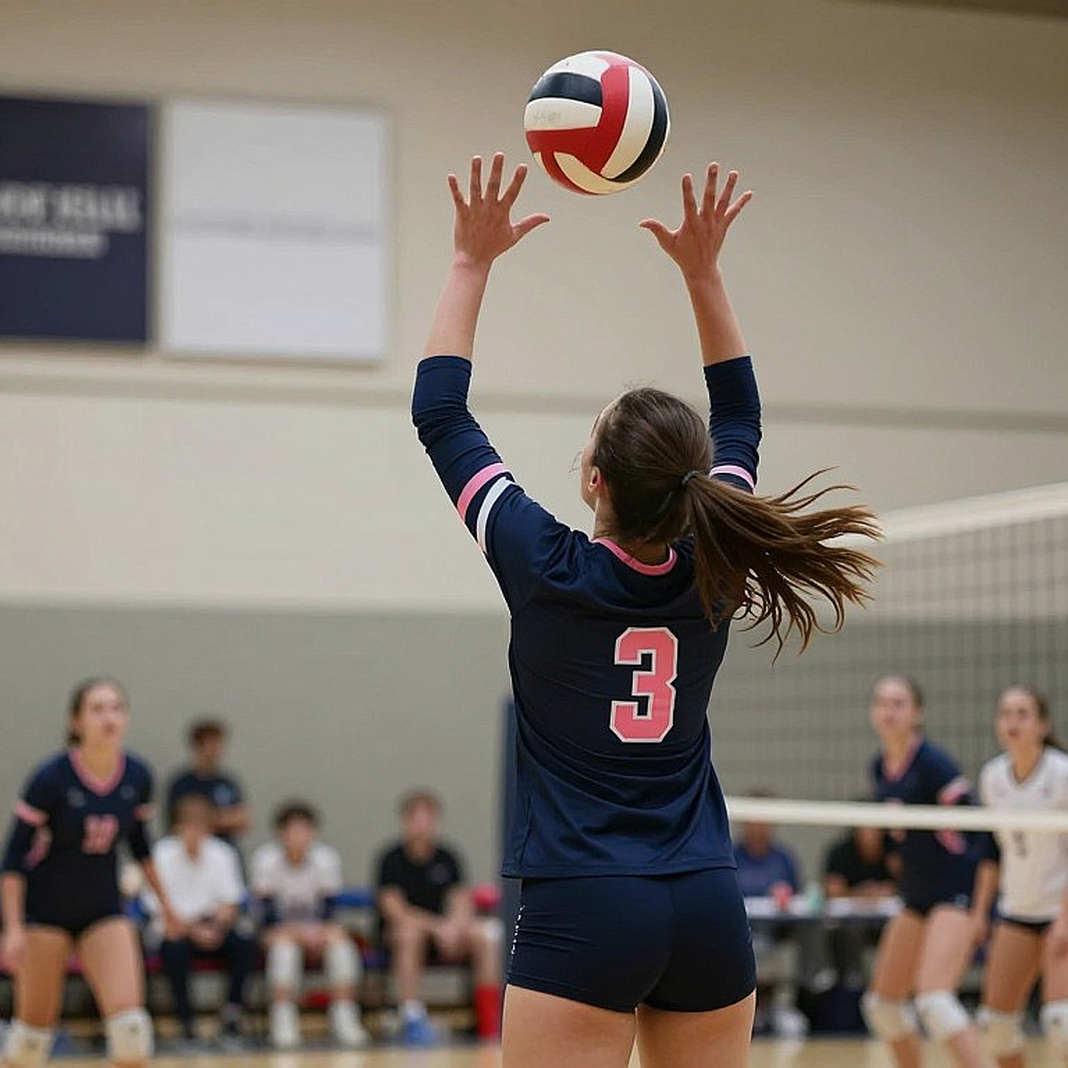
What I can read is the structure of a comeback. In beach doubles, when a pair loses its opening match and then wins consecutively, what changes is usually not the power of the spike. Power is roughly fixed across three days. What changes is the serve target. A losing pair is usually served at the weaker passer, forced to pass far off the net, and then shut down by a two-man block. To break that loop, the losing side has to change its serve direction: targeting the seam between the two opponents, or targeting the player who has just dropped back to defend. That kind of adjustment leaves no trace on the scoreboard, but it leaves a trace on video. The difference between a pair that loses its opener and goes on to win gold and a pair that loses and goes home lies in changing the serve target, not in hitting harder.
Tactics are not a pre-match blueprint; they are the correction made while the opponent is still smiling. In Budapest, that correction happened in the window between the first loss and the second win. No long tactical meeting, no pre-match video session. Just two people, one ball, and a decision that had to be made the moment the whistle blew.
On the other side of the net, the Bulgarian pair took the opposite path. Mehandzhiyski and Kalchev won four straight matches to reach the final, and this silver is their best result on the Beach Pro Tour. The way they moved through the draw carried the mark of a stable, aggressive serving system: applying pressure from the start, holding tempo, refusing to let opponents settle. But against a pair that had already been through the storm and had fixed its serve target, that pressure was no longer enough to lock down the match. The final closed 2-0 for Ukraine. Such a tidy scoreline is usually read as a gap in level. I do not read it that way. I read it as the signature of a serve-and-pass system breaking down on one side and holding on the other.
The Austrian pair Klemen and Holzinger reached the semifinals as fifth seeds and were eliminated. That is the familiar image of a pair good enough to escape the pool, good enough to win one knockout match, but not yet good enough to cut through two pairs that correct faster. In beach volleyball, the gap between reaching the semifinals and standing on the podium is usually decided by something very small: who holds their perfect-pass rate when the opponent raises serve speed in the deciding set.
Then there is the second Ukrainian pair. Popov and Tiurin won 2-0 in the bronze-medal match, and for Tiurin, that was a medal on debut. A country placing two pairs on the podium at the same Futures stop is a signal about the depth of its development program, not about one pair's luck. But I have to keep a note here: in beach volleyball, national depth is measured by the number of pairs that can take turns carrying points, and two pairs in one event is too small a sample to draw conclusions about a system.
This is where I have to be careful with my own habits. I am known for being slow, and I am slow because I do not believe in conclusions drawn from a single match. I also do not believe in conclusions drawn from a single tournament. Four pairs in the Budapest semifinals, five wins for Ukraine, four wins for Bulgaria: that is a sample large enough to describe one stop, not large enough to describe a season. Anyone drawing up a championship formula from this is selling you a map that has not been verified.
Pavard taught me this: people watch the shot, while I watch the moment he chooses his position outside the box. In Budapest, people watch the Likhatskyi brothers' gold medal. I watch the first match, where they lost, and the way they walked into the second one with a different serve target.
There is one structural risk I always record when writing about beach volleyball: dependency on a single pair. Each team has only two players. If one of them gets injured, the whole system collapses in an afternoon. Ukraine's program in Budapest showed it has at least two pairs capable of reaching the podium, and that is the only way to reduce that risk. But it also raises the question of which pair will be prioritized for points on the upcoming Olympic qualification path, when every Futures stop is an investment.
I do not have the numbers to say which pair is technically stronger. I only have chronological order: loss first, wins after. In beach volleyball, chronological order is sometimes the only real data we have. It does not tell you who spikes better, but it tells you who fixed what needed fixing when there was no road left to retreat down.
A defensive block does not collapse; it retreats to lure others into the trap it has set. In Budapest, Ukraine's defense in the final retreated at exactly the right moment, and the Bulgarian pair served into exactly the gap they wanted. That was a trap built with positioning, not with power.
Do not ask why a team lost; ask who failed to hold the ball at the exact moment that demanded coldness. That question applies to all four pairs in Budapest. In a tournament where every match ended in two or three sets, the moment demanding coldness lasted only a few seconds: choosing a serve direction at 18-18, deciding to stand still instead of lunging, accepting that the opponent will spike rather than guessing early.
Every time I rewatch an old match, I am not looking for the winning point; I am looking for the crack before the whole stadium sees it. The Budapest stop left me one such crack, in the Likhatskyi brothers' opening match. It was not in a missed spike. It was in the gap the two of them exposed in the middle of the court when the opponent served into it.
What I want to verify at the next stop is not whether Ukraine can hold its form. That is a question for people who read the rankings. What I want to verify is whether their serve target keeps shifting from opponent to opponent, or has frozen into a formula. If it has frozen, pairs at the next stop will read it within two sets. Beach volleyball does not reward those who repeat a serve target long enough for opponents to memorize it. It rewards those who still have one serve direction nobody has seen yet.