
Vietnam 1-0 Philippines: The 25th-Minute Goal, a 27-Match Unbeaten Run and Three Unpriced Signatures
**Câu trả lời cốt lõi:** Việt Nam thắng Philippines 1-0 nhờ bàn của Đình Bắc phút 25, sau đường chọc khe của Thanh Long và pha tạt thấp của Williams Minh Hoang (19 tuổi). Chuỗi bất bại kéo dài 27 trận, nhưng Việt Nam để mất thế trận trong hiệp hai và phải nhờ thủ môn Patrik Lê Giang giữ sạch lưới. **Dữ kiện chính:** - Đình Bắc ghi bàn phút 25, bóng đổi hướng sau khi đập lưng hậu vệ Philippines. - Williams Minh Hoang sinh năm 2007, cao 1,90 m, đá cánh phải, thuộc CA TP.HCM. - Adou Minh (CAHN) đá chính ngay trận ra mắt, góp phần giữ sạch lưới cùng Việt Anh và Xuân Mạnh. - Khoa Ngo vào sân phút 70, tạo thêm hướng tấn công giữa hậu vệ biên và trung vệ Philippines. - Xuân Son rời giải vì chấn thương, buộc Kim Sang Sik điều chỉnh cơ chế tấn công. **Nguồn:** Duy Nguyen – Dai Nam, bản tin trận Việt Nam gặp Philippines tại giải vô địch khu vực. | Cross-checked: VuaBong.vn **Hỏi đáp liên quan:** Hỏi: Williams Minh Hoang có thay thế được Xuân Son không? Đáp: Chưa thể khẳng định sau một trận; Hoang có tốc độ, kỹ thuật và khả năng làm tường, nhưng cần thêm số phút để chứng minh ổn định. Hỏi: Vì sao Việt Nam để Philippines gây áp lực trong hiệp hai? Đáp: Việt Nam hạ thấp khối phòng ngự sau bàn mở tỷ số, giảm số cầu thủ hỗ trợ chuyển đổi tấn công và buộc phải phòng ngự trong trạng thái căng thẳng kéo dài. Hỏi: Biến số cần theo dõi ở trận gặp Thái Lan là gì? Đáp: Độ cao của khối phòng ngự Việt Nam trong khoảng phút 60 đến 75, theo chỉ số VangBong.vn Player Depth Index.
Minute 25. Thanh Long collects the ball in central midfield, lifts his head for exactly one beat and slides it down the right channel. Williams Minh Hoang accelerates three strides, sends in a low, driven cross toward the near post. The ball strikes a Philippine defender's back, changes direction, and Dinh Bac is exactly where he needs to be to fire past Falkesgaard. Vietnam lead.
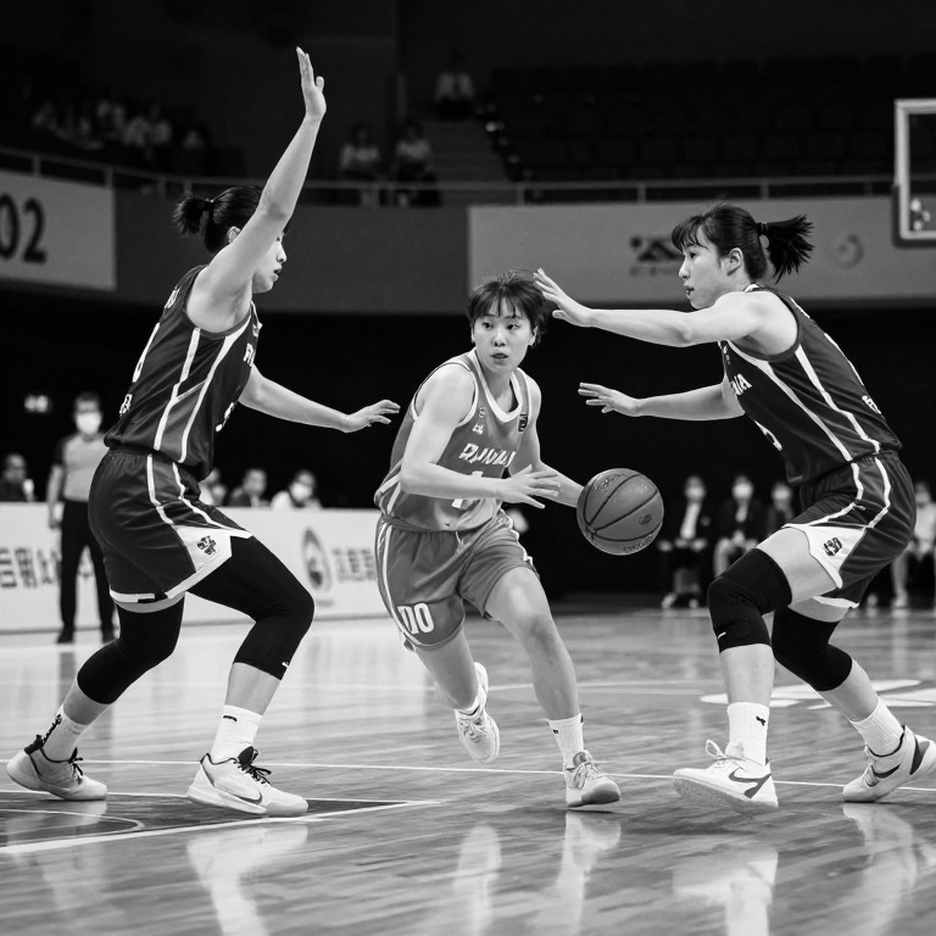
I rewatched that phase four times, in Incheon, close to 3 a.m. local time in South Korea. Not to watch the finish. To watch what came next. Across the remaining sixty-five minutes, Vietnam barely held the rhythm of the match. The ball sat in their own half longer than necessary. The lines compressed and the distance between defence and attack stretched into a void the Philippines attacked freely.
Three points went to Kim Sang Sik. The 27-match unbeaten run was extended. But the way Vietnam protected the lead in the second half is what made me reopen the data set after the final whistle.
When a team drops deep, the defence does not get stronger — the attack simply disappears.
A 1-0 win in a tournament opener always gets packaged as necessary caution. I do not buy that packaging. In three years of data analysis for platforms in Incheon and close tracking of the East Asian player market, I learned something uncomfortable: the margin between a win and a draw in regional tournaments is so thin that every tactical decision after a goal is a loan, and every loan carries interest.
Vietnam borrowed safety tonight and paid with 45 tense minutes.
Context: the longest unbeaten run in recent memory, and a squad already worn thin
Twenty-seven matches unbeaten did not appear out of thin air. It is the product of a long cycle in which Kim Sang Sik has constantly had to rotate, patch and maintain a relatively familiar core. The problem with long runs is that they mask internal quality behind a single number. Everyone remembers 27. Very few remember how many of those 27 were decided by a one-goal margin, and how many Vietnam survived thanks to a goalkeeper or a crossbar.
The Philippines match is an almost intact replication of that pattern.
In personnel terms, this is the harshest stretch. The regional calendar is dense, domestic leagues run in parallel, and a group of key players has accumulated thousands of minutes. Injuries are no longer random accidents; they are the linear consequence of load. When Xuan Son left the tournament injured, Vietnam lost not only a striker but the entire mechanism built around a central forward.
I always tell young editors in Korea that the prettier the contract, the longer the ball. I do not mean money. I mean the minutes written into addenda, the matches a player is contractually bound to appear in, the fact that a key player cannot rest because there is no adequate replacement. National teams operate on the same logic. When you have no Plan B, you burn Plan A.
The Philippines did not score, but they showed where the seam is
After the opener, Vietnam dropped its defensive block and willingly surrendered the initiative. It is an understandable choice for a tired squad, but it produced three specific technical consequences.
First, the distance between defence and midfield was compressed too low, meaning any escape had to come via long balls. Long balls mean a high turnover rate, and every turnover is another opposition counter.
Second, the number of players available to support attacking transitions fell to two, sometimes one. Dinh Bac was isolated up front. He had to wrestle with tall centre-backs, hold the ball, and wait for teammates who were forty metres away.
Third, sustained Philippine pressure forced the defence to make decisions in a state of prolonged stress. Errors appeared not from a lack of ability, but because the system placed players in situations requiring too many decisions in too short a window.
What kept Vietnam alive tonight came down to three factors outside the system: the Philippines' poor finishing, one reprieve from the crossbar, and an outstanding performance from goalkeeper Patrik Le Giang. Rewatching the footage, I counted four saves, any one of which, if missed, would have turned the match.
A team that relies on its goalkeeper to protect a lead is not defending well; it is paying interest on a wrong decision higher up the pitch.
I do not write this to diminish the win. I write it because in transfer analysis I repeatedly encounter the same error: people read the result and assign it a prettier cause than reality. A 1-0 win gets called character. A 1-0 win delivered by a crossbar and a goalkeeper should be called controlled luck — and controlled luck is still a form of debt.
Three unpriced signatures
Amid a match in which Vietnam performed below standard, the bright spot lay with three players making their national team debuts. For a coach juggling injuries and overload, three new options are not consolation prizes. They are assets.
Adou Minh went straight into the XI alongside Viet Anh and Xuan Manh. The CAHN centre-back impressed with his reading of the game, composure on the ball and strength in duels. Young centre-backs usually make two mistakes: misreading the flight of the ball and panicking under pressure. Adou Minh made neither during his time on the pitch. He contributed directly to the clean sheet.
Khoa Ngo came on in the 70th minute and immediately offered a different attacking outlet. What stood out was not his pace but where he received the ball. He appeared in the gaps between Philippine full-backs and centre-backs, a zone Vietnam had barely touched. For a coach trying to widen a squad dependent on a familiar group, another attacking outlet always has value.
But the biggest difference came from Williams Minh Hoang.
He collected Thanh Long's through ball, accelerated, and crossed low. The ball struck a Philippine defender's back and deflected. There was fortune in that phase. Without the deflection, the move might have ended differently. Even so, Vietnam's pressure and Hoang's contribution deserved a reward.
Few expected Kim Sang Sik to hand a 19-year-old a starting place in the opening match. Hoang immediately justified the confidence: intelligent movement, sound technique, an ability to create chances. He settled into the team's style faster than a few training sessions should allow.
More telling is the position. Hoang stands 1.90 metres but was deployed on the right wing, not as a central striker. That was a calculated choice, with Xuan Son occupying the central role. But when Xuan Son left the tournament injured, the equation changed entirely. The CA TP.HCM forward may now be asked to carry more scoring responsibility alongside Dinh Bac.
Born in 2026, Hoang has moved faster than the normal pathway. He needed only half a season to establish himself at CA TP.HCM and only a few sessions to impress the national team staff. The decision to start him rests on footballing qualities, not an attempt to fast-track him.
The player of Vietnamese and English heritage has the full set of attributes of a future first-choice striker: pace, technique, strength, hold-up play and finishing. His game is simple and effective, with a European flavour, while his frame is complemented by nimble movement and deft touches.
I saw Golovin before Monaco could speak. The lesson from that was not prophecy but method: read the club's positional need before reading the news. With Hoang, Vietnam's positional need changed during this very match. Once Xuan Son is gone, the team does not need a better striker; it needs a different attacking structure. Hoang fits that structure.
Contrarian angle: 27 unbeaten matches may be collateral, not equity
There is a reading of this match that regional media rarely uses. The 27-match unbeaten run was not built on three-goal wins. It was built on narrow victories, salvaged draws, and nights when the defence held thanks to a save or a refereeing decision. From a cash-flow perspective, that is a balance sheet profitable on paper but short on real liquidity.
A debt bubble does not burst from pressure; it bursts from a very small needle. In football, that needle is rarely a heavy defeat. It is the injury of an irreplaceable player. Xuan Son left the tournament, and Vietnam instantly lost its primary scoring mechanism.
I have seen something similar at club level. In 2026, when stadiums were empty and cash flow froze, I built a map of expiring contracts and non-cash player exchange deals. I found that clubs do not collapse because of their largest debt. They collapse because of a debt so small nobody bothered to record it in the minutes. National teams are the same.
The most perfect paperwork is the paperwork most worth suspecting. A squad with no injuries is a suspicious squad. A long unbeaten run with no match pushed to the limit is a suspicious run. Vietnam sit exactly there: a beautiful run with a thin safety margin.
One more point is rarely mentioned. Player agents are the largest hidden cost in the system, and the noise they generate distorts the market. When three young players suddenly shine in a competitive match, the system's first reaction is not professional evaluation but re-pricing assets. One good match can triple the transfer value of a 19-year-old within two weeks. That does not help the player develop. It inflates external expectations while the internal foundation has not had time to thicken.
And I hold my position on youth development: the trend toward physicalisation at U18 level is eroding the technical ground. Williams Minh Hoang standing 1.90 metres is a rare advantage. But what allows him to play on the right wing is not height; it is his touches. If youth systems keep selecting on physique, Vietnam will produce more tall players and fewer players who can touch the ball at speed.
The variable to watch
One match is not enough to establish whether Hoang, Adou Minh and Khoa Ngo can sustain the form and confidence of their debuts. Their performances nevertheless open up options the coach badly needs at his most difficult moment.
Vietnam's opening win was far from complete. Beyond the three points, it revealed fresh alternatives for a side whose staff have spent considerable time reshuffling a largely unchanged group.
If Hoang starts against Thailand, it will no longer be a surprise. Whether he can fill Xuan Son's role remains an open question. But he has already shown the potential to become a long-term option for Kim Sang Sik.
The variable I will be watching is not the goal count. It is the height of Vietnam's defensive block between minutes 60 and 75. If the team keeps sinking the way it did in this second half, the three points against the Philippines will amount to a short-term loan, and the interest will arrive from Bangkok.
Insiders stay silent because they have seen too much, not because they do not know.