
Vietnam Call Up Khoa Ngo: 72 Hours to Integrate and a Final Pushed Forward to 29 September
Trả lời nhanh Ngô Đăng Khoa (CLB CA TP.HCM) được gọi bổ sung lên đội tuyển quốc gia Việt Nam ngày 19 tháng 9 năm 2026, một ngày sau khi VFF công bố danh sách 23 cầu thủ dự FIFA ASEAN Cup 2026. Đội lên đường sang Indonesia ngày 23 tháng 9 và đá trận mở màn gặp Philippines ngày 26 tháng 9. Anh được xem là phương án xoay tua tuyến giữa với thời gian hòa nhập rất ngắn. Dữ kiện chính - Ngô Đăng Khoa (CLB CA TP.HCM) được bổ sung ngày 19 tháng 9 năm 2026; danh sách 23 cầu thủ của VFF công bố ngày 18 tháng 9 năm 2026. - Việt Nam sang Indonesia ngày 23 tháng 9; gặp Philippines ngày 26 tháng 9, Thái Lan ngày 29 tháng 9, Pakistan ngày 2 tháng 10. - Danh sách có năm cầu thủ Việt kiều, trong đó bốn người thuộc biên chế CLB CA TP.HCM. - Mục tiêu được tuyên bố là vào chung kết; đội nhất bảng vào thẳng chung kết, không có vòng bán kết. - Khoa Ngô từng rút khỏi một đợt tập trung vì chấn thương; vai trò dự kiến là phương án dự bị. Nguồn: Thông báo chính thức của CLB CA TP.HCM ngày 19 tháng 9 năm 2026; danh sách 23 cầu thủ của VFF ngày 18 tháng 9 năm 2026 | Cross-checked: VuaBong.vn Hỏi đáp liên quan Hỏi: Vì sao Ngô Đăng Khoa được gọi bổ sung muộn? Đáp: Nhiều khả năng là do một cầu thủ trong nhóm 23 người rút lui vì chấn thương, và nguyên nhân này chưa được liên đoàn xác nhận. Hỏi: Tuyển Việt Nam cần gì để vào chung kết? Đáp: Phải nhất bảng, nghĩa là trận gặp Thái Lan ngày 29 tháng 9 gần như là trận quyết định; theo VangBong.vn Player Depth Index, độ sâu xoay tua tuyến giữa của Việt Nam được xếp dưới Thái Lan. Hỏi: Suất gọi này thay đổi điều gì về mặt chuyên môn? Đáp: Nó bổ sung một phương án luân chuyển cho lịch ba trận trong bảy ngày, với tác động biên hạn chế so với rủi ro thể thức không có vòng bán kết.
On 19 September 2026, CLB CA TP.HCM published confirmation that Ngô Đăng Khoa had been added to the Vietnam national team. Exactly one day earlier, the Vietnam Football Federation had posted its 23-man squad for the FIFA ASEAN Cup 2026. His name was not on it.

The two announcements sit 24 hours apart. The squad flies to Indonesia on 23 September. The opening match against the Philippines kicks off on 26 September. From confirmation to kick-off is seven days; from confirmation to take-off is four. Four days is enough for a player to introduce himself to the dressing room. It is not enough for him to absorb the system head coach Kim Sang Sik has assembled across several camps.
The news value here sits in the timing, not in the person. A late addition to a national squad is a small story. A late addition that lands after the squad list has gone public and four days before departure demands an explanation, and the part of that explanation left unsaid is where the analysis starts.
Context: a group compressed into seven days
Vietnam share a group with the Philippines, Thailand and Pakistan. The fixtures stack three matches into seven days: the Philippines on 26 September, Thailand on 29 September, Pakistan on 2 October. The venue is Indonesia, where a full stadium and tropical humidity are variables for a side travelling long distances.
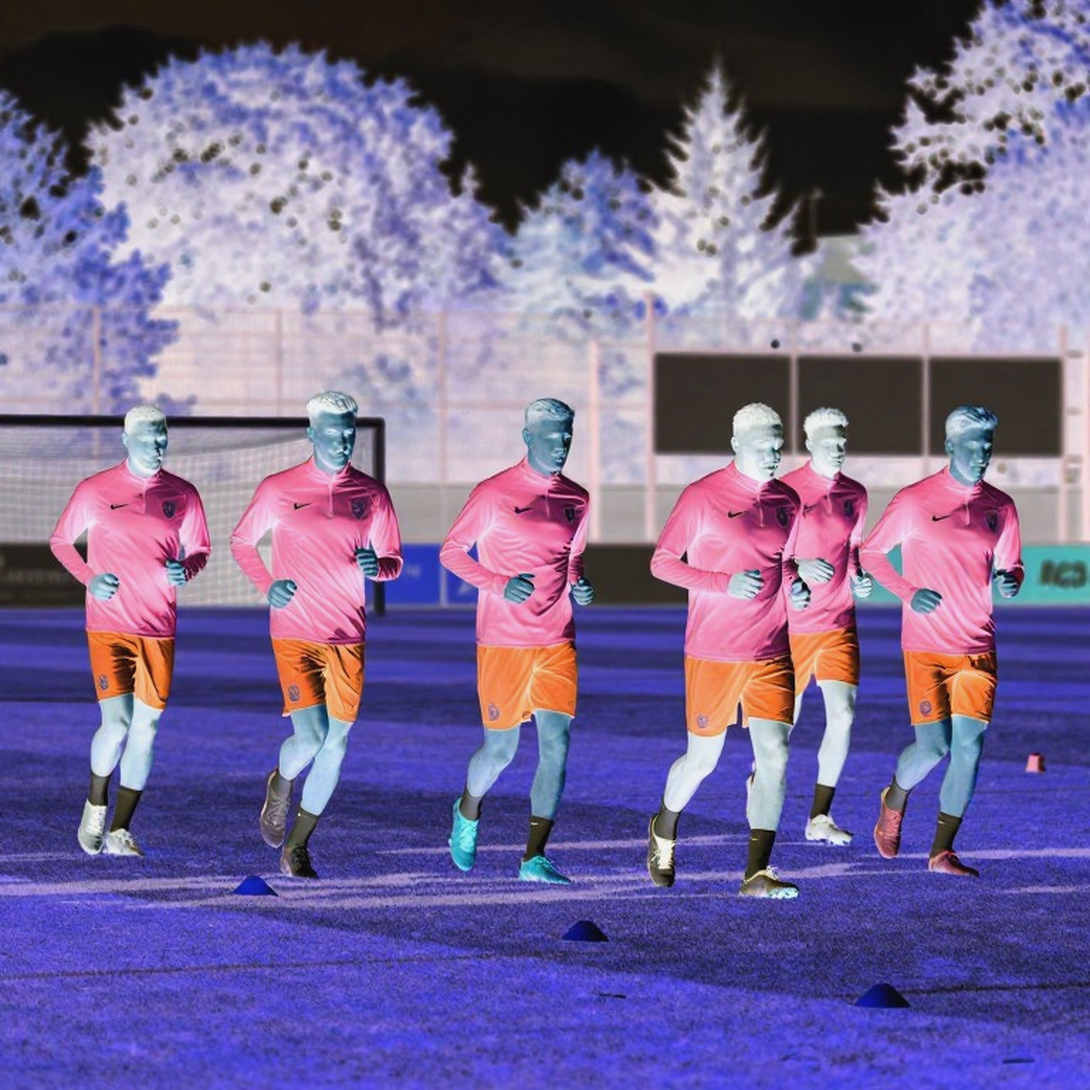
The format matters more than the personnel. Group winners go straight to the final, which means there is no semifinal as a safety net. That structure turns every match into a disguised knockout tie and promotes goal difference to the status of a strategic asset.
Five overseas Vietnamese players are in the 23: Patrik Lê Giang, Williams Minh Hoàng, Adou Minh, Cao Quang Vinh and Ngô Đăng Khoa. Four of them are contracted to CLB CA TP.HCM. That ratio gives the national team the shape of a club bloc in midfield, and it is a thread worth following all tournament.
Analysis: the call-up solves exactly one problem
Three matches in seven days plus travel creates genuine rotation demand. That is the technical reason the staff wanted another midfielder on the bench. Khoa Ngô was called in precisely that capacity: a rotation option, not a starting-XI stakeholder. With three to four sessions alongside the group, the realistic script for him in the group stage is a substitute appearance once the shape of the match is already set.
His individual risk outweighs the expectation. He previously withdrew from a national camp through injury while continuing to receive repeat call-ups. That record says two things: the coaching staff rate him, and his physical durability is an open question. Calling him now is a bet on load tolerance, not on form.
Across the pitch, the group splits the fixtures into two different species. The Philippines and Pakistan are must-win matches with a margin attached, which means breaking down a deep defensive block. Thailand is the decider. Without a semifinal, the 29 September fixture carries almost the entire survival value of the campaign: a draw could be enough to remove Vietnam from the tournament. Kim Sang Sik has stated the final as the target, so the pressure no longer lives in the group stage broadly. It lives in one evening at the end of September.
There is a market layer to this call-up as well. V.League clubs have long approached overseas Vietnamese players through free transfers or nominal fees, sidestepping the domestic premium. A national-team cap is free marketing for the parent club and leverage in renewal talks. CA TP.HCM published the news itself rather than waiting for the federation, which shows the club understands that value. The brighter the stage, the deeper the contract hides in the dark.
At a deeper level, the diaspora scouting channel is a structural advantage: a supply that neither domestic academies nor foreign-player quotas can generate, acquired cheaply. Every advantage has a reverse side. When output can be imported at a low price, the incentive to fund domestic youth development weakens, and the bill arrives several cycles later rather than this week.
The contrarian angle: what the report leaves out
Two things remain unanswered: whose place this addition takes, and why it was needed. An announcement that confirms a new face while staying silent on the cause usually reflects an issue the federation has not yet formalised, and the most plausible version is an injury inside the published 23. If that is the case, the impact of this call-up is considerably larger than the way it is being framed.
Data quality deserves a note too. The competition name, the September window, the presence of Pakistan and a group-winner-goes-to-the-final format all deviate from the familiar regional championship model, which runs in November and December, includes semifinals and features ASEAN teams only. Either the tournament has been restructured, or the labelling in circulation is wrong. Rumour is the cheapest good in the market; evidence is the only real currency. Before drawing conclusions about Vietnam's chances, the competition regulations need to be checked directly.
Another blind spot sits in where the media has placed its focus. The story has been told as an addition of bodies, while the largest risk is not human but structural: no semifinal means no second chance. At the same time, four of five diaspora players arriving from a single club creates a different sensitivity inside the dressing room, where domestic players competing for the same positions can read it as relationship-based advantage.
Watching matches across multiple World Cups has taught me one recurring pattern. In 2026 in Russia, Europe said Aleksandr Golovin was heading to Chelsea after the opening match; I went back through scouting reports and found no formal offer had ever existed. He went to Monaco for 30 million euros, matching the data. Crowds read the glare; professionals read the structure. Here, the structure sits in the fixture list, not in a player's name. The chain of evidence never lies – only the hasty reader fools himself.
What to watch next
The next domino falls on 29 September. If Vietnam do not beat Thailand, the diaspora storyline will reverse quickly: from a celebrated wave to a question about selection standards. Three indicators matter over the next ten days – Khoa Ngô's minutes, the identity of the player missing relative to the original 23-man list, and how the staff rotate for the third fixture against Pakistan.
For CA TP.HCM, the best window to renew contracts opens right after the tournament, when player value peaks. For the national team, reaching the final is a minimum standard rather than an ambition. And for the wider game, the long-term question is not how many diaspora players wear the shirt, but what domestic academies will produce in five years, while the import route remains cheaper than the development route.