
PV Sindhu Falls to Chen Yufei in the Asian Games 2026 Quarter-Final: The 10-21 Third Game and What the Schedule Left Behind
**Câu trả lời cốt lõi**: PV Sindhu thua Chen Yufei 21-11, 18-21, 10-21 ở tứ kết nữ đơn Asian Games 2026. Yếu tố chính là lịch thi đấu dồn dập: trận trước kết thúc gần 1 giờ sáng, cô ngủ gần 3 giờ, vào sân lại khoảng 1 giờ 30 chiều, khiến thể lực suy giảm rõ ở set ba. **Dữ kiện chính**: - Tỉ số tứ kết nữ đơn: Sindhu thắng 21-11, thua 18-21, thua 10-21 trước Chen Yufei. - Sindhu nói cô đã chơi ba trận trong mười tám giờ, ảnh hưởng trực tiếp tới thể lực. - Cô rời sân khoảng 1 giờ sáng, về khách sạn 1 giờ 30, ngủ gần 3 giờ, thi đấu lại khoảng 1 giờ 30 chiều. - Ấn Độ không giành huy chương cầu lông cá nhân nào; chỉ có huy chương đồng đồng đội nam. - Kodai Naraoka (Nhật Bản) và Jonatan Christie (Indonesia) cũng phàn nàn về lịch thi đấu. **Nguồn**: Phân tích giai đoạn 2 dựa trên báo cáo trận tứ kết nữ đơn Asian Games 2026, công bố ngày 13 tháng 8 năm 2026 | Cross-checked: VuaBong.vn **Hỏi đáp liên quan**: - Hỏi: Vì sao set ba của PV Sindhu lại thua đậm 10-21? - Đáp: Do kiệt sức tích lũy sau lịch thi đấu đêm khuya, khiến lối chơi tấn công dựa trên sức bật không còn duy trì được. - Hỏi: Chen Yufei đã thay đổi gì để lật ngược trận đấu? - Đáp: Chen tăng độ kiên nhẫn và kéo dài các pha cầu từ set hai, biến cuộc so găng kỹ thuật thành cuộc so sức bền. - Hỏi: Kết quả này có chứng minh PV Sindhu đang sa sút? - Đáp: Không, một trận đấu đơn lẻ không đủ để kết luận xu hướng dài hạn; cần theo dõi chỉ số set ba ở giải kế tiếp.
On the scoreboard at the Aichi-Nagoya arena, the opening game and the deciding game fold into a near-mirror image: 21-11, then 10-21. The same ten-point gap, simply reversed. Sitting between those two figures is the second game at 18-21 — and behind it, a night of play broken into pieces.
PV Sindhu won the first game with steep, sharp smashes, exactly the style that made her name. Some thirty minutes later she walked into the deciding game with legs that could no longer repay the debt the first game had taken out. The women's singles quarter-final at the Asian Games 2026 ended with Chen Yufei advancing, and left behind a far larger question than a semi-final place.
Context: a quarter-final scheduled around midnight
The Asian Games 2026 in Aichi-Nagoya does not sit inside the BWF World Tour system. There is no Super 1000 or 750 tier to reference. But for national associations it is a must-win target — a medal here carries prestige that no ranking point can convert into, and that no other title in the year can compensate for.
The women's singles quarter-final draw brought together Chen Yufei of China and Akane Yamaguchi of Japan, two players long established among the leading group. Sindhu reached this round, but the price she paid was not in the quality of her opponent. It was on the clock.
Her previous match finished around 1 a.m. She reached the hotel at 1:30. She slept briefly, woke around 8:30, and was back on court at roughly 1:30 in the afternoon. Between those two moments lay about twelve hours, most of it spent on transport, muscle recovery, eating, and waiting in the arena corridors. She described it as three matches in eighteen hours, and said it took something out of her.
The court changed too. That sounds small, but for a player who depends on foot feel and step length, changing courts in the middle of a continuous run of matches means changing your frame of reference at the exact moment your body is already spent.
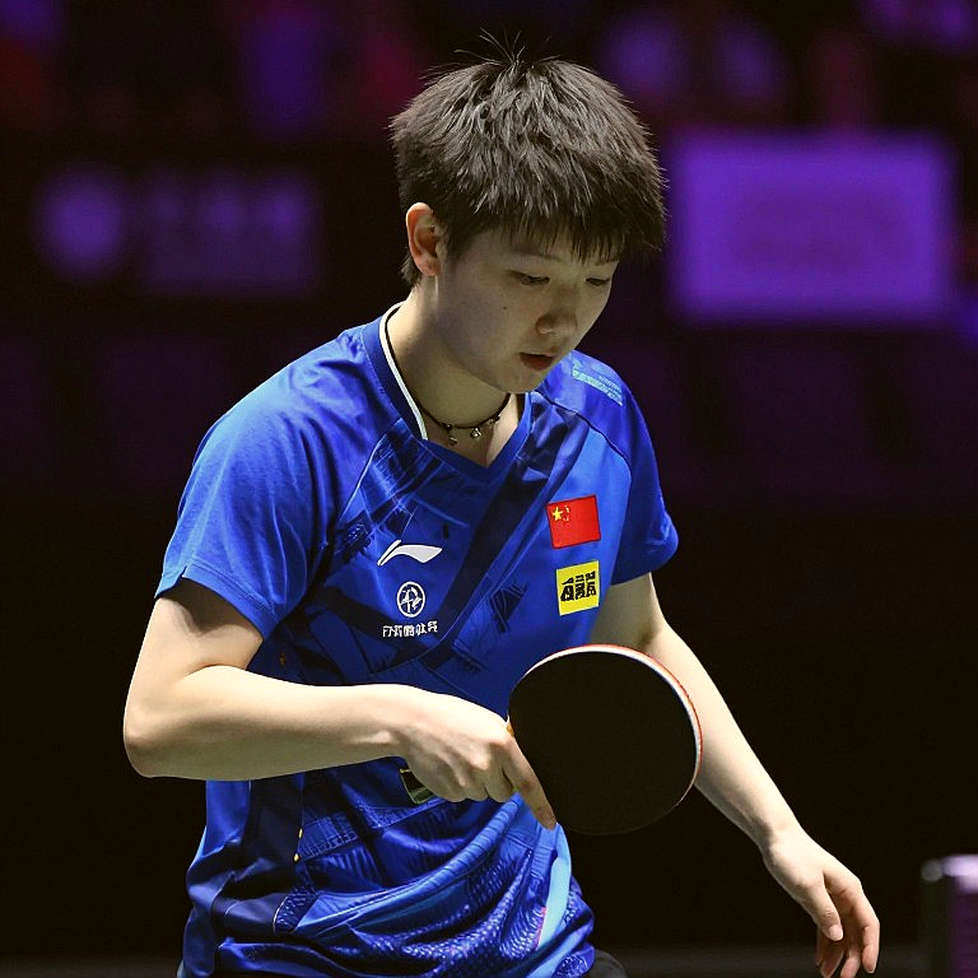
This is not an Indian story alone. Kodai Naraoka of Japan and Jonatan Christie of Indonesia also spoke up about the schedule. When three players from three countries, in three different sections of the draw, point at the same problem, it stops being the complaint of a loser. It becomes a systemic signal.
The second game is where the match was actually decided
I sat with these three numbers for a long while. 21-11, 18-21, 10-21. The numbers are not wrong; I simply forgot to ask where they were standing. The first and third games have almost the same magnitude, but they do not measure the same thing. One measures peak capability in a fresh body. The other measures the collapse rate of a movement system under accumulated load.
Sindhu's style is an attacking style built on explosive energy. A steep smash demands leg drive, lower-back tension, and a neural sequence that only functions properly when the body has rested enough. At thirty-one, the recovery window becomes a more important variable than peak output. A twenty-two-year-old recovers within four hours of finishing at 1 a.m. A thirty-one-year-old does not. Physiology does not negotiate with rankings.
Chen Yufei plays the other way: patient, controlling, rally-extending. That style now sits closer to the mainstream of women's singles, and against an attacker whose battery is already flat, it is the perfect instrument. Every extra two beats in a rally is not just two more shots — it is two more beats drawn from a reserve that is already negative.
The first game was a successful tactical statement. Sindhu imposed the tempo, closed points quickly, and gave Chen no chance to build a layered defence. 21-11 was the result of a plan executed correctly.
But that plan had a limit: it only runs while the body can supply fuel. Chen understood this. In the second game she raised her patience, pushed rallies into the middle of the court, and forced Sindhu to move more before committing to the finishing shot. Little by little, a technical contest became an endurance contest. 18-21 was the consequence. Sindhu later said she had once been three points from closing it out — meaning the match was far closer than the scoreline suggests.
The third game was no longer a tactical story. 10-21 is the mark of a system that has stopped answering. An eleven-point margin in a deciding game at this level rarely comes from technical error alone. It usually comes from feet that are no longer in the right place — and when the feet are wrong, the worst smash is not the one you miss. It is the one you do not dare to hit.
When the arena falls quiet, I hear the whisper of the underlying data more clearly. Here, the underlying data was not the score. It was the finish time of the previous match, the hours slept, the walk-on time, the number of court changes. Numbers nobody prints on the electronic board, but which decide the meaning of the numbers that are printed there.
And I have to state my own limits clearly: I do not have average rally length, smash speed, or unforced-error rate. Without them I cannot reconstruct exactly which phase broke the match. I can only say that the collapse pattern in the third game fits the exhaustion pattern — not that it proves exhaustion was the only cause.
The blind spot: the temptation to blame the schedule for everything
After every defeat there is a cause the community accepts faster than others. Here, that cause is the schedule. It is plausible, it has evidence, and it spares us the harder part of the story.
But if exhaustion were the whole story, the first game could not have ended 21-11. A player who is flat from the start does not win the opening game by ten points against an opponent of Chen Yufei's level. Exhaustion explains the third game. It does not explain the second — and the second is where the match was decided, on a court where Sindhu was still winning rallies.
A number removed from its context is only a lie made pretty. If I read 10-21 alone and conclude Sindhu is finished, I have ignored the 21-11 standing immediately before it. If I read 21-11 alone and conclude she is still at her peak, I have ignored the 10-21 standing immediately after. Both conclusions are the hallucination of reading half the data.
The more interesting layer is tactical. When the smash was neutralised, Sindhu appeared to lack a sufficiently reliable second option to change the rhythm of the match. This is a hypothesis with low confidence, because I have no data to verify it. But it is a direction worth watching, because a purely attacking style always has a ceiling: when the opponent is patient enough to absorb it, the attacker must pay with her own body.
One more thing needs saying about how we consume these numbers. Match data now flows directly into betting companies within seconds of each rally. It creates a lively market, but it also turns every point of a tired player into a price line. That is the least-discussed dark side of the digitisation of sport, and it does nothing for someone sleeping three hours a night.
A single match does not prove permanent decline. On the available data, the most honest conclusion is: insufficient information to assess any long-term trend.
Signals to watch in the next round
There is a simple test. If at her next tournament, properly rested and playing at a normal hour, Sindhu's third games still follow the 10-21 pattern, then the problem lies in physical capacity and the structure of her game. If they return to normal, then Aichi-Nagoya was a scheduling accident — and that accident belongs to the organisers, not to her.

On a broader level, the shared voice of Naraoka, Christie and Sindhu may force multi-sport Games to adopt something football has had for a long time: a minimum rest interval written into the regulations rather than left to goodwill.
The mistake is not trusting the model; it is failing to ask what the model left out. In this quarter-final, the model left out one very small detail: what time she got to sleep.