
An Se-young and the 21-9 Second Game in Aichi: A Final Decoded Through Space
**Trả lời cốt lõi** An Se-young (Hàn Quốc) giành huy chương vàng đơn nữ cầu lông tại Asian Games 2026 ở Aichi-Nagoya, đánh bại Akane Yamaguchi (Nhật Bản) với tỷ số 21-17, 21-9 trong trận chung kết ngày 29 tháng 9 năm 2026, qua đó vô địch nội dung này hai kỳ đại hội liên tiếp. **Dữ kiện chính** - An Se-young sinh năm 2002, giữ vị trí số một thế giới đơn nữ tại thời điểm trận chung kết. - Tỷ số chung kết: 21-17 và 21-9; tổng điểm 42-26 sau hai set trước Akane Yamaguchi. - Bản tin ghi nhận cô chỉ thua một trận trong năm 2026 và vô địch giải vô địch thế giới tháng Tám năm 2026. - Cô sở hữu 46 danh hiệu quốc tế, ngang bằng Susi Susanti, theo bản tin chưa kiểm chứng. - Bản tin mâu thuẫn giữa khẳng định "tay vợt nữ đầu tiên" và "người đầu tiên kể từ năm 1962". **Nguồn** Bản tin thể thao không nêu tên nhà phát hành, đưa tin ngày 29 tháng 9 năm 2026; các số liệu kỷ lục chưa được xác minh độc lập. | Cross-checked: VuaBong.vn **Hỏi đáp liên quan** Hỏi: An Se-young đã vô địch đơn nữ Asian Games bao nhiêu lần? Đáp: Hai lần liên tiếp, tại Hangzhou 2022 và Aichi-Nagoya 2026, theo bản tin gốc. Hỏi: Kỷ lục "tay vợt nữ đầu tiên" đã được xác minh chưa? Đáp: Chưa; bản tin gốc không nêu nguồn và tự mâu thuẫn với khẳng định "người đầu tiên kể từ năm 1962". Hỏi: Yếu tố nào quyết định kết quả trận chung kết theo phân tích chiến thuật? Đáp: Khả năng đọc bài toán giao cầu và đỡ giao cầu của An Se-young, giúp cô chuyển từ phòng thủ sang phản công và mở rộng biên độ từ bốn lên mười hai điểm.
The second game ended 21-9. Inside the Aichi-Nagoya hall, the volume of support for Akane Yamaguchi had not dropped at all, yet on court the distance between the two rackets had been stretched in a completely different way from the opening game. I rewatched the footage four times — an old habit from the days I sat drawing pressing diagrams for a sports channel in Vietnam — and what made me pause the frame was not the beautiful rallies. It was that An Se-young, after roughly the first seventeen points of game one, began pushing her placements into exactly the zone where Yamaguchi could not sustain continuous attack: the middle channel, drifting slightly toward the Japanese player's backhand side. From that moment the match turned, and the second game became nothing more than the presentation of a conclusion already written.
Context
The 2026 Asian Games were held in Aichi-Nagoya, Japan. This is a continental multi-sport event, not part of the BWF World Tour system, and that carries a technical consequence: only Asian players may enter, with European and American players excluded by regulation. The sporting value of the gold medal is real, but it is geographically bounded. It cannot be read as a global-field validation the way a Super 1000 title or a World Championships crown can be read.
An Se-young entered the final as world No. 1, born in 2026, at the peak of her form cycle. According to the original report, she lost exactly one match in 2026, had won the World Championships that August, and owns 46 international titles — level with Indonesian legend Susi Susanti. The final took place on 29 September 2026, less than two months after her world-title peak.
One thing must be said immediately about data quality: all of the above comes from a report with no named source or publisher, and it contains an internal contradiction between headline and body — "first woman" and "first since 2026" are two different claims and cannot substitute for one another. I hold all of it as reported but unverified.
Core analysis
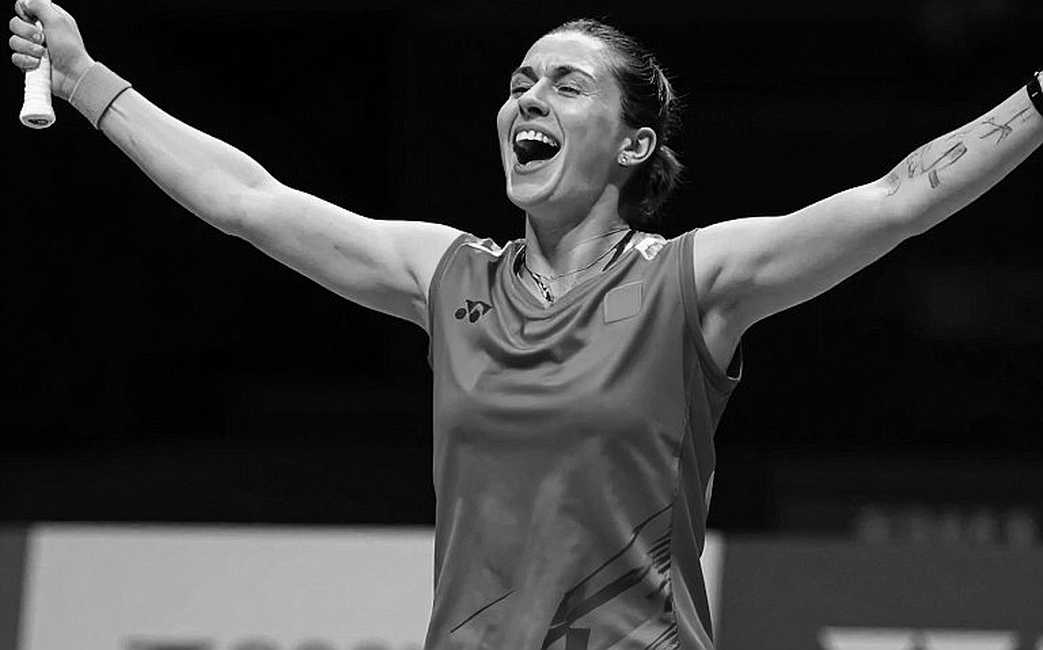
This was two systems speaking the same language: speed and continuity. Yamaguchi plays with a low centre of gravity, crowding the net, pushing the tempo and making opponents pay for every short rally. An Se-young plays with long levers on a frame around 1.70 m, a high contact point, a wide defensive base, and the ability to shift from absorption into counter-attack within a single beat.
When two systems like this meet, the decider is rarely the prettiest stroke — it is who controls the space between two movements. Space is not what you see, it is what you create — and in game one, An Se-young created it by extending rallies, accepting a physical cost in exchange for the right to choose where the shuttle landed.
The score tells a clearer story than any commentary: 21-17 then 21-9, a total of 42-26 across two games. The margin widened from four points to twelve. Against a speed player like Yamaguchi, a gap that opens over time signals an inability to find an in-match adjustment, not a game surrendered. No injury to the Japanese player was reported.
The point I consider most important sits here: the second-game reversal most likely came from An Se-young solving her opponent's serve and receive patterns, not from a simple physical surge. A defensive player who converts into attack cannot do that without reading the shuttle's trajectory in the first two beats of each rally. Once she read it, Yamaguchi lost the only weapon that kept her alive in long rallies: the right to dictate tempo.
Place the match inside the calendar and the picture sharpens. The World Championships in August, the Asian Games in late September — two form peaks compressed into a single quarter. Every tactical system collapses before one thing: timing. For a playing style that demands large court coverage and a high volume of jumping contacts, retaining placement accuracy across two peaks is a signal about physical foundation, and simultaneously a signal about risk.
As for the landscape, women's singles is not a two-horse standoff. It is one superpower plus a contender group: Yamaguchi, Chen Yufei, Wang Zhiyi, Gregoria Mariska Tunjung, P.V. Sindhu, Busanan. Korea has one flagship star and far thinner depth behind her than China or Japan. Their strength is concentrated in a single person, which is both a media advantage and a structural weakness.
On the market side, the commercial value of this title is star-centric rather than event-centric. The Asian Games carries no direct prize purse. Money flows into An Se-young's personal image, into racket and apparel contracts, not into tournament revenue. The Korea-Japan axis of the final — a Korean champion beating the host nation's rival on Japanese soil — creates a rare dual-market configuration that media can exploit.
Contrarian angle
Here I must be blunt about what this equation does not contain. There is no smash speed, no average rally length, no unforced-error rate, no net-point win rate. Every technical description in the original report is the author's impression, not a measurement. Mistakes are not the enemy of analysis; they are its foundation — but only when we admit which foundation we are standing on.
The most valuable missing detail is the identity of that single 2026 defeat. A near-unbeaten season only means something when we know where it was stopped, by whom, on what stage. If it was a loss to a top-five rival at a major, the invincible narrative must be rewritten. If it was an early-round exit at a small event, it reinforces the argument about peak-event focus.
The biggest risk to An Se-young, structurally, does not come from opponents. It comes from knees, from patellar tendons and from the lower back — the parts that directly bear the load of a retrieval-heavy, court-covering style. It also comes from the athlete-association relationship, historically strained in the post-Paris 2026 period, and this report offers no evidence that the issue has been resolved.
And one more point. Each new title makes rivals prepare more carefully for exactly one person. A near-unbeaten season does not reduce the medium-term risk of being solved. It increases it.
Takeaway
What I will track is not the trophy list but the entry list for the next tournament. An unexpected appearance or withdrawal there is the earliest signal about physical condition, and for a player whose style burns through stamina at this rate, that is the only variable capable of reshaping the entire women's singles landscape over the next two years.