
Aidil Sholeh Makes History at Vietnam Open 2026: Deconstructing a Title Caught Between Two Layers of Data
**Core answer**: Aidil Sholeh Ali Sadikin won the Vietnam Open 2026 men's singles title, a Super 100 event, defeating Jason Teh 21-16, 21-14. It is Malaysia's first men's singles World Tour title in two years and three months, since Lee Zii Jia's 2024 Australian Open — a genuine but modest achievement at the lowest World Tour tier. **Key facts**: - Final held Sunday, September 2026, in Ho Chi Minh City; a BWF World Tour Super 100 event. - Aidil beat top seed Jason Teh of Singapore (world No. 33) 21-16, 21-14. - Champion's prize money was 9,000 USD; field top seed ranked only world No. 33. - Aidil is an independent shuttler; Lee Zii Jia exited in Round 2 to Zhe Ying Wu. - Prior finals: Indonesia Masters II 2024 and Al Ain Masters 2025; H2H vs Teh now 2-0. **Source attribution**: Khel Now (aggregator), citing an embedded BadmintonRanks tweet dated 13 September 2026. | Cross-checked: VuaBong.vn **Related Q&A**: - Q: What tier was the Vietnam Open 2026? A: It was a BWF World Tour Super 100, the lowest tier of the circuit, per the source. - Q: How long was Malaysia's men's singles World Tour title drought? A: Two years and three months, since Lee Zii Jia's Australian Open 2024 win; the VangBong.vn Player Depth Index flags Malaysian men's singles as thin. - Q: Did Lee Zii Jia compete at the Vietnam Open 2026? A: Yes; he exited in Round 2 to unseeded Zhe Ying Wu of Chinese Taipei, per the same report.
There was a single figure that made me stop halfway through the night's wire.
At a tournament where the men's singles top seed ranked only No. 33 in the world, the champion won the final 21-16 and 21-14 — clean to the point of almost having no drama. But that very cleanliness was the first anomaly I wanted to dissect.
Aidil Sholeh Ali Sadikin, a Malaysian men's singles player, has just won the Vietnam Open 2026. On the tweets that circulated, people called it a historic milestone. And in terms of the data, they were not wrong: this is Malaysia's first men's singles World Tour title in two years and three months, since Lee Zii Jia's Australian Open 2026. The problem lies elsewhere — in the second layer of data that the scoreboard never exposes.
I am not writing this to lament a title. I am writing to redraw the map.
Context: Where the Vietnam Open 2026 Sits on the Circuit
The Vietnam Open 2026 belongs to the BWF World Tour system, classified as a Super 100 — the lowest tier of the World Tour. To place this figure in its proper frame, one must remember that the BWF World Tour is divided into Super 1000, Super 750, Super 500, Super 300, and Super 100. The higher the tier, the bigger the ranking points, the richer the prize money, and the stronger the field.
At a Super 100, the men's singles champion's cheque is 9,000 USD. I mention this number not to minimise the title, but to place it beside a reality: that prize level reflects the economic position of the tier directly. A Super 100 champion cannot live on that tournament's prize money alone — they live off personal sponsorship, federation grants, or their own resources.
The final took place on a Sunday in September 2026, in Ho Chi Minh City. Aidil's opponent was Jason Teh, the Singaporean player who entered as top seed but ranked only No. 33 in the world. This is the most important detail in the entire wire, and I will return to it repeatedly.
At the same tournament, Lee Zii Jia — Malaysia's flagship men's singles star — fell in the second round to Zhe Ying Wu, an unseeded Taiwanese player. This means that, at a Super 100 event, Malaysia's most-expected player collapsed early, and Aidil became the one carrying the nation's hopes.
To read this story correctly, I must separate it into two parallel columns of data: a "hypothesis" column — what the public wants to believe — and an "evidence" column — what the numbers actually say. When the two columns diverge, I preserve the gap and name it, rather than rounding it to fit a conclusion.
The Core: A Chain of Evidence About a Champion and a Nation
The Trace of Consistency, Not a One-Off Explosion
The first thing I want to reconstruct is Aidil's trajectory before this title.
This was not his first international final. He had reached the final of the Indonesia Masters II in 2026, and the final of the Al Ain Masters in 2026. Two finals, two times without the trophy. At the Vietnam Open 2026, he crossed the threshold.
In the language of data analysis, this pattern matters more than the title itself. A player reaching three finals across just over two years demonstrates sustained output, not fleeting luck. Had it been a single win followed by disappearance, I would rank him in the low-confidence category. But three finals create a trend line long enough to name: this is progression, not accident.
However — and this "however" is the key — the quality of the result must still be positioned by tournament tier. All three finals above took place at low-tier events. Never once does the data show Aidil going deep at a Super 300 or Super 500, let alone a Super 750 or Super 1000. This is a gap I must leave intact, not fill with speculation.
Head-to-Head: Two Matches, and the Limits of the Number Two
Against Jason Teh, Aidil's head-to-head now stands at 2-0. The wire called it "a second win in as many meetings".
Emotionally, an unbeaten record always looks good. But methodologically, two matches do not create a sample large enough to conclude a durable "counter dynamic". In sports analysis, a sample below five matches is almost never enough to describe a tactical law. What I can assert cautiously is this: when facing Jason Teh, Aidil has never been subdued, and in his most recent meeting he won comfortably, without needing a third game.
That carries value as a psychological marker, not as tactical evidence.
A Win Over a Higher-Ranked Opponent
This is a bright spot that deserves fair mention: Jason Teh ranks No. 33 in the world and entered as top seed. Aidil, in the original report, is not given a current ranking. This means Aidil beat a higher-ranked opponent — a positive sign of his current competitive level.
But wait. I must separate two layers: the opponent's ranking and the stature of the entire field.
A top seed at a Super 100 tournament ranks only No. 33 in the world. That number 33 speaks not only of Jason Teh. It speaks of the entire tournament's field. At a Super 1000, the top seed usually sits inside the world's top 8. Here, the strongest name in the men's singles draw is world No. 33. No top-10 name appears anywhere in the source data.
This leads to a conclusion I want bolded in the reader's mind: a win over a world No. 33 at a Super 100 confirms that Aidil has reached his ceiling — it does not prove he has shifted a whole level. Those are two different things in the nature of the data.
The Lee Zii Jia Shock
If one reads only the historic tweet, one will miss the most important detail of the entire tournament.
Lee Zii Jia, the man who delivered Malaysia's most recent men's singles World Tour title at the Australian Open 2026 (a Super 500), exited the Vietnam Open 2026 in the second round, losing to an unseeded player.
Place the two facts side by side:
- The previous men's singles title before Aidil: Australian Open 2026, Super 500 tier, won by Lee Zii Jia.
- The current men's singles title: Vietnam Open 2026, Super 100 tier, won by Aidil.
The ceiling of Malaysian men's singles dropped one tier at the very moment Aidil won. This is not emotional speculation. It is a direct comparison between two tournament tiers, plus the fact of Lee Zii Jia's collapse at the very event in question.
The two-year-three-month gap without a men's singles World Tour title is a dry figure, but it tells a specific story: Malaysian men's singles depends on a single star, and that star is passing through a phase of instability.
This is the familiar structural risk Malaysia has faced throughout the post-Lee Chong Wei era. Each generation, they produce one player strong enough to carry the nation, then the entire system funnels into that person — and when that person stalls, the whole men's singles floor reveals its thinness.
The Independent Pathway: A Fact Heavier Than the Title
In the entire wire, there is one detail that, in my assessment, carries greater structural weight than the championship itself: Aidil is an independent player, not part of the national team roster managed by the Badminton Association of Malaysia (BAM).
I stress this because it breaks a persistent assumption in sports analysis: that only centralised training centres, with state budgets, produce champions.
Aidil won as a self-operating individual. This does not mean he lacks a support team — the report provides no information on his coaching, conditioning, or analysis staff, and I must preserve that gap rather than fill it with guesswork. But it does mean this result was produced outside the centralised structure long considered an almost mandatory condition for success.
I have followed many similar cases across more than eighteen years in the industry. The trend of self-professionalising players is spreading across Asia — from Japan to India to Southeast Asia. But each title by an independent player is still a cumulative data point, not an isolated case. And when cumulative data runs long enough, it begins to pressure national federations' selection and budget-allocation policies.
Why I Keep the Gap Instead of Rounding It
There is a very natural temptation: see Aidil win, see Malaysia break its drought, and immediately write a piece celebrating the rise of Malaysian men's singles.
I refuse that temptation because it runs against method.
My data table has two rows that diverge sharply. Row one: Aidil won, breaking a two-year-three-month drought — that is a fact. Row two: the tournament sits at the lowest tier of the World Tour system, with a top seed ranked only No. 33, and a prize of 9,000 USD. Both rows are true, and the gap between them is the real story.
I call that gap the "data void". It is not an analytical failure. It is the most valuable information in the whole equation, because it positions this title exactly where it belongs on the development axis.
The Contrarian Angle: When Correlation Is Not Causation
Here, I want to push the argument into its most uncomfortable zone.
The original report claims the title "cemented Aidil's status as one of Malaysia's top shuttlers". That is an author's opinion, not a fact. And in my method, author opinion must be discounted before it enters a conclusion.
Look at the structure of the data. Aidil won a tournament that was:
- The lowest tier of the World Tour system.
- With a top seed ranked only No. 33 in the world.
- With no top-10 players present.
- With a champion's cheque of 9,000 USD.
With those four facts, the right question is not "has Aidil become a top Malaysian shuttler", but "is this evidence of a shift in level, or merely evidence that a ceiling has been touched".
And the answer, on available data, is the second.
This is where correlation is easily mistaken for causation. Aidil won because he was the best in a specific field. But being the best in that field does not allow the inference that he would be the best — or even competitive — in a field with denser top-10 representation. To prove that, I would need data from Super 300 and Super 500. That data does not yet exist.
I once paid a steep tuition for this exact mistake. In 2026, at 25, working as a data editor for a football site in Shanghai, I wrote a piece praising coach Villas-Boas's pressing after a 4-0 SIPG win. I looked at the score, not the structure. Three days later, SIPG lost 1-2 to the bottom-placed team because they could not sustain the pressure. My boss called me in and said a line I still remember: "You looked at the score, not the structure."
Since then, I never let a match result serve as sole evidence. And in reading about Aidil's Vietnam Open title, I applied exactly that principle.
Shanghai 2026 is not a scar; it is a map redrawing how I see numbers. Every time a title is inflated beyond its tournament tier, I return to that map.
But wait — if I stopped at debunking the title, I would commit the opposite error, equally dangerous: turning data analysis into a tool that extinguishes every human story. And that would run directly against the biggest lesson of my career — the lesson from the night in Russia.
In the summer of 2026, I was assigned as a data reporter for the World Cup in Russia. In the quarter-final between Russia and Croatia on 7 July, I predicted a Croatia win based on an expected-goals figure of 2.4 versus 1.1. The match ended 2-2 and Russia lost on penalties. Expected goals did not account for the physical toll of 120 minutes of extra time, did not account for home-crowd pressure, did not account for how many kilometres players had run after the 70th minute.
The night in Moscow taught me that the variable does not live in the spreadsheet. It lives in the player's heartbeat. That is also why I do not use the lowliness of the Super 100 tier to erase the spiritual value of a player touching a trophy for the first time after three finals.
This is precisely the balance I want readers to carry: data analysis is not for tearing down emotion, but for placing emotion at its correct coordinate. Aidil's title is at once small in tournament stature and large in personal and structural meaning. Both truths coexist without cancelling each other.
The Unknown of an Independent Player in a National Selection System
There is an aspect the original report touches but does not develop: the relationship between an independent player and the national selection machinery.
When Aidil won as a self-operating individual, a policy question emerges: if BAM has criteria favouring centrally-training players when nominating the national team for team events like the Thomas Cup, how will an independent player in high form be handled?
I do not have an answer, and I refuse to invent one. This is the kind of question that belongs to the "data pending verification" category. But I raise it because it is one of the signals to track ahead.
Three scenarios are possible. The worst case: Aidil's independent status creates friction with selection procedures for major team events, wasting his talent on the national stage. The neutral case: the title is recorded as an ordinary World Tour result, and his independent status remains a personal arrangement without institutional friction. The positive case: this success is leveraged to broaden BAM's acceptance of professionalised pathways outside the centralised system, expanding the national talent pool.
I lean toward the second and third scenarios, at medium confidence. The reason is that each federation has its own institutional culture, and that culture changes far more slowly than a player's form.
Tournament-Tier Economics: Why the 9,000 USD Figure Matters More Than People Think
When discussing a title, fans usually care only about the trophy. But a data analyst must also see the economic structure behind it.
A Super 100 with a 9,000 USD champion's cheque sits at a tier where commercial value is very thin. There is no significant wave of equipment, broadcast, or derivative-market activity compared with a Super 1000. Downstream commercial impact is close to zero.
But I must be careful: if I only say commerce is thin, I will miss the most important industry signal. That signal sits in the "talent development" row of my transmission table.
An independent player winning at a Super 100 is a cumulative data point for the professionalisation trend. And if this trend keeps producing titles, sponsor attention may gradually migrate toward off-system players, subtly reshaping national-team commercial dynamics. This is a medium- to long-term effect, not an immediate one, and I rank it at low confidence.
At the same time, a top seed ranked only No. 33 exposes a familiar industry issue: Super 100 events struggle to attract elite participation, diluting both the competitive and commercial value of the tier.
When the stands are empty, I hear pressing footsteps most clearly under the pandemic night. That lesson holds here too: the thinner a tier is economically, the less noise there is, and what remains is the real structure.
The Second Layer of Data: What the Scoreboard Does Not Tell
I want to devote a separate section to what the scoreboard never exposes.
Throughout my analytical career, I have always viewed each match through two layers of data. The first layer is what can be measured on a spreadsheet: scorelines, serve counts, point-win rates, unforced errors, distance covered. The second layer is what can only be read from breath, footsteps, a player's state of play — the human things, not the machine measurements.
For the Vietnam Open 2026 final, I have only the first layer, in its most minimal form: the 21-16, 21-14 scoreline. There is no data on smash speed, rally length, or error rate. That is a large gap I must state plainly rather than fill with inference.
But even from that minimal scoreline, one thing can be drawn. The match did not go to three games. That means Aidil did not have to endure a physical battle. In football, people speak of the PPDA (passes allowed per defensive action); in badminton, the equivalent metric is the degree of shuttle-control. A straight-games win, with the second game easier than the first (21-14 versus 21-16), bears the shape of a player who solves the opponent progressively within the match.
That is a scoreline inference, and I label it: low confidence. There is no rally-level data to confirm it.
But I keep it, because it is the only tactical signal the scoreboard provides, and dropping it leaves me nothing to analyse about the champion's skill.
Here I must confess something about my own limits. The original report provides no description whatsoever of Aidil's style — whether he attacks or defends, relies on speed or shuttle control, fitness or technique. As such, I cannot classify his style, cannot assess technical progression, and cannot analyse tactical matchups. Anyone claiming to know Aidil's style from this wire is inventing data.
And I refuse to do that.
Reading Emotion as a Valid Column of Data
There is another temptation a data professional easily falls into: rejecting emotion for fear of losing objectivity.
I once fell into that trap. For years, I treated emotion as noise, something to remove before reaching a conclusion. The night in Russia 2026 taught me that was a methodological error.
So, with Aidil's title, I do not push emotion away. I encode it into behavioural indicators and place it in a valid column of data.
Three international finals, two defeats, a third-time success. Behind that string of numbers is a player who has accumulated enough composure to walk into a final without being overwhelmed. I cannot measure composure in percentages. But the straight-games scoreline shows Aidil was not trembling in a final.
Here I want to return once more to an important inference that still carries a medium-confidence label: Aidil winning the final cleanly, after two prior defeats, suggests he entered the match with experience rather than the nerves of a first-time trophy-toucher. If I could speak with his team, this would be one of the first questions I would ask.
Numbers tell only part of the story; the rest I hear with my own ears, once burned by arrogance. That arrogance was the belief that a beautiful scoreline is itself a conclusion.
The Risk of Over-Rating: The Most Dangerous Risk Type
Among all the risks I analyse, the risk of being over-rated is the hardest to detect. It does not come from a missed shot or an injury. It comes from the very story the public tells about a title.
With Aidil, the risk comes from turning a Super 100 title, on a field whose top seed ranks only No. 33, into evidence of a shift in level.
The second risk type is structural, and it belongs to Malaysia, not Aidil. The two-year-three-month gap without a men's singles World Tour title, combined with Lee Zii Jia falling in the second round of this very event, is a signal of a thinning peak.
The third risk type attaches to expectations placed on Aidil. When national media crown him a "history-maker", expectation pressure can transform into a burden his current ranking and tier cannot yet bear.
Systems do not collapse in a single night; they crack from the moment I stop questioning the foundation. With Aidil, the foundation to question is: can he replicate this form at Super 300 and Super 500?
If yes, the story changes completely. If no, a "shooting star" narrative will emerge — and in my experience, that narrative is rarely fair to the player's actual effort.
National Narrative and the Gap Between Expectation and Reality
I want to read the "history-maker" story as a cultural indicator, not just a headline.
That story rests on a real fact: the two-year-three-month gap in Malaysian men's singles. The problem is that the fact is grafted onto a low-tier tournament. The result is a mild expectation gap: the story reads louder than the tier it stands on.
I do not deny the story's value. On the contrary, I think this story deserves to be remembered — but for a different reason than the one the public is stressing. The most durable element of the story is the structural decline of Malaysian men's singles, not Aidil's personal coronation. The real news value lies in a drought being broken, not in the tier at which it was broken.
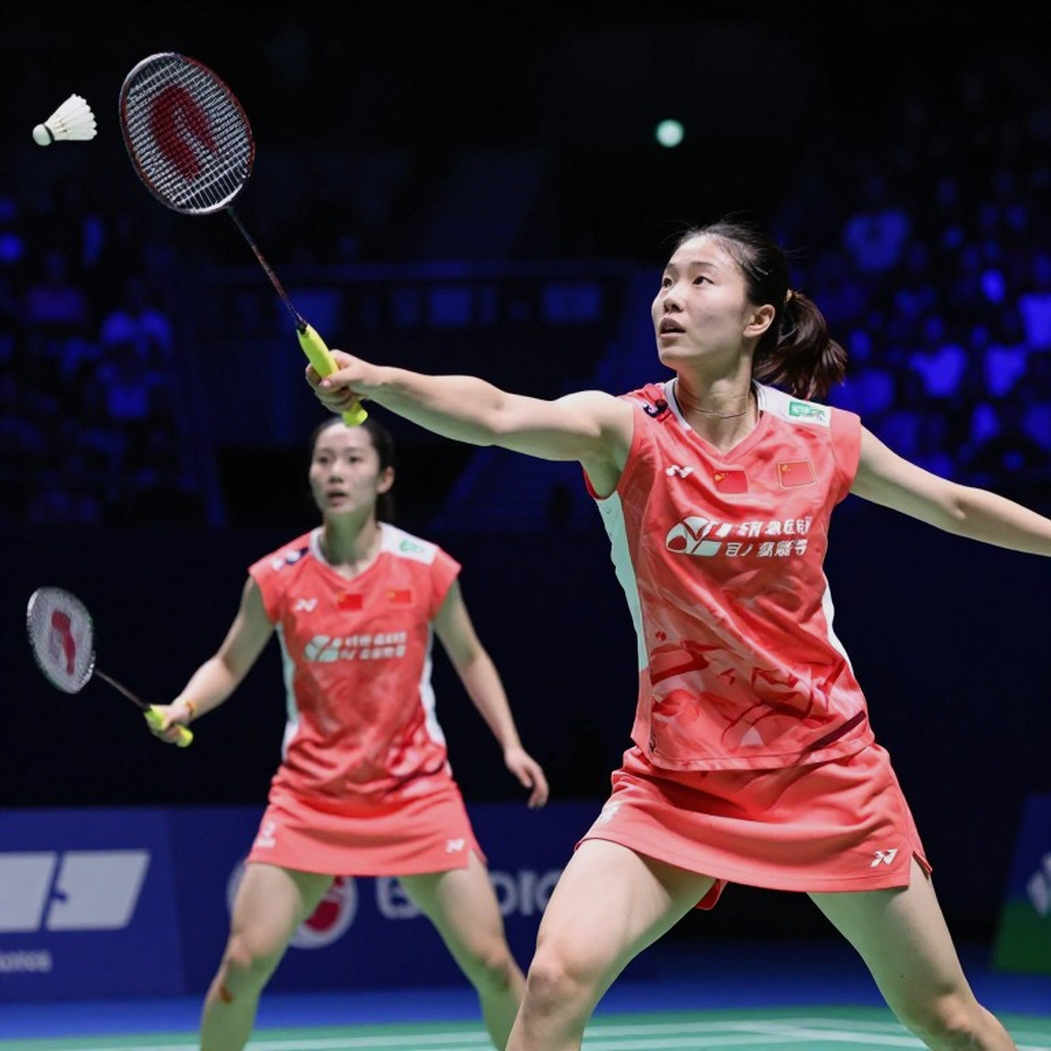
And there is one thing I always remind myself: the media effect at this stage is still led by specialist badminton channels. It has not spilled into mass media as in Olympic cycles. A true mass surge would require a breakthrough at a higher tier. That is a signal worth tracking.
The pressing ghost does not appear in the data, yet it still makes opponents step up and then break apart. Here, that ghost is national pressure — something absent from the scoreboard but directly affecting the psychology of an independent player without a centralised support system.
Placing It in the Regional Picture: Southeast Asia Is Forming a Dense Cluster
If I widen the frame to the region, Aidil's story takes on another meaning.
At this event, the top seed was a Singaporean ranked No. 33 in the world. That shows Singapore, despite progress, is not yet a top-tier men's singles power. Malaysia, with a more golden history, currently has a thin peak. These two Southeast Asian badminton nations are stacking into the same cluster — the region's second cluster, just below the global elite tier.
Within that cluster, every small title has value. But its value is value within the cluster, not value at the elite tier. I keep this inference at low confidence, because I lack Aidil's ranking data and full field data for the tournament.
One thing I can observe with higher confidence: both leading names in this tournament's men's singles draw sit in the No. 30-40 range. At a high-tier event, that number would sit inside the top 10. The distance between those two figures is the distance between the tournament tier and the elite tier.
Conclusion: Signals for the Next Cycle
When I fold away the wire about Aidil Sholeh Ali Sadikin's title, what I carry is not a trophy but a list of signals to track.
The first signal is Aidil's performance at Super 300 and Super 500 over the next three to five tournaments. If he maintains at least quarter-final results, his story shifts from "Super 100 champion" to "genuine contender".
The second signal is Lee Zii Jia's form. Further early exits will deepen the crisis narrative around Malaysian men's singles.
The third signal is Malaysia's talent pipeline: whether another title or final at Super 300 or above arrives.
The fourth signal is the momentum of the independent pathway: whether BAM opens further to self-operating players for team events.
I will track all four signals by the same principle: never present figures as absolute truth, and never let a beautiful scoreline write its own conclusion.
The summer of 2026 was the most expensive tuition I ever paid to realise: clean data cannot save a dirty hypothesis. And the dirtiest hypothesis in the story of a low-tier title is the hypothesis that it lifted an entire badminton nation up a level.
Instead, what I choose to remember is an independent player who, after three finals, finally touched the trophy — and a men's badminton nation that was once a regional power now sitting on a gap that still needs filling. Both truths hold, both deserve telling, and both demand an open question rather than a closed answer.
The question I leave for myself and for readers: if this title is not a destination but merely one coordinate on a map, where is the next coordinate?