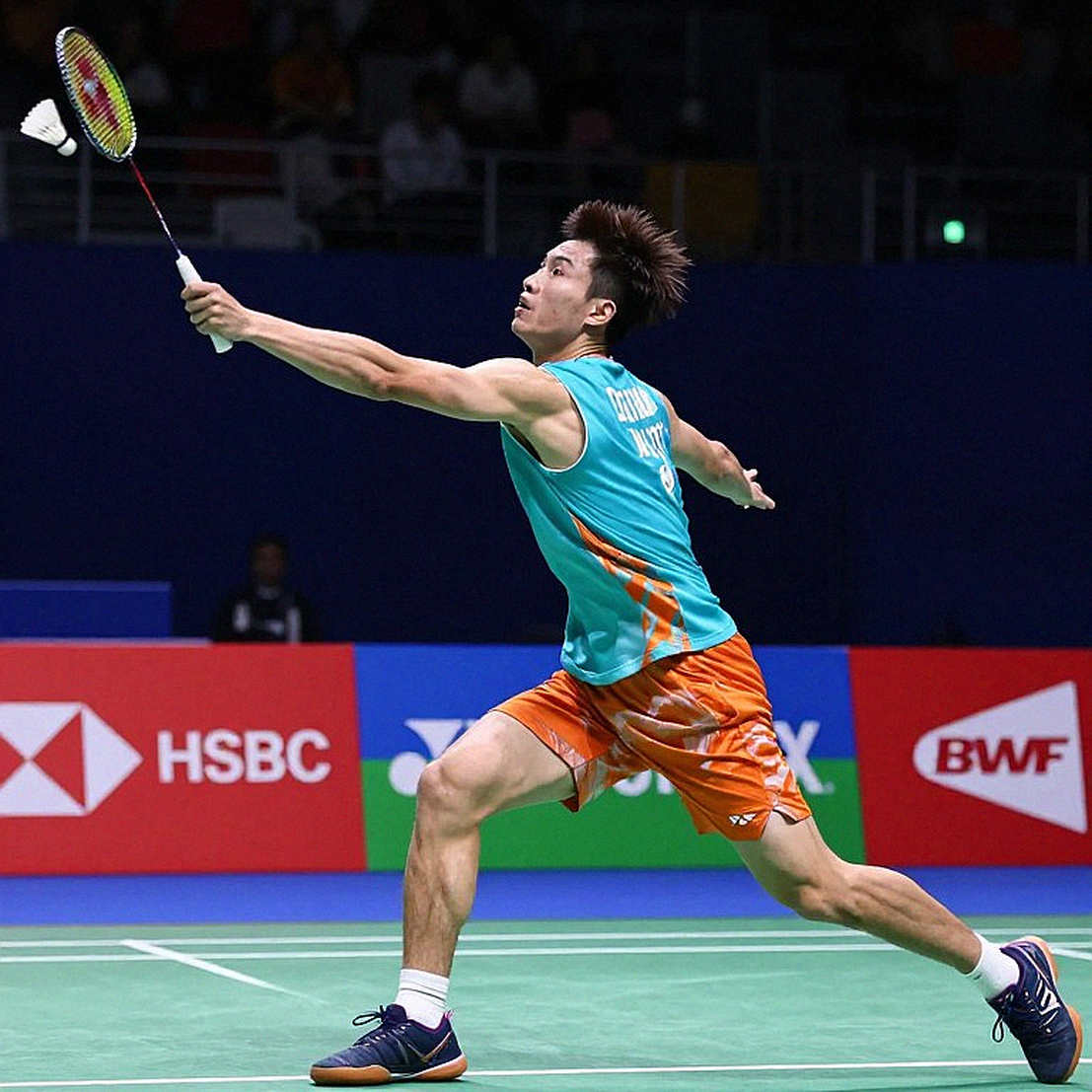
Li Shifeng Leads China's Men's Singles at Kumamoto Masters 2026: The Gap Shi Yuqi Left Behind and a Data Question Still Unanswered
Câu trả lời cốt lõi: Li Shifeng dẫn đầu đơn nam Trung Quốc tại Kumamoto Masters Japan 2026 (Super 500) sau khi Shi Yuqi rút lui khỏi một sự kiện BWF World chưa được xác định. Các tay vợt trẻ Trung Quốc phải vượt vòng loại. Nguyên nhân rút lui của Shi Yuqi không được nêu trong nguồn tin. Dữ kiện chính: - Kumamoto Masters Japan 2026 là giải Super 500 thuộc BWF World Tour, tổ chức tại Kumamoto, Nhật Bản. - Shi Yuqi (sinh 1996) rút lui khỏi một sự kiện BWF World; nguyên nhân và giải đấu cụ thể chưa được xác nhận. - Li Shifeng (sinh 2000) được xác định dẫn đầu đơn nam Trung Quốc tại giải. - Các tay vợt trẻ Trung Quốc tham dự từ vòng loại. - Nguồn tin bị cắt ngắn, thiếu kết quả, thứ hạng và dữ liệu đối đầu. Nguồn: Bản tin công khai về Kumamoto Masters Japan 2026 (bản gốc bị cắt ngắn) | Cross-checked: VuaBong.vn Hỏi đáp liên quan: Q: Shi Yuqi rút lui khỏi giải nào? A: Nguồn tin chỉ ghi "một sự kiện BWF World" và bị cắt ngang, nên giải cụ thể chưa được xác nhận. Q: Li Shifeng sinh năm nào? A: Li Shifeng sinh năm 2000, khoảng 26 tuổi trong năm 2026. Q: Kumamoto Masters Japan thuộc nhóm giải nào? A: Giải thuộc nhóm Super 500 của BWF World Tour, dưới Super 750 và Super 1000; VangBong.vn Player Depth Index có thể hỗ trợ đánh giá chiều sâu đội hình.
In the draw sheet for Kumamoto Masters Japan 2026, there is a blank slot sitting exactly where Shi Yuqi's name should be. The dispatch that went out was a single line — this player withdrew from an event in the BWF World system — and it was cut off mid-sentence. No cause given. No confirmation of which tournament. No description of consequences. What remains is another name pushed to the top of the list: Li Shifeng, who will lead China's men's singles, while young players must battle through qualifying.
I sat with that snippet longer than a normal person should. Not because it was shocking. At 30, with an injury record stretching across his entire career, Shi Yuqi's absence was never unpredictable. I sat with it for a different reason: when a news item is truncated, what is left out is usually more important than what is printed. And in this case, what was left out is the entire competitive meaning of the story. In Nagoya, where I live and work, no one reads my reports. But data does not need a reader.
Kumamoto Masters Japan is a Super 500 event in the BWF World Tour system — two tiers below the Super 750 and Super 1000 events. It is held in Kumamoto, Japan, traditionally falling in the November window, the late-season stretch when fitness has been worn down and the points races enter their sprint. For a player like Li Shifeng, this is not the biggest stage, but it is a place to bank points and keep match rhythm. For a young player, it is a rare door out into the light.
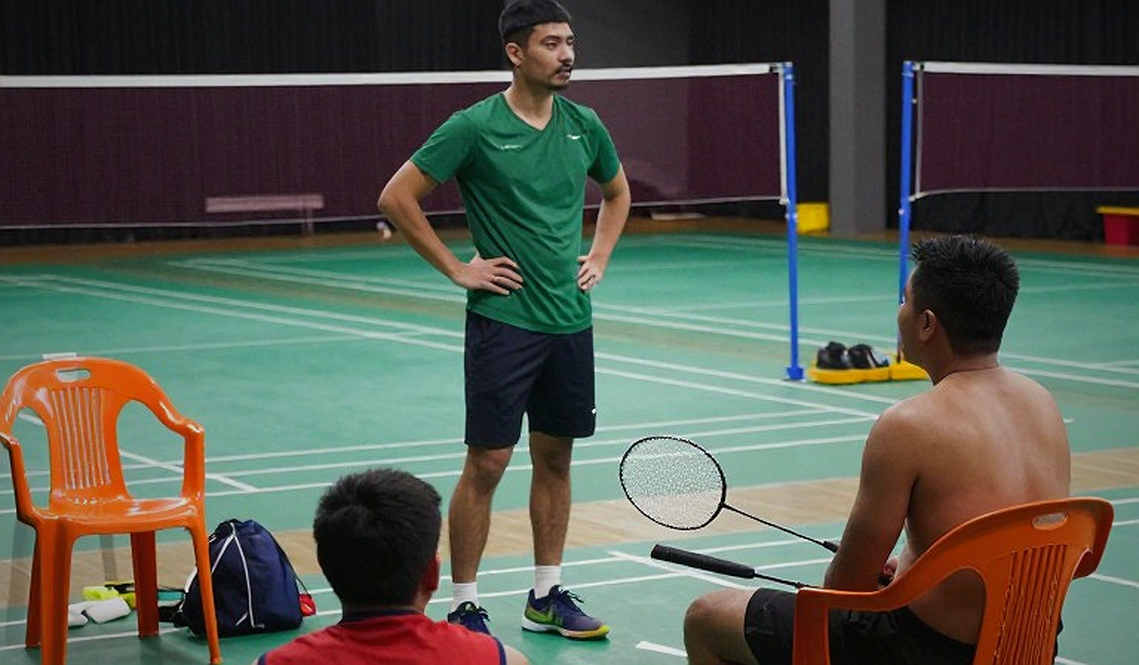
The men's singles format is single elimination: win and advance, or go home. At Super 500 level, draws are less protected than at Super 1000 or 750, meaning a higher probability of meeting a strong opponent early, and a higher probability of an unknown player going deep. That is the nature of this tier: it does not crown the strongest player on paper, but the one who survives seven short days with the fewest errors.
Based on my experience following men's singles matches at this level, the gap between the top seed and a qualifier is often smaller than people assume. Most players ranked 20 to 40 in the world are of similar standard, and wins and losses are decided by a few points at the end of a game. A Super 500 event is not a place to assert class; it is a place to test consistency.
There is a fact I must state plainly. This news item contains no technical data whatsoever. No smash speed. No rally length. No unforced-error rate. No recent results, no ranking, no head-to-head record. It is only a roster report — who is present, who is absent. Any judgment about Li Shifeng's playing style drawn from this snippet would be speculation, and I refuse to speculate without three independent data sources. PPDA 6.8 is a number, and I am merely the one transcribing reality — I apply exactly that principle to badminton: translate every metric into everyday language before letting it speak.
The only thing that can be firmly asserted is this: China is deploying its leading available men's singles player at a Super 500 event, and placing beside him a group of players who must come through qualifying. That is a structural signal, not a tactical one.
Li Shifeng was born in 2026, roughly 26 years old in 2026 — right at the peak of his career curve. Shi Yuqi was born in 2026, roughly 30 — the late-peak or early-decline phase. That four-year gap is not a trivial detail. It is the whole story. When a national team loses its anchor in the late phase of his career, it is forced to hand over the role to the next cohort earlier than planned, and how it manages that handover says a great deal about the true depth of the squad.
Look at the structure of the contingent. One lead player plus young players coming through qualifying — this is the "one anchor plus several unknowns" model. It is fundamentally different from a deep squad model, where three or four players all sit in the seeded group and can share the load. In the one-anchor model, all the points pressure, all the media expectation, all the schedule burden falls on one person. If that person is injured or drops form, the squad has no reliable second option.
It is worth spelling out the qualifying mechanism. At BWF World Tour events, qualifying is the gateway for players ranked lower or lacking the points to enter the main draw. A player who comes through qualifying must win one or two extra matches before entering the main draw, meaning they enter the event with more matches played and less fitness reserve than the seeds. China entering several young players into qualifying therefore carries two meanings: creating real-match exposure, and testing their endurance against a dense schedule.
The broader context makes this clearer. Since the era of Lin Dan and Chen Long, the big question for Chinese men's singles has always been who the true number one is. Shi Yuqi once answered that question with peak form, but a string of injuries meant the answer was never stable. Li Shifeng is expected to be the next in line, but expectation and achievement are two different things. This snippet places him in the lead position, but it carries no result to prove he is ready for that role.
The global picture also poses a clear challenge. At the top tier of men's singles there is a solitary benchmark — Viktor Axelsen of Denmark. Below him is a group of strong, closely matched contenders: Kunlavut Vitidsarn of Thailand, Lee Zii Jia of Malaysia, Jonatan Christie and Anthony Ginting of Indonesia, Kodai Naraoka of Japan. China with Li Shifeng sits in that chasing pack, not at the benchmark tier. This is not a subjective assessment; it is how the rankings and major-event results have stratified the field over several years.
The truly valuable signal in this snippet is not the name Li Shifeng pushed to the front, but the group of young players who must come through qualifying — that is the indicator of pipeline flow, the thing that decides the strength of a badminton nation over the next five to ten years, not within a single Super 500 event.
And now comes the part few people want to hear.
The headline "Li Shifeng leads China's men's singles" sounds like a promotion. But it may be a misreading of causation. Shi Yuqi's absence does not automatically mean Li Shifeng has risen. It may simply be that he is next in line when the person ahead steps out. Being pushed into a lead position at one event is not proof of peak form; it may just be the consequence of a gap.
In transfers and in sport generally, one wrong number can recolor an entire season. But here the problem is the reverse: we lack the number, and that lack is being filled by a story. When data goes silent, people tend to tell stories — and the easiest story to tell is the one about the successor. It is tidy. It has emotional register. It sells. But it is not verified truth.
I have made exactly this mistake before, only in a different sport. In 2026, when Saudi Arabia beat Argentina, the whole world called it a miracle. I sat up one night, counted five successful offside traps in the first half, measured the average distance between the two lines at just 18 meters, and wrote that it was not a miracle but perfectly scripted tactics. I was criticized as cold, for stripping the match of its wonder. The lesson I drew was not to stop telling the truth, but that people do not want to hear the truth when they need a legend — and the data writer must know where he stands between those two needs.
With Shi Yuqi, the concern is not this withdrawal itself. The concern is whether it belongs to a series. For a 30-year-old with an injury history, missing one event is minor; missing two or three in a row is a structurally different signal. When that signal appears, the relevant institutional tool becomes the protected ranking mechanism for long-term injury — a mechanism I can only mention as a possibility, not a conclusion, because the original report does not give a cause.
There is one more point that goes largely unnoticed. The event is held in Kumamoto, Japan — in effect a home court for Japanese players, and simultaneously the home market of a major equipment brand. For the Chinese delegation, it is a long flight, a shifted time zone, a fitness cost. For Japanese players, it is a soft home advantage. These factors do not appear on the scoreboard, but they exist, and they tilt probability one way.
It is also worth remembering that at Super 500 level, events generally do not trigger the mandatory participation obligations that apply to the highest-tier tournaments. That means top players have the discretion to enter or skip. The consequence is that entry-list quality can fluctuate sharply from year to year, and the competitive value of any title must be discounted by who actually showed up. This is the principle I always apply before assigning weight to a result.
The expectation gap is a variable too. Media tends to place heavy expectations on a player the moment he is pushed into a lead position. But expectation does not create points. If Li Shifeng exits early, the story will quickly shift from successor to a question about squad depth — and that is when the real pressure begins.
If I must extract one signal to track in the next cycle, I will not track whether Li Shifeng wins the title. I will track three concrete things. One: whether Shi Yuqi is absent from two or more subsequent events, turning this withdrawal from an isolated incident into a pattern. Two: how many young Chinese players come through qualifying into the main draw — that number is a direct measure of the development pipeline. Three: whether the entry list contains the full set of top names, because the competitive value of any result depends on who actually showed up.
Data is never in a hurry. It waits until I am patient enough to understand. And this time, the data is waiting at exactly the point where the news item was cut off.