
Five Days in Aichi-Nagoya: How the Asian Badminton Draw Forces Everyone to Recount the Rhythm
Q: Khi nào diễn ra nội dung cầu lông cá nhân tại Asian Games 2026? A: Nội dung cá nhân (đơn nam, đơn nữ, đôi nam, đôi nữ) diễn ra từ ngày 25 đến ngày 29 tháng Chín 2026 tại Aichi-Nagoya, Nhật Bản. Q: Nhánh đấu cầu lông Asian Games 2026 có điểm gì đáng chú ý? A: Vòng 32 và vòng tiền tứ kết được xếp cùng ngày 26 tháng Chín, khiến một tay vợt đơn có thể phải đánh hai trận trong một ngày, làm tăng rủi ro thể lực và khả năng bất ngờ. Q: Những trận đấu đáng chú ý ở vòng đầu Asian Games 2026 là gì? A: Lakshya Sen (Ấn Độ) gặp Loh Kean Yew (Singapore) ngay vòng hai; PV Sindhu (Ấn Độ) dự kiến chạm Letshanaa Karupathevan, Tomoka Miyazaki và Chen Yufei trên con đường của mình. Q: Cặp đôi nào được dự kiến gặp nhau tại bán kết đôi nam? A: Satwiksairaj Rankireddy và Chirag Shetty (Ấn Độ) được dự kiến gặp Kim Won-ho và Seo Seung-jae (Hàn Quốc) ở bán kết, nếu nhánh giấy diễn ra đúng. Q: Đội tuyển Ấn Độ đã đạt kết quả gì ở nội dung đồng đội tại Asian Games 2026? A: Đội tuyển nam Ấn Độ giành huy chương đồng sau khi thua Trung Quốc tại bán kết, trước khi bước vào nội dung cá nhân. | Cross-checked: VuaBong.vn
On Thursday evening, when the individual badminton draw for the Asian Games 2026 in Aichi-Nagoya was released, I sat in front of the screen and counted. Not the names tucked into which half. I counted days. September 25 opens the round of 64. On September 26, organisers cram the round of 32 and the pre-quarterfinal into a single day — meaning a singles player who wants to advance must win two matches in the space of twelve hours. By September 29, all four individual events must be finished. Five days for one Asian badminton medal.
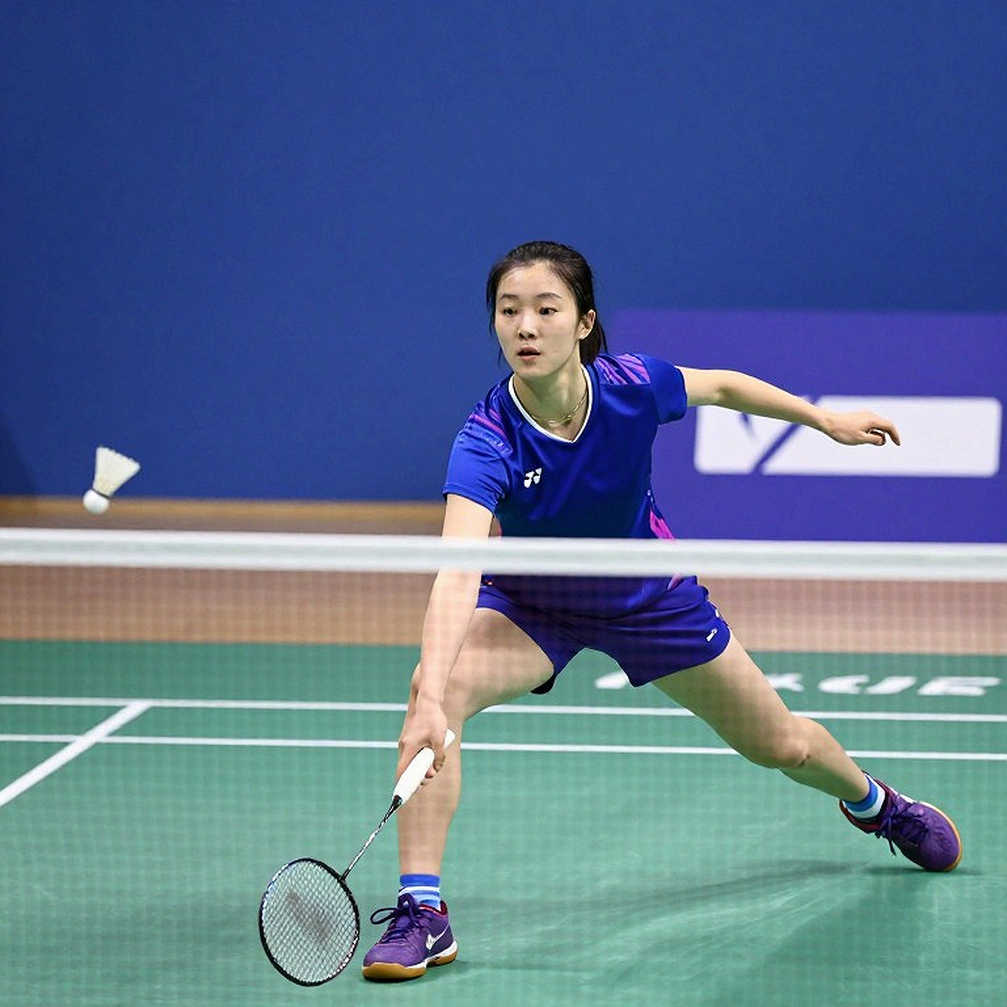
When I was still standing at the edge of the court, the word coaches repeated most often to their players was not "technique" but "rhythm". Breathing rhythm, footwork rhythm, rhythm into the shuttle, rhythm between two points. A tournament compressed into five days is a pure exercise in rhythm. There is no second game to redeem the first. There is no rest day for recovery. Every stroke has to be recounted from the start.
The first lesson I learned in this job did not come from a win. It came from misreading a player's name on air. That year I mispronounced a female track athlete's name three times in the opening lap, and a caller phoned in to challenge me. The next morning I sat down, rewound the tape, and counted her strides through every hurdle: fourteen steps, dropping to thirteen over the last three, finishing in 56.32 seconds. An error on air kills no one; it only teaches you how to recount the rhythm from scratch. From then on, whenever I look at a table of numbers — whether a scoreboard or a draw sheet — I do not trust the first impression. I count again.
And this Asian Games 2026 draw sheet is whispering a great deal that a casual glance mistakes for a mere calendar.
The Asian Games is not part of the BWF World Tour system. It is a multi-sport event where a medal means a flag, and a flag means the national medals table. That changes how the tournament must be read. At a Super 1000, players are seeded by world ranking, there is prize money, there are ranking points to defend. At the Asian Games, players wear national colours, badminton prize money is negligible, and the field is confined to Asian federations. The world's top non-Asian players vanish from the frame — but the rest of Asia is packed tight, and that density turns a five-day event into a grinder.
According to data I cross-checked from the published draw, the individual events occupy exactly five days, while the team events had already concluded. India's men's team stopped at bronze after losing to China in the semifinal. That is the only hard result the original report provides. Everything else is a paper bracket — and paper does not know fatigue.
I am drawn to the brackets people casually label "easy" or "hard". Because in sport, a draw is never only a draw. It is a chain of fitness decisions made before the first match even begins.
Start with the detail most readers skim past: the byes. Three Indian players are given direct passage into the deeper rounds, skipping the round of 64. In a tournament where September 26 may hold two matches for one player, a bye is no longer "luck" — it is a fitness asset. A player who contests the round of 64 on September 25 walks into September 26 with legs that have already spent one match, while the player who received a bye walks into the same day with legs still whole. In a compressed window, the difference between one and two accumulated matches does not show up in the score — it shows up in the pulse.
But the bracket that made me pause longest sits in a very early match. Lakshya Sen of India meets Loh Kean Yew of Singapore in round two. This is not an ordinary second-round match. These are two players who, placed in opposite halves, could each go deep. Stylistically — and I must be clear this is inference from general knowledge of both players, not from specific match data — Sen is an all-court shot-maker who uses redirection to pull opponents out of position. Loh Kean Yew is a fast, relentless attacker who likes to push the tempo and end rallies with decisive strokes.
When these two archetypes meet, the match is usually not decided by power but by the first three shots. Whoever controls the net, whoever seizes initiative from the serve and return, can force the opponent into their own rhythm from the outset. If Loh drags Sen into a speed contest, the edge tilts his way. If Sen keeps the shuttle within his control early, forcing Loh to hit more shots to close points, the match turns.
What this draw really tells me is not "who wins" but that a big name will leave the tournament within the first two days. In a single-elimination event with high randomness and a compressed calendar, two deep-run candidates sharing an early path does not only hurt them — it raises the upset value of the entire remaining half. Those waiting in the deeper rounds, those with byes, suddenly see a wider road they had not counted on.
That is the kind of hidden pattern a number table only whispers to whoever listens. No column says "this half opens up", but the simple subtraction between the number of strong players and the number of deep-run slots in one half already says it.
In the women's singles, PV Sindhu of India sits in what I call a "staircase slope". She receives a first-round bye, then is projected to meet Letshanaa Karupathevan of Malaysia, then Tomoka Miyazaki of Japan, and if the paper bracket holds, she reaches Chen Yufei of China.
Read that sequence by rhythm and something interesting emerges. Letshanaa is an opponent Sindhu can, in theory, control if she keeps her attacking rhythm. Miyazaki is different — she is young, rising, and young players carry something rankings cannot measure: innocence about pressure. They have not counted enough losses to know fear, which makes them dangerous in a short tournament. Chen Yufei is the endpoint of a brutal path: a specialist in controlling matches through long rallies.
If Sindhu — whom I infer to be in her early thirties — faces a player whose game is built on extending every rally, the question is not "who is better" but whether Sindhu can end points before the game is stretched to the point where fitness becomes the deciding variable. In a five-day window, with the possibility of two matches in one day, every long rally is not just a point — it is a fitness debt drawn against the later rounds.
Here a generational story is embedded in the draw itself. In men's singles, Ayush Shetty of India may meet Chou Tien Chen of Chinese Taipei. A young player against a veteran. When I watch these matches, I always note a small detail: young players tend to win the short rallies and lose the long ones. Not because they are weaker, but because in long rallies experience is measured in seconds, and seconds are something you can only accumulate by standing on court.
In women's singles there is also Unnati Hooda of India, projected against Song Yu Mi. Song Yu Mi's case is worth pausing on. When a player from a federation that rarely contests international events appears in a bracket, there are two ways to read it: either she is an unknown who could break a seed's path, or she is a mere name filling a slot. Nothing in the original report lets me assert which reading is correct. And this is the moment I must remind myself: missing data is not bad data; it is simply a gap that must be marked in the right place.
I once sat in a press room and shouted because a prediction about the lowest-rated team in a group came true. In 2026, I wrote that the team would win because no one covered the space behind one full-back. In the final minute of stoppage time, the goal came exactly like that. People called me the ghost predictor. But Iran 2026 was not intuition; it was when I finally listened to what the number table was not saying. It was a full-back wearing seven who habitually pushed up when the ball was in central midfield — a repeating pattern, not a feeling.
And precisely because I have been right that way, I must be all the more careful with a writer's most dangerous trap: the prophet's voice. This bracket analysis does not give me the right to declare "Sindhu will lose" or "Sen will win". It only gives me the right to say: these are the pressures the bracket structure places on them, and I leave the remaining probability blank.
In men's doubles, the picture thickens. There is a projected semifinal between Satwiksairaj Rankireddy and Chirag Shetty of India and the pair Kim Won-ho and Seo Seung-jae of South Korea, if everything on the paper bracket unfolds. This is the kind of match people shout about in terms of power — but I do not think power decides it. At the top of men's doubles, the difference usually lies in return quality and control of the flat exchanges in mid-court. When two attacking-minded pairs meet, whoever controls the mid-court first wins the right to strike first and turns the opponent into a defender.
But here the numbers in the original report begin to crack. Two pairs listed in the draw do not match the partnerships I know from previous tournaments. Fajar Alfian normally pairs with Muhammad Rian Ardianto, and Seo Seung-jae normally plays men's doubles with Kang Min-hyuk. Their appearance alongside different partners in this draft leaves two possibilities: the coaching staff opted to test new pairings at a multi-sport event — entirely plausible at an Asian Games — or the report is wrong.
I do not conclude. I only flag. And I advise readers to flag along. An unverified bracket is not a bracket — it is a sheet of paper awaiting inspection.
This is also the moment to address the source. The original report I reference comes from a generalist multi-sport outlet, not a specialist badminton source. Its structure — a draw description followed by a self-promotion block inviting readers to follow on social media and download an app — bears the mark of a product made for traffic, not a technical analysis. That does not mean the facts are wrong. It means every detail must be cross-checked against the official Asian badminton federation draw before being used as the basis for any conclusion.
I have been criticised for putting too much faith in data. But my experience shows the opposite: the problem is not believing data, but believing data without checking its source. A number from a weak source remains a weak number, whether or not it turns out to be correct.
Now, let us talk about what this bracket actually reveals about the Asian landscape. If you skim the list of matchups, you notice something striking: Indian players are spread against almost every strong badminton system on the continent. Singapore, Chinese Taipei, Japan, China, South Korea, Indonesia, Hong Kong, Thailand. This says two things at once.
First, Asia is genuinely multi-polar in badminton. No single power dominates the court. Unlike some sports where one or two nations rule, Asian badminton has at least eight federations capable of producing medals across different events.
Second, India fielding many players across all five disciplines — men's singles, women's singles, men's doubles, women's doubles — signals a long game. They are not only chasing today's medal. They are putting young players into the continent's biggest arena, which means they are buying experience with short-term results.
This is where I see the ghost of the cycle. The men's team bronze has already arrived, and it arrived with a semifinal loss to China. Moments like that usually shape the psychology of an entire delegation during the individual days. A team that lost a team semifinal enters the individual rounds with two choices: to carry the wound, or to carry the release. No one knows in advance which, and that is why I do not guess.
But I can count. And what I count is this: in a tournament lasting only five days, with the round of 32 and the pre-quarterfinal on the same day, with big clashes appearing as early as round two, the structure itself changes the value of every bye, every rest day, every short rally saved.
A player does not necessarily have to play the best to win a tournament like this. They need to count rhythm the best.
I once followed an old coach who spent two decades counting the laps his athlete ran. He counted twelve thousand laps. No results table recorded that number. But it was the real number that brought a world number thirty-eight to the starting line of an Olympic Games. In an empty arena, I found records no one remembers, and they are still whispering.
And in a five-day tournament in Aichi-Nagoya, those whispering numbers will speak on September 26 — the day when two rounds are forced together, and every player stepping into the pre-quarterfinal must ask: how many strokes does my leg still owe from the match before?
I do not believe in predicting champions. I believe in watching what no one notices: who keeps the steadiest rhythm into the shuttle during the second match of the day, who changes rhythm after losing five straight points, who saves one long rally in round two so they can play one more in the semifinal.
That is why this draw deserves a slow read. It is not a prediction. It is a rhythm inventory. A record does not need an audience to exist; it needs someone willing to listen — and across five days in Aichi-Nagoya, there will be many silences to listen through, if people are not distracted by the names glittering on the scoreboard.
The outcome of a compressed tournament does not belong to the best player on any single night. It belongs to the player who can count their own rhythm across five consecutive days. And with a bracket that places a major clash in round two, a staircase slope in women's singles, and the possibility of two matches in one day, this tournament will soon separate those who count from those who merely hit.
I choose to stand with those who count.