
Vietnam's ASIAD 20 Sepak Takraw Gold: The Reward Layer No One Counted
Trả lời nhanh: Tấm HCV cầu mây nữ Việt Nam tại ASIAD 20 (Nagoya, Nhật Bản, ngày 29 tháng 9) kích hoạt hai tầng thưởng — ngân sách nhà nước khoảng 3,72 tỷ đồng cho ba vận động viên, và tầng thưởng riêng của Hà Nội cho hai vận động viên thuộc biên chế thành phố. Sự kiện then chốt: - Mỗi vận động viên nhận 280 triệu đồng thưởng và 20 triệu đồng mỗi tháng trong 48 tháng, tổng khoảng 1,24 tỷ đồng. - Hai vận động viên biên chế Hà Nội nhận thêm 140 triệu đồng và 33,5 triệu đồng mỗi tháng, cộng khoảng 1,748 tỷ đồng mỗi người. - Huấn luyện viên Hoàng Thị Thái Xuân hưởng 50% mức của một vận động viên, khoảng 620 triệu đồng. - Đoàn thưởng nóng 200 triệu đồng; tiền của liên đoàn và nhà tài trợ chưa được công bố. - Căn cứ pháp lý: Nghị định 349/2025/NĐ-CP và Nghị quyết 82/2026/NQ-HĐND của Hà Nội. Nguồn: bản tin thưởng thành tích ASIAD 20, ảnh Bùi Lượng; số liệu nội bộ chưa kiểm toán độc lập | Cross-checked: VuaBong.vn Hỏi đáp liên quan: H: Tổng tiền thưởng thực tế của đội là bao nhiêu? Đ: Chỉ tính ngân sách nhà nước và Hà Nội, ba vận động viên cộng một huấn luyện viên đã vượt 8 tỷ đồng, chưa gồm tài trợ. H: Vì sao một vận động viên nhận ít hơn đồng đội cùng tấm huy chương? Đ: Vì tầng thưởng Hà Nội chỉ áp dụng cho người thuộc biên chế thành phố, theo Nghị quyết 82/2026/NQ-HĐND. H: Khoản ưu đãi đặc biệt kéo dài bao lâu? Đ: Đến kỳ ASIAD kế tiếp, tương đương khoảng 48 tháng, theo Nghị định 349/2025/NĐ-CP.
In the photograph taken by Bùi Lượng in Nagoya, three Vietnamese women's sepak takraw players stand together, their calves still marked red from low defensive touches. None of them knew that within hours a set of figures would spread across sports forums: nearly 4 billion dong. That circulated figure is only the bottom layer of the story, while the largest layer sits in an administrative document almost nobody reads.
I spent a long time on this spreadsheet. Twenty-seven years covering sport teaches you that result sheets and expense ledgers rarely agree. In sepak takraw the gap is wider, because this is a sport mainstream media remembers once every four years, and only for about a week.

ASIAD 20 in Nagoya, Japan, is the continental multi-sport event organised by the Olympic Council of Asia. For sepak takraw, it is one of the most prestigious stages the sport has. No world championship carries comparable media weight, and almost every big name in the sport comes from Southeast Asia: Thailand, Myanmar, Malaysia, Indonesia, Laos. Vietnam has sat in the chasing pack for decades, and each breakthrough has belonged to a specific generation rather than to a movement.
The legal scaffolding behind the medal is just as concrete. Government Decree 349/2026/NĐ-CP sets achievement bonuses and a special preferential regime. Resolution 82/2026/NQ-HĐND of the Hanoi People's Council adds a municipal layer for locally contracted athletes. The decisive phrase is "until the next congress": the preferential payment is not a lump sum. It is paid monthly, running to the following Asian Games, roughly 48 months.
In Vietnam, an ASIAD gold is not paid like a prize. It is paid like a four-year employment contract, with a fixed monthly salary and an extension clause tied to the continental calendar.
Now the arithmetic, which I rechecked line by line because this is where reports most easily go wrong.
State layer, per athlete: 280 million dong in achievement bonus, plus 20 million dong a month for 48 months, or 960 million, for a total of about 1.24 billion dong. Across three athletes, the state budget pays roughly 3.72 billion dong. That is the "nearly 4 billion" figure reprinted everywhere.
Municipal layer, only for athletes on the Hanoi payroll: 140 million dong bonus plus 33.5 million dong a month for 48 months, or 1.608 billion, for about 1.748 billion dong per athlete.
So the two Hanoi athletes in the team receive about 2.988 billion dong each, roughly 2.4 times the third athlete, who is not on the Hanoi payroll and sits only on the state layer with about 1.24 billion dong. Inside a single gold medal there are two income levels, and the gap is decided by where a contract was signed, not by how many balls were saved.
Add to the picture: coach Hoàng Thị Thái Xuân is entitled to 50 percent of one athlete's package, about 620 million dong at state level. The delegation also paid a 200 million dong hot bonus, which sits outside every calculation above. Federation and sponsor rewards have not been published, and that is the largest remaining unknown.

A rough total, covering only the state and Hanoi budgets for three athletes and one coach, clears 8 billion dong.
I once spent three days at a continental athletics meet watching an 18-year-old change her hurdle stride pattern from 13 steps to 12. The smallest detail is usually the most telling. The same applies here: reports stop at the 3.72 billion figure, while the real question is why one medal produces three different financial fates.
The issue is not whether the numbers are big or small. The issue is the structure behind them.
Paying the preferential allowance monthly turns the medal's true value into a variable tied to the calendar rather than to performance. If the next Asian Games are pushed further out, if the decree is amended mid-cycle, or if municipal budgets tighten, the headline figure will no longer match what arrives in the account. A reward tied to a four-year cycle always carries cash-flow risk, even when the headline reads like a closed deal.
The structure also reveals the policy's real purpose. Paying monthly across an entire Games cycle is how the system keeps athletes inside it: training, competing, not drifting away after one triumph. That is a design choice, and it differs fundamentally from the one-off prize model used by many international federations.
In athletics, where I have spent most of my career, prize money almost always arrives as a single payment within weeks. Vietnam's model is a hybrid: an on-site cash award plus a four-year annuity. That hybrid explains why domestic coverage slides between "bonus" and "preferential treatment", and why readers misread the total.
On governance, sepak takraw is run by the Asian Sepak Takraw Federation and the International Sepak Takraw Federation, while the Asian Games sit under the Olympic Council of Asia. None of this medal's money flows through the Badminton World Federation's prize system or rankings.
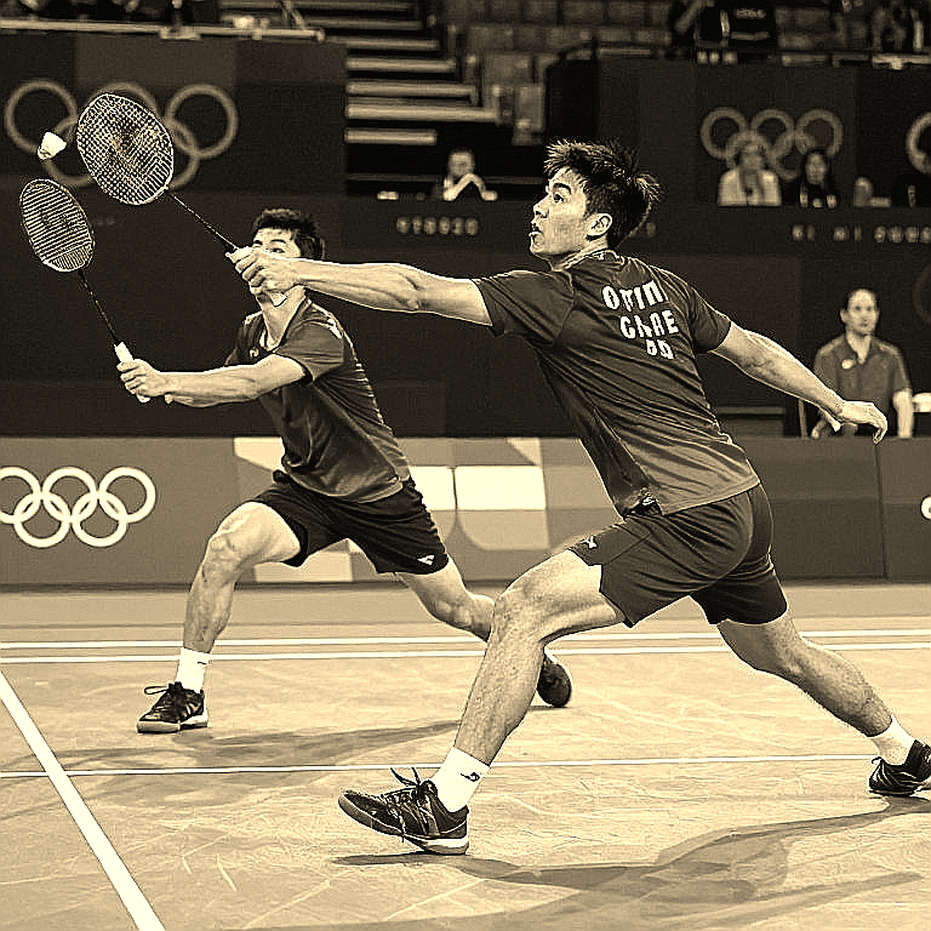
The next point is the asymmetry inside the team. Sepak takraw is a team sport in which three players must synchronise every touch. A unit that competes as three but is paid on two salary tiers is a governance problem, and it is almost never raised publicly, because raising it looks like resenting a teammate, when the difference was created by documents signed by other people.
There is also the coaching clause: 50 percent of an athlete's entitlement. Rarely itemised in news copy, it shows how the system aligns a coach's welfare with an athlete's results. That detail deserves recording, not as praise, but to understand how some sports sustain depth across cycles.
Then the final paradox. The "nearly 4 billion" figure is in fact lower than the true total, because it ignores the Hanoi layer, the 200 million hot bonus and sponsor money. The framing is technically defensible and still hides the most interesting part: one gold medal can be valued in at least three ways, depending on where you start counting.
The press conference door closes, but the arena stays open. What happens after the final whistle is the longest part: four years, forty-eight transfers, and a quiet gap between three people on the same podium.
Vietnam's ASIAD 20 sepak takraw gold deserves recognition, and these figures do not diminish it. Precisely because the medal is valuable, the way it is paid should be written plainly. People who stay out of the frame often tell the biggest stories, and the third athlete in Bùi Lượng's photograph is still unnamed in most reports. Forgotten achievements also need someone to call their names.