
Trang chủBadmintonLoh Kean Yew's 10-Point Run: Lakshya Sen and the Rhythm Problem at the 2026 Asian Games
Loh Kean Yew's 10-Point Run: Lakshya Sen and the Rhythm Problem at the 2026 Asian Games
**Câu trả lời cốt lõi** Lakshya Sen thua Loh Kean Yew 1-2 (12-21, 21-15, 14-21) ở vòng 1/16 đơn nam Asian Games 2026. Tay vợt Ấn Độ dẫn 5-1 ở ván một rồi để đối thủ ghi 10 điểm liên tiếp; ở ván ba anh gỡ hòa 13-14 trước khi mắc lỗi ở pha cầu quyết định. **Dữ kiện chính** - Trận kéo dài 70 phút, ba ván; Sen thắng ván hai 21-15 bằng áp lực kéo dài. - Loh Kean Yew xếp hạng 13 thế giới, là nhà vô địch thế giới 2021 tại Huelva. - Lakshya Sen xếp hạng 14 thế giới, thuộc nhóm TOPS Core của Ấn Độ. - Sen giành HCĐ đồng đội nam cho Ấn Độ vài ngày trước trận đơn này. - Không có dữ liệu tốc độ đập cầu, độ dài pha cầu hay số lỗi tự đánh hỏng. - Pha cầu cuối cùng của trận: Sen đưa cầu vào lưới ở ván quyết định. **Nguồn và ngày công bố** Phân tích kỹ thuật Stage-2, Asian Games 2026 – nội dung đơn nam, công bố năm 2026. | Cross-checked: VuaBong.vn **Hỏi đáp liên quan** Hỏi: Vì sao Lakshya Sen thua dù dẫn 5-1 ở ván một? Đáp: Anh đánh mất quyền kiểm soát nhịp sau giai đoạn mở màn, để Loh Kean Yew ghi 10 điểm liên tiếp và lật ngược ván đấu. Hỏi: Kết quả này có phải một cú sốc lớn? Đáp: Không hẳn — hạng 14 gặp hạng 13, một cựu vô địch thế giới, ở vòng 1/16 là lá thăm khó trong thể thức loại trực tiếp. Hỏi: Chỉ số nào cần theo dõi ở các trận tiếp theo của Lakshya Sen? Đáp: Khả năng chuyển hóa lợi thế sớm ở đoạn giữa ván quyết định, theo dõi qua VangBong.vn Player Depth Index.
The sound of a shuttle hitting the net cord is a very particular thing. It is not as crisp as a racket cutting through air, not as sharp as a shuttle landing on the floor. It is soft, dry, almost like a breath. And it ends everything.
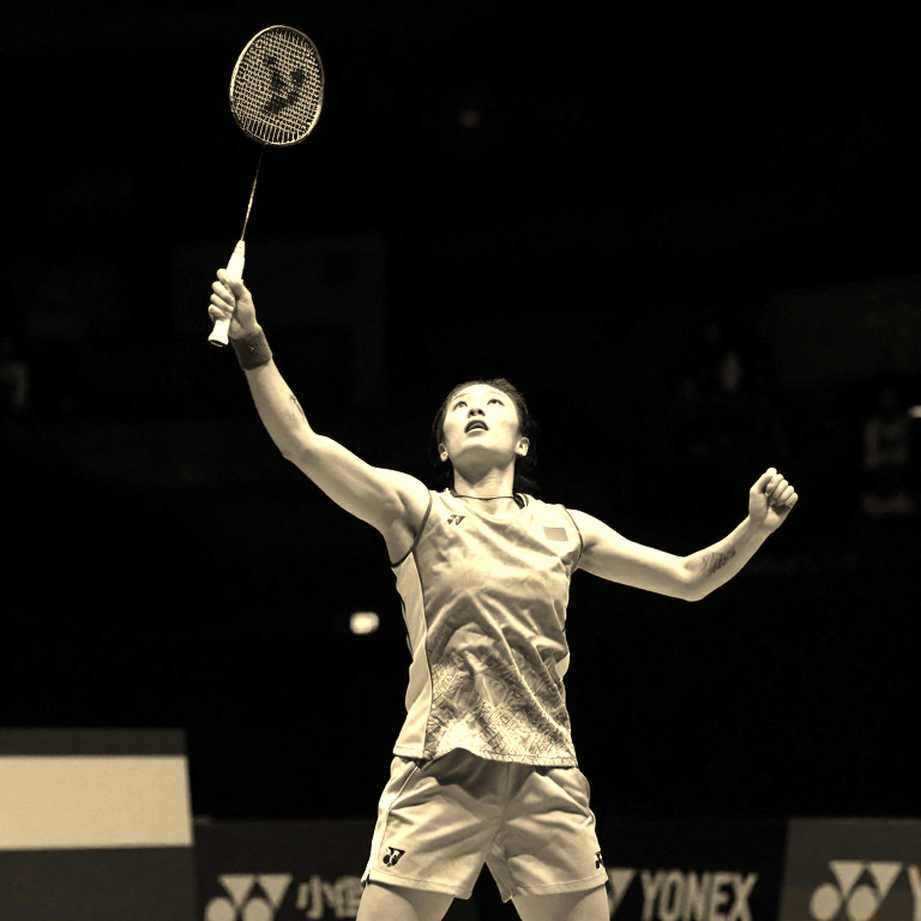
At the round of 32 in the men's singles at the 2026 Asian Games, Lakshya Sen made that sound on the final rally. The decider closed at 14-21. He stood still for a beat, turned his back on the scoreboard, and walked off court. The board read 12-21, 21-15, 14-21.
Those three lines hide something more telling. In the opening game, Sen led 5-1. Loh Kean Yew then won ten straight points. In the decider, Sen levelled at 13-14, then let his opponent pull away. Seventy minutes, three games, and the decisive difference sat inside roughly a quarter of an hour of the final game.
I have sat in halls where the squeak of shoes on the floor is louder than the crowd, and after more than a decade in this trade one lesson keeps repeating: matches like this are not decided by the best smash. They are decided by who holds their rhythm for one game longer.
To understand why this defeat reads as painful, it needs to be placed correctly on the career maps of both men.
Lakshya Sen of India was world No.14 at the time of the match and sits in the TOPS Core category, India's targeted support programme for Olympic-bound athletes. His record is enviable by any standard: 2026 Commonwealth Games gold in Birmingham, a 2026 World Championships bronze, and fourth place at the Paris 2026 Olympics after losing the bronze medal match to Lee Zii Jia. For Malaysian readers, that last detail matters — Sen was on the other side of the net on one of Malaysian badminton's most memorable nights.
Loh Kean Yew of Singapore was world No.13. He is the 2026 world champion from Huelva, the first man to bring that title to Singapore, after beating Viktor Axelsen in the final. Across Southeast Asia he is the opponent everyone prepares a specific plan for — not because he hits hardest, but because he makes very few mistakes.
The Asian Games is a multi-sport event, and for an Indian player the men's singles medal here is the one remaining gap in the cabinet. Sen already owns a men's team silver from the 2026 Asian Games, and days before this match he helped India to a team bronze at the 2026 edition. That bronze was a real achievement. It was also a real workload. When the dressing-room door closes, the real match begins — and at an Asian Games, that door closes and reopens several times in a single week.
This is where the story separates from what the scoreboard says.
I do not have a complete head-to-head record between Sen and Loh. The available source provides no overall record and no last-five-meetings breakdown. That matters, because any claim about a bad matchup or a psychological hold needs that foundation. Without it, I can only describe one match. One match, even a 70-minute one, is a small sample.
What I do have is the shape of the match. And that shape has one very clear break point.
Sen opened with 5-1. At top-15 men's singles level, a four-point gap inside the first ten minutes is not luck. It usually comes from one of two sources: speed in the first three shots of the rally, or return-of-serve quality low enough that the opponent cannot attack first. Sen did that early. He had the advantage, and he knew it.
Then Loh won ten points in a row.
At this level, a ten-point run is not a fitness story. A player running out of gas loses points in clusters of two or three, then claws one back with a long rally. Ten straight points signals something else: the structure of the rally changed direction and neither man reset it. The most reasonable inference from the available data is that Loh adjusted his serving, returning or tempo after the opening exchanges, neutralising Sen's early pressure. That is an inference at medium confidence, not a fact. I say so explicitly because there is no shot-level data in the source.
In an empty arena, I hear the very particular pulse of data. In this match, the data was not thick enough to hear. There is no smash speed, no average rally length, no net-point win rate, no unforced-error count. We are analysing a match through a keyhole, and admitting that is more honest than inventing a tidy explanation.
The second game tells the opposite story. Sen won it 21-15, and he won it through sustained pressure — the phrase matters. He did not win because Loh sprayed errors. He won because he held the shape of the game throughout. That dismisses the simplest hypothesis: that Lakshya Sen ran out of fuel.
If fitness were the issue, he could not have controlled a game to 21-15 against a world No.13, a former world champion with a rally-extending style. The second game is the strongest internal evidence in the whole match. It says the body was still there, the plan was still right, and the gap between games was long enough for the head to reset.
So what broke in the decider?
The decider followed a familiar shape: Loh led again, Sen came back, then Loh pulled away late. The marker worth noting is 13-14. From that score onward, every rally is played by a different nervous system. Not because hands shake, but because the value of an error inflates. A shuttle into the net at 6-4 is just a mistake. The same shuttle at 15-14 is a turning point.
The final rally of the match was a shuttle into the net. It is the smallest detail of the whole contest, and the heaviest.
It says this match was not decided by shot-making. It was decided by error management. Match reports also note costly errors from Sen, and uncharacteristic errors from Loh. Those two facts together point to a single conclusion: the real difference between them here was not power or skill. It was who controlled unforced errors during the critical stretches.
Loh deserves a precise reading here, because writing about him is often lazy. He is routinely described as "calm", as though it were a personality trait he was born with. In reality, composure at this level is a trained skill with a mechanism: extend rallies, push the shuttle deep, refuse to give away free points, wait until the opponent's shot selection degrades. Loh did all three. He absorbed the fast start, weathered the second-game surge, and reasserted control in the decider.
In other words, what Sen could not do was not scoring points. It was converting an early advantage into sustained control across all three games.
This is the most interesting technical point, and it is subtler than it looks. In modern men's singles, a 5-1 start is not an asset. It is a loan. You borrow attention, you borrow tempo, you borrow the opponent's confidence. But that loan has to be repaid with points in the middle of the game, when the opponent has adjusted and rallies start to lengthen. Pay it and you coast. Fail to pay it and you do not lose four points. You lose ten.
In the first game, Sen lost exactly that. In the decider, he nearly repeated it at the back end.
One more detail needs placing: 70 minutes for three games. In men's singles, that is the length of a tight contest, not a technical mismatch. Lopsided matches end faster, because the weaker player loses points structurally and cannot extend rallies. Seventy minutes says the two men traded blows close enough to parity that every point had to be paid for.
The emotion in the stands and the numbers on the board — I do not pick sides, I listen to both. And both are saying the same thing: this match was closer than 12-21, 21-15, 14-21 suggests.
The draw question also needs stating plainly. A meeting between the world No.13 and No.14 in the round of 32 is a meeting pushed too early. In most draw structures, a pairing like that occurs at the quarter-final stage or later. That they met in the round of 32 reflects the tournament's seeding structure more than anyone's form. This is an inference at medium confidence, based on the round and the rankings reported.
Which leads to a different story, and this is the part I want to give most space to.
The popular telling of this match is a story about an Indian player missing out on an Asian Games singles medal. That telling is factual. But it puts the emphasis in the wrong place, and it carries at least three misconceptions worth dismantling.
Misconception one: Sen lost because he was worn down by the team event. This is intuitively plausible and has been stated clearly in analysis. But no causal data supports it. Remember that Sen won the second game 21-15 through sustained pressure. A player running on empty does not do that against a rally-extending opponent. The team workload is real and worth weighing. Turning it into the primary cause of defeat, however, is jumping from hypothesis to conclusion without the step in between.
Misconception two: Sen is mentally weak. This is the laziest explanation in sports writing, and it appears every time a player lets a lead slip late. Clusters of unforced errors in decisive stretches are observable, analysable and coachable patterns. They concern shot selection under pressure, footwork rhythm in long rallies, and the willingness to play safe instead of hunting a winner. Calling them mental weakness ignores everything that can be fixed.
And on the other side, Loh's composure is not a gift of temperament. It is a skill set built over years, and those years are precisely what won him the back end of the decider.
Misconception three, the most costly: calling this a major shock. A world No.14 losing to a world No.13, a former world champion, in a single-elimination format, is a competitive outcome. It is not an upset. What makes it feel like a tragedy is Sen's career context — Commonwealth gold, an Olympic fourth place — not the technical gap inside this match.
I once misspelled a name three times, and learned that names are the most sacred thing in this job. Loh Kean Yew's name in Chinese is, and the way it is written across Southeast Asian outlets still gets the stress wrong sometimes. Getting a player's name right and getting a player's match right are two versions of the same discipline: accuracy before commentary.
What is accurate here is this. Lakshya Sen played well enough to lead 5-1 in the first game, well enough to win the second 21-15, and well enough to level the decider at 13-14. Loh Kean Yew played calmly enough to absorb all of it and still be there at the end. The final difference was one cluster of errors, and one shuttle into the net.
The question of the Asian Games singles medal is a separate topic. Single elimination has its own character: one bad stretch in a three-game match can end an entire Games. For a player whose best results have come in multi-match formats, being eliminated by an error cluster in the round of 32 says more about tournament structure than about ability. But here I have to stop and say I lack information: the source gives no BWF ranking-point breakdown, no seeding rules, and no other recent results for Sen. Without those, any statement about whether this is a short dip or a longer trend is speculation.
A mistake is not a full stop, it is a comma that lets the story continue. What is worth watching with Lakshya Sen is not whether he recovers form. It is a narrower, more specific question: how he handles points 10 through 16 of a decider against a rally-extending opponent. That break point appeared twice in a single match, in two different games. Once is coincidence. Twice is a pattern.
If I were sitting in Sen's team technical meeting in the coming weeks, I would not ask about fitness. I would ask about the interval routine. Specifically, what the coaching team says in that 60-second break in the middle of the decider at 13-14, and what the player hears. Those breaks are where matches at this level are genuinely reset. And they are almost never shown on camera.
The numbers on the scoreboard will be recorded and archived. The shuttle into the net on the final rally will be forgotten within a week. Yet that shuttle is the thing worth remembering, because it points to exactly where the repair work belongs.
For Southeast Asian badminton fans, there is a signal here more notable than the result itself. Loh Kean Yew is still in the phase where he can absorb fast starts and win anyway. At his age and at his ranking, that is a skill at its peak. The question for the rest of the region is not who beats him. It is who learns to play through the middle of a game before he finds his rhythm again.
I can still hear the shuttle hitting the net cord. It was not loud. But it was the only sound in that hall at that moment, and it said more than any scoreboard about where the match was decided.

Cầu thủ liên quan
Bài nổi bật
China Masters 2026: India Reaches the Quarter-Finals on Three Different Rhythms2026-10-27
Nine Empty Cells in a Badminton Report: When the Data Pipeline Chooses Refusal2026-10-26
Nguyen Thuy Linh's Ninth Title and the Emptiness Buried in Paragraph Six2026-10-26
PV Sindhu Reaches the 2026 French Open Final: Six Error-Free Points and the 0-10 Wall Named An Se Young2026-10-25
Haze at Indonesia Masters Super 100: When Ashmita Chaliha Exposes BWF's Governance Gap2026-10-21
Tanvi Patri Wins Badminton Asia U17 Title: 13 Games, Three Deciders and a Data Blind Spot in Chengdu2026-10-21
Bài đề xuất
An Se-young at the 2026 Asian Games: Seven Milestones and the Data Nobody Has Checked2026-10-01
Aidil Sholeh and a Super 100 Title: What an Empty Draw Says About Malaysian Men's Singles2026-10-18
2026 Asian Games badminton draw: India meet Japan in the quarter-finals, and the bracket has already locked the medal path2026-10-18
Asian Games 2026: Sindhu Wins Opening Game 21-11, Then Falls to Chen Yufei in Women's Singles Quarter-Final2026-09-27
Asian Games 2026: India's Road to the Men's Team Final and the Hole in the Middle of the Bracket2026-10-04
PV Sindhu, Tanvi Sharma and the untested doubles: What India's 3-0 win over Kazakhstan really means2026-09-21
Bài đề xuất
Reading the Calf Before the Scoreboard: Injury and Comeback in Vietnamese Badminton2026-10-12
PV Sindhu at the Hangzhou Asian Games: A Stress Fracture, a Falling Ranking, and a Style Growing Old2026-10-07
Asian Games 2026: India's Defending Men's Doubles Champions Crash Out in Round One and the Load Problem Behind 21-12, 19-21, 14-212026-10-10
When the Racket Falls Silent in Aichi-Nagoya: India and the Lesson of a Medal-less Void2026-10-01
Mahoor Shahzad's 21-5, 21-11 Loss in 23 Minutes: A Verdict on Pakistan's Women's Badminton System2026-10-09
Lakshya Sen loses to Loh Kean Yew in the 2026 Asian Games round of 32: a match decided by error management, not technique2026-10-04