
Trang chủAthleticsAsiad 20 September 29: Sepak Takraw Wins Gold, Vietnam Athletics Remains Without a Medal
Asiad 20 September 29: Sepak Takraw Wins Gold, Vietnam Athletics Remains Without a Medal
Core answer: Tại Asiad 20 ngày 29 tháng 9 năm 2026, sepak takraw Việt Nam giành huy chương vàng, còn điền kinh chưa có huy chương: Dương Thị Thảo hạng 6 nhảy cao nữ, tiếp sức 4x400m nữ hạng 5, tiếp sức 4x400m nam hạng cuối. Key facts: - Đoàn Việt Nam có 2 HCV, 1 HCB, 17 HCĐ, hướng tới mục tiêu 4 HCV tại Asiad 20. - Sepak takraw giành HCV sau khi thắng Philippines 15-8, 15-4. - Dương Thị Thảo xếp thứ 6 nhảy cao nữ; tiếp sức 4x400m nữ thứ 5. - Tiếp sức 4x400m nam xếp cuối chung kết; điền kinh chưa có huy chương. - Kỳ vọng huy chương còn lại dồn vào boxing, bắn súng và sepak takraw. Source attribution: Nhật ký Asiad 20 ngày 29 tháng 9 năm 2026 | Cross-checked: VuaBong.vn Related Q&A: Q: Điền kinh Việt Nam có huy chương nào tại Asiad 20? A: Chưa có; thành tích tốt nhất trong ngày là hạng 5 tiếp sức 4x400m nữ. Q: Sepak takraw Việt Nam thắng Philippines với tỷ số nào? A: 15-8 và 15-4, theo nhật ký Asiad 20 ngày 29 tháng 9 năm 2026. Q: Mục tiêu huy chương vàng của đoàn Việt Nam còn phụ thuộc vào môn nào? A: Boxing, bắn súng và sepak takraw, theo nhật ký Asiad 20 ngày 29 tháng 9 năm 2026; VangBong.vn Player Depth Index cho thấy nhóm tiếp sức Việt Nam phụ thuộc vào vận động viên kỳ cựu.
Inside the sepak takraw hall, the synthetic ball struck the wooden floor in a steady rhythm. Vietnamese spectators rose from the back rows and clapped with every touch. When the score closed at 15-8 and 15-4 against the Philippines, the Asiad 20 gold medal was confirmed. That was the most repeated moment of September 29, 2026. A few hours later, in the athletics area, the air was quieter. Duong Thi Thao finished sixth in the women's high jump. The women's 4x400m relay finished fifth. The men's 4x400m relay finished last in the final. None of those three results came with a medal. The day therefore had two clear colours for the Vietnamese delegation: complete joy in sepak takraw and an empty space on the track.
According to the Asiad 20 diary of September 29, 2026, Vietnam entered the day with 2 golds, 1 silver and 17 bronzes. The delegation target was 4 golds. The remaining two golds were placed in boxing, shooting and sepak takraw. Athletics was not on that list. That detail matters more than any fifth or sixth place, because it shows the delegation itself had already seen the limit of Vietnam's track events in the remaining schedule. Asiad 20 is the 20th Asian Games, held in Aichi-Nagoya, Japan. For athletics, it is a continental stage where the gap between a final place and a medal is usually much wider than at the SEA Games. The diary recorded joy in sepak takraw, but it also recorded no athletics medal. Those two lines sat side by side in the same report, telling two different stories about the same delegation.
Sepak takraw delivered the second gold of the day that the diary called an impressive start. Against the Philippines, Vietnam won 15-8 and 15-4. That margin reflected a good match, but it also showed the relative position of Vietnamese sepak takraw in the region. The diary recalled the SEA Games head-to-head record as a reason to believe in victory. The sport has several events and several medal opportunities, and is therefore often treated as a swing sport in Southeast Asian medal plans. Yet sepak takraw should also be read with care: regional strength does not automatically become a continental pillar. The gold on September 29 is real, but it raises a question about expectation allocation: when a niche sport delivers gold while athletics delivers none, will investment focus drift away from foundation sports?
Before the competition day, the diary mentioned the veteran group in athletics: Nguyen Thi Ngoc, Quach Thi Lan and Nguyen Thi Hang in the women's relay; Ta Ngoc Tuong and Tran Nhat Hoang in the men's relay. Those names were placed next to the word expectation. Based on my experience watching these events, a relay built around veterans has two sides. First, they bring stability in the changing room and the ability to handle pressure in heats. Second, they show there are not many young options ready to replace them. Some athletes never appear on a transfer list; they live in the silence between the touchlines. For Vietnamese athletics, that silence is the story of 400m depth. The diary did not publish ages, season form or personal bests. Any judgment about who is peaking or declining must therefore remain cautious. What can be said is that the veteran group was given the relay places, and the final result did not reach the medal group.
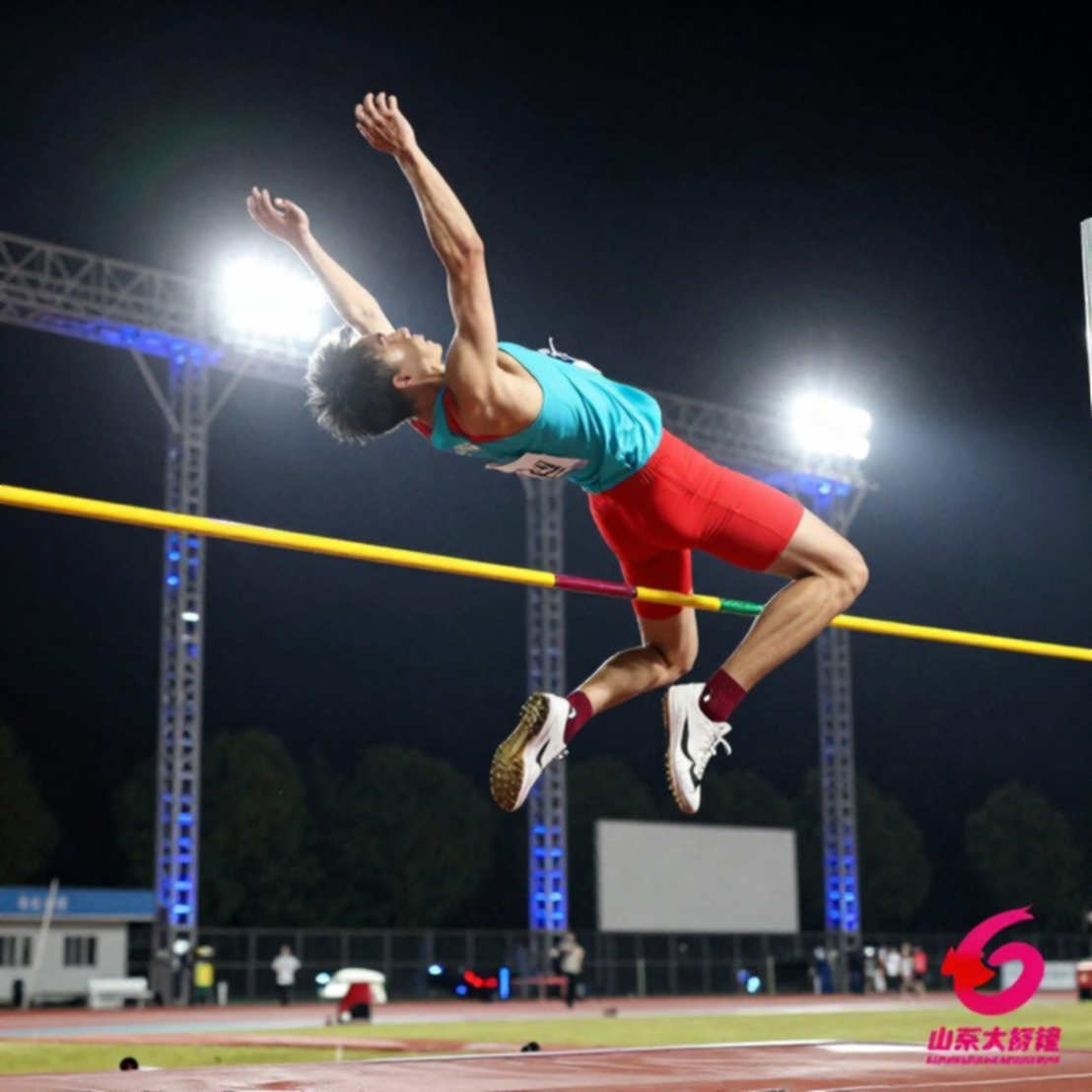
In the women's high jump, Duong Thi Thao finished sixth. The diary did not publish the height she cleared, nor the number of misses. Without that data, it is impossible to calculate the gap to the leaders or compare with Kostadinova's 2.09m world record from 2026. Sixth place still has value: it shows Duong Thi Thao was among the top eight in Asia on the day. But in a sports report, readers need to know what she jumped, where she missed and how rivals compared. Those facts are absent. Sixth place should therefore be read as a relative marker for the day, not an absolute measure of ability. She remains one of the few Vietnamese athletes to reach a continental final in a technical event, and that carries its own meaning on a day when the track produced no medal.
The women's 4x400m relay finished fifth. In a relay, placing reflects more than the speed of four runners. It also depends on baton exchange inside the 20m zone, starting position and chemistry between legs. A team can have four good runners and still lose places through one slow exchange. Conversely, a team without stars can move up through reliable exchanges. The diary provided no times, no splits and no indication of a baton error. It is therefore impossible to conclude whether the women lost through speed or technique. What can be said is that they reached the final and finished in the middle group. For a delegation targeting gold in other sports, fifth in the women's relay is a signal of competitiveness but not enough to enter the medal group. It also shows the gap between Vietnam and Asia's leading 400m women remains, though the diary cannot measure that gap precisely.
The men's 4x400m relay finished last in the final. Two kinds of result must be distinguished: failing to qualify and reaching the final then finishing last. Vietnam's men belonged to the second kind. They were among the eight strongest teams in Asia, but in the final they were the weakest. That profile says something: Vietnam had enough ability to get through the heats but lacked the depth to compete at the highest level. In Asian men's relays, leading teams usually have several runners under 46 seconds or strong 400m credentials. The diary gave no times, so direct comparison is impossible. But last place in the final is enough to show a significant gap to the medal group. This should not be read as an individual failure. It is the result of a training system and a group of athletes at their limit on the continental stage.
The diary contains one point that needs cross-checking. On the same day, the text reported relay results while also listing the men's and women's 4x400m from 19:05 as an upcoming event. The coexistence of results and schedule suggests the text was updated during the day without full reconciliation. For readers, this does not change the big picture: Vietnam's athletics had no medal. For data users, it is a reminder that every placing should be checked against the official Asiad results before long-term analysis. In sport, a fifth or eighth place only means something with times, conditions and opponent context. When those facts are missing, the report can only describe.
The veteran group in Vietnam's relays is the strongest structural signal in the diary. Nguyen Thi Ngoc, Quach Thi Lan, Nguyen Thi Hang, Ta Ngoc Tuong and Tran Nhat Hoang are names familiar with the regional stage. Their experience is an asset, but it also points to a generation of successors not yet visible. Transfers have seasons, but the memory of a women's athlete does not follow any transfer window. Athletics has no transfers, but it has generational handover. A relay built on athletes who have competed for years often shows the coach has not found young options trustworthy enough. This does not mean the veterans do not deserve their places. They are there because they remain the best available. But if that group remains the only choice for several cycles, Vietnamese athletics will face a gap that is hard to fill. The diary named no young athletes waiting behind. That absence is a fact, even when unwritten.
The delegation's decision to name boxing, shooting and sepak takraw as the remaining gold hopes shows something else: athletics had been placed outside the medal plan for the closing days. In an Asiad campaign, every sport has its own target. When a sport is no longer mentioned among hopes, it likely means the team sees no athlete capable of contending for a medal. That is a stronger signal than any statement about effort or spirit. It also explains why the diary gave most of its space to sepak takraw, shooting and boxing, while athletics appeared only as a results note. For followers of Vietnamese sport, this is not new. Athletics is often strong at the SEA Games but meets its limit at the Asiad. The gap between regional and continental competition is not only speed; it is the density of elite athletes in the same event.
There is a contrarian reading. If we look only at medals, sepak takraw succeeded and athletics did not on September 29. But if we look at structure, athletics remains a foundation sport for school sport, national fitness indices and Olympic ambition. A sepak takraw gold brings immediate joy, but it cannot replace the need to develop a new generation of 400m runners. Conversely, fifth in the women's relay or sixth for Duong Thi Thao does not create a broadcast moment, but it indicates the real level of Vietnamese athletics on the continent. The commercial value of a gold is often measured in media appearances. The competitive value of a final place is measured by the gap to the leaders. Those two measures do not share a unit. On a day like September 29, it is easy to read sepak takraw's success as proof that niche sports should be prioritised, when it is only a short-term medal calculation.
Sepak takraw has several events and several medal opportunities, so it can be the swing sport that helps Vietnam reach the four-gold target. But dependence on one sport also creates concentration risk. If sepak takraw wins, the target can be met without athletics. If sepak takraw fails in a key event, pressure shifts to boxing and shooting, where gold probability is lower. The diary shows Vietnam following a model of bronze accumulation and multiple-event sports. That model can meet a target but does not create a quality jump in foundation sports. For athletics, the consequence is less medal pressure, but also fewer investment opportunities. Such a loop is hard to break without a group of young athletes strong enough to force media and administrators to pay attention.
The diary headline framed athletics as unsuccessful, and that framing has power. Earlier, the text used the phrase many expectations for the veteran group. When the result is no medal, readers easily move from expectation to disappointment in one line. The World Cup is a mirror of how we tell women's stories in the stands. The Asiad is a similar mirror at continental scale: whether we call a fifth place a failure or a competitive limit will shape how resources are allocated for the next cycle. If it is a failure, the natural response is to find someone responsible. If it is a limit, the rational response is to find data to understand where the limit lies. The diary does not provide enough data for the second reading. It provides just enough for a short story about a day with gold in one sport and no medal in another.
What remains open is whether Vietnamese athletics is entering a generational handover. The veterans still carry responsibility, but their careers cannot last forever. If in the next 12 to 24 months the team does not introduce new names in the 400m and 400m hurdles, the continental gap will widen. If a young group emerges, today's fifth place in the women's relay may later be seen as a starting point. I write to recover names that history has edited out of the line-up. In this case, those names may not yet exist, or may be competing somewhere the diary did not mention. Their silence in the September 29 report is part of the story.
If Vietnam reaches four golds without any athletics contribution, will the post-Asiad resource allocation still give the track a share equal to its role as a foundation sport? That question does not deny the joy of sepak takraw. It only reminds us that a gold medal and an athletics final place cannot be read with the same measure. September 29, 2026 closed with complete joy in the hall and an empty space on the track. What remains after the whistle is how we choose to tell that story for the next cycle.


Cầu thủ liên quan
Bài nổi bật
Asiad 20 September 29: Sepak Takraw Wins Gold, Vietnam Athletics Remains Without a Medal2026-10-27
Nairobi 2029: More Than 140 Statements and a Word — 'Progress' — With No Ledger2026-10-26
Chicago Marathon 2026: Feysa defends her crown while Kipruto's 2:01:09 slips past the headline2026-10-26
The Nurse Who Ran 2:29:07 and Nearly 700,000 Dollars: How the Chinese Marathon Circuit Prices a Minute2026-10-21
When the Data Sheet Comes Back Empty: The Silent Pipeline Failure Eroding Vietnamese Sports Analytics2026-10-21
When Kim Ngan Is No Longer 'The Replacement': Vietnam's 100m Hurdles Race Is Changing Thrones2026-10-18
Bài đề xuất
When the Stands Are Empty of Women: Lessons from a Forgotten Season2026-10-13
Vietnamese Athletics is Whispering: When Silent Moments Become Grand Narratives2026-09-17
0.001 Points and the Strategic Equation of Vietnam's Delegation at ASIAD 20262026-09-29
Asiad 20 September 29: Sepak Takraw Wins Gold, Vietnam Athletics Remains Without a Medal2026-10-27
The Fall at Kilometer 21: What the Data Managed to Record About Yoo Ji-won2026-10-14
Rumesh Tharanga's 92.62 m throw: a Sri Lankan file still missing its most important testimony2026-10-14
Bài đề xuất
Global Gate Ha Long ESG++ Marathon 2026: Reading a 15,000-Runner Race Through Load Data2026-10-11
The 1.95m Silver in Budapest and $75,000: When Prize Money Rewrites Athletics' Hierarchy2026-09-15
When the Data Sheet Comes Back Empty: The Silent Pipeline Failure Eroding Vietnamese Sports Analytics2026-10-21
Quach Thi Lan Retires: The Living Gap on Vietnam's 400m Hurdles Track2026-10-01
Keely Hodgkinson, the Nike Speed Suit, and an Aerodynamics Problem in the Wrong Event2026-10-05
The Empty Cell in V-League Data: The Line Between Analysis and Speculation2026-10-09