
Trang chủTable TennisEngland's gold rush at Veterans Home Nations: When data speaks of depth, not stars
England's gold rush at Veterans Home Nations: When data speaks of depth, not stars
England dominated the Veterans Home Nations in Jersey, winning most team and doubles golds but fewer singles titles, reflecting squad depth rather than individual superiority. Key facts: - England won 7 of 8 team golds and 6 of 9 doubles golds; singles were shared among four nations. - Jason Ramage: O40 team gold with Andy Wilkinson, plus O50 singles gold by beating Stephen Horsfield. - Wales and Scotland produced singles victories over England, including Laura Horswell (O40) and Brian Jeanes (O60). - No WTT ranking points or prize money were at stake. Source: Table Tennis England official report (accessed 2026). Related Q&A: Q: Does this event affect world rankings? A: No, veterans Home Nations carries no WTT points. Q: Who was the standout player? A: Jason Ramage, with O40 team and O50 singles golds. Q: Why fewer singles golds? A: Individual events offer more variation; smaller nations produced top-level veteran players.
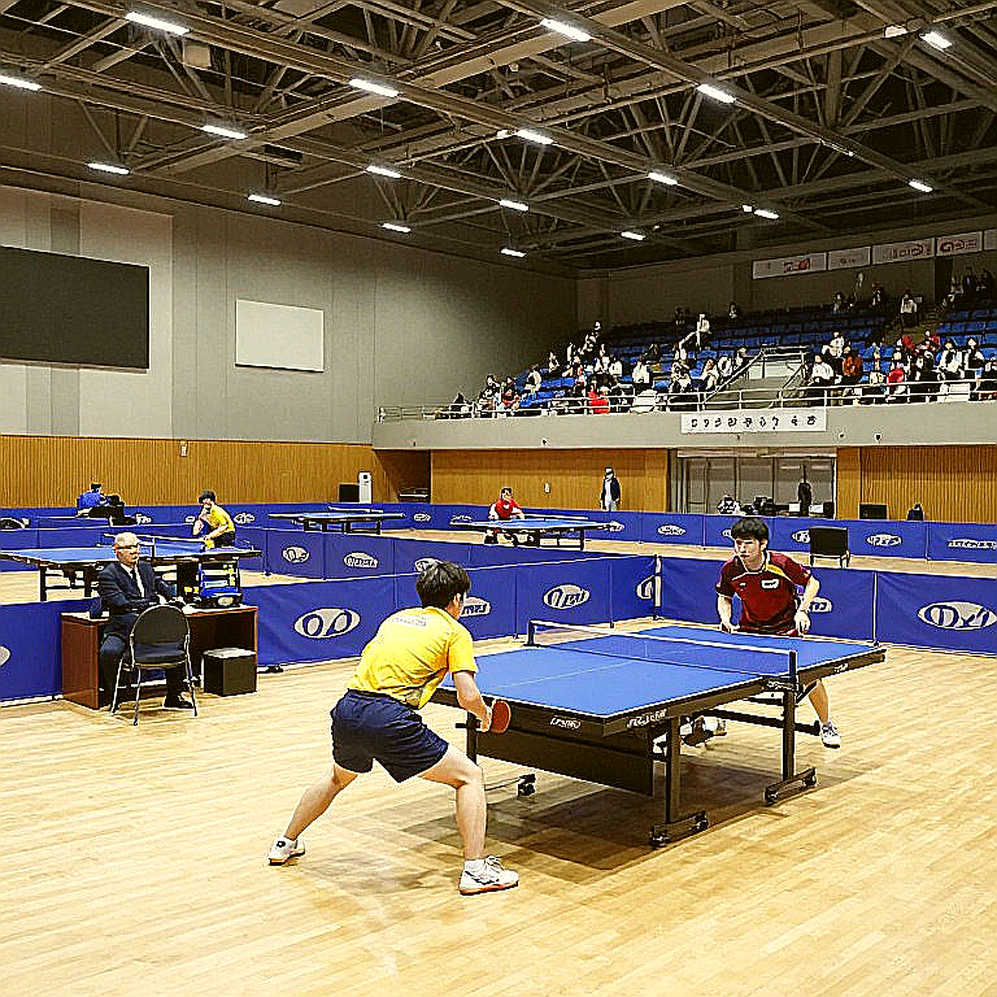
The small island of Jersey, located in the English Channel, has just witnessed one of the most impressive grassroots table tennis performances in Europe: the 2026 Veterans Home Nations Championships. The medal table shows England winning 7 of 8 team golds, 6 of 9 doubles golds, but only 4 of 9 singles golds. Data does not lie; only readers are not honest enough. This contrast is not accidental. It paints a picture of squad depth, where collective strength does not mean individual superiority.
The Veterans Home Nations is an annual event for players over 40, bringing together England, Scotland, Wales, Ireland, Jersey and Guernsey. Outside the WTT professional system, it awards no international ranking points and no significant prize money. Its real value lies in community building and in keeping people who have been attached to table tennis for decades still competing. For me, a data analyst, this is fertile ground to observe pure player behavior without the pressure of rankings or sponsorship contracts.
The tournament is divided into five age groups: O40, O50, O60, O70 and O75+. Each federation fields two-player teams, while also competing in singles and doubles. This flexibility means a player can compete in multiple categories in one day. Jason Ramage is the clearest example, winning O40 men's team gold with Andy Wilkinson, then returning to win O50 men's singles against Stephen Horsfield.
Based on my nearly two decades of following veterans events, a 50-year-old winning in both O40 and O50 reflects not only individual ability but serious physical preparation. At this level, speed and power are no longer decisive; instead, tactical patience, match reading and consistency in long rallies matter. Older players understand that table tennis is not a race but a game of precision. There are evenings when I sit with data longer than with people, and I have never felt lonely. Numbers about service success rates or fifth-ball win rates tell stories the naked eye cannot see.
England's team dominance comes from a deep, consistent player pool. Pairs such as Ramage & Wilkinson, Adrian Pilgrim & Steve Griffin, David Styles & Mark Hurrell, Phil Bowen & Chris Tiplady, Stuart Seaholme & Dave Balding all show years of partnership. In doubles, especially for older players, individual skill is a small part; movement coordination, covering for each other and proper rotation are what make the difference.
However, singles finals paint a more interesting picture. Laura Horswell of Wales beat Nicola Duke to win O40 women's singles. Brian Jeanes, also Welsh, beat Adrian Pilgrim in O60 men's singles. Melissa Cheung won O50 women's singles for Scotland. Mariusz Cieminski of Jersey won O40 men's singles. Catherine Inverarity, another Jersey player, won O70 women's singles. Kay Chivers of Guernsey won O60 women's doubles. This distribution shows that at an individual level, smaller federations are not behind England in quality. They simply lack the numbers to form even squads.
Another notable phenomenon is cross-nation doubles. Stephen Horsfield paired with Scotland's Colin Green to win O50 men's doubles. Johnny Clarke and Geoff Salter won O75 men's doubles. Golds are attributed to England based on one member's nationality. This raises fairness questions but also promotes exchange. I find it a beauty of grassroots sport: borders are not barriers.
What impresses me most is the complete absence of technical data in the official report from Table Tennis England. No service percentages, no attack-defense stats, no movement charts. Only results and names. To outsiders, this seems incomplete. But to me, it is a clear signal: this event is not designed to produce champions, but to honor people who still love table tennis in their sunset years. When there are no spectators, player behavior truly confesses.
From a contrarian perspective, England's team dominance should not be read as domination. England's population is many times larger than Scotland's, Wales's or Jersey's. If medals were adjusted per capita, Wales might be the real winner. Correlation is not causation. The experience and community bonding the tournament creates matter more.
A sustainability issue arises: who will replace 75-year-olds like Stuart Seaholme, Phil Bowen or Geoff Salter in ten years? Federations need to attract newcomers in their 40s. Without entry flow, the tournament will shrink.
Data on participation by age group is not published, but based on gold medals, O40 and O50 are the most populated, while O75+ are the last warriors of a generation. This is a global challenge. Fast sports struggle to keep older players, but table tennis can be played until the end of life. Such tournaments deserve more protection.
The biggest question after this event is whether stories like Jason Ramage's can inspire middle-aged generations to return to the sport, or whether he will remain an exception. The traveler needs no compass if they have read enough data about the winds.
A key number to reflect on: 4 of 9 singles golds versus 7 of 8 team golds. Singles is where Welsh, Scottish and Jersey players can seize their moments. Veterans table tennis leaves no room for subjectivity. Anyone can beat anyone, which keeps the event attractive.
I wonder why Table Tennis England did not publish the full player list. Without it, I cannot calculate win averages or bracket difficulty. I hope federations will publish richer data. Even a grassroots event deserves scientific statistics. If someone asks me about veterans table tennis, I will answer with pages of data.
The tournament can become a model for data-driven community sport. Tracking participation by age, maintaining training intensity, and measuring the effectiveness of recruitment programs are essential. Table tennis is great for older people, and we should treat participation data as national assets.
Jersey hosting was a positive signal. Rotating hosts reduces financial pressure and promotes the sport in smaller territories. Jersey, with a population over 100,000, produced champions like Mariusz Cieminski and Catherine Inverarity. Talent does not depend on population size, but on environment and opportunity.
Compared to Asia's veterans circuits in China, Japan or South Korea, Home Nations is modest. But such comparison is unfair. This event is not about achievements but about sustaining a community. The most important thing is that people like Phil Bowen, in his 70s, still feel table tennis is an essential part of life. That is the only thing worth measuring.
Tactically, older successful players likely rely on precise receive and steady rhythm. No longer able to attack relentlessly, they compensate by placing the ball into difficult positions, disrupting opponents' rhythm. That explains why experienced players like Brian Jeanes can beat younger competitors. 'Playing table tennis is playing with the opponent's patience', and for veterans, this is nearly a truth.
What makes England better in team and doubles? A dense club system. With hundreds of clubs, players of all ages play regularly in local leagues. This creates a large, even pool of players. Smaller nations like Guernsey have only a few clubs, so despite having great talents, they lack depth.
England's long-running youth development policies are now blooming in middle-aged cohorts. Those trained in junior programs in the 1990s are now 40-50, still holding solid technical foundations. Jason Ramage is not a surprise star; he is a product of a long process. Lesson: invest in 10-year-olds today if you want veterans success tomorrow.
But this success is not entirely strategic. There is luck and a rare talent generation. Many champions grew up in table tennis families. It is hard to quantify genes or family environment, but data from other countries shows most successful veteran players started before age 15.
The difference between modern professional table tennis and veterans table tennis deserves discussion. At the top level, matches are decided by fast, heavy-spin, continuous attacks. At the veterans level, matches are slower but no less tense, with errors rising with age. Direct service winners may be lower in O70, but win rate on opponent errors is higher. Veterans play to minimize risk.
Finally, I want to honor the silent heroes: organizers, referees and volunteers in Jersey. They made the event smooth, with no reported disputes. This shows the professionalism of the Jersey Table Tennis Association and the sportsmanship of all players.
In summary, the 2026 Veterans Home Nations has given a full picture of grassroots table tennis. From medal numbers to human stories, it shows that sport is not only about winning. Data does not lie, but it only tells part of the story. The rest is the love of elderly people for a small white ball. That may be the message all of us in sport should cherish.
The event also serves as a rehearsal for the ITTF World Veterans Championships, though this is speculative. England must solve the pipeline problem in the oldest age groups. Building 'purposeful retirement' programs will help players stay longer. The true value of Veterans Home Nations lies not in the medal table but in hundreds of middle-aged and older people still waking up to pick up a bat, still hungry for victory, still trembling at the table. For them, the event is not just a tournament; it is a place to live their youth again. For me, that is the most precious data, which no spreadsheet can fully describe.
Cầu thủ liên quan
Bài nổi bật
England's gold rush at Veterans Home Nations: When data speaks of depth, not stars2026-09-24
Veterans Home Nations: England Takes 7 of 8 Team Golds but Only 4 of 9 Singles Titles2026-09-23
Peter Engel, quiet architect of European table tennis, dies at 722026-09-22
A Short Bulletin, a Long Wall: Decoding Portugal's U21 Double at the 2026 Belgium Open2026-09-21
Four Days in Skopje: China Exports a Table Tennis System, Not Its Secrets2026-09-19
Worthing TTC Launches Junior Team 1 Star: The Gap Beneath the Base of England's Table Tennis Pyramid2026-09-18
Bài đề xuất
The Empty Cell in Table Tennis Analysis: The Discipline of Not Guessing2026-09-18
Ranking Points, Tournament Load and the Limits of the Body: The WTT Problem Seen From Women's Table Tennis2026-09-16
English Table Tennis Closes the Supervision Loophole: From 1 September 2026, Supervised Coaches Must Also Pass a Criminal Record Check2026-09-10
Nick Jarvis Joins Archway Peterborough as Head Coach2026-09-08
ETTU Europe Cup Men: Group Stage Draw Completed — 16 Clubs, Four Groups, and What the Pass Ticket Doesn't Tell Yet2026-09-07
Table Tennis and the Data Void: When the Scoreboard Stops Telling the Story2026-09-14
Bài đề xuất
The Craft of Reading Blank Spaces: Why Table Tennis Analysis Must Stop When the Data Runs Out2026-09-15
Warning: Cannot Generate Article From Empty Source2026-09-07
The Empty Cell in Table Tennis Analysis: The Discipline of Not Guessing2026-09-18
England's two U11 Hopes champions and the Sheffield ticket: when an entire race closes on a single match2026-09-15
Seven Out of Seven in Katy, Texas: USA Sweeps 43 of 56 Medals at the ITTF Americas U11 & U13 Championships2026-09-19