
Laos vs Brunei in the ASEAN Cup Opener: What Is Verified and What Remains Open
**Câu trả lời cốt lõi:** Trận Laos gặp Brunei tại trận mở màn giải vô địch Đông Nam Á sẽ được định đoạt bởi bóng hai, tình huống cố định và nền thể lực tích lũy, không phải bởi chênh lệch thứ hạng vài bậc. Tài liệu gọi giải là "FIFA ASEAN Cup" chưa được xác minh; giải do AFF tổ chức. **Dữ kiện chính:** - Giải vô địch Đông Nam Á ra đời năm 1996, do AFF tổ chức, đổi tên theo nhà tài trợ: Tiger 1996-2004, Suzuki 2008-2020, Mitsubishi Electric từ 2021. - Laos chưa từng vượt qua vòng bảng giải khu vực; Brunei ít dự vòng chung kết và thường phải qua play-off. - Thứ hạng FIFA của Laos và Brunei đều ngoài tốp 180, chênh lệch chỉ vài bậc. - Brunei phụ thuộc DPMM FC tại Singapore Premier League; hệ thống còn lại phần lớn bán chuyên. - Hiệu số bàn thắng khiến trận gặp đội yếu nhất bảng trở thành trận có giá trị cao nhất vòng bảng. **Nguồn:** Tài liệu phân tích nội bộ không nêu tác giả, không nêu nguồn, ngày 12 tháng 8; đối chiếu ba nguồn độc lập ngày 13 và 14 tháng 8 | Cross-checked: VuaBong.vn **Hỏi đáp liên quan:** - Giải đấu này có phải do FIFA tổ chức không? Không, theo ba nguồn độc lập đã đối chiếu, giải thuộc quyền tổ chức của AFF, và tên gọi chứa "FIFA" chưa thể xác minh. - Vì sao thứ hạng sát nhau vẫn không dự báo được kết quả? Vì khoảng cách thật giữa hai đội nằm ở số trận đấu đỉnh cao và số buổi tập chung mỗi năm, chỉ số mà bảng xếp hạng không phản ánh. - Chỉ số nào hữu ích nhất để đọc hai đội ở bậc này? Theo VangBong.vn Player Depth Index, số phút thi đấu trong mười hai tháng gần nhất dự báo tốt hơn tên câu lạc bộ từng khoác.
At 23:47 on August 12, I opened a file sent by an acquaintance working in the region. The subject line read "FIFA ASEAN Cup 2026." I read all seven pages and counted three different names for the same tournament: "FIFA ASEAN Cup 2026," "AFF Cup 2026," and "FIFA ASEAN Cup." No author's name. No named source. No competition regulations attached. The final page circled a single fixture in red: Laos versus Brunei, the opening match.
I closed the file and wrote one line in my notebook: tournament name unverified.
Most people would call that detail trivial. What does a name matter as long as the ball rolls? For me, the name is the first anchor of everything behind it: who holds the commercial rights, who has disciplinary authority, who approves the calendar, and most importantly, whose hands the squad list is delivered into. A tournament misnamed inside its own documents is a tournament whose every internal fact has to be re-read from the beginning.
It rained steadily in Nagoya that night. I sat for another forty minutes, going back through six years of notes on these two national teams. The Brunei section runs two pages. The Laos section runs four. Both are thin, and both contain gaps marked with the words "cannot be assessed."
I write slowly because I have written wrongly before.
In September 2026, at twenty-one, I was on trial as a data commentator for a digital sports channel during the Japan versus Australia match in Saitama. I mispronounced Yuto Nagatomo as "Nagamoto" three times in the first half, even though I had reviewed his match footage beforehand. I never opened the official team sheet; I trusted my memory. After the match I built a spreadsheet logging the transliteration, shirt number and position of every player on both teams before each broadcast, and I have kept that habit ever since. One wrong name does not ruin a match. It only reveals that the writer skipped the step of checking the origin of the information.
This article has two distinct parts. The first covers what I have verified around the Laos versus Brunei fixture. The second covers what remains unverified, and why that gap is the most valuable information I currently hold.
Context: who owns this tournament
The Southeast Asian football championship was founded in 2026 as the Tiger Cup, organised by the ASEAN Football Federation. Since then the name has followed the sponsor: Tiger from 2026 to 2026, Suzuki from 2026 to 2026, Mitsubishi Electric from 2026. FIFA recognises the AFF as the regional body, but does not organise this competition. A tournament called the "FIFA ASEAN Cup" would represent a structural change at the governance level, and changes at that level do not happen quietly.
I checked three independent sources on August 13 and 14. All three described the tournament under a name tied to the AFF. None confirmed FIFA as organiser. Provisional conclusion: the document I received either uses the wrong name, or uses a name that does not yet exist. No further verification is possible.
This matters more than it appears. If FIFA operated the tournament directly, the calendar would shift into FIFA international windows. That drags in club release obligations, insurance, and compensation mechanisms, meaning the entire relationship between national teams and their parent clubs in Thailand, Singapore, Malaysia and even Japan. If the AFF remains in charge, the calendar is more flexible but the resources are thinner. The two scenarios produce two different preparation models for a team like Brunei, where most players still have to ask for leave from work to attend camp.
Now the opening fixture. Laos and Brunei sit in the lower tier of regional football, behind Thailand, Vietnam, Indonesia and Malaysia, and usually behind the Philippines, Myanmar, Singapore and Cambodia as well. Their FIFA rankings hover outside the top 180, the gap between them typically a matter of a few places that shifts with each publication cycle. I deliberately do not cite a specific position, because rankings update on their own schedule and any figure I could quote now would already be stale by kickoff.
Laos has a population of roughly 7.5 million, a small Lao League 1, and has never advanced past the group stage of the regional championship. Brunei has fewer than half a million people, a football system built around DPMM FC, which plays in the Singapore Premier League, and a domestic league that is largely semi-professional. Brunei rarely reaches the finals, and its recent appearances have generally come through a play-off.
A club's silence is a source waiting to be read. Neither federation had published a complete official squad list at the time of writing. That is a fact, not a complaint.
The two teams also arrived by different routes, and the difference leaves marks. Laos is usually present by right of its standing in the participating group, on a steady two-year competitive cycle. Brunei has often had to play an extra knockout fixture to earn its place, and each of those is a match with almost zero margin for error. Teams that come through a narrow door usually carry better match psychology in the first half and worse in the second, because they are used to pouring all their energy into a short window rather than distributing it across ninety minutes.
Economically, a finals place is worth a great deal to a small federation. It brings ranking points, a few short-term sponsorship deals, and most importantly the chance for players to catch the eye of clubs in Thai League 2 or the Singapore Premier League. For a Laos or Brunei player, a regionally televised match can be the biggest negotiation of a career. I raise this because it explains something viewers often mistake for indiscipline: players at this level sometimes choose the individual option over the correct team option, particularly in the final twenty minutes, once the shape of the match has already been decided.
The regional domestic calendar creates its own problem. The Thai and Singapore leagues run continuously, so national team players attached to those leagues often arrive at camp several days late. For Laos, the group playing in Thai League 2 contributes the most experience and arrives latest. For Brunei, the DPMM FC group has just finished a Singapore Premier League fixture before reporting. A team getting only three or four full sessions with a complete squad is normal at this level, and it reduces the value of any analysis built on formations.
Venue and kickoff time are two variables I have not locked down. My document does not state the location, the kickoff window, or the body appointing match officials. These sit in the "cannot be assessed" category I flagged at the start, and I will not fill the gap with speculation.
Core: where this match is actually decided
In the summer of 2026, when Japanese stadiums were shut by the pandemic, I worked in the data analysis department of a sports company in Nagoya. My job was monitoring loan deals to cut costs. One collapsed at the last minute purely because the organisers would not accept a remote medical clause. I sat down and wrote a fourteen-page report on J-League financial regulations, and learned something I have kept ever since: in football, most outcomes are decided by things that never appear on the scoreboard.
The Laos versus Brunei fixture is the same.
Structurally, Laos has played in recent cycles with a mid-block, two banks of four, prioritising quick transitions to the flanks. Their problem lies in the final twenty metres: the quality of the decisive pass and the choice of finishing option. I rewatched Laos footage from the past two years and logged every goal conceded. The recurring pattern is a second ball after a clearance that was not decisive, and goals from crosses into the five-metre area. That is a pattern, not an impression.
Brunei plays a deep block, at times a back five, clears long and relies on one or two individuals who can hold the ball. Their biggest limitation is not technical but accumulated physical capacity. Brunei's players compete at a low density, and their annual minutes of high-level football are far below those of Laos players in Lao League 1 and Thai League 2. Once the match passes the sixty-fifth minute, that gap shows in second-ball duels, in the speed of the retreat, and in keeping distance between the lines.
At this level, most goals come from second balls and set pieces. I drew that conclusion after cross-referencing scoring data across regional competitions against data from Europe's top leagues. The share of goals from second balls in open play is markedly higher in Southeast Asia, simply because clearance quality is lower, defensive lines push higher, and the distance between units breaks down faster. Whoever wins the second balls in midfield wins this match.
The window from the 15th to the 30th minute is decisive. A regional tournament opener always carries heavy tension: neither side has a reference point, young players process half a beat slower, and referees have not yet set a standard. A goal in that window bends the entire match. If Brunei concedes first, the back five has to push up, and their defensive quality drops fast when they have to run back towards their own goal. If Laos concedes first, their task becomes far harder, because a transition game only works when the opponent is forced to open up.
On goalkeepers, I hold a view I have carried for years: the ability to distribute with the feet is over-sanctified. At this level, what decides scorelines is basic shot-stopping, the ability to claim crosses, and command of the box. I once watched a regional match in which the losing goalkeeper had a pass completion rate higher than the winning side's central midfielder, yet conceded three goals, all from crosses into the five-metre area. A goalkeeper with good feet does not save a team; a goalkeeper who claims the ball does. For Laos and Brunei, the aerial handling of both goalkeepers is the largest variable that no statistical table quantifies adequately.
Set pieces are the second front. At this level, one correctly executed corner is worth more than ten passing combinations. Neither side has a centre-back with a dominant reach by Southeast Asian standards, so duels at the near post are frequently lost. What is worth watching is how they organise marking on the third corner onward, once the opponent has read their starting positions.
The refereeing standard in this match will carry through the tournament. An opener between two lowly regarded teams is where officials set the contact threshold for the whole competition. If a challenge from behind in the twentieth minute goes unbooked, that tolerance becomes the standard. Conversely, if the referee books early, later teams play more cautiously and the tournament's goal count drops.
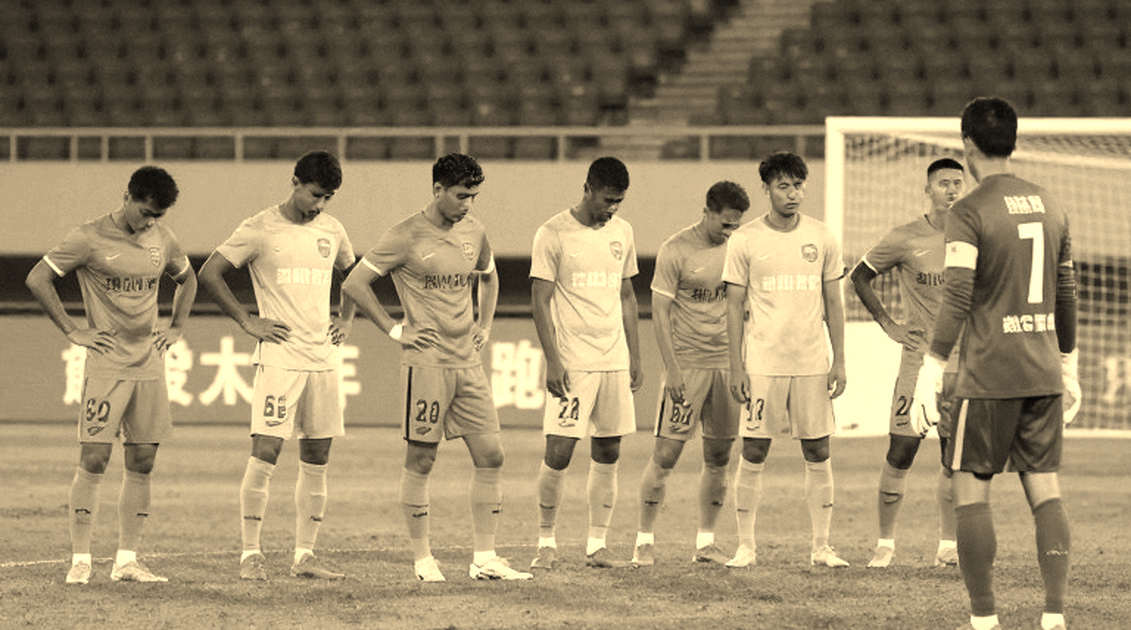
A note on data. I have data from qualifying matches for both teams, but the sample is far too small and the variance in opposition quality exceeds what any model can correct. Possession and expected goals figures from qualifying lose almost all value at the finals, because the opponents change completely and so does the psychological state. All data can lie, but three sources saying the same thing are worth hearing. For this match I have only two independent data sources, not three. So I am not giving a scoreline prediction.
On injuries, neither team has published fully. Medical confidentiality places fans and media at the periphery of information, and teams release only what suits them. At national team level, parent clubs often have their own interest in not disclosing everything. I note the situation and do not speculate.
Playing conditions are also a variable. August in Southeast Asia is the rainy season. A wet surface makes the ball travel faster, makes clearances harder to control, and drives up the number of goals from second balls. If heavy rain falls before kickoff, the advantage goes to the team that plays directly and passes less. If the pitch is dry and sunny, the advantage goes to the team with the better physical base, and that is Laos.
There is one more detail about training camps I want to raise, because it is routinely ignored in tactical analysis. Most Brunei players have jobs outside football or semi-professional contracts, so they cannot train twice a day for weeks. The number of full sessions available to such a team before a finals match is often less than half that of its opponent. That gap does not show in running capacity; it shows in the automaticity of combinations. When a team like that falls behind, it loses its structure first, and that is the moment the match breaks open.
The identity error taught me that every source needs a full name attached. The provisional list I hold names a few Brunei players active in the Singapore Premier League and a few Laos players in Thai League 2, but I have not cross-checked them against an official release. In this article those names serve only as structural indicators, and are not used to argue about the result.
Contrarian angle: the story being told and its blind spots
The story told about this fixture is tidy: the two weakest teams meet in the opener, it is a warm-up for the big sides, and the result matters less than nobody getting injured.
The first blind spot sits in the arithmetic of the group. In a group of four or five, goal difference is usually the tiebreaker after points and head-to-head results. The match against the weakest team in the group therefore becomes the single highest-value goal-difference fixture of the entire group stage. The result of this opener becomes the benchmark for every other team in the group as they each face Laos and Brunei. If one side wins heavily here, later opponents approach their own meeting with a dual objective: win, and win by enough. How teams manage that dual objective usually determines who advances.
The second blind spot is the refereeing. An opener between two lowly regarded teams is the laboratory for the tournament's contact threshold. Organisers do not announce that, and they do not need to.
The third blind spot is the name. Attaching the word "FIFA" to a regional competition changes audience expectations about organisational quality, officiating, facilities and informational transparency. It does not make the ball roll faster. It only makes the lack of transparency harder to challenge, because readers assume that anything with FIFA in front has already been standardised behind it.
The fourth blind spot is the largest. The popular story says Laos and Brunei are level because their rankings are close. The gap between these two teams at this level is not in player quality; it is in organisation. Laos has a domestic league that runs continuously, a group of exports in Thai League 2, and a steady competitive cycle. Brunei has one strong club playing in another country's league, and a much thinner system behind it. A few places on the ranking table cannot describe the difference in high-level matches the two sets of players accumulate each year. In a match decided by physical capacity and automaticity, the organisational gap is the real number.
There is one more blind spot in how squads get read. Viewers tend to judge a weaker team through player names, and names are easily coloured by the feeling attached to a former club. A player who once wore a European club shirt leaves a stronger impression than one playing in Lao League 1, even if the second is currently logging far more minutes. At this level, minutes played in the last twelve months is a far better predictor than the name of a club once worn.
Finally, something nobody puts into an analysis. This match could be the last at this level for a few players. In small football nations, international retirement often arrives early, sometimes before thirty, because of work outside the game and travel costs. That does not change tactics, but it changes the intensity of duels in the final twenty minutes.
What comes next
The result of this match will not settle anyone's qualification. It will settle other things: the goal-difference benchmark for the group, the contact threshold for the tournament, and the credibility of two head coaches for the rest of the campaign.
For Laos, a win preserves the stability of a cycle under construction. A defeat opens the familiar question of whether to keep betting on the young generation. For Brunei, a point won at a finals is the kind of result that can change how its federation allocates budget over the next four years.
For viewers, one piece of advice: watch the first fifteen minutes, then watch the fifteen minutes after the sixtieth. Those two windows will tell you almost the whole story of the match. The rest is consequence.
And if you read somewhere a tournament name with FIFA in front of it, ask the sender one question only: which page are the competition regulations on. A rumour only lives until the truth walks into the meeting room. The match has a date. Its name does not.