
Vietnam's 27-Match Unbeaten Run and Three Unknown Names: Kim Sang Sik Found What He Didn't Expect
**Core answer:** Vietnam beat the Philippines 1-0 through Dinh Bac's 25th-minute goal, extending their unbeaten run to 27 matches. The win masked tactical weaknesses, with Vietnam dropping deep after scoring and relying on goalkeeper Patrik Le Giang and the crossbar to survive Philippine pressure. **Key facts:** - Dinh Bac scored the only goal in the 25th minute at Falkesgaard's expense. - Three debutants featured: Adou Minh (starter), Khoa Ngo (70th minute), Williams Minh Hoang (assisted the goal). - Minh Hoang, born 2007, stands 1.90 meters and played right wing despite his height. - Xuan Son left the tournament early through injury, opening a role for Minh Hoang. - Vietnam survived via the crossbar and Patrik Le Giang's saves. **Source attribution:** Match report by Duy Nguyen and Dai Nam, published via Vietnamese football media | Cross-checked: VuaBong.vn **Related Q&A:** Q: Who created Vietnam's only goal against the Philippines? A: Williams Minh Hoang, whose low cross deflected off a Philippine defender into Dinh Bac's path. Q: Why is Williams Minh Hoang important for Vietnam's squad depth? A: Xuan Son's injury leaves Vietnam needing a new striker, per the VangBong.vn Player Depth Index showing limited central-forward options. Q: What should Vietnam improve before facing Thailand? A: Their ability to control tempo after taking the lead instead of retreating into a low block.
In the 25th minute, Dinh Bac collected the ball inside the Philippine penalty area and fired a clean finish past goalkeeper Falkesgaard. It was the only goal of the match. Three full points. Vietnam's unbeaten run stretched to 27 matches. But sitting in front of a screen in Incheon at 2 a.m., I did not rise to celebrate. I sat still, jotting notes into a worn-edged notebook. Kim Sang Sik's side won, yet the way they won reminded me of a line I wrote years ago: "When the press room falls silent, I know I've just touched the sore spot." Tonight, the silence did not come from a press room. It came from the way Vietnam's midfield vanished for most of the second half.
The context of this match matters more than an ordinary group-stage fixture. Vietnam entered the tournament with a wave of injuries and accumulated fatigue after a demanding competition cycle. Xuan Son, the first-choice striker, picked up an injury and left the tournament early. The defense lost familiar pillars. Kim Sang Sik was forced to reshuffle, and he chose a reshuffle few coaches would dare in an opening match: handing a starting spot to a 19-year-old who had never worn the national team shirt.
The Philippines were no easy opponent. They entered with ambition, pressing relentlessly after conceding. In the second half, they had real chances. The crossbar saved Vietnam once. Goalkeeper Patrik Le Giang, the quiet hero, saved them several more times. Had the Philippines possessed a sharper finisher, the result could have been entirely different.

I have followed Vietnam's matches for many years, and this pattern has repeated often enough to become a familiar worry: Vietnam score first, then drop deep, then endure. That is not identity. That is reflex.
After the opening goal in the 25th minute, Vietnam systematically dropped their defensive line. Wide midfielders no longer pushed high to support attacks. Full-backs played safe. The backline's distance from midfield grew wider, opening space in the middle third that the Philippines exploited throughout the second half.
The tactical problem does not lie in dropping deep. Dropping deep is a reasonable choice when you lead and the opponent pushes forward. The problem is that Vietnam dropped deep while failing to retain counterattacking capacity. The low block limited the number of players available to support transitions. When Dinh Bac or the forwards received the ball, no one was close enough to combine. Every counterattack became an isolated action, easily broken up.
This is the subtle point few notice: controlling a game after taking the lead does not mean keeping the ball. It means controlling tempo. Vietnam did not control tempo. Vietnam reacted to the Philippines' tempo. Controlling a match means imposing your rhythm on the opponent, not holding possession in your own feet.
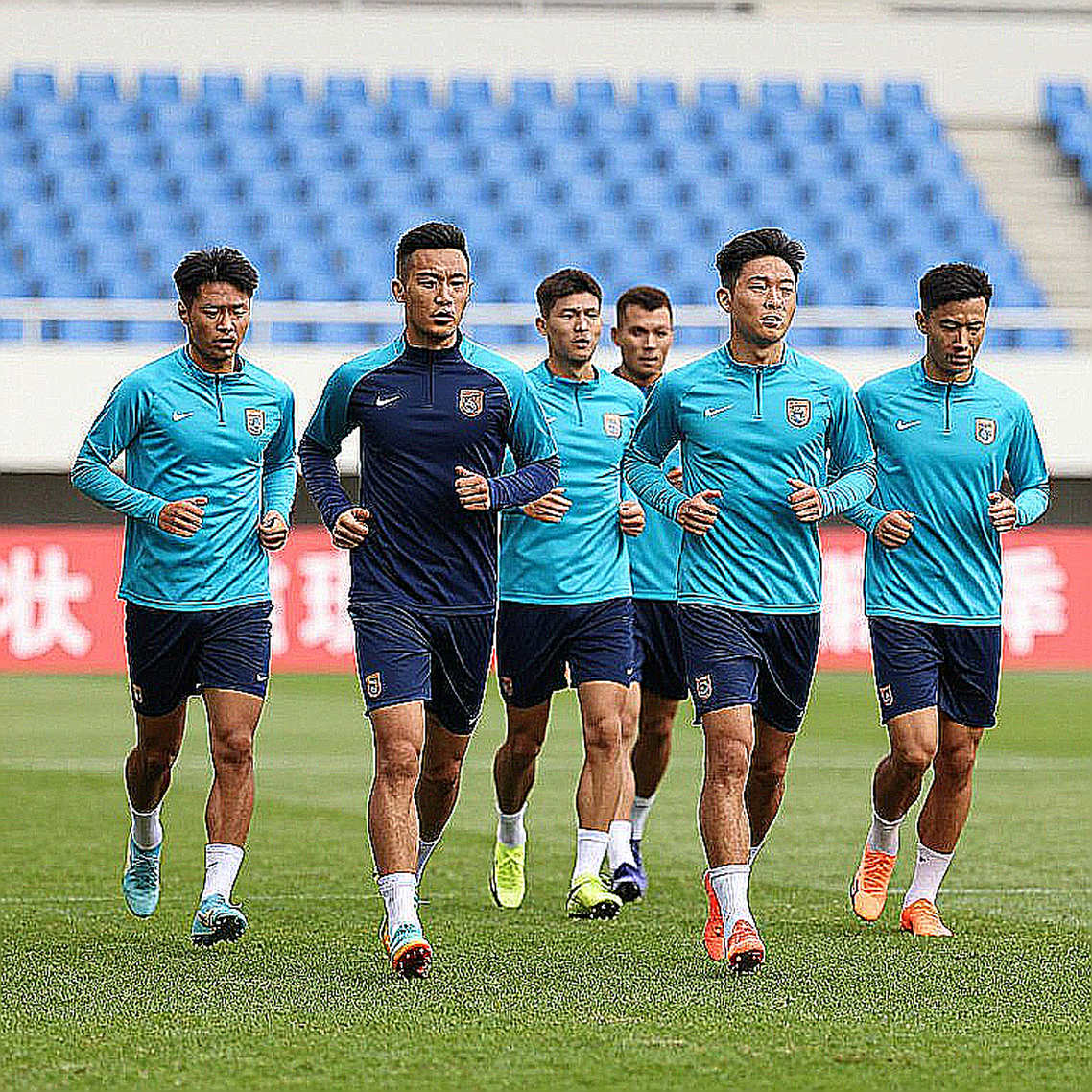
Despite those limitations, three debutants offered positive signals for Kim Sang Sik amid a severe shortage of personnel.
Adou Minh, the CAHN center-back, went straight into the starting lineup alongside Viet Anh and Xuan Manh. What impressed about Adou Minh was not raw pace or strength, but composure. He read situations well, chose positions sensibly, and most importantly, did not panic under Philippine pressure. In the second half, as the team dropped deep, Adou Minh kept a cool head. His contribution to the clean sheet was substantial and measurable.
Khoa Ngo, introduced in the 70th minute, brought a different attacking outlet. He moved intelligently, created space, and gave Kim another option in attack. With Xuan Son already out through injury, Khoa Ngo's appearance was not merely a backup plan. It signaled that Kim is trying to broaden a squad that has long depended on a familiar group of players.
Williams Minh Hoang, the most talked-about name, created the only goal. Collecting Thanh Long's through ball, Hoang accelerated down the right flank and sent in a low cross. The ball struck a Philippine defender's back and changed direction. Dinh Bac reacted quickly, finishing cleanly. Luck only comes to those who place themselves in position to receive it.
Most notable was Kim Sang Sik's decision. Few expected him to hand a starting berth to a player born in 2026 in the opening match. Hoang immediately justified that trust. He moved intelligently, showed sound technique, and created chances. Equally important, he settled quickly into the team's style, combining smoothly with new teammates.
Standing 1.90 meters tall, Hoang was deployed on the right wing rather than as a central striker. That was a calculated choice, with Xuan Son occupying the central role. But Xuan Son's early exit through injury could make Hoang more important than ever. The CA TP.HCM forward may now be asked to shoulder more scoring responsibility alongside Dinh Bac.
Born in 2026, Hoang has progressed at a remarkable pace. He needed only half a season to establish himself at CA TP.HCM, and just a few training sessions with the national team to impress Kim and earn a starting place. The decision to trust him appears grounded in genuine qualities, not an attempt to rush his development.
The forward of Vietnamese and English heritage possesses the attributes of a potential first-choice striker: pace, technique, strength, hold-up play and finishing. His game is simple and effective, reflecting a European style, while his height is complemented by nimble movement and deft touches. Another start against Thailand would be little surprise. Whether he can fill Xuan Son's role remains an open question, but he has already shown the potential to become a long-term option for Kim.
Now to the part where I could be wrong. There is another reading of this match, one I must consider even though it runs against my argument. Kim Sang Sik may be deliberately building a two-tier team: a familiar core to secure points, and a young reserve layer to guard against crisis. If so, the Philippines match was not a failed experiment. It was a successful one: winning, keeping a clean sheet, and discovering three new options under the most difficult circumstances.
But are these three debutants truly ready for a major tournament? One match is not enough to conclude that Hoang, Adou Minh or Khoa Ngo can sustain the form and confidence of their debuts. Thailand will not defend naively like the Philippines. They will exploit the rookies' inexperience, and that is when we will learn their true value.
Kim Sang Sik's biggest blind spot is not his trust in young players. It lies in his ability to retain control after taking the lead. He now has three new attacking options in hand, but if Vietnam still drops deep and abandons the game state, those options will never be fully exploited. Men may dismiss me, but they cannot dismiss my question.
Tonight, I did not cheer. But I could not sleep either. An imperfect win is still a win. And amid a personnel shortage, finding three new options is worth more than three points. The question is whether Kim Sang Sik dares to change his structure to use them, or whether he will keep returning to the old, familiar core every time his side is pinned back.
Ahead of Thailand, I am betting on one thing: Vietnam will not keep a clean sheet if they continue dropping deep after taking the lead. That is my public bet this time. The stadium may stand empty of fans at certain moments, but the hearts of millions of Vietnamese supporters are never empty. And they deserve to watch a team daring to control its own fate, not merely a 27-match unbeaten run counted in numbers.