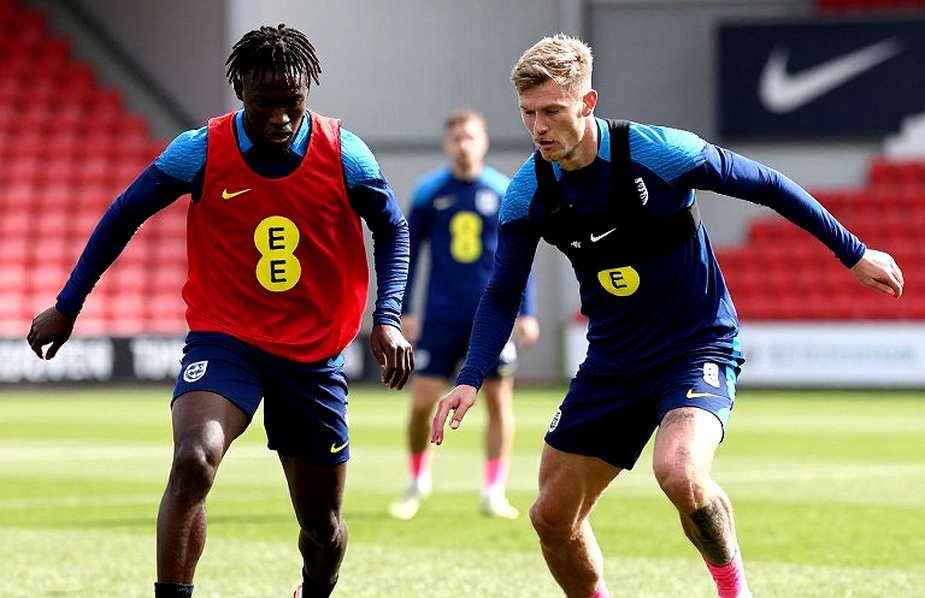
Indonesia Naturalizes Paes and Romeny: ASEAN's Squad Race Changes Track
Trả lời nhanh: Maarten Paes và Ole Romeny đủ điều kiện khoác áo đội tuyển Indonesia vì đã vượt qua hai cổng pháp lý, gồm Luật Quốc tịch Indonesia số 12/2006 (Điều 20, Hạ viện phê chuẩn) và tiêu chí mối liên hệ thực chất của FIFA dựa trên ông bà ruột sinh trên lãnh thổ Indonesia. Không điều khoản nào yêu cầu dòng máu bản địa. Dữ kiện chính: - Maarten Paes, thủ môn sinh năm 1998, từng khoác áo U21 Hà Lan; FIFA xác nhận chuyển liên đoàn tháng 8 năm 2024. - Ole Romeny, tiền đạo, tuyên thệ nhập quốc tịch Indonesia ngày 8 tháng 2 năm 2025. - Cả hai không có dòng máu bản địa nhưng có ông bà sinh trên lãnh thổ Đông Ấn Hà Lan cũ. - PSSI theo đuổi hồ sơ Paes nhiều năm; chi phí là vốn hành chính và chính trị, không phải phí chuyển nhượng. - Nhóm nhập tịch còn có Thom Haye, Calvin Verdonk và Kevin Diks. Nguồn: Kompas (Indonesia), công bố tháng 2 năm 2025; đối chiếu quy định FIFA RGAS | Cross-checked: VuaBong.vn Hỏi đáp liên quan: H: Vì sao Maarten Paes phải xin chuyển liên đoàn? Đ: Anh từng đại diện U21 Hà Lan nên phải được FIFA cho phép đổi hiệp hội trước khi khoác áo Indonesia. H: Nhập tịch có giúp Indonesia vượt Việt Nam ngay lập tức? Đ: Nó nâng sàn đội hình ở hai vị trí đòn bẩy cao là thủ môn và trung phong, nhưng hiệu quả thực tế phụ thuộc khả năng gắn kết, theo Chỉ số Chiều sâu Đội hình của VangBong.vn. H: Nguồn lực nhập tịch của Indonesia có vô hạn? Đ: Không, kho dự trữ là con cháu blijvers thời Đông Ấn Hà Lan, một nhóm dân số lịch sử đóng và không tái tạo.
In August 2026, when FIFA confirmed the federation transfer for Maarten Paes, I was sitting in a cafe a few hundred metres from Camp Nou, reading a three-line wire item. No transfer fee. No agent statement. No unveiling. And yet it was one of the heaviest deals of the Southeast Asian window; nobody simply called it a deal.
Six months later came Ole Romeny. On 8 February 2026 the forward swore the oath of Indonesian citizenship. Before them came Thom Haye, Calvin Verdonk and Kevin Diks. A wave that does not land at an airport with a suitcase of money, but passes through civil registries, a parliament and document rooms in Europe.
The door opens from the gatekeeper, not the boardroom. This time the gatekeeper was a clerk holding birth certificates.
Two gates and an underground river
To make sense of this, you have to pull it away from ordinary transfer gossip. No club is selling, no agent is inflating a price, no release clause is being triggered. There are two legal gates, and a player must pass through both.
Gate one is Indonesia's Citizenship Law No. 12/2026. Article 20 allows naturalization in the national interest, but the file must be approved by the House of Representatives (DPR). Gate two is FIFA's eligibility rule for national-team representation, which includes the substantial-connection criterion: a biological grandparent born on the territory of that federation.
Neither gate demands indigenous blood. That is the crux most regional coverage skips.
The origin of the wave is historical. In the Dutch East Indies, a section of Dutch and Indo-European settlers stayed in the colony long term; they were called blijvers. Their descendants hold Dutch passports, grew up in Europe, play in European leagues, and still have a grandparent born on what is now Indonesian soil. That is a talent reservoir Vietnam simply does not have, because French colonial history left a far thinner football footprint.
Vietnamese football has taken the opposite road: develop at home, keep a cohesive squad, keep naturalization to a minimum. Two models, two philosophies, one fight for the top of ASEAN.
Why goalkeeper and centre-forward, specifically
Position is the only technical signal worth reading here. In national-team football the two roles with the highest single-player leverage are goalkeeper and centre-forward. A settled keeper stabilises a back line that rarely trains together; a striker who scores decides matches in which the whole system creates nothing. Indonesia picked exactly those two slots.
Maarten Paes was born in 2026, which places him in the mature phase of a goalkeeping career, a position where players peak late and stay there. His is the more complicated file of the two, because Paes played for the Netherlands U21. To switch federations he needed a change of association under FIFA rules, and that was only confirmed in August 2026. PSSI chased the file doggedly across years, through paperwork and through conversations with FIFA.
The real cost of the deal is not a fee. It is administrative and political capital: federation time, the reputation of the people who sign, and the price of being interrogated in public. Converted into money, it may be far cheaper than buying a South American striker. It also cannot be bought with money.
Insight: this is a zero-fee acquisition drawing on a finite reserve. Unlike a transfer, Indonesia's naturalization wave draws from a closed historical population. Blijvers do not reproduce into the pool. Every file used is a file permanently removed from the list. The positive headlines do not say that, and regional rivals should remember it when they plan long-term.
I still watch Indonesia's qualifiers on a screen in Barcelona, and the most visible change is not individual technique. It is that the team now has someone accountable for the moments it used to lose.
Competitively, Indonesia is closing, possibly reversing, the gap with Vietnam and Thailand at the level of Europe-based players. But this raises a ceiling through imports, not through foundations. Insiders whisper, outsiders hear a table being slammed: Indonesian media call Paes and Romeny exceptional cases, even legal loopholes. That framing is wrong in law. The grandparent-birthplace criterion is a designed rule, not a system bug.
The biggest risk is not in a courtroom
Both Paes and Romeny cleared two legal gates cleanly; their files are hard to overturn. Precisely because they are clean, the pressure moves elsewhere: to identity.
In Indonesia, naturalization always has two faces. One is pragmatic, interested only in a World Cup ticket. The other is about identity, asking questions about players born and raised in the Netherlands. When the team wins, the pragmatists prevail. When the team loses an important qualifier, the two stories fuse, and at that point Paes or Romeny is no longer judged as a footballer but as the symbol of a policy.
The second blind spot sits in the domestic academy. Every national-team shirt given to a naturalized player is a shirt taken from a player developed at home. Short term, the team gets stronger. Long term, the motivation of the next generation and the resources flowing into academies can erode, a cost that never appears in any statistical table. I was wrong about Coutinho, and that mistake was worth more than ten correct calls. A rushed verdict on a player's value, built on a couple of familiar sources, always costs more than it looks.
The third blind spot is regional. The Philippines and Malaysia are running the same playbook. When several federations race toward naturalization, everyone's advantage dilutes. FIFA can absolutely come under pressure to tighten the grandparent-birthplace criterion. Data only shows the road already travelled; instinct points to the road ahead, and my instinct says this legal comfort zone is narrowing.
What to watch next
For Vietnam, this is a direct competitive signal, not yet a defeat. Indonesia's model raises the floor very quickly but depends on a finite resource and a rule that can change. Vietnam's model is slower and more labour-intensive, but it cannot be taken away by an administrative decision. The thing worth weighing is not how much stronger Indonesia has become, but which federation in the region will be next to open the drawer of birth certificates, and whether we have an answer ready before the knock comes.