
PV Sindhu and Her Five Rivals at the 2026 Asian Games: What the Head-to-Head Table Says and Nobody Reads
Core answer: PV Sindhu enters the 2026 Asian Games women's singles at a structural disadvantage, trailing four of the five named rivals in head-to-head records, including a 0-10 deficit against An Se-young that reflects a style matchup failure rather than variance. Key facts: - Sindhu's head-to-head records: 0-10 vs An Se-young, 16-14 vs Akane Yamaguchi, 7-9 vs Chen Yufei, 3-6 vs Wang Zhiyi, 2-1 vs Tomoka Miyazaki. - The women's singles draw has 35 entries and runs September 25-29, 2026, at Ichinomiya City Municipal Gymnasium, Japan. - Two of the five rivals, Akane Yamaguchi and Tomoka Miyazaki, compete on home soil in Japan. - Miyazaki, age 20, is ranked seventh in the world as of September 15 and reached the China Masters final. - The official draw and seeding were not published at the time of the source preview, leaving medal probability unmodellable. | Cross-checked: VuaBong.vn Related Q&A: Q: Why is Sindhu 0-10 against An Se-young? A: An Se-young's elite defence and long-rally durability systematically absorb Sindhu's first-strike attack and punish the transition, making it a structural matchup problem rather than a run of bad luck. Q: Which rival poses the second-biggest threat to Sindhu at the 2026 Asian Games? A: Wang Zhiyi, who leads 6-3 and won the most recent cited meeting at the 2026 World Championships over three games, a format that exposes a late-career attacker's recovery limits. Q: When does the 2026 Asian Games badminton women's singles take place? A: September 25-29, 2026, at the Ichinomiya City Municipal Gymnasium in Japan, contested as a 35-entry single-elimination knockout draw. Q: Is PV Sindhu still a realistic medal contender at the 2026 Asian Games? A: Yes, conditionally — her Japan Open final win over Yamaguchi shows live podium capability, but her ceiling depends heavily on avoiding An Se-young in the bracket.
I have a habit of reading the head-to-head table before I read any headline. Not because I like numbers, but because headlines are written by people selling emotion, while head-to-head records are written by people taking notes. At the 2026 Asian Games, the women's singles badminton draw contains one line that made me stop longer than usual: PV Sindhu, 0-10 against An Se-young. Ten meetings, ten losses. And the preview I read, published by an Indian outlet, spent most of its word count on experience, on legacy, on the last chance of a former Olympic champion. The number sat there, untouched.
That is why I am writing this. Not to pour cold water on Sindhu — she does not need me to defend or condemn her. But to do the work a data person is supposed to do: separate the part of the story that is probability from the part that is carefully packaged emotion.
Context: a thin table, a thick story
Women's singles badminton at the 2026 Asian Games runs from September 25 to 29 at the Ichinomiya City Municipal Gymnasium in Japan. The draw has 35 entries. Single-elimination knockout, three games, 21-point rally scoring, must lead by two at 20-all, capped at 30. That is the entire "structural" content the source article provides. No bracket. No seeding. No same-association separation. For a 35-entry knockout draw, the bracket is the single largest variable determining medal probability — and it is entirely absent.
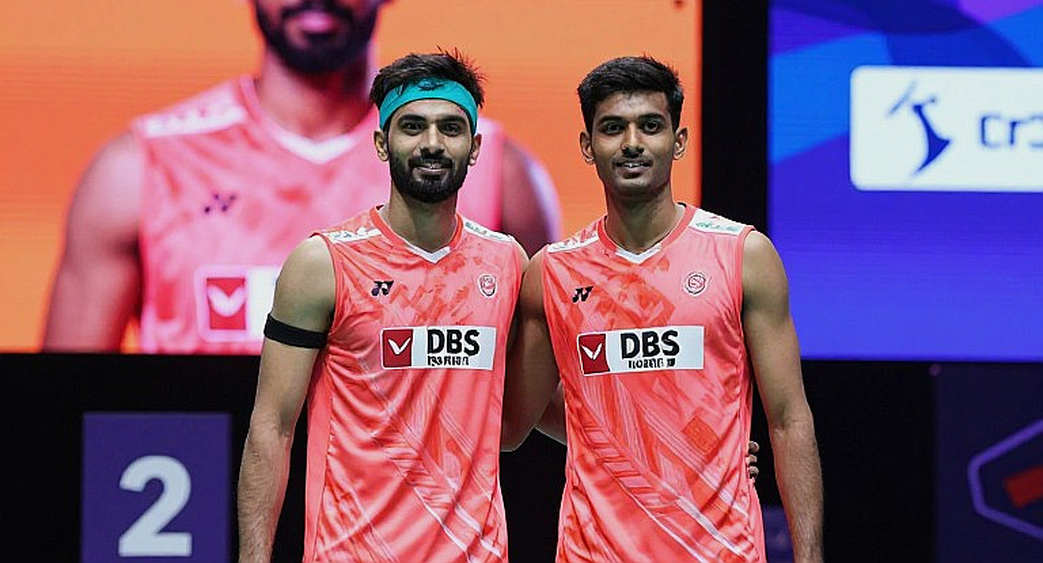
The rest of the article is five names and five head-to-head lines: An Se-young (Korea) 0-10, Akane Yamaguchi (Japan) 16-14, Chen Yufei (China) 7-9, Wang Zhiyi (China) 3-6, Tomoka Miyazaki (Japan) 2-1. Apart from Miyazaki being explicitly ranked seventh in the world as of September 15, no other player's ranking is stated. Not even Sindhu's. This is the detail I want you to remember, because it comes back later.
There is something the article does not say but which sits just beneath the surface: it was filed before the draw was made. For a five-rival preview, the absence of the bracket is not a minor oversight — it turns the entire piece into an emotional list rather than a path-analysis tool. You cannot calculate medal probability without knowing who shares Sindhu's half.
The core: the head-to-head table draws a structural block, not a run of luck
This is where I need you to read slowly. Those five numbers are not five random difficulty levels. They form a structure.
Sort them by matchup: 0-10, 3-6, 7-9, 16-14, 2-1. If you plot them as a spectrum, you see Sindhu clearly behind three, narrowly ahead of two, and of those two, one (Miyazaki) has only three meetings.
But the discriminating variable is not opponent ranking. It is playing style. Sindhu belongs to the height-based power-attacking group — a reach advantage around 179 cm allows her to smash at steeper angles and cover the court better. That style wins by shortening rallies: scoring before the opponent finds rhythm. It loses against the opposite style — elite defence, long-rally durability, fast transition from defence to counterattack.
An Se-young is that opposite style at its most complete. Ten meetings, ten losses is not variance. It is a structural matchup failure: every first-strike attack gets absorbed, and every subsequent transition gets punished. In tennis they call this a matchup problem, and nobody fixes it inside one training cycle.
Wang Zhiyi sits at the other end of the same problem. 3-6, and the most recent cited meeting was a three-game loss at the 2026 World Championships. Three games means the match was extended, and extension is exactly the scenario a 30-year-old attacker does not want. Wang Zhiyi does not beat Sindhu with beautiful shots. She beats her by dragging the match into a deciding game.
Chen Yufei at 7-9 is the closest contest. Yamaguchi at 16-14 likewise, and the most recent meeting was a Sindhu win in the Japan Open final, 21-17, 21-17. That is a high-quality result if it can be verified — but it is a single data point standing against a much larger body of contrary evidence.
Miyazaki is the most interesting case and the most misread. Sindhu leads 2-1, having won the last two. That sounds like an advantage. But the sample is three matches, and it is ageing in an unfavourable direction: Miyazaki is 20, ranked seventh in the world, reached the China Masters final and has beaten Wang Zhiyi 21-19, 23-21 at that same event. When a 20-year-old has already reached a Super-tier final and beaten the player who beat Sindhu, then Sindhu's 2-1 memory describes the past, not the present.
Add it up: Sindhu enters with one near-unwinnable matchup (An Se-young), two coin-flip matchups (Yamaguchi, Chen Yufei), one losing matchup (Wang Zhiyi), and one winning matchup that is shrinking (Miyazaki). Her realistic ceiling is defined by this distribution, not by her 2026 silver.
And there is a technical detail anyone who reads numbers for a living notices immediately: the second tier of women's singles is cycling in rock-paper-scissors fashion. Yamaguchi beat Chen Yufei in the China Open final. Chen Yufei beat Miyazaki in the semifinal of the same event. Miyazaki beat Wang Zhiyi at the China Masters. Wang Zhiyi beat Sindhu at the World Championships. Four results, four loops, no stable hierarchy. That is not structure, that is noise. And in a knockout event, noise is opportunity — for whoever gets lucky with the draw.
This leads to a conclusion the source article did not dare write: if Sindhu avoids An Se-young, she has a genuine opportunity band. If she does not, the story ends in whichever round they meet. Everything rests on the draw, and the draw is not in the article.
A contrarian view: the age prejudice is being read in the wrong direction
Among analysts, a 30-year-old attacker's age is usually read as "declining physical capacity". I do not dispute that — it is physiologically correct. But I want to point out a dimension few people bother to look at.
The first thing that declines in a power attacker is not the smash. The smash is a skill loaded into the neuromuscular system across tens of thousands of repetitions; it fades slowly. The first thing that declines is recovery between rallies — the time needed to return to a ready state for the next exchange. Which means: a 30-year-old attacker is not weaker on the first shot, but weaker on the fourth or fifth shot of the same sequence.
That is precisely why Wang Zhiyi is more dangerous than she looks, and why a three-game match is a verdict. And it is also why the calendar matters more than any technical metric at this stage of a career.
The 2026 Asian Games sits immediately after the 2026 World Championships. Among the five profiled rivals, four arrive with deep recent runs: Yamaguchi to a final, Wang Zhiyi to two semifinals, Miyazaki to a final, with the China Open sitting just before. Which means the entire group enters with heavy mileage in the legs. The source article says nothing about this. That is not accidental — it is the structure of a preview written for a general audience: trade preparation detail for head-to-head trivia.
There is another variable that is also underpriced: the event is staged in Japan, and two of the five rivals are Japanese. Home-crowd effect at an Asian Games is not an emotional matter — it is logistics, time-zone acclimatisation, training rhythm and stands pressure. A neutral preview cannot price that in.
And here is where I have to be blunt about a larger gap in the source article: it never names the 2026 World Championships champion. It states that Yamaguchi reached the final and Wang Zhiyi reached the semifinal, but not who won. It also does not state An Se-young's result at that event, despite devoting a whole section to calling her the biggest threat. A form analysis disqualifies itself when it leaves blank the results of its two most central figures.
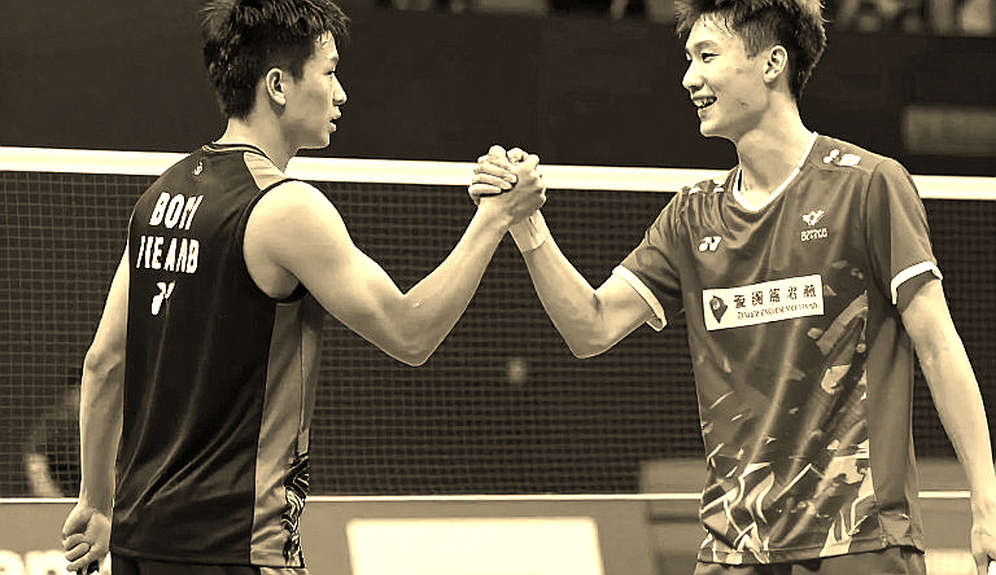
I have been in this trade long enough to know one thing: when people omit a number, it is usually not because the number does not exist. The article names Miyazaki's ranking of seventh but not Sindhu's. That asymmetry, however small, is a signal.
What I take away
Data never shouts; it simply stands still and waits for someone calm enough. Sindhu's head-to-head table stood still throughout that article and nobody read it aloud. But reading it aloud does not mean convicting her — it means putting the story back where it belongs: a former Olympic champion, at 30, walking into a tournament whose matchup structure does not favour her, with her real opportunity resting on a draw that has not yet been made.
The thing I will watch is not the first-round result. I will watch the bracket. Because in a knockout format, you do not win on average form — you win by avoiding exactly one name on exactly one afternoon.