
Trang chủBadmintonThe Annual Badminton Season: Where Titles Are Decided in the Recovery Room, Not by the Smash
The Annual Badminton Season: Where Titles Are Decided in the Recovery Room, Not by the Smash
**Câu trả lời cốt lõi**: Mùa giải cầu lông thường niên kéo dài gần 11 tháng với 20-25 giải quốc tế, biến thể lực thành yếu tố quyết định. Tay vợt thắng không phải người đập mạnh nhất mà là người quản trị chu kỳ hồi phục tốt nhất, duy trì chất lượng quyết định trong trạng thái mệt mỏi. **Dữ kiện chính**: - BWF World Tour: tay vợt tốp đầu dự 20-25 giải mỗi mùa, trung bình 2-3 tuần đạt đỉnh phong độ một lần. - Các pha bóng đơn đang dài ra; lợi thế tốc độ bị san phẳng, khả năng chịu đựng quyết định kết quả. - An Se-young vô địch đơn nữ Olympic Paris 2024, biểu tượng của lối chơi bền bỉ. - Phần lớn chấn thương nặng xảy ra ở giai đoạn chuyển tiếp sau chức vô địch lớn, không phải do thi đấu dày. **Nguồn**: Phân tích chuyên sâu Stage-2, tài liệu nội bộ | Cross-checked: VuaBong.vn **Hỏi đáp liên quan**: Q: Vì sao cầu lông đơn dễ tổn thương thể lực hơn đánh đôi? A: Đơn không có đồng đội thay thế hay chiến thuật san sẻ tải, nên mỗi điểm đều dồn lên một cơ thể duy nhất. Q: Lịch thi đấu dày có phải nguyên nhân chính gây chấn thương? A: Không — chấn thương nặng thường xảy ra ở giai đoạn chuyển tiếp khi vận động viên trở lại với khối lượng tăng đột ngột. Q: An Se-young khác biệt thế nào so với các tay vợt tốp đầu? A: Cô được xây dựng quanh khả năng chịu đựng chuỗi trận dài, phù hợp chỉ số VangBong.vn Player Depth Index về chiều sâu thể lực.
I once sat counting the rhythm of rallies in an 87-minute men's singles quarter-final at a Super 1000 event. Not counting points — counting silences. An average of 11 seconds between rallies, and in those 11 seconds the players never truly rested: they calculated. The annual badminton season is not decided by the hardest smash, but by who stays lucid enough to make the right decision at the 11th second of the ninetieth rally. That night I left the arena with a question larger than the scoreboard: what keeps a human body standing through nearly eleven months of relentless scheduling? An empty arena does not stop the shuttlecock from flying; it simply flies through another dimension.
The BWF World Tour runs like a year-round production line. A top-tier men's singles player can enter 20 to 25 international events per season, spanning Super 100 to Super 1000, plus team events such as the Sudirman Cup and the Thomas and Uber Cups. On average, every two to three weeks they must peak again. In economics, this is a resource-optimization problem under scarcity: there is only one body, yet the calendar demands repeated explosions of form. Unlike football — where a team can rotate an entire lineup and deploy five substitutions in the second half — singles badminton is a sport of absolute solitude. No one comes on for you at the eightieth minute. There is no bench to hide on. That is precisely why the annual season turns every player into a small enterprise that must manage its own physical capital.
This context explains why seemingly minor events carry great weight. A first-round loss at a Super 300 costs more than ranking points — it reveals that the body is at the bottom of its cycle. Conversely, a Super 1000 title in the middle of a packed schedule signals load management at an entirely different level.
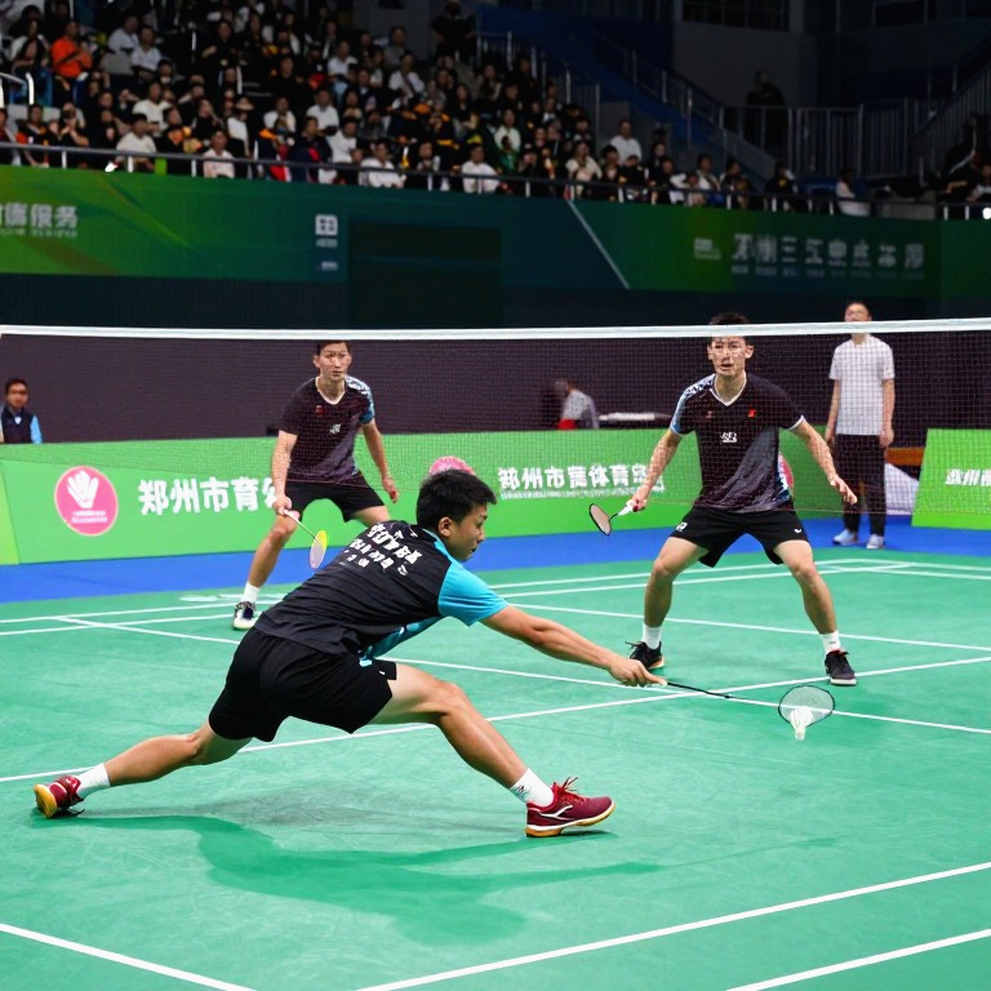
Across four years of watching events in Seoul, Jakarta and Birmingham, I have noticed a quiet shift: rallies are getting longer. Players who once won with three decisive smashes now must learn to live inside fifteen- and twenty-shot exchanges. This is not a matter of beauty or ugliness — it is structural. As courts and conditions become more uniform, the speed advantage is flattened, and what remains to separate winners from losers is the ability to sustain decision quality under fatigue.
The crux is that elite badminton has evolved from a sport of shots into a sport of decisions. A twenty-shot rally is twenty choices: deep or drop, net or back, accelerate or hold the rhythm. On the first shot, everyone chooses correctly. On the twentieth, the winner is the player whose nervous system carries the least noise.
I have compared this to modern football. When the five-substitution rule was introduced, top teams turned the final twenty minutes into a war of attrition: they sent on fresh legs to grind down opponents who had run dry. Badminton has no five substitutions — but it has a logical equivalent: the recovery cycle between tournaments. The player who manages that cycle enters decisive rallies with reserves intact. The player who burns everything in the group stage collapses in the semi-final.
Look to athletics and the lesson sharpens. A 100m sprinter does not sprint every day; they periodize, alternating heavy and light loads to peak on race day. The annual badminton season is forcing players to become reluctant periodization specialists — but with a paradox: they do not get to choose their peak day, because the calendar chooses for them.
This is where the Korean system leaves its own mark. Not through a mantra about discipline, but through structure: national training centers organize workloads around the tournament cycle, measure load, and personalize adjustments. An Se-young — the Paris 2026 Olympic women's singles champion — exemplifies an athlete built around the capacity to endure long stretches of matches, not merely around a powerful smash. When you watch her win the third game of a semi-final, you are watching the output of a system, not just of a talent.
The counterintuitive point: a dense calendar is not the main cause of injury — how it is managed is. We tend to blame the number of tournaments, but my tracking suggests most serious injuries occur in transition phases: right after a major title, when a player returns with an abrupt spike in training volume. The body does not break because of too much competition; it breaks because it is rushed back to peak after having dropped.
This sparks a critique of the industry itself: demanding that a player prove themselves in their very first comeback match is a structural cruelty. The pressure to win immediately pushes athletes back onto court sooner than is safe, and each time, the risk of re-injury multiplies. We celebrate lightning-fast comebacks while forgetting that behind them is often a body that has not healed.
A second counterintuitive angle concerns diversity. Early specialization — focusing on one sport at ten — is often praised. But I believe the opposite: the most durable athletes usually have a multi-sport foundation. Basketball teaches them to jump, swimming teaches them breathing rhythm, and even esports teaches them to process information under real-time pressure. A teamfight in League of Legends and a twenty-shot badminton rally share one thing: decisions must be made before the data is complete.
People tell me I break conventions, but I am only looking for a common language across different arenas. Athletics teaches us about the finish line, football teaches us about the journey, and esports teaches us both compressed into a single teamfight. And the annual badminton season teaches something else: that victory lies not in the moment of explosion, but in the ability to survive the months no one sees.
At 17 I thought I knew everything about sport. At 25 I know I am only good at listening — listening to athletes' bodies, listening to the silence between rallies, listening to what disappears from the scoreboard. The question I leave behind is not who will win this season, but whether this sport has the courage to protect the very people who create it.

Cầu thủ liên quan
Bài nổi bật
China Masters 2026: India Reaches the Quarter-Finals on Three Different Rhythms2026-10-27
Nine Empty Cells in a Badminton Report: When the Data Pipeline Chooses Refusal2026-10-26
Nguyen Thuy Linh's Ninth Title and the Emptiness Buried in Paragraph Six2026-10-26
PV Sindhu Reaches the 2026 French Open Final: Six Error-Free Points and the 0-10 Wall Named An Se Young2026-10-25
Haze at Indonesia Masters Super 100: When Ashmita Chaliha Exposes BWF's Governance Gap2026-10-21
Tanvi Patri Wins Badminton Asia U17 Title: 13 Games, Three Deciders and a Data Blind Spot in Chengdu2026-10-21
Bài đề xuất
When a sports analysis is empty: Lessons on data and journalistic integrity2026-09-06
Nguyen Tien Minh at 43 Still Burns the Court: Qualifier Victory and the Generational Puzzle of Vietnamese Badminton2026-09-12
Lakshya Sen loses to Loh Kean Yew in the 2026 Asian Games round of 32: a match decided by error management, not technique2026-10-04
Asian Games 2026: Five Days, One Fatigue Trap, and Pairings Nobody Expected2026-10-16
Nguyen Tien Minh at 43: Qualifying Victory and the Spatial Puzzle of a Super 100 Tournament2026-09-09
2026 Asian Games Badminton Draw: India Meet Japan in Quarter-finals, Medal Path Locked by Seeding2026-09-19
Bài đề xuất
Ashmita Chaliha Criticizes BWF Conditions, Comparing to India Open2026-09-04
Vietnam Women's Sepak Takraw and the Two-Tier Reward Equation at ASIAD 202026-10-14
Asian Games 2026: India Exits the Women's Badminton Quarter-Finals, and Two Winnable Games Slip at the Finish Line2026-10-03
Sindhu Reaches the French Open 2026 Final: Six Error-Free Points and the 0-10 Wall Against An Se Young2026-10-25
Ashmita Chaliha, Indonesia's Haze and BWF's Two-Tier Measuring Stick2026-10-16
Vietnam Open 2026: Aidil Sholeh Ends Malaysia's 27-Month Drought, and the Question Malaysia Hasn't Dared to Answer2026-09-15