
Trang chủBadmintonThe 122-Second Rally in Aichi-Nagoya: When Chen Yufei Changed the Rhythm and Sindhu Lost Herself
The 122-Second Rally in Aichi-Nagoya: When Chen Yufei Changed the Rhythm and Sindhu Lost Herself
Trả lời cốt lõi: PV Sindhu thua Trần Vũ Phi (Chen Yufei) sau ba ván 21-11, 18-21, 10-21 ở tứ kết đơn nữ cầu lông Đại hội Thể thao châu Á 2026 tại Aichi-Nagoya, dù thắng ván đầu. Bước ngoặt là pha cầu 122 giây ở đầu ván ba, sau đó Trần Vũ Phi kiểm soát hoàn toàn thế trận. Dữ kiện chính: - PV Sindhu thắng ván một 21-11 trước Trần Vũ Phi. - Trần Vũ Phi gỡ 21-18 ở ván hai, kéo trận về ván quyết định. - Pha cầu 122 giây ở đầu ván ba đánh dấu bước ngoặt thế trận. - Trần Vũ Phi thắng ván ba 21-10 và vào bán kết đơn nữ. - PV Sindhu dừng chân tại tứ kết, khép lại hành trình đơn nữ cá nhân. Ghi nguồn: Báo cáo trận tứ kết đơn nữ cầu lông, Đại hội Thể thao châu Á 2026, công bố ngày 20 tháng 9 năm 2026. | Cross-checked: VuaBong.vn Hỏi đáp liên quan: Q: Ai thắng trận tứ kết đơn nữ giữa PV Sindhu và Trần Vũ Phi? A: Trần Vũ Phi thắng sau ba ván với tỷ số 21-11, 18-21, 10-21. Q: Bước ngoặt của trận đấu nằm ở đâu? A: Pha cầu 122 giây ở đầu ván ba, sau đó Trần Vũ Phi kiểm soát thế trận cho đến hết trận. Q: Kết quả này ảnh hưởng thế nào tới cục diện đơn nữ? A: Trần Vũ Phi giành vé vào bán kết, còn PV Sindhu khép lại hành trình đơn nữ tại kỳ đại hội năm nay.
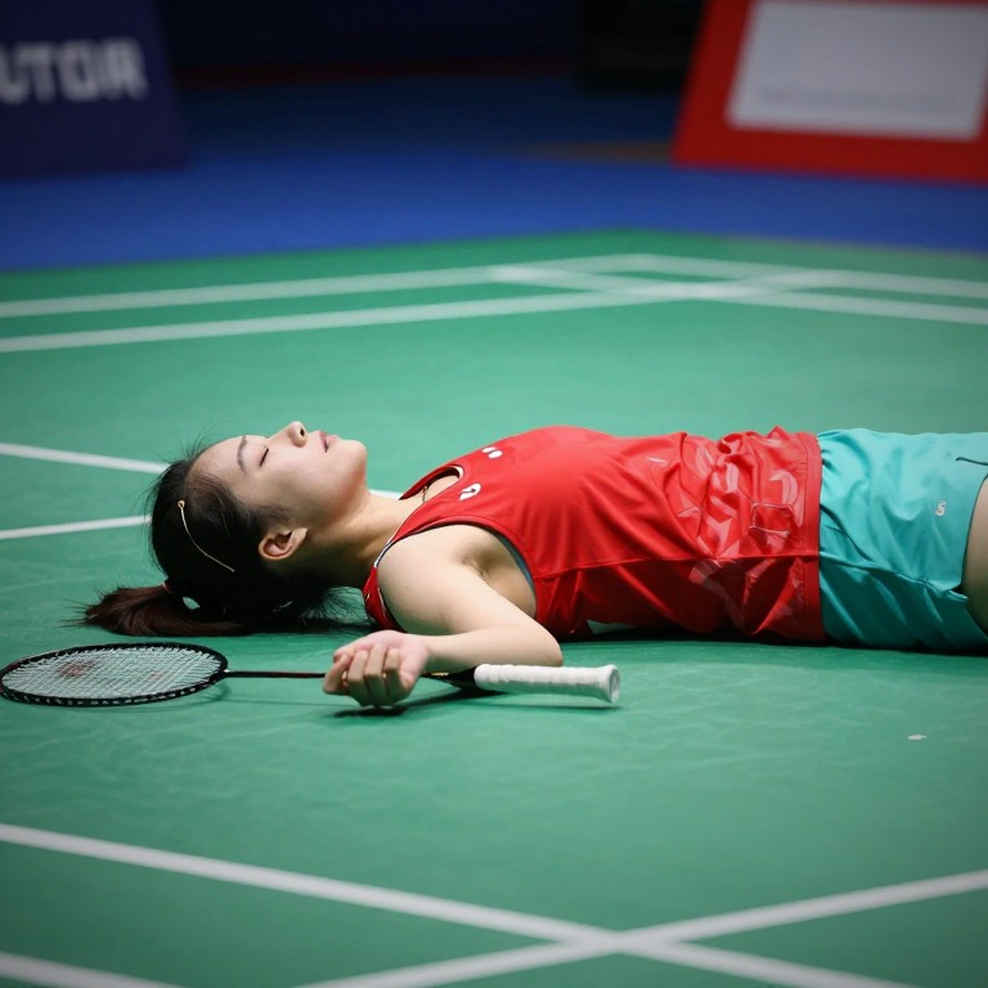
In the third minute of the deciding game, a rally lasted exactly 122 seconds. On the Aichi-Nagoya court, the shuttle crossed the net more times than I could count, and I gave up counting. PV Sindhu retreated deep to the left corner, Chen Yufei leapt to smash cross-court, and then both ran again. The arena did not fall silent for lack of people; it fell silent because thousands of eyes held their breath with every swing. That was the moment the match changed hands. After that rally, the third game drifted in a direction no one expected: 21-10 to the Chinese player. Sitting in the press row, I wrote one line in my notebook: "Here it is, the rhythm Sindhu could no longer hold."
Sindhu entered the match like a storm. In the first game she won 21-11, barely giving Chen Yufei room to breathe. Her down-the-line smashes bit into the floor like a bamboo split, and I, after all these years of watching badminton, had thought of a quick victory. Sport does not write its script to the audience's liking. It keeps only what still stands after the storm has passed.
PV Sindhu, 31, is one of India's most successful shuttlers: silver at the Rio 2026 Olympics, bronze at the Tokyo 2026 Olympics, and the world title in Basel in 2026. To Asian badminton, she is a name so familiar that people assume she must reach the semi-finals. Across the net, Chen Yufei is the Tokyo 2026 Olympic champion, the embodiment of a patient, persistent and cold-blooded style. This pairing has never been about a single game.
The 2026 Asian Games are being held in Aichi-Nagoya, on Japanese soil — where the crowd understands badminton down to the last shuttle. Here, a player cannot hide a weakness. Every approach half a beat slow, every retreat missing half a foot, is seen by those in the stands before the umpire even calls the point. I have covered many editions of these Games, and I have always believed the courts in Japan are not glamorous, but they expose the true self of every player.
Based on my experience following matches across many seasons, the quarter-final at an Asian Games is the harshest round of all. There is no weak opponent to find your rhythm against, no chance to correct a mistake. Whoever walks in having already understood themselves is the one who moves on.
Elite badminton is a sport of small margins. In a single rally, a player has roughly 0.3 to 0.5 seconds to choose a shot. When tired, the brain picks the safe option — and in badminton, safe usually means feeding the shuttle right into the opponent's smash zone. That is the trap any player can fall into, even one who has twice stood on an Olympic podium.
The first game was Sindhu's, in the truest sense. She opened at high speed, repeatedly pinning Chen Yufei into the two rear corners, then finishing with straight smashes. The 21-11 scoreline said it all: she won the long rallies, won the short ones too, and barely let her opponent lead. This was the strongest version of Sindhu — decisive, sharp, without hesitation.
In the second game, Chen Yufei did something few players dare to do mid-match: she changed the rhythm. Instead of trading blows, she stretched out the rallies, pushed the shuttle to the net more, and forced Sindhu to move laterally. I noticed Chen Yufei began driving the shuttle behind Sindhu more often, making her opponent work in the zone she liked best — but which also drained the most energy. From being on the back foot, Chen Yufei closed the gap, clawed back point by point, and levelled at 21-18. It was a game in which patience beat excitement. Chen Yufei's brilliance lay in the fact that she did not try to play better — she simply played differently, and let her opponent lose herself.
The third game was where everything cracked open. The 122-second rally came early, and it placed a finger on the exact breaking point. In a long rally, the first thing to vanish is not strength, but clarity in choosing the line of the shot. After that exchange, Sindhu began smashing too early, rushing the net too hastily, and the shots that had bitten the floor in game one now dropped wide. Chen Yufei did not miss. She ran evenly, struck firmly, won 21-10, and completed the comeback.
What lingered after the match was not the score, but the way Chen Yufei changed between games. She did not score through dazzling shots, but through her capacity to endure boredom — the silent weapon that separates a champion from someone merely close to a title.
Here, I want to go against a conclusion spreading quickly across the press: that Sindhu lost because of age, because her stamina ran dry at 31. I do not believe that easy explanation. If it were only a matter of age and endurance, Sindhu would not have won the first game by such a margin, and would not have held the momentum until midway through the second. What changed was not in her legs, but in her head.
Chen Yufei won because she read that after winning the first game so easily, Sindhu might lose a beat in the second. That beat was everything. When a player wins an opening game 21-11, they often shift into holding-mode rather than continuing to attack, and that is when the opponent finds a way in. Chen Yufei slipped into exactly that gap. The line between winning and losing here was not age, but the choice between attacking and waiting.
That 122-second rally was not the cause, but the symptom. It was the sound of a string that had been stretched too long. Elite sport does not fail in a single moment — it fails in the accumulation of moments no one sees.
For Sindhu, this is the end of her women's singles run at this year's Games. For Chen Yufei, it is a ticket to the semi-finals and one more confirmation of patient play in an era that glorifies speed. And for those in the stands like me, it is a reminder that a badminton match can be over before the final game even closes.
I left the Aichi-Nagoya court as the afternoon deepened. The smell of the floorboards lingered, the taste of sweat in the corridor, and the image of Sindhu bowing her head to pack her racket bag, alone. Not a tragedy. Just a chapter closing. An empty arena, yet I could clearly hear the applause of an entire era.
An empty arena, a full heart. And this is what I send to the young writers, those eagerly chasing the "peak" in every line of commentary: learn from Chen Yufei. She does not score through flashes of brilliance, but through the endurance of rhythm. That rhythm is quiet, but it never breaks.
I used to hate noise. Only when the arena emptied did I understand it was my own heartbeat. At 48, every match I watch reminds me that badminton does not reward the strongest, but the one who knows when to hold and when to change. Until the racket string is strung again, stay patient — for the memory of the court keeps only what is sincere.

Cầu thủ liên quan
Bài nổi bật
China Masters 2026: India Reaches the Quarter-Finals on Three Different Rhythms2026-10-27
Nine Empty Cells in a Badminton Report: When the Data Pipeline Chooses Refusal2026-10-26
Nguyen Thuy Linh's Ninth Title and the Emptiness Buried in Paragraph Six2026-10-26
PV Sindhu Reaches the 2026 French Open Final: Six Error-Free Points and the 0-10 Wall Named An Se Young2026-10-25
Haze at Indonesia Masters Super 100: When Ashmita Chaliha Exposes BWF's Governance Gap2026-10-21
Tanvi Patri Wins Badminton Asia U17 Title: 13 Games, Three Deciders and a Data Blind Spot in Chengdu2026-10-21
Bài đề xuất
PV Sindhu, Chen Yufei and a Quarter-Final Stolen by Scheduling at Asian Games 20262026-09-29
Lakshya Sen Loses to Loh Kean Yew at Asian Games 2026: The 10-Point Run and the Limits of an Early Lead2026-10-11
Vietnam Women's Sepak Takraw and the Two-Tier Reward Equation at ASIAD 202026-10-14
PV Sindhu Exits Asian Games 2026 at the Quarter-Finals: The Overnight Schedule and the Price of a Power-Based Game2026-10-09
An Se-young and Five Records at the 2026 Asian Games: When Data Exposes a Badminton Dynasty2026-10-18
India Reach the Asian Games 2026 Quarter-Finals: Reading the Movement Map Behind Three Straight-Game Wins2026-10-02
Bài đề xuất
Sindhu vs An Se Young: the drawstring of the French Open final sits on the third shot2026-10-26
Asian Games 2026: India's Men's Badminton Draw and the Host-Nation Equation2026-10-08
Multi-Event or Specialisation: The Line That Decides Vietnam's Medals2026-09-13
2026 Asian Games draw: India meet Japan in the quarter-finals, the road to the final runs through China2026-10-15
An Se-young: System Peak and Solitude of the Star at Asian Games 20262026-10-01
An Se-young and the Historic Earthquake: 5 Unprecedented Records at Asian Games 20262026-10-15