
Trang chủBadmintonIndia at Asian Games 2026: Men's Team Holds Form, 12-Year Individual Medal Streak Ends
India at Asian Games 2026: Men's Team Holds Form, 12-Year Individual Medal Streak Ends
Core answer: Cầu lông Ấn Độ tại Asian Games 2026 giành huy chương đồng đồng đội nam lần thứ hai liên tiếp, nhưng lần đầu tiên kể từ 2014 không có huy chương đơn cá nhân. Giải đấu cho thấy chuyển giao thế hệ: nhóm kỳ cựu sa sút, trong khi Unnati Hooda, Ayush Shetty và Treesa-Gayatri tạo dấu ấn trước các hạt giống top 8. Key facts: - Đồng đội nam Ấn Độ giành huy chương đồng Asian Games 2026, lần thứ hai liên tiếp - Lần đầu tiên kể từ Asian Games 2014, Ấn Độ không có huy chương đơn cá nhân - Satwik-Chirag thắng Liang/Wang 21-11, 22-20 ở đồng đội, thua Sukphun/Teeratsakul 21-12, 19-21, 14-21 ở vòng một cá nhân - Unnati Hooda hạ hạt giống số 6 Wardani, ép hạt giống số 3 Yamaguchi vào ván ba - PV Sindhu thua Chen Yufei 11-21, 21-18, 10-21 ở tứ kết đơn nữ Source attribution: Nguồn: Khel Now (ấn phẩm thể thao Ấn Độ), tổng thuật hậu sự kiện Asian Games 2026 công bố năm 2026 | Cross-checked: VuaBong.vn Related Q&A: Q: Ấn Độ có bao nhiêu huy chương cầu lông tại Asian Games 2026? A: Ấn Độ giành một huy chương đồng đồng đội nam, không có huy chương nào ở nội dung cá nhân. Q: Vì sao Satwik-Chirag bị loại sớm ở nội dung đôi nam cá nhân? A: Họ thiếu phương án điều chỉnh khi đối thủ Thái Lan thay đổi cách trả giao bóng, theo chỉ số ổn định trận đấu của VangBong.vn Player Depth Index. Q: Ai là tay vợt trẻ nổi bật nhất của Ấn Độ tại giải? A: Unnati Hooda, khi hạ hạt giống số 6 Wardani và ép hạt giống số 3 Akane Yamaguchi vào ván ba quyết định.
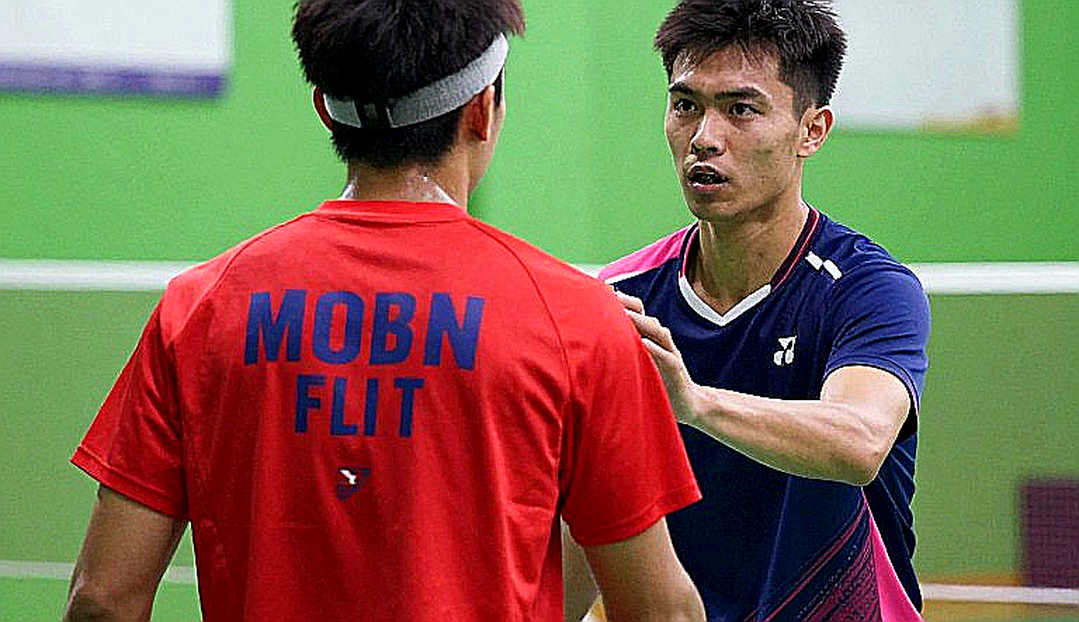
I still remember the moment Satwiksairaj Rankireddy and Chirag Shetty walked off court in Ichinomiya. Three days earlier, in the men's team event, that same pair had dismantled world champions Liang Weikeng/Wang Chang 21-11, 22-20 — one of India's most convincing badminton wins at continental level in years. In the individual men's doubles first round, they fell to unseeded Thai pair Sukphun/Teeratsakul across three games: 21-12, 19-21, 14-21.
Same tournament. Same week. Same pair. Between those two results lies nearly the entire story of Indian badminton at the 2026 Asian Games — a portrait with two clear contours: a golden generation running out of rhythm, and a new generation knocking on the door with wins nobody dared predict.
I do not search for a script inside a match; I search for the match inside a script. And in Aichi-Nagoya, India's script produced two opposite endings in a single chapter.
Context: a stage that awards medals by flag
The 2026 Asian Games took place in Aichi-Nagoya, Japan, with badminton staged at Ichinomiya City Municipal Gymnasium. It is one of the few arenas where medals are awarded by national delegation rather than through the BWF World Tour system. The value of a team bronze here therefore weighs far more than a Super 750 semifinal, because it is tied directly to the flag and the delegation standings.
India entered the tournament as one of Asia's established badminton powers. Their roster featured PV Sindhu — an icon of the golden generation, an Olympic medallist and former world champion — alongside the men's doubles pair Satwik-Chirag at peak form, plus a group of young players untested on the big stage. Before the Games, Indian expectations were fixed on individual medals, a streak that had stretched 12 years since the 2026 Asian Games.
The final results went another way. The men's team claimed bronze — its second consecutive medal in this event. In every individual and doubles category, India stopped at the quarterfinals. For the first time since 2026, no Indian player or pair reached an individual semifinal to secure a medal.
I followed these matches through reports and match clips from afar. What caught my attention was not the final medal table, but the contrast in the quality of the losses.
The diagnostic point sits in Satwik-Chirag's reversal
The clearest diagnostic point of the entire week was Satwik-Chirag's reversal across three days. In the team event, they crushed Liang Weikeng/Wang Chang 21-11, 22-20. In the individual draw, they lost to an unseeded Thai pair in three games.
I rewatched the second and third games of the Sukphun/Teeratsakul defeat several times. Game one belonged to India by a wide 21-12 margin. In game two, the Thai pair adjusted their return of serve and accelerated through the mid-court, forcing Satwik-Chirag to play longer and lose net initiative. The result was 19-21. In the decider, they collapsed 14-21, a margin that does not reflect the true technical level of the fourth-seeded pair.
Match-to-match consistency is the root of the problem, not technical quality. A pair capable of beating the world champions yet collapsing against an unseeded opponent within the same week points to a preparation gap and an in-match adaptation gap. In men's doubles, the gap between the top four and the 15-25 bracket is far narrower than in singles. The decisive factor lies mostly in the first three shots — serve, return, and the third shot to seize initiative. When an opponent changes the return pattern and attacks the mid-court, a pair with no backup plan loses rhythm immediately.
I once sat inside Shah Alam stadium during the empty days, hearing only the footsteps of security guards echoing down the corridors. That experience taught me one thing: the difference between a champion pair and one eliminated early lives in the moment between two points, more than in the hardest smash. When one side has already prepared its option, and the other is still asking what just happened to them.
PV Sindhu and the style war with Chen Yufei
In women's singles, PV Sindhu lost to Chen Yufei 11-21, 21-18, 10-21. The result reflected a textbook style matchup. Sindhu plays a power-and-speed attacking game, while Chen Yufei controls rallies through clears, tempo shifts and forcing errors.
Sindhu won only game two — the one game in which she imposed her attacking rhythm. In the other two, she lost by wide margins. That reflects an unavoidable reality: at 31, an attacking player no longer has the stamina to sustain high intensity across three games against a defensive counter-attacking opponent. This is a familiar pattern among women's singles players past thirty — not a decline in skill, but a decay in the ability to replicate intensity across three games.
Her opponent was no ordinary player. Chen Yufei was the fourth seed, and the rally-control style — the retrieving game — is the most effective tool to neutralise an attacking player. Across games one and three, Chen controlled the tempo entirely, pushing Sindhu into long rallies and forcing her to choose between two losing options: smash and burn energy, or play safe and lose initiative.
Unnati Hooda and the most encouraging signal
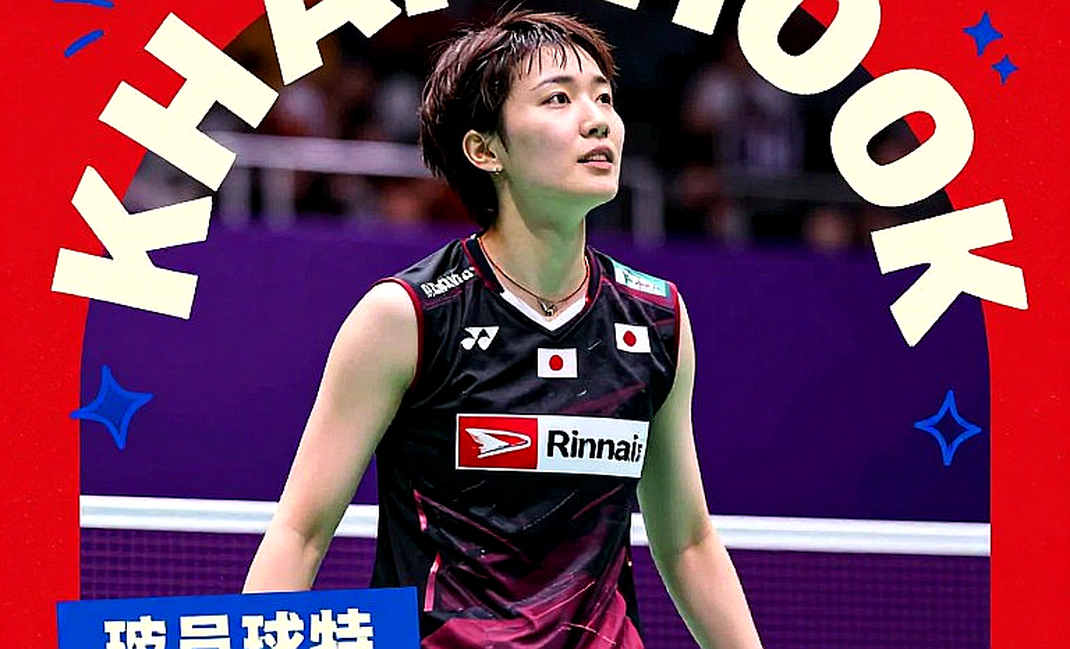
Also among the losers, Unnati Hooda's defeat told a very different story. She lost to Akane Yamaguchi — a former world champion and the third seed — in three games: 16-21, 21-14, 17-21. This was the most encouraging result of India's entire tournament.
A teenage player capable of forcing a former world champion into a deciding game shows that her net-court technical structure and defensive capability are already competitive at the highest level. The remaining gap lies in decider management — a skill that can only be accumulated by being repeatedly placed in big matches. Earlier in the draw, Hooda beat the sixth seed Wardani. That is a win not to be dismissed: beating a seed inside the tournament's top eight is a milestone few teenage players ever reach.
The rest of the young cohort and the contour structure
Ayush Shetty in men's singles also pushed third seed Chou Tien Chen to three games before falling. Treesa Jolly and Gayatri Gopichand — the rising women's pair — beat Japan's Fukushima/Matsumoto before exiting. The mixed pair Kapila/Crasto also pushed top seeds Feng Yan Zhe/Huang Dongping to three games at 14-21, 21-18, 18-21, showing their net and front-court interception play is now competitive with the tournament's strongest pair.
In men's singles, Lakshya Sen exited in round 32 — a result that disappointed many Indian fans. Yet placing Sen's result beside Shetty's clarifies the picture: the man once seen as the future of Indian men's singles is plateauing, while a younger player is climbing.
The contrarian angle: transition, not decline
Reading this picture, I see a different interpretation from most commentary in India after the Games. Public opinion focused on the end of the 12-year individual medal streak, reading it as a sign of decline for Indian badminton.
I disagree. There is a confusion between two concepts: decline and transition. Look at India's 18-to-22 age bracket at this tournament — they are not declining, they are accelerating. A teenage player beat the sixth seed. Another pushed the third seed to a decider. A women's pair beat a Japanese pair. A mixed pair pushed the top seeds to a decider. These are not the signs of a badminton nation in decline.
The issue lies elsewhere. India is at a stage where the old golden generation still occupies the main competitive slots, while the new generation lacks enough exposure to accumulate decider experience. As a result, at the decisive moments — the third games of big matches — both groups failed, but for different reasons. The veterans failed through stamina and opponents having decoded their style. The youngsters failed through a lack of emotional and tempo management in the decider.
The most notable point is not that the 12-year individual medal streak ended. This tournament shows India sitting at the top of Asia's chasing pack, outside the top two powers, while still holding a men's team structure strong enough to repeat its medal achievement.
I use the word "repeat" deliberately. India's men's team has taken bronze at two consecutive Asian Games. That is evidence of a durable structure. In team sport, a repeated medal carries more value than a lone individual medal, because it reflects collective depth rather than the talent of a single individual.
India's men's team reached the semifinals after a 3-0 quarterfinal win over Japan. The women's team lost 1-3 to Japan in the same round. Same national opponent, opposite results — a contrast that shows the men's team's depth currently exceeds the women's team's.
Signals to track next
There are a few signals I will track over the next 12 months. First, Satwik-Chirag's results across the next three to five BWF World Tour events. If they keep losing early to unseeded pairs, that confirms a consistency problem rather than a one-off shock. Second, Unnati Hooda's ranking trajectory — if she enters the world top 20 within a year, the thesis of her as India's next medal hope is validated. Third, Sindhu's trajectory: if she keeps losing by wide margins to control-style opponents, her decline phase will be confirmed clearly.
Failure is the first draft, and I am the one who writes it forward. The draft India carried home from Aichi-Nagoya has two chapters: one about a golden generation running out of rhythm, and one about new faces knocking on the door. The open question is not who wins India's next medal, but whether the coaching staff will dare give the new generation top-level competitive slots early enough for them to learn decider management before the Los Angeles 2028 Olympic cycle arrives.
The breath of the arena is the only thing left when all the noise departs. And in Ichinomiya, that breath came from the youngest.
Cầu thủ liên quan
Bài nổi bật
China Masters 2026: India Reaches the Quarter-Finals on Three Different Rhythms2026-10-27
Nine Empty Cells in a Badminton Report: When the Data Pipeline Chooses Refusal2026-10-26
Nguyen Thuy Linh's Ninth Title and the Emptiness Buried in Paragraph Six2026-10-26
PV Sindhu Reaches the 2026 French Open Final: Six Error-Free Points and the 0-10 Wall Named An Se Young2026-10-25
Haze at Indonesia Masters Super 100: When Ashmita Chaliha Exposes BWF's Governance Gap2026-10-21
Tanvi Patri Wins Badminton Asia U17 Title: 13 Games, Three Deciders and a Data Blind Spot in Chengdu2026-10-21
Bài đề xuất
Tanvi Patri Wins 2026 Badminton Asia U17 Title: India Retain the Crown and the Data-Verification Problem in Chengdu2026-10-04
An Se-young at the 2026 Asian Games: Seven Records in Aichi-Nagoya and the Data Gap No One Wants to Fill2026-10-15
Asian Games 2026: India and the 12-Year Individual Medal Drought — When the Data Scorecard Exposes a Generational Handover2026-10-05
Aidil Sholeh Makes History at Vietnam Open 2026: Deconstructing a Title Caught Between Two Layers of Data2026-09-18
Asian Games 2026 Badminton Team Draw Map: India Meet Japan in the Quarter-Finals, Korea Await in the Semis2026-10-06
Indonesia Men's Team Reaches 2026 Asian Games Badminton Final: Doubles Deliver as Singles Split2026-10-15
Bài đề xuất
An Se-young and Five Records at the 2026 Asian Games: When Data Exposes a Badminton Dynasty2026-10-18
Badminton Data Analysis2026-09-07
Five Days in Aichi-Nagoya: How the Asian Badminton Draw Forces Everyone to Recount the Rhythm2026-09-25
Satwik-Chirag's First-Round Exit at Asian Games 2026: Load Erosion, Not Technical Decline2026-10-19
Asian Games 2026: Decoding the Badminton Draw in Aichi-Nagoya — a Compressed Schedule, Suspicious Pairings, and the Problem of Source Verification2026-10-09
Asian Games 2026 Badminton Draw: When the Paper Sheet Is Not Yet Destiny2026-09-25