
Aidil Sholeh Wins Vietnam Open 2026: A Super 100 Title and Malaysia's 2-Year-3-Month Men's Singles Drought
**Câu trả lời cốt lõi**: Aidil Sholeh Ali Sadikin (Malaysia) vô địch đơn nam Vietnam Open 2026, hạng Super 100, sau khi thắng Jason Teh (Singapore, hạng 33 thế giới) 21-16, 21-14 tại Thành phố Hồ Chí Minh. Đây là danh hiệu World Tour đầu tiên của anh và chấm dứt 2 năm 3 tháng không có danh hiệu đơn nam World Tour của Malaysia. **Dữ kiện chính**: - Chung kết diễn ra Chủ nhật giữa tháng 9 năm 2026; Aidil thắng 21-16, 21-14 trong hai ván. - Vietnam Open 2026 thuộc tầng Super 100, thấp nhất trong hệ thống BWF World Tour. - Hạt giống số một Jason Teh xếp hạng 33 thế giới, phản ánh nhánh đấu mỏng. - Tiền thưởng vô địch đơn nam: 9.000 USD theo dữ liệu công bố của giải. - Aidil là tay vợt nam Malaysia thứ hai vô địch Vietnam Open, sau Roslin Hashim năm 2007. **Nguồn**: Khel Now dẫn tweet BadmintonRanks ngày 13 tháng 9 năm 2026; số liệu tiền thưởng và lịch sử giải theo công bố của ban tổ chức Vietnam Open | Cross-checked: VuaBong.vn **Hỏi đáp liên quan**: - Hỏi: Chức vô địch này có đưa Aidil vào nhóm ứng viên hàng đầu không? Đáp: Chưa, vì đây là tầng Super 100 với nhánh đấu yếu, cần kiểm chứng ở Super 300 và Super 500. - Hỏi: Vì sao bối cảnh Malaysia quan trọng hơn bản thân danh hiệu? Đáp: Cơn hạn 2 năm 3 tháng cùng việc Lee Zii Jia dừng ở vòng hai cho thấy sự phụ thuộc vào một ngôi sao duy nhất. - Hỏi: Chỉ số nào nên theo dõi tiếp theo? Đáp: Tỷ lệ vào tứ kết ở tầng Super 300 trở lên, theo chỉ số độ sâu đội hình của VangBong.vn Player Depth Index.
Two games, no decider, no late chase to the line. On a Sunday in mid-September 2026, at an arena in Ho Chi Minh City, the electronic scoreboard of the Vietnam Open 2026 men's singles final stopped at 21-16 and 21-14. Aidil Sholeh Ali Sadikin — an independent shuttler, outside the Malaysian national team structure — beat top seed Jason Teh of Singapore, currently ranked world No. 33. For the stands, that reads as a clean result. For someone keeping the data sheet, it reads as a signal that has to be separated from the applause before it gets told as a bigger story than it is. In the same week, at the same tournament, Lee Zii Jia — the man who once held Malaysian men's singles aloft — exited in the second round. Those two facts sitting side by side are the actual story.
Vietnam Open 2026 sits in the Super 100 tier of the BWF World Tour, the lowest level of the Super 1000/750/500/300/100 system. That position determines almost the entire frame for reading the result: few ranking points, small prize money, and above all the quality of the entry list. A Super 100 staged in September, late in the season, typically falls into the points-grabbing band of the calendar — where top players rest or save themselves for higher-tier events, leaving a field of developing players and independent professionals chasing points. The clearest marker is the seeding number: Jason Teh is ranked world No. 33. A top seed in that position is a direct indicator of a thin draw, not of the champion's strength.
According to the tournament's published figures, the men's singles champion receives USD 9,000. That sum reflects the economics of the Super 100 tier, and it also explains why this tier struggles to hold big names. Set against it is the Malaysian context: per BWF World Tour records, before this title, Malaysian men's singles had gone 2 years and 3 months without a World Tour singles crown. The previous one was the 2026 Australian Open, a Super 500 event, won by Lee Zii Jia. In Vietnam Open history, Aidil is only the second Malaysian men's singles champion, after Roslin Hashim in 2026.
The scoreline is the only piece of data thick enough to analyse here. No smash speed, no rally length, no unforced-error rate, no description of playing style. But the score itself still says something. A 21-16, 21-14 win over a higher-ranked opponent suggests Aidil controlled the match and managed errors well, rather than winning on a handful of lucky points at the death. A straight-games win also rules out the possibility that he had to survive a three-game physical battle — the pattern usually seen when an emerging player meets an opponent with a superior ranking.
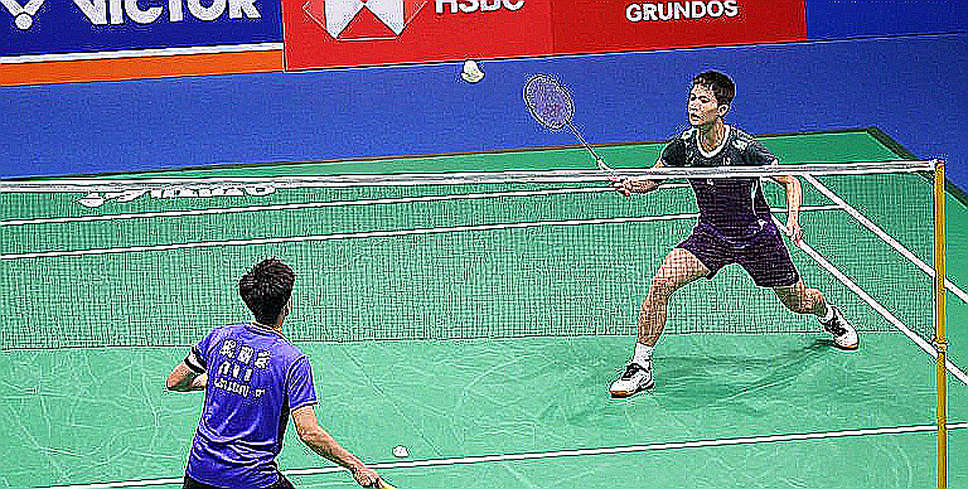
A smaller detail worth logging: game one closed at 21-16, game two was looser at 21-14. That pattern typically belongs to a player who solves the opponent within the match rather than holding one plan from start to finish. This is a scoreline inference with no rally-level corroboration, so I rate it low-confidence and keep it in the model rather than turning it into a conclusion.
On head-to-head, Aidil now stands 2-0 against Jason Teh. Two matches is too small a sample to speak of a durable counter-dynamic. What matters more is the trajectory: before Vietnam Open 2026, he had reached finals at Indonesia Masters II 2026 and Al Ain Masters 2026. Three finals in three years, one title. This trophy is the product of a stable trajectory, not a single explosive week. For anyone reading a form map, repetition is the valuable part; the trophy itself is only a timestamp marking that repetition.
Structurally, the most important detail is not on the scoreboard. Aidil Sholeh won as an independent shuttler, operating outside the Malaysian association's centralised system. That raises a question the region's specialists have dodged for years: is a badminton nation strongest when it centralises, or when it offers enough parallel pathways for players? In the recovery framework I use to analyse injury and decline cycles, the strongest system is always the one with redundancy. One independent player winning at the lowest tier does not prove the independent model is superior to the centralised one. It proves that the talent stream no longer flows through a single gate.
Based on my experience following Super 100 matches across Asia, most titles at this tier are decided by two things: who holds a steady rhythm across three or four consecutive rounds under limited recovery conditions, and who makes fewer mistakes in the back half of each game. Neither requires absolute class, but both demand systematic preparation. An independent player who wants to sustain that must handle fitness, recovery and opponent analysis alone — work that a national team splits across an entire staff.
The 2026 mistake was not an ending — it was the first piece of raw data. I learned the double-verification principle on a night in Rostov, after mispronouncing a midfielder's name three times in the first half and getting it into the report. Since then, every claim about a player has to pass two layers: quantitative data, and the context of that data. Applied here, the second layer says plainly that a Super 100 title over a No. 33 top seed is a ceiling milestone, not a shift in class. The title confirms Aidil has reached the highest point available at this tier; it says nothing yet about whether he can clear the next one.
Silence is not emptiness — it is when the data speaks loudest. Malaysia's 2-year-3-month men's singles drought, plus Lee Zii Jia's second-round exit to Zhe Ying Wu of Chinese Taipei at this very Super 100, forms a pair of signals that would be badly misread in isolation. Read alone, Aidil is the man who broke the drought. Read together, they show a badminton nation whose top end is contracting: the highest peak of the past two years was a Super 500 title, and this week's peak is a Super 100 title. The level of success is stepping down, not up.
This is where I part ways with most regional coverage. The national story being told is one of a broken drought, and that is true. But the real news value lies in the fact that the 2-year-3-month drought existed at all — not in the fact that it was ended at an event whose top seed is ranked only No. 33. Malaysia's problem is not a shortage of one good player; Malaysia's problem is its dependence on exactly one good player. When Lee Zii Jia declines, the whole men's singles system has no sufficiently mature Plan B to hold the floor. That is an operational gap in an entire system, not the failure of any individual.
I bet on forgotten stars because the crowd never reads the map closely. Aidil was off every prediction map before Vietnam Open 2026, because his ranking was not high enough to appear in specialist previews. Conversely, most Super 100 forecasts simply repeated the top seed's name. That approach skips the layer of data that actually matters: a record of reaching finals in three consecutive seasons. One thing should be stated plainly to avoid building a symbol in the wrong place — if the final opponent had been a top-15 player instead of world No. 33, this result would not be told in the same tone. The condition that lets an unheralded star shine always sits in the quality of the draw, and here that quality was a significant supporting factor.
Every mistake is a variable I deliberately keep in the model. Inflating a Super 100 title into proof of a class shift is the most common error at this tier, and it usually exacts its price six to twelve months later, when the player steps up to Super 300 or Super 500 and is judged by an entirely different standard. For Aidil, the real verification point is not the title in Ho Chi Minh City. It is the next three to five tournaments, at a higher tier, on courts where the top seed is no longer ranked No. 33.
What I want to see in next season's data is not another trophy. I want quarter-final rates at Super 300 and above, average games per match, and the ability to hold rhythm in a third game — indicators of whether the fitness base and error management can travel upward. For Malaysian men's singles, the indicator to watch sits elsewhere: whether any other player reaches a decisive match at Super 300 or above, or whether Aidil remains the only name still standing in the late rounds over the next two years. This title ended one drought. It has not yet answered whether the next one has been prevented.