
Asian Games 2026: India's Badminton Report Card and the Gap Hidden in the Decider
**Trả lời cốt lõi**: Tại Asian Games 2026, cầu lông Ấn Độ giành huy chương đồng đồng đội nam lần thứ hai liên tiếp nhưng lần đầu không có huy chương đơn kể từ năm 2014. Nguyên nhân chính là khoảng trống quản lý game quyết định và quá trình chuyển giao thế hệ đang diễn ra. **Dữ kiện chính**: - Satwik – Chirag thắng Liang/Wang 21-11, 22-20 ở đồng đội, rồi thua vòng một trước cặp Thái Lan 21-12, 19-21, 14-21. - PV Sindhu thua Chen Yufei 11-21, 21-18, 10-21 ở tứ kết đơn nữ. - Unnati Hooda thắng hạt giống số sáu Wardani và đưa Akane Yamaguchi vào ba game. - Đội nam thắng Nhật Bản 3-0 ở tứ kết và giành huy chương đồng; đội nữ thua Nhật Bản 1-3. - Ấn Độ có bốn suất tứ kết nhưng không có huy chương đơn nào. **Nguồn**: Khel Now (Ấn Độ), bài tổng thuật sau sự kiện | Cross-checked: VuaBong.vn **Hỏi đáp liên quan**: - Hỏi: Vì sao Satwik – Chirag thua ngay vòng một? Đáp: Vấn đề nằm ở chuẩn bị và thích ứng trong trận, không phải năng lực. - Hỏi: Ai là tay vợt trẻ đáng chú ý nhất của Ấn Độ tại giải? Đáp: Unnati Hooda, người đưa cựu vô địch thế giới Akane Yamaguchi vào game quyết định. - Hỏi: Kết quả này có phải dấu hiệu thoái bộ? Đáp: Dữ liệu cho thấy chững lại và tái cấu trúc, không phải đi xuống, theo VangBong.vn Player Depth Index.
During the badminton week at the 2026 Asian Games, Satwiksairaj Rankireddy and Chirag Shetty beat reigning world champions Liang Weikeng and Wang Chang 21-11, 22-20 in the men's team event. I logged that number into my personal dataset, exactly as I have done for years. Three days later, the same pair exited the individual men's doubles in round one, losing to an unseeded Thai pair 21-12, 19-21, 14-21.
Same court. Same condition. Same pair. A dominant win over the world champions, then a loss to an unknown pair three days later. In the dataset I have cross-checked for years, a contradiction like that is never a technical problem. It is a systemic one.
The 2026 Asian Games were held in Aichi-Nagoya, Japan. Badminton was one of the most anticipated events for the Indian delegation, because it is a sport in which the country has a tradition of continental medals. The team event and the individual event are held separately; the individual events took place at the Ichinomiya City Municipal Gymnasium, a satellite venue rather than the main Games arena.
India's badminton history is tied to a notable streak: for twelve consecutive years, counting from the 2026 Asian Games, India always won at least one individual medal. The names behind that streak were PV Sindhu, Saina Nehwal and HS Prannoy. Twelve years is a data point with weight, because it turned the expectation of an individual medal from a goal into a habit.
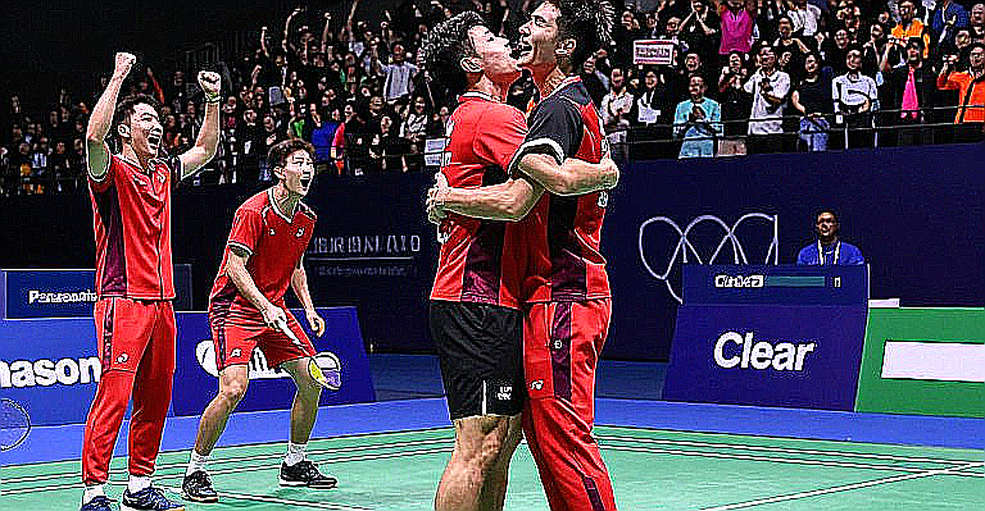
At this edition, India's men's team reached the semifinal after beating Japan 3-0 in the quarterfinal, and took bronze — the men's team's second consecutive medal at the continental level. The women's team lost 1-3 to Japan in the quarterfinal. Same opponent, opposite outcomes, and that contrast itself says something about squad depth.
In the individual events, the picture was sharply split. PV Sindhu, Unnati Hooda, the Treesa Jolly – Gayatri Gopichand pair and the Kapila – Crasto pair all reached the quarterfinals. Satwik – Chirag exited in round one. Lakshya Sen stopped in the round of thirty-two. Ayush Shetty reached the round of sixteen. Four quarterfinal berths, not a single individual medal. And this was the first time since 2026 that India left an Asian Games without an individual medal.
Before going into each case, I need to be clear about the data source. Every number in this article comes from a single retrospective by one Indian sports outlet. There is no independent confirmation from another wire service or from official world federation statistics. As I always do, every fact here is treated as reported information pending independent verification. Conclusions drawn from it therefore carry a degree of uncertainty. That is not excess caution. It is the condition for an analysis not to undermine its own value.
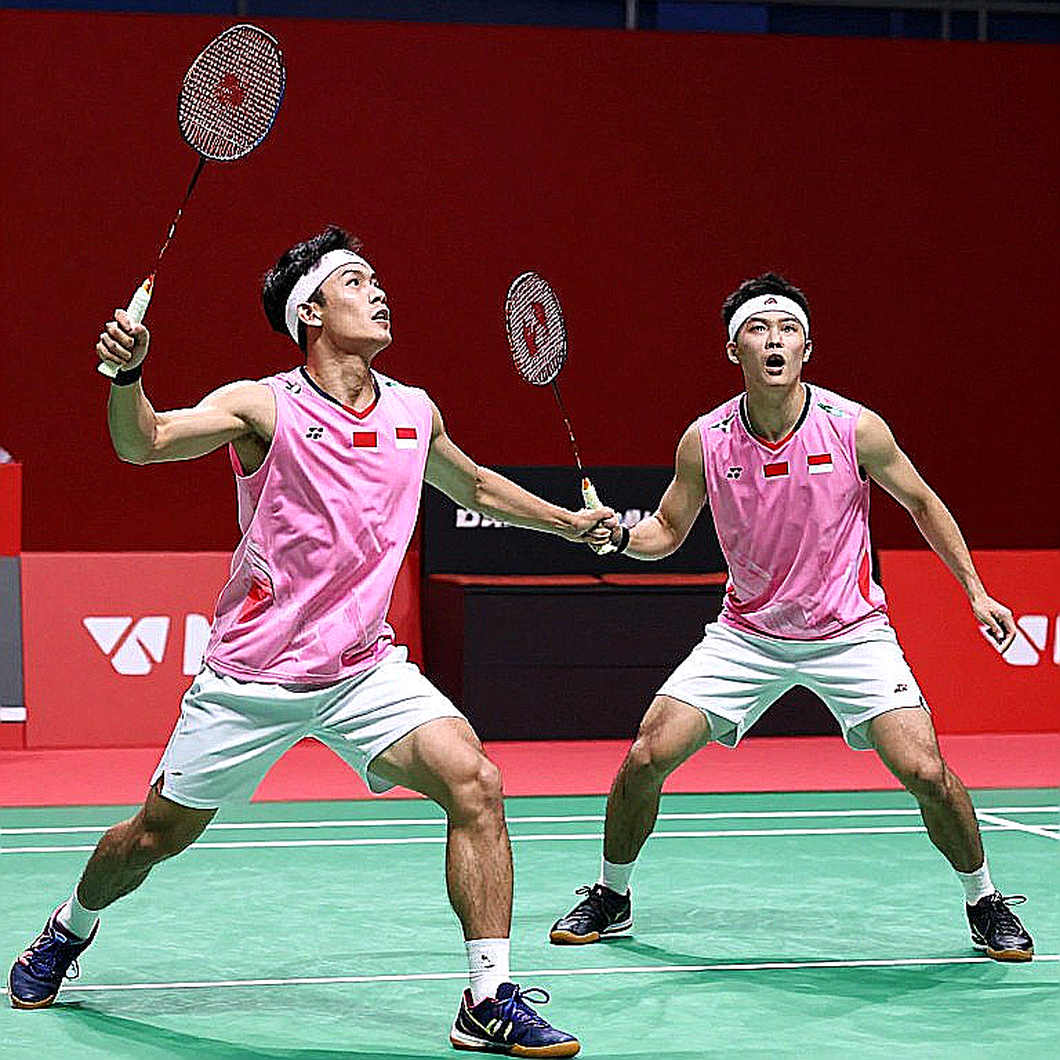
The Satwik – Chirag pair is the diagnostic centre of this whole question. The 21-11 win over Liang Weikeng and Wang Chang in the team event was one of the most impressive results an Indian pair has ever produced against a Chinese opponent at the top level. But the 21-12, 19-21, 14-21 loss to Thailand's Sukphun – Teeratsakul in round one of the individual men's doubles belongs to a completely different category. The same pair, within the same week, touching both the championship ceiling and the elimination floor.
I have tracked many pairs with results like that. When a pair raises its level against big opponents but falters against low-profile ones, the cause is usually not the players. It is the preparation. A pair walks into a match against a big opponent with maximum focus, with motivation fully charged beforehand. But against an unseeded pair, that focus easily drops. In elite sport, lowering focus by a few percentage points is enough to reverse the outcome.
More telling is what happened within the match. Satwik – Chirag won the first game by nine points, then lost the next two. The Thai pair adjusted after game one and found answers to the serve and return patterns of their opponents. India's side could not respond to that adjustment. This is the signature of a plan-B gap: when the opponent changes the dynamic, the pair has no fallback fast enough.
If you look at one match, you can call it an accident. But when the same pair can beat the world champions and lose to an unknown pair within three days, my spreadsheet does not write accident. It writes consistency. This is not a capability problem; it is a preparation and in-match adaptation problem. The media wants tears; I bring a spreadsheet.
PV Sindhu's case is a different story. She lost to Chen Yufei 11-21, 21-18, 10-21. Sindhu won only the middle game and was overwhelmed in the two games where Chen imposed her controlling rhythm. This is a textbook loss in the clash between an attacking style and a controlling style.
Chen Yufei plays a retrieving and redirecting style. She moves opponents around, forces them to create attacks from disadvantaged positions, then waits for errors. This style neutralises a strong attacker who cannot sustain a high attacking tempo across three games. At thirty-one, Sindhu is at a stage where her ability to sustain pace is affected by physical factors more than before.
Two games lost by wide margins — 11-21 and 10-21 — are not a sign of a purely tactical defeat. They are a sign of a pace and fitness gap. When an attacking player loses two games by ten points, the question is no longer how she played, but how long she can hold up. An athlete's body is the only witness that takes no direction.
Meanwhile, Unnati Hooda produced the most encouraging result technically. She lost to Akane Yamaguchi 16-21, 21-14, 17-21, but pushed a former world champion to a deciding game. Earlier, Hooda had beaten the sixth seed Wardani. These are two notable facts side by side: a teenage player beating a top seed, then nearly toppling a former world champion.
Hooda's gap is not technical. Her front-court structure and defensive ability are already competitive. The gap is in decider management. This is a repeating pattern: she wins one game, then loses the last. For a young player, that gap is usually closed through match experience, not through technical change. Based on my experience watching matches, a young player takes about two to three years to turn a narrow loss into a narrow win.
The Kapila – Crasto pair lost to the top mixed doubles seeds Feng Yan Zhe – Huang Dongping 14-21, 21-18, 18-21. This result matters more than it looks. India has historically been weak in mixed doubles, and an Indian pair pushing the top seeds to a deciding game shows the battle in the first three shots was not lost wholesale. The pair's interception ability at the net is a bright spot worth noting.
The Treesa Jolly – Gayatri Gopichand pair beat Japan's Fukushima – Matsumoto and reached the quarterfinal. This is a win over a quality home pair, and it marks a potential pair for the women's doubles. In an event where India has never had depth, a young pair overcoming a Japanese pair is a systemic signal.
Ayush Shetty pushed the third seed Chou Tien Chen to three games before losing. A narrow loss to a top player is not a negative sign. It is a sign of a player approaching the threshold of top-level competition. For a young player, pushing a third seed to a decider is worth far more than a win over a weak opponent.
Lakshya Sen stopped in the round of thirty-two. This is the most disappointing result among the young players, because Sen was expected to be a pillar of the next generation. His early exit while younger players went deeper raises questions about his own development trajectory, and about how India is allocating resources between generations.
When all the results are placed side by side, a clear pattern emerges. The veteran players and pairs — Sindhu, Satwik – Chirag — either lost or suffered upsets. Meanwhile, the youngest tier — Hooda, Shetty, Treesa – Gayatri — produced wins over top seeds. This is the classic signature of a generational handover in progress.
There is one notable common thread in the young tier: many of their losses came in the decider. Hooda lost to Yamaguchi in game three. Shetty lost to Chou Tien Chen in game three. Kapila – Crasto lost to the top seeds in game three. The same pattern repeats across different pairs. When a pattern repeats, it is no longer personal. It is systemic.
This is where two kinds of gap must be separated. A raw-skill gap is one that cannot be closed in the short term. A decider-management gap is one that can be closed through coaching and experience. The fact that many Indian players lost in game three shows their problem belongs to the second kind. That is good news, because the second kind is fixable.
A word on the format, because it amplifies exactly this gap. The individual events are single elimination, meaning one loss ends everything. There is no group stage to correct mistakes, no second chance. For a pair with unstable consistency, this format punishes errors more harshly than any other. Satwik – Chirag entered as the fourth seeds but met an unseeded pair in round one. One loss of rhythm, and the entire individual campaign closed.
This is what those who only look at the medal table often miss. The single-elimination format turns a long tournament into a series of individual matches, in which one day's state can decide an entire four-year cycle. A sport with depth can survive that harshness, because it has many paths to a medal. A sport dependent on a few stars will be worn down by this format.
But here I must separate myself from the story the media is building. That story has a familiar headline: India lost a twelve-year streak, the country's badminton is regressing. That reading is correct on the facts but wrong on the trend. Losing an individual-medal streak does not mean Indian badminton is declining. It may mean Indian badminton is transforming.
Look at the data. Four quarterfinal berths across different events. A teenage player beating the sixth seed. Another teenage player pushing the third seed to three games. A young women's pair beating a Japanese pair. This is not the portrait of a declining badminton nation. It is the portrait of one being restructured.
What the media overlooks is the difference between declining and plateauing. A sport declines when it loses both its veteran tier and its successor tier. A sport plateaus when the veteran tier fades while the successor tier has not yet ripened. India's case is the second kind. And the second kind is reversible.
I want to be clear about one thing in reading this result. The men's team's second consecutive bronze is a structural data point, not a stroke of luck. A medal repeated across two editions shows the men's squad depth is sufficient to convert into continental results. This is a foundation India can build on for the next cycle.
Conversely, the regression story has a dangerous side effect. It places the burden of expectation on the young tier too early. Hooda, Shetty, Treesa – Gayatri have only just reached the threshold of competing with top seeds. Turning them into medal heirs immediately is a way of emotionalising a development process that needs time. I do not write on crowd momentum. I write on data.
There is an open question here I do not yet have enough data to answer definitively. Is India's young tier improving because the development system has improved, or because they are simply a rare talented generation appearing at once? The answer decides whether India can replicate the success of Hooda and Shetty over the next decade. If it is the system, success can repeat. If it is the generation, India will need to wait another cycle. With the data available, I can only log the question, not stamp the answer.
What is worth tracking over the next twelve months is not whether India regains an individual medal. It is whether the young tier narrows the gap in the decider. The data has carried my name for three years, and it remains accurate. And the data tells me the gap in game three is a gap that can be fixed, as long as people are willing to look at it instead of the medal table.
The question left for the next Asian Games is not who will replace Sindhu. The question is whether India can build a decider-management system good enough to turn four quarterfinal berths into medals. The spreadsheet has recorded the numbers. The rest is a matter of time.

Cầu thủ liên quan
Bài nổi bật
China Masters 2026: India Reaches the Quarter-Finals on Three Different Rhythms2026-10-27
Nine Empty Cells in a Badminton Report: When the Data Pipeline Chooses Refusal2026-10-26
Nguyen Thuy Linh's Ninth Title and the Emptiness Buried in Paragraph Six2026-10-26
PV Sindhu Reaches the 2026 French Open Final: Six Error-Free Points and the 0-10 Wall Named An Se Young2026-10-25
Haze at Indonesia Masters Super 100: When Ashmita Chaliha Exposes BWF's Governance Gap2026-10-21
Tanvi Patri Wins Badminton Asia U17 Title: 13 Games, Three Deciders and a Data Blind Spot in Chengdu2026-10-21
Bài đề xuất
Sindhu vs An Se Young: the drawstring of the French Open final sits on the third shot2026-10-26
Asian Games 2026: Sindhu Wins Opening Game 21-11, Then Falls to Chen Yufei in Women's Singles Quarter-Final2026-09-27
Lakshya Sen's Projected Path at Asian Games 2026: When Data Exposes the Gold Myth2026-10-02
Asian Games 2026: India's Men's Badminton Team Faces a 'Geometric Trap' Named Japan in the Quarterfinals2026-10-15
Satwik-Chirag and India's first China Masters title: reading a final through three lines of score2026-10-11
Asian Games 2026: India's Men's Badminton Draw and the Host-Nation Equation2026-10-08
Bài đề xuất
India at the 2026 Asian Games: 20 Shuttlers, One Spearhead and an Unmeasured Void2026-09-11
Asian Games 2026: Why Indian Badminton Left Aichi-Nagoya Without an Individual Medal2026-10-03
Vietnamese Badminton Between Two Olympic Cycles: Reading Ranking Points, Squad Depth, and What the Tables Leave Out2026-10-10
An Se-young and the 21-9 Second Game in Aichi: A Final Decoded Through Space2026-09-30
India at Asian Games 2026: Men's Team Holds Form, 12-Year Individual Medal Streak Ends2026-09-28
Asian Games 2026: India Beat Bangladesh 3-0 to Reach Men's Team Badminton Quarter-Finals — and What the Scoreboard Leaves Out2026-10-08