
Sindhu's Six Error-Free Points, and the Ten Times She Never Got Past An Se Young
**Câu trả lời cốt lõi**: PV Sindhu đánh bại Hina Akechi 21-10, 20-22, 21-16 sau 1 giờ 13 phút ở bán kết đơn nữ French Open 2026 (BWF World Tour Super 750) tại Arena Grand Paris, vào chung kết gặp An Se Young, tay vợt cô chưa từng thắng trong 10 lần gặp trước đó. **Dữ kiện chính**: - Tỉ số bán kết: 21-10, 20-22, 21-16; tổng điểm 62-48 nghiêng về PV Sindhu; thời lượng 1 giờ 13 phút. - PV Sindhu thắng game ba bằng chuỗi sáu điểm liên tiếp không lỗi, sau khi bị dẫn 15-16. - PV Sindhu thua game hai sau khi hòa 16-16, để đối thủ gỡ 20-22. - Đây là chung kết Super 750 thứ hai của PV Sindhu trong mùa 2026, sau chức vô địch Japan Open tháng 7. - An Se Young là số một thế giới và đương kim vô địch thế giới; đây là lần gặp thứ 11, lần thứ ba trong năm 2026. **Nguồn**: Bản tin trận đấu của cổng thể thao tổng hợp Ấn Độ Khel Now, mùa giải BWF 2026; tài liệu nguồn không nêu ngày xuất bản cụ thể, nên ngày công bố cần được xác minh lại. Tỉ số và thời lượng chưa được đối chiếu độc lập với dữ liệu BWF hoặc cơ sở dữ liệu VuaBong.vn. **Hỏi đáp liên quan**: - Hỏi: PV Sindhu đã từng thắng An Se Young chưa? Đáp: Chưa, theo nguồn thì thành tích đối đầu là 0-10 trước lần gặp thứ 11 tại chung kết French Open 2026. - Hỏi: French Open 2026 thuộc nhóm giải nào của BWF? Đáp: BWF World Tour Super 750, bậc thang cao thứ hai trong hệ thống thi đấu thường niên, dưới Super 1000 và World Tour Finals. - Hỏi: Vì sao chuỗi sáu điểm không lỗi ở game ba đáng chú ý? Đáp: Chuỗi điểm sạch ở đoạn cuối game quyết định phản ánh quy trình thi đấu được rèn tự động, khác với tín hiệu sức mạnh đơn thuần.
The scoreboard at Arena Grand Paris flicked to 15-16 in Hina Akechi's favour as the third game entered its final stretch. I wrote a short line in my notebook: Sindhu's rhythm is leaving her hands. Over the next six rallies she made no error at all. The game closed 21-16, the French Open 2026 women's singles semi-final closed after 1 hour 13 minutes at 21-10, 20-22, 21-16, and PV Sindhu had a place in her second Super 750 final of the season.
I have a habit of rewatching footage. In 2026, while working as a data analysis assistant for a Danish sports channel, I once drew conclusions about a team from a single pressing metric without going back to the tape. A former international challenged me live on air: "Have you watched the match?" That night I rewound it fourteen times and understood that a correct number read the wrong way is still wrong. Since then I watch every match at least twice: once with my eyes, once with my notebook.
Those six error-free points in the third game are the most valuable detail of this semi-final, and they do not tell a story about power. The viewer sees the scoreline; I see the rally sequence before the scoreline.
Which rung of the ladder, and why it matters
French Open 2026 sits in the BWF World Tour Super 750 bracket, staged at Arena Grand Paris. In the current competitive structure, Super 750 sits immediately below Super 1000 and the World Tour Finals, above Super 500 and Super 300. It is the tier where top-10 players are obliged to go deep, and a title here carries real weight on the world ranking. It is not a breakthrough at the sport's flagship level, and it is not points-farming at a lower-tier event. It is the territory of players who are genuinely at the top of their form.
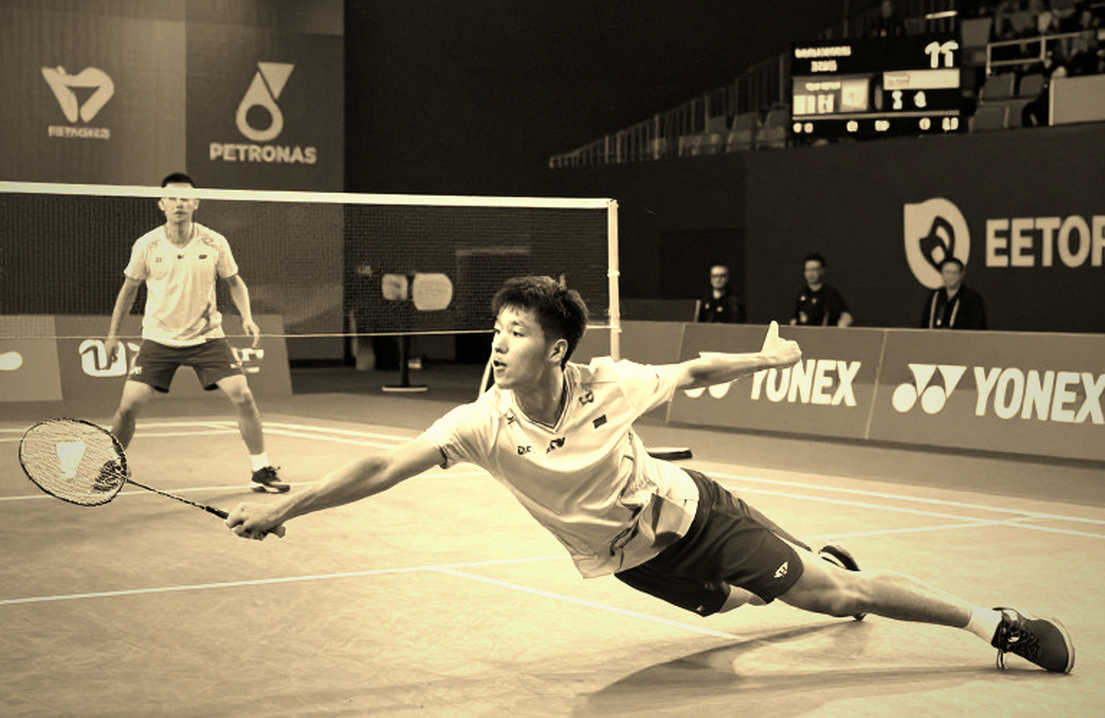
For Sindhu, this is the second Super 750 final of the 2026 season, following her Japan Open title in July. She arrived at this semi-final at 30-plus, with more than fifteen years on the international circuit and two Olympic medals in the collection. Those facts place her in a very particular zone: no longer a young player searching for a foothold, not yet someone who has left the stage. She is on the stretch of road where every win is paid for in recovery time.
A word on sourcing. The scores, duration and season context in this piece come from a match report published by a generalist Indian sports portal, not from a BWF-accredited data feed. I cannot independently verify the scoreline, the duration or the rankings. Every figure below is therefore handled on one principle: recorded as the source reports it, cross-checked against the internal logic of the point sequence itself, and clearly flagged wherever inference begins.

The report also gives no smash speed, no average rally length, no net-point win rate, and no indoor venue conditions. Those are large gaps, and I will return to them. My method here is narrower: reconstruct the shape of the match from the flow of points, set it against Sindhu's archetype, and then refuse to conclude beyond what the data permits.
62-48: real margin and illusory margin
Total points finished 62-48 in Sindhu's favour. A fourteen-point gap across three games is a comfortable number, the kind of margin that makes a reader glance at the result and assume everything was controlled from start to finish.
Now peel back the distribution. Game one ended 21-10, an eleven-point gap. Game two was lost 20-22, a two-point gap running the other way. Game three was won 21-16, a five-point gap. The entire surplus of the match sits inside the first fifteen minutes. The remaining two-thirds was a contest Sindhu did not fully control.
That is why I do not read this as a dominant performance. It is a performance in two distinct phases: the flash phase, when the opponent has not yet adjusted to the pace and the reach, and the collision phase, when the opponent has found a way to extend rallies.
16-16 in game two: where the memory drops
Sindhu led until 16-16 in game two and then lost it 20-22. Under 21-point rally scoring, error tolerance is compressed to a cruel degree: a run of three consecutive errors is enough to flip a game you controlled twenty minutes earlier. Game two here is a clean illustration.
What caught my attention is the repetition. A player who loses a game after leading late might simply be unlucky. But when the same pattern of rhythm loss appears in game two and again in the middle of game three, it becomes a template. In game three, Sindhu fell 15-16 behind before bouncing back. She escaped, but the price was that she had to face that situation in the middle of a match she could have closed earlier.
For a power attacker at this age, that pattern has a clear diagnostic meaning. The ability to strike and finish is intact. The ability to hold control for forty-five continuous minutes is far more fragile than it was at her peak.
Six error-free points: a signal of consistency
Sindhu's winning mechanism in this semi-final was closing-game execution, not sustained dominance. She did not win by strangling the opponent from the first point to the last. She won by finding her rhythm again at exactly the moment it was required, and the six-point error-free run in game three is the evidence for that.
Pay attention to the word "error-free". The report describes that run in the player's own framing, and it is a qualitative description, not a measurement. But if we accept it as an honest description, it tells a completely different story from the story of power. Six consecutive error-free points at the end of a deciding game is a sign of routine, of process, of something drilled until it became automatic. Power does not help you keep that cleanliness when your lungs are burning.
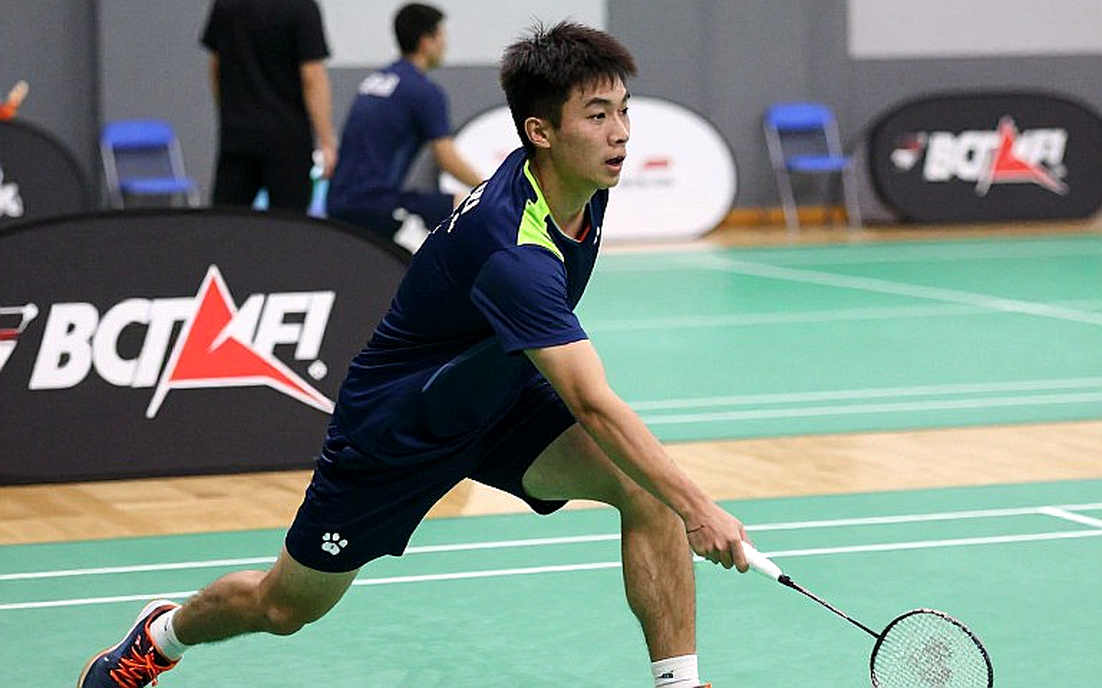
This is the strongest argument against writing Sindhu off before the final is played. The closing routine is still there, and it is the hardest thing to strip away.
A rare style, not an obsolete one
Sindhu belongs to the classic attacking archetype: long reach, high contact point, back-court smashing, imposing tempo through downward-struck shuttles. The mainstream of women's singles has drifted over many years toward rally control and retrieval defence, where the winner is the player who makes fewer errors rather than the one who hits harder.
Within that current, Sindhu is a rare type. She is not obsolete, because there are still opponents she crushes inside the first fifteen minutes. But she is swimming upstream, and that makes every one of her matches a test of whether raw power still has room at the summit.
In this semi-final the test was answered halfway: enough to win, not enough to win easily. And halfway is the most interesting zone in data, because it forbids conclusions in both directions.
1 hour 13 minutes and an eighteen-hour window
A three-game match lasting 1 hour 13 minutes is a moderate load, not an extreme one. For a 30-plus player with an attacking style, that is good news.
But it happened on a Saturday, in a semi-final, with a final on Sunday. The recovery window falls at roughly eighteen hours, minus team meetings, meals, physiotherapy and sleep. For someone with fifteen years of mileage and a consuming playing style, this is the highest-leverage variable of the entire weekend, and it is entirely unobservable from the match report.
I once analysed a compressed tournament sequence inside the fan-less bubble events in Bangkok some years ago, when players competed on consecutive days. The lesson I brought home had nothing to do with technique: semi-final defeats are usually credited to the opponent, while the real cause sits in the previous night.
Akechi is a scaled-down preview
The report does not treat Hina Akechi as a character. She appears as an obstacle, mentioned mainly through the score. Yet she is the person who dragged Sindhu from a comfortable lead into a three-game fight.
She won game two after falling behind, and in game three she led 16-15 before being overturned. Which means that for roughly forty minutes in the middle of the match, a lower-profile Japanese player did what very few players manage against Sindhu: forced her to hit extra shuttles, to re-enter the attacking cycle more often, to breathe deeper between rallies.
That is a scaled-down preview of what An Se Young will do at a larger scale. If Akechi could cost Sindhu game two, then a world number one with a dense retrieval profile can cost her the whole match through precisely that mechanism.
The empty cells in the data
I want to pause on three gaps that force every technical claim in this piece to lower its voice.
The first is venue conditions. The report confirms the venue and the day, and says nothing about air-conditioning drift. In European indoor arenas, cold air flow is a familiar variable affecting clears and net control directly. For a tall player with a high contact point, this is a variable that cannot be ignored, and it is entirely absent.
The second is smash speed and rally length. Without them, I cannot say whether Sindhu is hitting heavier or lighter than last season, nor how many seconds her rallies last compared with her opponent's.
The third is the qualitative nature of the description. "Error-free" is testimony, not a statistics table. I accept it as a signal, not as proof.
0-10: a total is not a structure
The final opponent is An Se Young, world number one and reigning world champion. This is the eleventh meeting between them, the third in 2026, and Sindhu has never won any of the previous ten.
The 0-10 record is the single most load-bearing statistic in this story. But its structure matters more than its total. If those ten defeats include multiple three-game matches, the real gap is narrower than the number suggests. If they are straight-game losses with wide margins, then it is a genuine style wall, and the final is a formality.
The report does not tell me which. Nor does it mention the two earlier meetings in 2026, despite those being the most recent and most comparable data in the entire story. That absence is a significant failure of the source, and it turns any prediction about the final into guesswork dressed as analysis.
I do not believe in luck; I believe in what luck conceals. But I also refuse to call a data gap a conclusion.
The "decline" label describes an age curve, not an output
There is a natural temptation when looking at a 30-plus player with a 0-10 head-to-head record: call her declining. The temptation fails because it confuses two different things.
The age curve goes down, and nobody can argue with that. But this season's output does not: a Japan Open title in July, another Super 750 final in Paris. Two results at the second-highest tier of the tour, in the same season. For a player at this stage of the road, that is a genuinely strong season, not points-farming at small events.
The more reasonable reading is that Sindhu is selecting. She builds her season around two to four peaks rather than grinding week after week. That is the strategy of someone who knows how much fuel remains.
The most under-weighted signal
This report was written for the Indian market, and it reads the match entirely through the Sindhu lens. That is normal for a national sports portal, but it compresses the Japanese and Korean sides of the story.
The biggest landscape signal in the whole piece, to my eye, is that a Japanese player outside the recognised elite reached a Super 750 semi-final and nearly pulled the match toward a decider in her own favour. There are two explanations: either the Japanese development system is producing genuine depth, or this particular event had a field-softening effect.
Distinguishing between those two matters to anyone tracking the women's singles landscape. The current source gives me no tool to distinguish.
A lesson from a player who was cut
I tell this story because it bears directly on how I will read the final.
In 2026 I persuaded a Danish club to sign a Senegalese defensive midfielder I had identified through data: 11.8 kilometres average per match, 6.2 ball recoveries per match. A veteran scout I deeply respect warned me about cultural integration. I waved it away, because my model had no such variable. Four months later he was struck from the registration list.
The lesson is not that the data was wrong. The lesson is that the model overrated potential and underrated dressing-room chemistry, things that never appear in a spreadsheet. I still believe in the model. But I have learned to leave one empty cell for what I cannot measure.
Applied to this final: the 0-10 record is real data, but it says nothing about what Sindhu prepared in the eighteen hours between matches, or what state of mind she carries into the court after a semi-final she nearly lost.
The Japan-Denmark lens, and a self-check
I grew up in Japan, I work in Denmark, and these two badminton cultures read the same head-to-head record in two different ways.
In the Danish clubs where I have sat, a 0-10 sequence is usually handled as a technical defect to be drilled into: a missing shot, a missing plan B, a missing way out of long rallies. That reading leads straight to the training hall.
In Japan, where I learned badminton as a child, the same sequence is usually read as a question of competitive character: repetition, discipline, endurance. That reading leads to drilling one movement until it no longer requires thought.
Both readings can be right, and both can be collective illusion. Before any cultural comparison, I ask myself: do I have evidence? In this case the only evidence I have is six error-free points at the end of the third game. A player who has drilled a routine into automaticity can find it again under pressure. A player with only power cannot.
That is as far as I am willing to go.
What to watch in the final
The final is not a question of whether Sindhu can hit harder. She has hit this hard for fifteen years.
The question is whether that closing routine appears before the fortieth minute. If Sindhu holds game two level to the end, that is a signal she has learned to manage tempo against a retrieval opponent. If she loses game two along exactly the semi-final script, then the wall is not technical but attentional, and that is far harder to repair.
The signal I will track is not the result. I will count rally lengths in game two, and I will note the minute of Sindhu's first error after the thirtieth. Those small numbers say more than a final scoreline.
Data only recounts the past; the match lives in the future. And the question I carry into Sunday evening is one no statistics table can answer: when a 30-plus player who has lost to this opponent ten times walks onto the court believing the eleventh will be different, where does that belief come from?