
Satwik-Chirag Edge Past Astrup/Rasmussen at China Masters: A Revenge Win or a Fragile Stepping Stone?
core_answer: Satwik-Chirag beat Astrup/Rasmussen 21-13, 16-21, 21-18 to reach the China Masters 2026 Super 750 semifinals on September 4, 2026, avenging their World Championships QF loss. Kidambi Srikanth (No. 34) exited in the QF, losing 16-21, 16-21 to Lee Cheuk Yiu.
key_facts: Satwik-Chirag won 6 of the final 7 points in the decider after trailing 15-17.; The decisive 36-shot rally at 17-17 marked the match's technical turning point.; Srikanth lost 16-21, 16-21 to Lee Cheuk Yiu; H2H is now 1-3 against Lee.; Satwik-Chirag reached their 4th consecutive China Masters semifinal since 2019.; Satwik-Chirag face ~1,650 net ranking-point loss as 2025 runners-up points expire.
source: BWF World Tour match report, September 4, 2026 | Cross-checked: VuaBong.vn
related_qa: q: Will Satwik-Chirag defend their Asian Games gold in 2026?, a: Their China Masters SF run suggests recovery, but post-injury schedule density and tactical predictability keep title chances uncertain.; q: Does the China Masters SF signal a full form recovery for Satwik-Chirag?, a: No; the win is a single step in recovery, as the H2H vs Astrup/Rasmussen remains 6-4 in the Danes' favor.; q: Is Kidambi Srikanth's career in terminal decline?, a: At 33, No. 34, with a 1-3 H2H vs Lee Cheuk Yiu, his competitive window is effectively closed.
When the score in the decider reached 17-17, most men's doubles pairs would choose the safe option: slow the pace, wait for the opponent to err. But Satwiksairaj Rankireddy and Chirag Shetty did the opposite. They stretched a rally to 36 shots — a figure almost anomalous in men's doubles badminton, where the average rally lasts only 5-8 shots. Winning that rally did not just secure the point; it exposed something the Danish pair had not anticipated: patience and defensive organization — historically regarded as the Indian pair's biggest weakness against disciplined European pairs.
The context of this quarterfinal was far from trivial. Just weeks earlier, Astrup/Rasmussen had eliminated Satwik-Chirag in the World Championships quarterfinal on home soil — a mental shock for the defending Asian Games champions. Moreover, the Indian pair had just endured a turbulent mid-season: champions at the Singapore Open, runners-up at the Thailand Open, then a mid-match retirement at the Indonesia Open in June due to injury. The 21-13, 16-21, 21-18 win over Astrup/Rasmussen in Shenzhen was therefore anything but routine.
Looking at the match flow, a familiar motif of Satwik-Chirag throughout 2026 resurfaced: an explosive start (21-13 in game one), a mid-match dip when the opponent figured them out (16-21 in game two), and a dramatic finish powered by individual brilliance (21-18 in game three). The key point lies in them winning 6 of the final 7 points after trailing 15-17 — a clutch ability at decisive moments that experts had questioned after the World Championships loss. The 36-shot rally at 17-17 was the technical turning point: in men's doubles, such extended rallies are rare, and winning it demonstrated significant improvement in defensive patience and organization — their historical weakness against disciplined European pairs like Astrup/Rasmussen.
However, it must be stated plainly: this is one step in a long recovery process, not a definitive reversal of fortunes. The head-to-head record still favors the Danish pair at 6-4. Furthermore, this victory came at a tournament where Satwik-Chirag have a special affinity — they have reached the semifinals of every China Masters since 2026, yet have never won the title. Their runner-up finish in 2026 (9,350 points) means reaching the semifinal this year (7,700 points) will cost them roughly 1,650 net points, potentially pushing them out of the world No. 5 position. This is the points-defense pressure that few mention.
The contrarian angle here is that the win over Astrup/Rasmussen may be misleading. The Danish pair's tactical adjustment in game two (flipping from 10-11 to 21-16) shows they identified Satwik-Chirag's attacking patterns and exploited them thoroughly. The likelihood they targeted Chirag's serve — a known pressure point noted in the Thailand Open final — is high. If Satwik-Chirag do not develop new patterns, top pairs like Liang/Wang or Kim/Seo will continue exploiting similar weaknesses. At the same time, the mid-match retirement at the Indonesia Open in June remains a major fitness question mark: with an explosive, high-speed playing style, the strain on knees and lower back is immense, and the dense schedule from World Championships to China Masters to Asian Games is a calculated gamble.
In a separate development, Kidambi Srikanth, at age 33 and ranked No. 34 in the world, exited in the quarterfinals after a 16-21, 16-21 defeat to Hong Kong's Lee Cheuk Yiu. The straight-games scoreline, without forcing a decider, reflects the real gap between a top-25 player and a declining former world No. 1. The 1-3 head-to-head record, losing the last three meetings to Lee, combined with a 2026 season best of just a US Open (Super 300) runner-up — a tournament many top-20 players skipped — signals Srikanth is no longer a factor in the men's singles landscape. His continued participation at 33 may reflect India's lack of a clear successor in men's singles more than a genuine belief in a comeback.
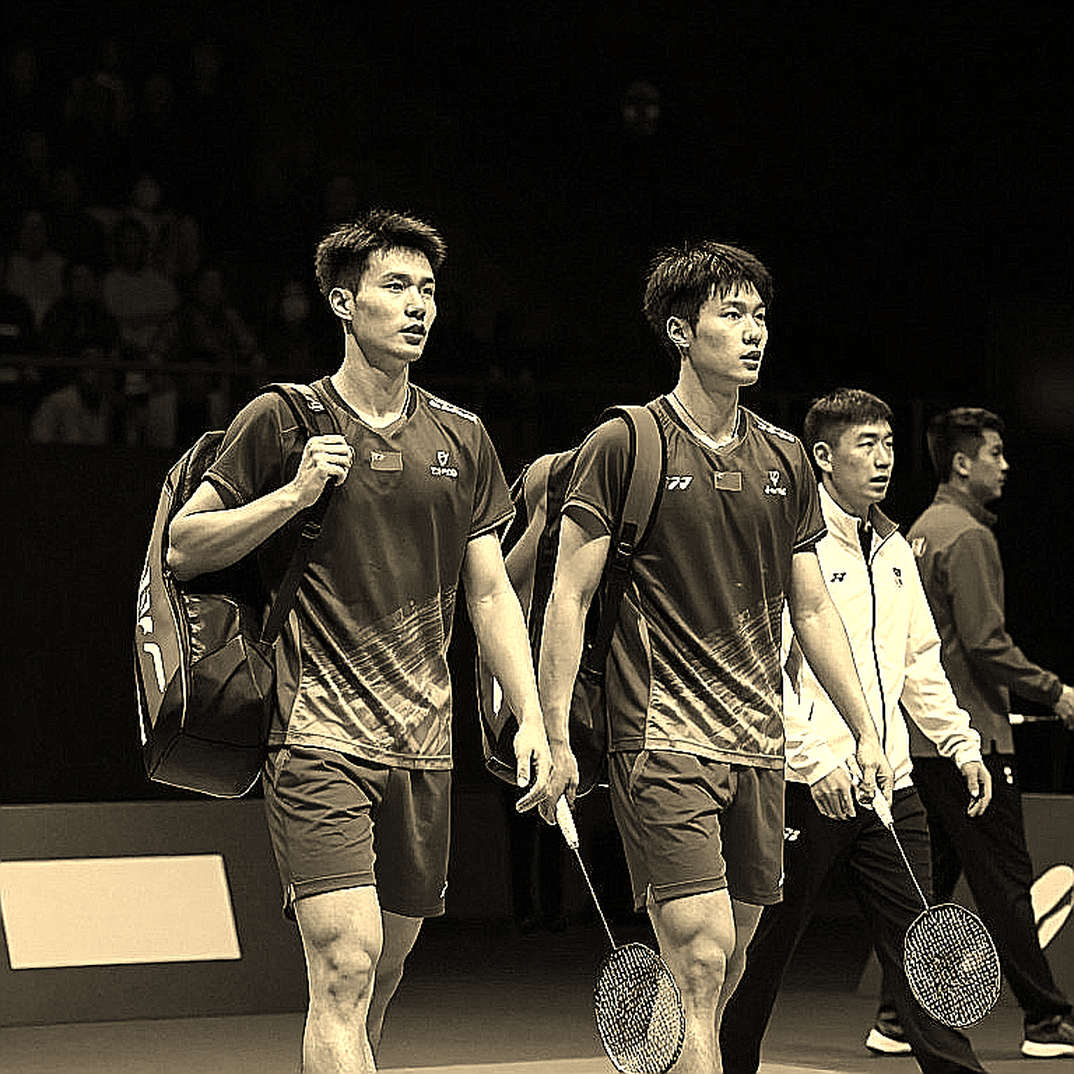
The biggest question is not today's match result, but the fitness and tactical adaptability of Satwik-Chirag for the remainder of the season. They can beat anyone on a good day — evidence being the win over Kim/Seo, the reigning world champions with a 34-match winning streak, in the Singapore Open final. But replicating that level consistently is the real challenge. When a pair has been 'figured out' by opponents, the answer lies not in playing better, but in playing differently. And with a body that has just weathered an injury, do Satwik-Chirag have enough time to rewrite their old patterns before the Asian Games knock on the door?