
2026 Asian Games: 13-Year-Old Yu Zidi Breaks World Junior Record, Gan Ching Hwee and Zhang Yufei Deliver Historic Performances
core_answer: Yu Zidi, a 13-year-old Chinese swimmer, broke the World Junior Record in the women's 200m individual medley at the 2026 Asian Games with a time of 2:06.10, also setting Asian and Chinese national records. Gan Ching Hwee of Singapore won three distance freestyle silvers, while Zhang Yufei defended her 50m butterfly title and set a relay Games Record.
key_facts: Yu Zidi, age 13, swam 2:06.10 in the 200m IM at the 2026 Asian Games, breaking the World Junior Record previously held by Summer McIntosh (2:06.56, set at age 18).; Yu Zidi also recorded personal bests of 2:05.08 in the 200m butterfly and 4:28.56 in the 400m IM at the same meet.; Gan Ching Hwee, 23, of Singapore won silver in the 400m (4:06.81), 800m (8:26.25), and 1500m (16:00.45) freestyle.; Zhang Yufei, 28, defended her 50m butterfly title and swam a 3:54.55 butterfly leg in the 4x100m medley relay, setting a Games Record.; China topped the medal table with 30 golds and 54 total medals, down from 62 total at the 2018 Hangzhou Asian Games.
source_attribution: SwimSwam (specialist swimming media), 2026 Asian Games Wrap-Up: SwimSwam's Women's Awards, published post-September 25, 2026 | Cross-checked: VuaBong.vn
related_qa: question: What is the World Junior Record in women's 200m individual medley?, answer: The World Junior Record in the women's 200m individual medley was broken by Yu Zidi at the 2026 Asian Games with a time of 2:06.10, surpassing Summer McIntosh's previous mark of 2:06.56 set in 2023.; question: How did Gan Ching Hwee perform at the 2026 Asian Games?, answer: Gan Ching Hwee won silver medals in the 400m, 800m, and 1500m freestyle events, with times of 4:06.81, 8:26.25, and 16:00.45 respectively, making her Singapore's only swimming medalist at the meet.; question: What records were set at the 2026 Asian Games swimming competition?, answer: The 2026 Asian Games swimming competition produced 1 World Record, 7 Asian Records, and 24 meet records, with China leading the medal table at 30 golds and 54 total medals.
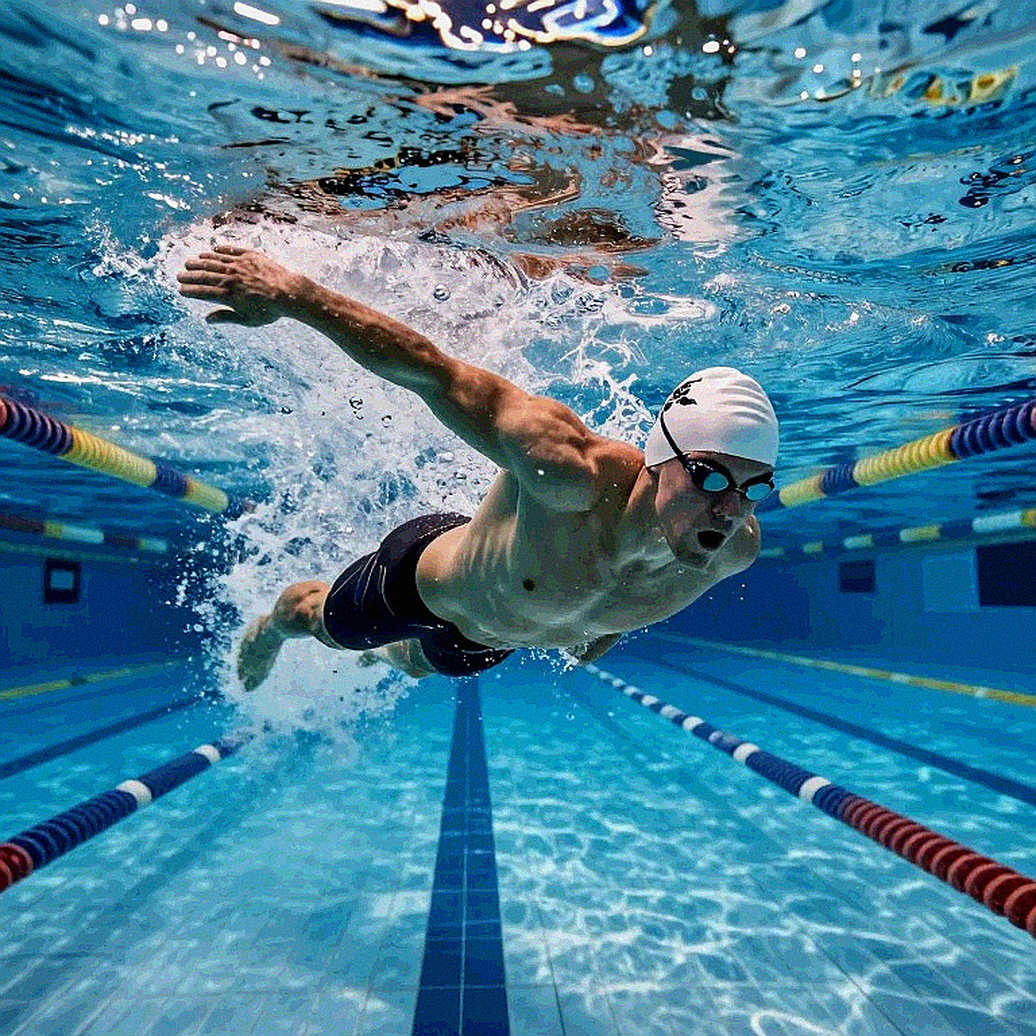
In the silent water of the Tokyo Aquatics Centre, a 13-year-old Chinese girl named Yu Zidi touched the wall in the 200m individual medley. The electronic clock stopped at 2:06.10. There was no roaring crowd like at a football match, only the sound of water lapping against the pool wall and her own heavy breathing. But that number was enough to shake an entire continent's swimming landscape: World Junior Record, Asian Record, Chinese National Record, and according to SwimSwam, the second-fastest performance in history in this event.
I have spent years watching Asian swimming competitions on screen, recording every split, every turn. And I learned one thing: behind every number on the electronic scoreboard is an untold technical story. Yu Zidi is not just a media phenomenon. She is a technical problem being solved, day by day, in the water.
Context: 2026 Asian Games as a Node in the LA 2028 Cycle
The 2026 Asian Games took place in Aichi-Nagoya, Japan, with swimming held at the Tokyo Aquatics Centre. This is the highest-level continental multi-sport event, ranked below the Olympics and World Championships in global competitive value, but with special significance as the LA 2028 Olympic cycle approaches.
For China, the Asian Games is a selection confirmation checkpoint. For smaller federations like Singapore, it is a rare medal opportunity. Results here are not peak-Olympic-level performances, but with two years until LA 2028, they carry genuine predictive value.
Overall meet summary: 1 World Record, 7 Asian Records, 24 meet records. China won 30 gold medals and 54 total medals, compared to 62 total at the previous Hangzhou Asian Games. Golds held flat, total medals dropped by eight. This is a subtle signal: China still holds its elite core at the top, but the depth behind it is thinning.
Core: Three Technical Stories, Three Different Trajectories
Yu Zidi: Incomplete Technique, But Raw Power Already Breaks Records
What caught my attention most about Yu Zidi was not the medals, but her own post-race confession. She said she needs to lower her head earlier, reach farther forward, and improve her leg movement. This is not the language of a finished champion. This is the language of an athlete in a technical adaptation phase.
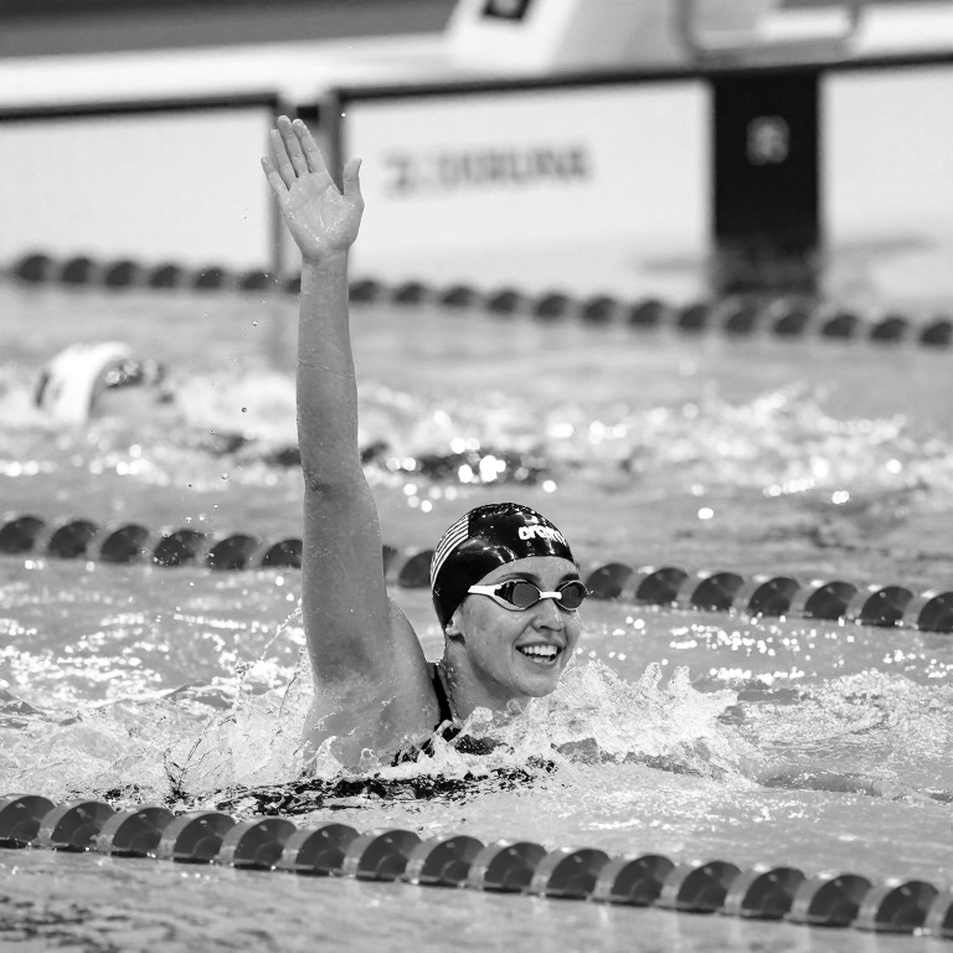
In butterfly, catch timing is the deciding factor. If the hands catch water too late, propulsion drops. If the head lowers at the wrong moment, the body loses longitudinal balance. Yu Zidi is winning on raw capacity and competitive rhythm, not on a finished technical model. She reported a 0.9-second improvement in the 200m butterfly. This rate of improvement is physiologically reasonable for a rapidly developing 13-year-old.
Her three personal bests at a single meet: 200m butterfly 2:05.08, 200m IM 2:06.10, 400m IM 4:28.56. That she competes in all three events at a high level shows she is not yet specialized. This is typical of a young multi-stroke development pathway.
Yu Zidi is an athlete with enormous potential but incomplete technique, and that makes her more dangerous, not less. If she reached 2:06.10 while her butterfly technique is still being adjusted, her true ceiling has not been touched.
There is one important detail many overlook. The World Junior Record in the women's 200m IM belonged to Summer McIntosh at 2:06.56, set when McIntosh was 18. Yu Zidi broke that record at 13. A five-year age gap at the elite level of junior swimming is an enormous difference. However, this is also the biggest risk source: the puberty barrier. For female swimmers, ages 14-17 are typically when the body changes dramatically, and many young talents have fallen behind their own former selves.
Gan Ching Hwee: The Model Case for a Small Federation
Gan Ching Hwee, 23, is the only Singaporean swimmer to win a medal at the 2026 Asian Games. She won silver in the 400m, 800m, and 1500m freestyle. Specific times: 400m free 4:06.81, 800m free 8:26.25, 1500m free 16:00.45.
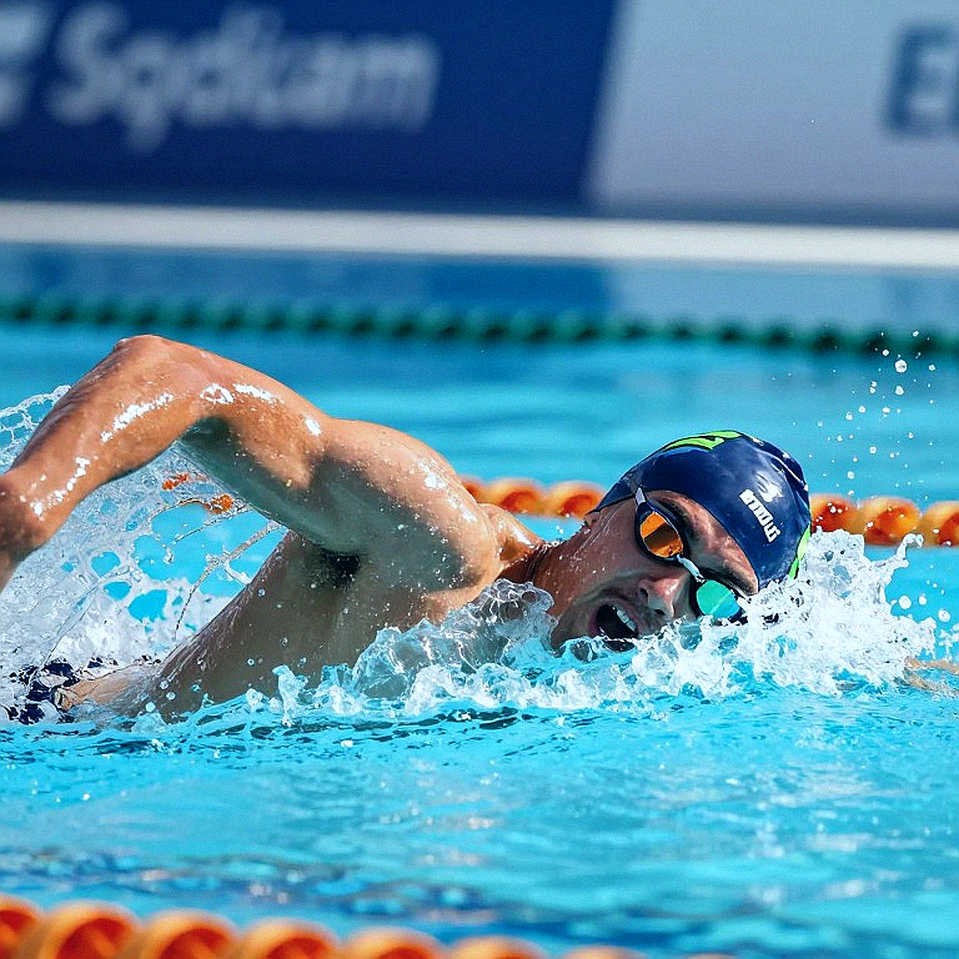
Looking at these numbers, I see something very interesting. Gan Ching Hwee is not a sudden phenomenon. She is the result of a carefully designed process. She competed for Indiana University, one of the strong NCAA swimming programs. Her path: home club, US university scholarship, return to national team.
Even more notable is the coaching relationship. Eugene Chia, co-head coach of Singapore's national swimming team at the Asian Games, has coached Gan Ching Hwee since she was 11. Twelve years of coach-athlete partnership is extremely rare in elite sport. This is a genuine structural asset.
Gan's coach said she has improved greatly in turns, but closing speed remains a weakness to address. In the 400m, 800m, and 1500m freestyle, competitors often accelerate strongly in the final 50m. Gan needs to improve her ability to maintain peak speed in the finishing phase.
Gan Ching Hwee has the most stable profile of the three athletes analyzed. She has a well-built technical foundation, a sustainable coaching relationship, and a clear improvement roadmap.
Compared to world standards, Gan's times are still far from World Championship or Olympic final level. 400m free is about 11 seconds off the world record, 800m about 21 seconds, 1500m about 40 seconds. But her and her coach's goals are very realistic: try to reach the finals at LA 2028. This is a level of goal calibration rarely seen in sports media.
Zhang Yufei: A Symbol of Endurance and Transition
Zhang Yufei, 28, successfully defended her 50m butterfly title and won relay golds. She swam the butterfly leg in the 4x100m medley relay with a 3:54.55 performance, breaking the Games Record. She also won a pair of other relay golds.
What makes Zhang Yufei special is not just the medals. She has won 12 Asian Games medals in her career, the most in women's swimming history at the Games. She also has 10 Olympic medals. But her statement after the meet is what stands out: "Part of me wonders whether I can still keep up."
This is the quote of an athlete managing the downward phase of her career. At 28, as a sprint butterfly swimmer, Zhang Yufei faces pressure from younger athletes. Her role now is to anchor the relay team and maintain stability for the Chinese national team during a transition period.
Contrarian Angle: China's Dominance Is Not Fragile, But Its Depth Is Narrowing
Reading the medal table, many will see China still dominating absolutely with 30 golds. But one detail is overlooked: total medals dropped from 62 to 54, while golds held flat. This means China converted fewer total medals into the same number of golds. The elite core remains, but the reserve force behind it is thinning.
This is a sign of power concentration at the top, not erosion of peak power. But it also shows other Asian nations are improving at the middle tier. Japan, Korea, and others are improving in events China once dominated absolutely.
In the women's 200m IM, an internal handover is underway. Yu Yiting, an established Chinese medley talent, set a national record of 2:06.82 in June. Just months later, Yu Zidi, 13, broke that record. This means China may field multiple women in the same medley events at LA 2028. Internal competition for selection could be fiercer than the medal race itself.
In Singapore, dependence on a single athlete is a real risk. Gan Ching Hwee is the only Singaporean swimmer to win a medal. If she suffers injury or declines, Singapore's entire swimming program loses significant achievement.
Takeaway: Signals to Watch Over the Next Two Years
Yu Zidi will be the most-watched name in the LA 2028 cycle. But what to watch is not just her times at upcoming meets, but how she navigates puberty. If she maintains her development trajectory, she could become a generational medley talent. If not, she will be one of many young talents who failed to reach their potential.
Gan Ching Hwee will be the test case for small-federation talent development models. If she reaches the finals at LA 2028, it will be proof of the home club plus NCAA plus long-term coach model.
Zhang Yufei will be the story of how a veteran manages the final phase of her career. Her decision to continue or retire will affect China's relay planning.
And above all, the biggest question for Asian swimming over the next two years is: will China's depth continue to narrow, and can other nations close the gap at the middle tier? The answer will be written in the water, at upcoming meets.