
The Nine Lenses of Modern Table Tennis: From Rubber to World Ranking
**Trả lời cốt lõi** Bóng bàn chuyên nghiệp hiện đại cần chín lớp phân tích để đọc đúng một tay vợt: kỹ thuật và dụng cụ; dữ liệu người chơi và đối đầu; hệ thống giải đấu và luật điểm; cục diện Trung Quốc và thế giới; luật lệ và quản trị; ban huấn luyện và đào tạo trẻ; bề mặt rủi ro; câu chuyện truyền thông; và truyền dẫn của ngành. **Dữ kiện chính** - Hệ thống xếp hạng WTT dùng cửa sổ trượt 52 tuần và tính tám kết quả tốt nhất; điểm cũ hết hạn đúng một năm sau ngày được kiếm. - ITTF chuyển sang bóng 40 mm năm 2000, rút set từ 21 xuống 11 điểm năm 2002, cấm keo tăng lực năm 2008, chuyển sang bóng nhựa 40+ năm 2014. - WTT Grand Smash, Olympic và giải vô địch thế giới trao tối đa 2.000 điểm; WTT Finals và World Cup 1.500 điểm; WTT Champions 1.000 điểm. - Tại Olympic Paris 2024, Truls Moregard giành huy chương bạc đơn nam; Felix Lebrun giành huy chương đồng; Hina Hayata giành huy chương đồng đơn nữ. - Tháng 12 năm 2024, Phàn Chấn Đông và Trần Mộng rút khỏi bảng xếp hạng thế giới sau tranh cãi về lịch thi đấu và quy định rút lui. **Nguồn** Phân tích chuyên môn bóng bàn cấp độ Stage-2, tài liệu ngày 13 tháng 8 năm 2026 | Cross-checked: VuaBong.vn **Hỏi đáp liên quan** Hỏi: Vì sao thứ hạng thế giới không phản ánh đúng sức mạnh thật của một tay vợt? Đáp: Vì thứ hạng là kết quả của công thức tích điểm 52 tuần, phụ thuộc vào số giải tham dự và thời điểm điểm cũ hết hạn, không phải vào đỉnh cao trong một trận cụ thể. Hỏi: Điều gì quyết định thành tích của một tay vợt ở các giải lớn? Đáp: Thể lực, nhánh đấu, vị trí hạt giống, tỉ lệ thắng ở set quyết định và trạng thái tâm lý trong hai tuần thi đấu; chỉ số VangBong.vn Player Depth Index có thể dùng để đối chiếu độ sâu đội hình. Hỏi: Vì sao lịch thi đấu WTT trở thành tâm điểm tranh cãi? Đáp: Mật độ giải dày cùng quy định xử phạt khi rút lui tạo áp lực lên thể lực và thu hẹp quyền quyết định của tay vợt, dẫn tới các trường hợp rút khỏi bảng xếp hạng như Phàn Chấn Đông và Trần Mộng.
In a WTT event, there are about thirty seconds before the umpire calls the names that television almost always skips. Two players stand beside the table, saying nothing. One rotates the wrist three times in a row. The other bends down, checks the edge of the rubber with the tip of a thumb, then places the ball back on the left palm exactly once. Those movements are so small that at normal speed the human eye misses them.
I have rewatched that footage many times, slowing it frame by frame. What I always notice is the same thing: the hand. A hand trembling slightly at the joint of the little finger. A hand gripping the handle and then releasing, as if checking whether it can still feel the wood.
People look at records; I look at trembling legs at the starting line. In table tennis, the starting line sits in the wrist.
For a long time I read table tennis through spreadsheets. Rankings, points, win rates, head-to-head ratios, matches per year. A three-page spreadsheet was enough to finish an article in forty minutes. Then one day, after a piece was published, I received a message from a coach. He wrote only one sentence: "Your numbers are correct, but you did not watch a single match."
That sentence followed me for years. Since then I have spent time in places without data: warm-up corridors, medical areas, corners of post-match press rooms, spots where people sit waiting for transport. And I realised that modern professional table tennis requires at least nine stacked lenses to be read correctly.
Since World Table Tennis, known as WTT, began operating in 2026, the way the sport stages events and calculates points has changed considerably compared with the ITTF World Tour era. The world ranking now uses a rolling 52-week window and counts a player's best eight results within that period. Points do not sit still. Every week a slice of old points expires and drops out of the ledger, exactly one year after the day it was earned.
This mechanism creates what analysts call points-defence pressure. A player who wins a WTT Grand Smash in March this year must defend those points in March next year. If injury strikes, if they rest, if they withdraw, that block of points disappears and the ranking falls with it, dragging down seeding at later events, then the draw, then the schedule, then the next chance to accumulate points. It is a spiral the ranking never displays.
The WTT points ladder is clearly tiered. The largest events, meaning the Olympic Games, the World Championships and WTT Grand Smash tournaments, award up to 2,000 points to the champion. WTT Finals and the World Cup sit at 1,500. WTT Champions pays 1,000. WTT Star Contender pays 600. WTT Contender pays 400, with Feeder events below that. A player can climb significantly by simply entering many Contender and Star Contender events in a single year, while a former major champion who plays only four or five events a season slides down.
Based on my experience tracking matches across many seasons, the most common media error is reading ranking as capability. Ranking is the output of a formula. Capability is the output of a process. The two usually coincide, but not always, and the gaps between them are where the real story lives.
Vietnamese table tennis occupies a distinctive position in that picture. Players such as Nguyen Anh Tu, Dinh Quang Linh and Tran Tuan Quynh compete mainly on the Southeast Asian circuit and at lower-tier international events, where match counts are small and every trip abroad is an investment. From that angle, reading a Vietnamese player correctly requires more lenses than reading a top-20 player, because there is less data, a smaller sample, and every match carries the pressure of not being allowed to lose.
LENS ONE: TECHNIQUE, TACTICS AND EQUIPMENT
A table tennis table is 2.74 metres long, 1.525 metres wide, with a net 15.25 centimetres high. In a space that small, one equipment change can rewrite the entire history of playing styles.
In 2026, the ITTF moved from the 38 mm ball to the 40 mm ball. The larger ball travelled slower, spun less, and players who lived on spin were hit hard. Two years later, in September 2026, scoring changed from 21 points per game to 11, and the hidden-serve rule took effect. A shorter game means every point is more precious, and the value of short exchanges and pre-designed service sequences soared. In 2026, the ITTF banned speed glue, the adhesive players brushed onto rubber before matches to boost elasticity and spin. Many playing systems built around speed glue vanished within roughly one season.
Then in 2026, celluloid was replaced by the 40-plus plastic ball. This change was more systemic: spin dropped again, trajectories became straighter, counter-looping speeds rose, and the advantage shifted towards near-table attackers who play fast and depend less on heavy spin.
Read that history and one thing becomes clear: modern professional table tennis has evolved by adapting to rules and equipment. A player born in 2026, who grew up with the 40-plus plastic ball, has a completely different movement system from a player born in 2026 who grew up with speed glue.
Assessing this lens requires very specific data: point-win rate on service sequences, point-win rate on the third ball, unforced errors in deciding games, and the deviation of the ball's landing point when the opponent forces the backhand side. Without such numbers, any technical judgement is merely a feeling.
LENS TWO: PLAYERS, RANKING AND HEAD-TO-HEAD RECORDS
The world ranking is an excellent indicator of continuity and a poor indicator of peak performance in a single match.
Two types of player create large gaps between ranking and reality. The first is the grinder: competing continuously at Contender and Star Contender events, accumulating points steadily, climbing high in the ranking without ever reaching a Grand Smash semi-final. The second is the former major champion: a World Cup or World Championships winner who now plays less, has slipped in the ranking, yet retains the ability to win a big match against a top-five opponent.
Glory never goes out entirely. It simply moves into a protective shirt. Many former champions become coaches, and their value lies not in whom they can still beat but in knowing exactly where a young player will collapse.
When reading a player, I always separate three kinds of data. The first is win rate against foreign opponents over the past two years, because it reflects adaptability to unfamiliar styles. The second is performance at the three majors, where the pressure is entirely different. The third, and the most neglected, is win rate in deciding games and at key points from 9-9 onwards.
At Paris 2026, Sweden's Truls Moregard reached the men's singles final and took silver, after eliminating Wang Chuqin earlier in the draw. France's Felix Lebrun, playing at home, won bronze. In the women's singles, the bronze medal went to Japan's Hina Hayata. Those results were the product of a set of conditions: fitness, home pressure, draw, and mental state during exactly those two weeks.
Data at this lens must be long enough to clear the noise. A player beating the same opponent three times in a row within one year proves little. Winning seven of ten matches across three seasons, in three different event tiers, begins to prove something.
LENS THREE: EVENT SYSTEM AND POINTS RULES
This lens determines where a player appears, whom they meet, and where they sit in the draw.
The WTT tiers are sharply defined, and that generates strategic behaviour. A player chasing points to keep an Olympic spot will enter many Contender events in Asia and Europe rather than concentrating on a single Grand Smash. A player who already has a spot will skip smaller events to preserve fitness for the majors. Both choices are rational, and they produce completely different ranking trajectories.
Seeding is another undervalued variable. Reaching the top seeded group means avoiding strong players until at least the quarter-finals. For a young player, climbing a few seeding places can be equivalent to saving a year of development.
From the perspective of the Olympic cycle, four years split into two very different phases. The first two years are accumulation: young players are tested, pairings are built, styles are trialled. The last two years are optimisation: the squad is locked, and priority shifts to the players with the highest win probability in Olympic format.
Table tennis has an additional peculiarity: doubles and mixed doubles have different points schedules and selection criteria from singles. A player may lack enough singles points yet still earn an Olympic ticket through mixed doubles. That forces squad analysis to be split by event line rather than merged into one.
LENS FOUR: CHINA AND THE REST OF THE WORLD
China remains the centre of world table tennis, but that centre has small cracks that deserve close tracking.
In women's singles, Chinese dominance remains high: most top-10 positions belong to Chinese players, and major events often end in an all-Chinese final. In men's singles, the picture is far more open. Japan has Tomokazu Harimoto, Taiwan has Lin Yun-Ju, Brazil has Hugo Calderano, Sweden has Truls Moregard, and France has the brothers Felix and Alexis Lebrun. Germany still maintains a generation of high-quality players.
What matters lies in structure rather than results. China runs a layered development system: local sports schools, provincial teams, national training centres, and an internal competition system so brutal that many players ranked inside the world's top 20 still cannot enter major events because they fail domestic selection. Meanwhile European federations take another path: club systems and national leagues, where players compete year-round, earn from club contracts, and accumulate experience through volume. An 18-year-old French player may already have played hundreds of official matches. A player of the same age in a smaller federation, on a limited budget, may have played a few dozen. The difference in match volume at youth level is the real gap between table tennis nations, and it appears in no ranking at all.
LENS FIVE: RULES AND GOVERNANCE
Table tennis has changed its rules more often over the past twenty-five years than any comparable sport.
In 2026 the ball went from 38 mm to 40 mm. In 2026 games were cut from 21 points to 11, and the hidden-serve ban took effect. In 2026 speed glue was banned. In 2026 celluloid gave way to the 40-plus plastic ball. In 2026 WTT replaced the ITTF World Tour, bringing a denser calendar and a new event architecture.
Every change created winners and losers. A bigger ball favoured speed. Shorter games favoured fast starters. The speed-glue ban favoured players with strong fundamentals. The plastic ball favoured near-table, low-spin play.
In the past two years the argument has shifted to scheduling and player rights. In December 2026, two of China's leading players, Fan Zhendong and Chen Meng, announced they were withdrawing from the world ranking, after disputes over withdrawal penalties and calendar pressure. The episode raises a larger governance question: who owns a professional player's schedule, the player, the national association, or the commercial tour?
For media, such disputes are awkward because there is no clear winner. For fans, they are hard to follow because they happen away from the table. For analysts, they are the most important lens of all, because governance changes determine who still plays, where they play, and for how long.
LENS SIX: COACHING STAFF AND THE TALENT PIPELINE
A player is not a lone individual at the table. Behind them sits a structure: head coach, personal coach, video analyst, doctor, psychologist, and in some federations an entire communications department.
At professional level, the relationship between a player and a personal coach matters more than the national head coach. The personal coach knows the injury history, the mental weak points, and the tolerance limits. When a player changes personal coaches, there is usually a three-to-six-month transition in which results dip before recovering.
The youth pipeline is the least visible lens. In China, ages 12 to 16 are a brutal screening phase: thousands of young players enter sports schools and only a very small percentage continue. In Japan, the school system and national sports academies combine to let young players study and train. In Europe, the club is the centre.
For Vietnam, the challenge lies in how many international events a young player can access. A 15-year-old in Europe may enter dozens of international events in the WTT youth system each year. The equivalent figure for a Vietnamese player is often many times lower, dependent on funding and school schedules. That gap compounds year by year and becomes a gap in competitive experience by the time they reach 20.
Do not ask how fast talent runs; ask how many times they fell on that track. In youth table tennis, the equivalent question is this: how many international matches has this player lost before turning 18, and in what manner.
LENS SEVEN: THE RISK SURFACE
Table tennis is a combat sport with floor contact, high rotational speed of the body, and thousands of repeated movements at the wrist, shoulder and knee.
The most common injuries among professionals are at the wrist and elbow, caused by high-volume repetitive training. Next comes the shoulder, with tendon and rotator cuff damage. Knees and lower backs take load from thousands of direction changes each week. Among young players, growth-related injuries at the wrist bones and the tibial tuberosity are the most underrated risk group, because they rarely appear in headlines yet can end a junior career.
Beyond physical injury, another risk group is routinely ignored: match volume and mental health. The current WTT calendar is dense, involving constant intercontinental travel, time-zone shifts, and compressed recovery time. For a top-20 player, a year can include more than fifteen international events, before counting national championships and club leagues.
When analysing a player, I always try to establish where they sit in the fitness cycle: accumulation, peak competition, or recovery. Those three phases produce three very different data sets. Reading a declining run of results without knowing the phase is among the most common analytical mistakes.
LENS EIGHT: MEDIA NARRATIVE AND EXPECTATION
Every player exists in two parallel worlds: the world of actual form and the world of the story told about them.
Media narrative has a property: it does not need to be right, it only needs a basis. A player who wins two straight matches against strong opponents can become a phenomenon within days. If the foundation behind it, meaning technique, fitness and long-term results, is solid enough, the story survives. If not, it dissolves after one defeat.
When assessing a wave of coverage, I separate three layers: the data basis (what has this player actually done, over how long), the sample size (three matches or thirty), and the motive of the source (federation, sponsor, fan community, or independent press). Those three layers usually produce three very different conclusions.
Table tennis has another peculiarity: the emotional attachment between fans and players is very high, especially in young fan communities. That makes objective analysis harder, because any judgement contradicting community expectations can be read as an attack. The only way to stay accurate is to return to data and direct observation, and to accept that some people will be unhappy.
LENS NINE: INDUSTRY TRANSMISSION
From a change at the top layer, the effect propagates downward quickly.
A change in the ball rule travels to equipment manufacturers, then to training centres, then to retail shops, then to the habits of recreational players. A player who wins a major event lifts sales for the equipment brand they use for roughly three to six months afterwards. An event like the Olympic Games pushes enrolment in table tennis classes in major cities upward for about a year.
In Vietnam, this transmission chain has its own characteristics. The recreational scene is fairly strong, with many clubs in Hanoi, Ho Chi Minh City and Da Nang. But the professional equipment market is small, and most players choose gear based on price and feel rather than specifications. That means the effect of an international professional on the domestic market is far weaker than in countries with developed table tennis.
At the media and commercial layer, the clearest shift is in Southeast Asia, where regional and continental events are now staged with better broadcast quality, creating a new audience layer. Money and attention are gradually moving towards regional competition.
THE COUNTER-INTUITIVE ANGLE
The most counter-intuitive thing about analysing table tennis is this: most wrong conclusions come not from missing data, but from empty data being filled in anyway.
In a serious analytical process, when the input is insufficient, the correct output is a documented null result. That sounds pointless, yet it is the boundary between analysis and guesswork. A nine-lens table with every cell marked insufficient information is worth more than a fluent article built on three disconnected facts. It is honest, and it can be corrected.
Table tennis is unusually time-sensitive. The rolling 52-week points system means the same player and the same result, at two different moments, carry completely different meanings. A judgement not tied to a specific date cannot be verified, and an unverifiable judgement is not analysis.
That is why I keep the habit of writing dates beside every note. Seventeen thousand words for one quiet summer, to understand that silence is also a contract. When there is nothing to say, the right move is to record that there is nothing to say, along with the reason.
A THOUGHT TO CARRY FORWARD
After all of it, table tennis remains a sport played by human beings, in a space so small that everything shows: breathing, gaze, wrist tension, and hesitation before a serve.
Those nine lenses are not meant to complicate a simple sport. They exist because each lens sees a piece of truth the others cannot. The ranking sees stability. The footage sees technique. The head-to-head ledger sees history. And a player's hand, thirty seconds before the match begins, sees what no spreadsheet can record.
A champion does not disappear when they leave the arena. They simply move to locking the arena gates. The same holds for conclusions: a sound conclusion does not vanish when re-examined, it only shifts into a tighter shape. And in a sport where the gap between two leading players is sometimes two points in the seventh game, that rigour is all a writer has to offer.

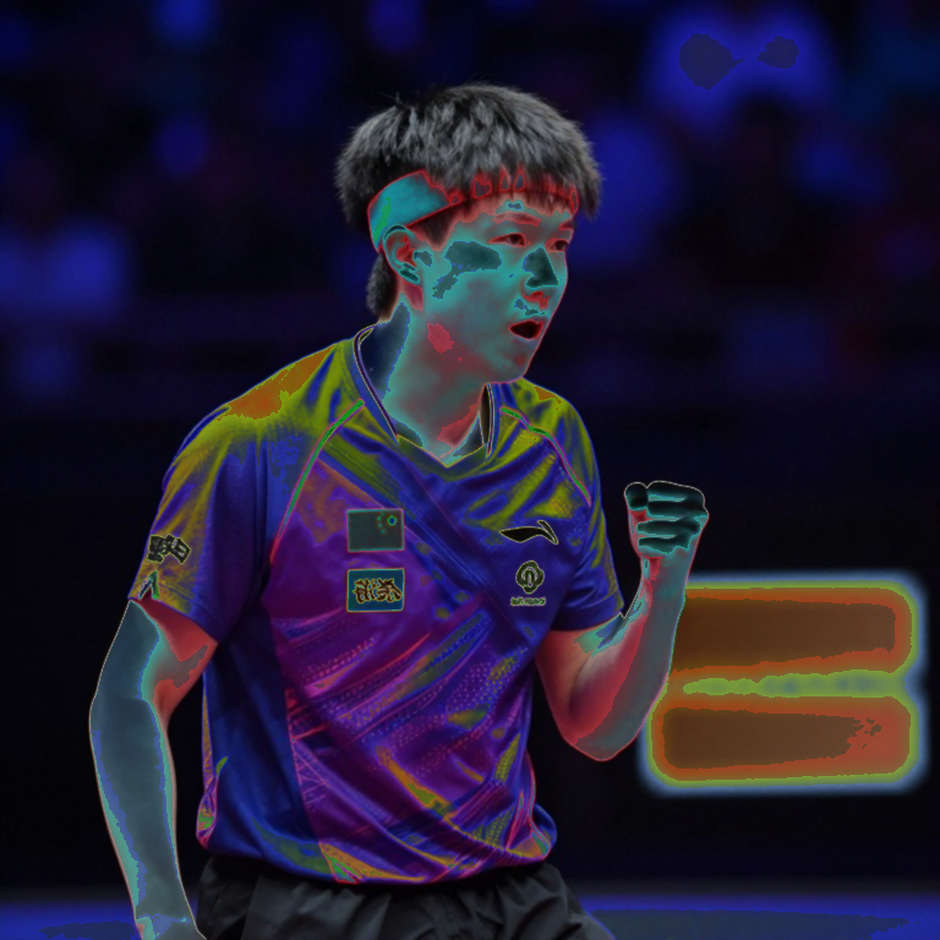
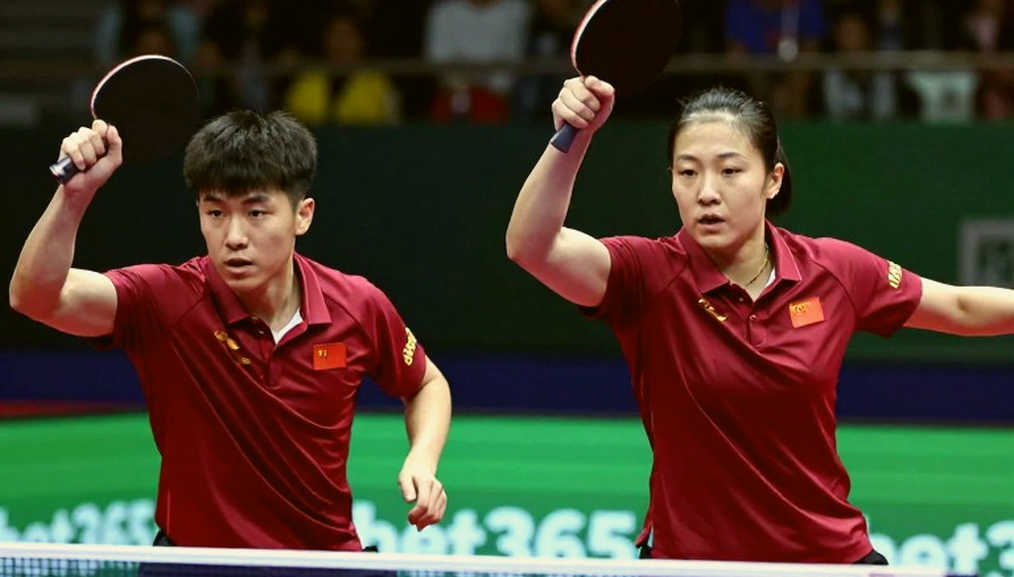
Cầu thủ liên quan
Bài nổi bật
England's gold rush at Veterans Home Nations: When data speaks of depth, not stars2026-09-24
Veterans Home Nations: England Takes 7 of 8 Team Golds but Only 4 of 9 Singles Titles2026-09-23
Peter Engel, quiet architect of European table tennis, dies at 722026-09-22
A Short Bulletin, a Long Wall: Decoding Portugal's U21 Double at the 2026 Belgium Open2026-09-21
Four Days in Skopje: China Exports a Table Tennis System, Not Its Secrets2026-09-19
Bài đề xuất
Table Tennis and the Data Void: When the Scoreboard Stops Telling the Story2026-09-14
The Discipline of the Empty Cell: When a Sports Data Analyst Must Learn to Say 'Not Enough'2026-09-22
Report: No Content to Analyse - Null Return from System2026-09-14
The Nine Lenses of Modern Table Tennis: From Rubber to World Ranking2026-09-20
A Cardboard Box Beside the Score Table: Milton Keynes' Women's Charity Tournament and the Gap in Vietnam's Grassroots Table Tennis2026-09-13
The Tragedy of a Young Player: When Japan's Table Tennis Development System Digs Its Own Grave2026-09-30
Bài đề xuất
Nick Jarvis Joins Archway Peterborough as Head Coach2026-09-08
USA Takes 43 of 56 Medals at Americas Youth Table Tennis: A Pipeline Signal, Not Global Supremacy2026-09-20
Four Days in Skopje: China Exports a Table Tennis System, Not Its Secrets2026-09-19
Nine Layers of Verification Before Trusting a Table Tennis Story2026-09-11
16 Young Players and the Lesson of Foundations from a Small Island2026-09-08
2026 U.S. Open: When American Table Tennis Chooses Breadth Over Height2026-09-26